
Spices are more than just ingredients—they are cultural artifacts, linguistic time capsules, and botanical marvels. Behind every jar in your pantry lies a story embedded in its name: tales of ancient trade routes, colonial ambitions, linguistic evolution, and sensory science. Understanding what spices are called—and why—offers insight not only into cooking but into global history and human curiosity. For home cooks, chefs, and food historians alike, decoding spice names unlocks deeper appreciation and more informed use in the kitchen. This guide explores the etymology, origin, and practical significance of widely used spices, revealing how language shapes flavor and function.
Definition & Overview
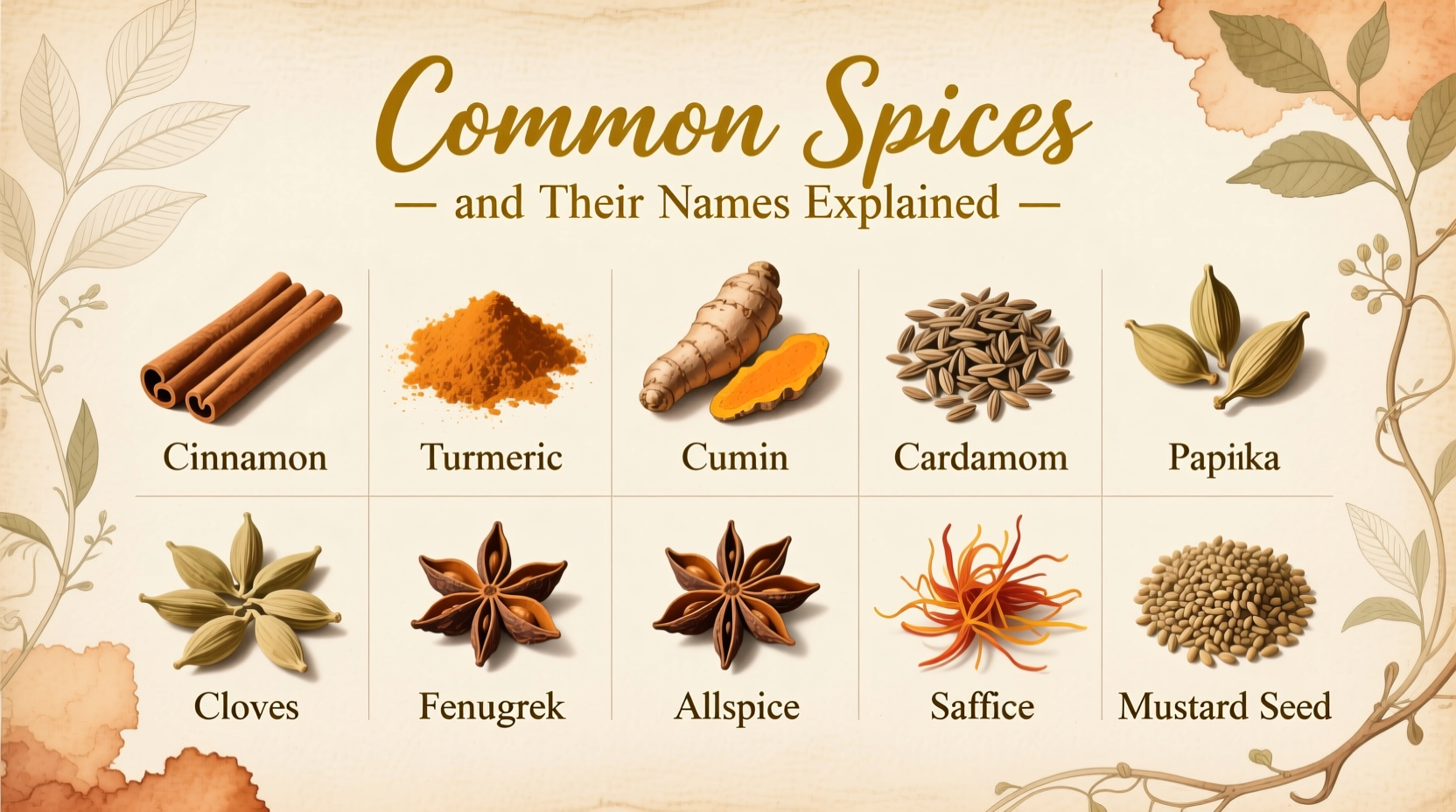
A spice is a dried part of a plant—typically seed, fruit, root, bark, or bud—used to flavor, color, or preserve food. Unlike herbs, which are usually fresh or dried leafy parts of aromatic plants, spices tend to be more potent, heat-stable, and globally traded. Many have been central to commerce for millennia, driving exploration and shaping empires. The names of these spices often reflect their geographic roots, physical traits, or historical misunderstandings by early traders and botanists.
For example, \"cinnamon\" derives from the Hebrew *qinnāmōn* and later Greek *kinnámōmon*, possibly referencing its sweet aroma. \"Nutmeg\" combines “nut” (for its seed-like appearance) and “meg” (from Dutch *megge*, meaning musk), alluding to its warm, musky scent. These names aren’t arbitrary—they’re linguistic fossils that trace migration, misidentification, and cross-cultural exchange.
Understanding the meaning behind spice names helps clarify their proper use, avoid substitutions, and appreciate their role beyond the kitchen. Whether you're seasoning a stew or studying gastronomic history, knowing where a spice’s name comes from enhances both accuracy and authenticity.
Key Characteristics of Common Spices
The following table outlines 12 essential spices, including their botanical source, flavor profile, name origin, and primary culinary functions:
| Spice | Botanical Source | Flavor Profile | Name Origin | Culinary Function |
|---|---|---|---|---|
| Cinnamon | Cinnamomum verum (bark) | Sweet, warm, woody | Hebrew *qinnāmōn*, via Greek/Latin | Baking, desserts, curries, beverages |
| Nutmeg | Myristica fragrans (seed) | Warm, nutty, slightly sweet | Dutch *nootmuskaat* (\"nut musk\") | Dairy dishes, baked goods, sausages |
| Mace | Aril of nutmeg seed | Sharper, more pungent than nutmeg | Latin *macis*, French *mace* | Pickling, soups, spice blends |
| Cloves | Syzygium aromaticum (dried flower bud) | Intense, sweet-pungent, warming | Latin *clavus* (\"nail\"), due to shape | Ham glazes, mulled drinks, rice dishes |
| Black Pepper | Piper nigrum (dried berry) | Pungent, sharp, mildly floral | Greek *peperi*, possibly Dravidian *pippali* | Universal seasoning, sauces, marinades |
| Turmeric | Curcuma longa (rhizome) | Earthy, bitter, slightly peppery | Latin *terra merita* (\"earth worthy\") → Old French *termerite* | Curries, rice, coloring agent |
| Ginger | Zingiber officinale (rhizome) | Spicy, citrusy, warm | Sanskrit *śṛṅgavera* (\"horn body,\" due to shape) | Stir-fries, teas, baked goods |
| Cardamom | Elettaria cardamomum (seed pod) | Floral, eucalyptus-like, citrusy | Greek *kardamomon*, possibly \"cress-like\" | Coffee, desserts, biryanis, stews |
| Cumin | Cuminum cyminum (seed) | Earthy, nutty, slightly smoky | Latin *cuminum*, from Greek *kyminon* | Mexican, Indian, Middle Eastern cuisine |
| Coriander | Coriandrum sativum (seed) | Lemon-citrus, floral, mild | Greek *koris* (\"bug\"), due to unripe smell | Curries, sausages, pickles, spice rubs |
| Fenugreek | Trigonella foenum-graecum (seed) | Bitter, maple-like when roasted | Latin \"Greek hay\" (used as fodder) | Curry powders, chutneys, mock meats |
| Paprika | Dried Capsicum annuum peppers | Sweet to hot, earthy, vegetal | Hungarian *paprika*, from Serbian/Croatian | Stews, goulash, rubs, garnishes |
Practical Usage: How to Use These Spices Effectively
Each spice plays a distinct role based on its chemical composition and solubility. Understanding how and when to apply them maximizes flavor extraction and avoids bitterness or imbalance.
Toasting and Blooming
Dry toasting whole spices in a skillet before grinding enhances volatile oils. Cumin, coriander, and mustard seeds benefit especially. For ground spices in liquid-based dishes, blooming in oil (e.g., heating turmeric or paprika in ghee for 30 seconds) disperses flavor compounds evenly and reduces raw notes.
Timing Matters
- Early addition: Cinnamon, cloves, and cardamom can withstand long cooking times and infuse deeply in braises or rice dishes.
- Late addition: Nutmeg and mace lose complexity with prolonged heat; add near the end of cooking for sauces or custards.
- Raw application: Freshly grated ginger or black pepper provides brightness; pre-ground versions lack vibrancy.
Pairing Principles
Certain combinations recur across cuisines due to synergistic chemistry:
- Cinnamon + Clove + Nutmeg: Found in pumpkin pie, chai, and Moroccan tagines—creates warmth without overpowering.
- Cumin + Coriander + Turmeric: Base trio in Indian curry powders; balances earthiness with citrus lift.
- Paprika + Garlic + Black Pepper: Core of Hungarian goulash; adds depth and color without excessive heat.
Pro Tip: Store whole spices in airtight containers away from light and heat. Grind only as needed using a dedicated coffee grinder or mortar and pestle. Ground spices lose up to 75% of volatile oils within six months.
Variants & Types
Many spices exist in multiple forms, each suited to different applications.
Cinnamon: Two Main Types
- Ceylon Cinnamon (Cinnamomum verum): Thin, layered quills, delicate flavor. Lower in coumarin (a liver-affecting compound). Ideal for desserts and beverages.
- Cassia Cinnamon (Cinnamomum cassia): Thicker, harder bark, stronger, slightly bitter. Common in supermarkets. Best for robust dishes like curries or spiced meats.
Pepper Varieties
| Type | Processing Method | Flavor Notes |
|---|---|---|
| Black Pepper | Unripe berry, cooked and dried | Pungent, complex, floral undertones |
| White Pepper | Ripe berry, soaked to remove outer layer | Milder, earthier, less aromatic |
| Green Pepper | Unripe berry, freeze-dried or brined | Fresh, herbal, tangy |
| Pink Peppercorn | Not true pepper; from Peruvian pepper tree | Soft, fruity, slightly resinous |
Paprika Grades
- Sweet Paprika: Mild, vibrant red; used in Spanish and Hungarian cooking.
- Smoked Paprika (Pimentón): Dried over oak fires; imparts deep smokiness. Choose “dulce” (sweet), “agridulce” (semi-sweet), or “picante” (hot).
- Hot Paprika: Contains capsaicin-rich pepper varieties; adds heat and color.
Comparison with Similar Ingredients
Confusion between similar spices leads to flawed results. Clarifying distinctions ensures accurate usage.
Cumin vs. Caraway
- Cumin: Larger, lighter seeds; warm, earthy, slightly bitter. Central to chili, taco seasoning, and Indian dal.
- Caraway: Smaller, curved seeds; anise-like, sharper. Used in rye bread, sauerkraut, goulash.
“Cumin brings heat; caraway brings lift. They’re cousins, not twins.” — Chef Ana López, Culinary Institute of Barcelona
Nutmeg vs. Mace
- Both come from the same fruit: nutmeg is the seed; mace is the lacy red aril surrounding it.
- Mace has a more intense, slightly metallic edge—ideal for pickling and delicate fish sauces.
- Nutmeg is sweeter, better for desserts and béchamel.
Ground Ginger vs. Fresh Ginger
- Ground ginger: Concentrated, warm, slightly woody. Best in cookies, spice cakes, and dry rubs.
- Fresh ginger: Juicy, bright, with lemony heat. Essential in stir-fries, marinades, and teas.
Practical Tips & FAQs
How long do spices last?
Whole spices retain potency for 2–4 years; ground spices for 6 months to 1 year. Label containers with purchase dates. Test freshness by rubbing a pinch between fingers and inhaling—if aroma is faint, replace.
Can I substitute one spice for another?
Substitutions depend on context:
- Cassia for Ceylon cinnamon: Acceptable in savory dishes, but reduce quantity by 25% due to stronger flavor.
- Ground cumin for coriander: Not recommended—flavors diverge significantly. If necessary, use half the amount and add a pinch of lemon zest.
- Paprika for chili powder: Only if the blend lacks additional spices. Pure paprika lacks cumin and garlic found in most chili powders.
Why do some spices taste bitter when burned?
Spices contain essential oils that degrade at high heat. Toasting requires constant motion and low-to-medium heat. Once spices smoke or darken excessively, they release acrid compounds. Discard and restart.
Are expensive spices worth it?
In select cases: yes.
- Saffron: Despite cost, no substitute delivers its golden hue and honeyed aroma.
- Vanilla beans: Real extract offers depth missing in synthetic vanillin.
- True cardamom pods: Superior to pre-ground in both fragrance and longevity.
However, for robust spices like black pepper or cumin, high-quality ground versions from reputable brands perform well.
How should I store spices?
Keep in opaque, airtight glass jars, stored in a cool, dark cabinet—never above the stove. Avoid refrigeration, which introduces moisture and clumping. Buy small quantities frequently, especially for ground spices.
Storage Checklist:
- Use dark glass or metal containers.
- Label with name and date.
- Store away from heat sources.
- Do not store near dishwasher or sink (humidity risk).
- Check aroma every 3 months.
Summary & Key Takeaways
The names of common spices are not merely labels—they are keys to understanding origin, use, and cultural significance. From the nail-shaped clove (*clavus*) to the musky nutmeg (*nootmuskaat*), etymology informs application. Recognizing the difference between Ceylon and cassia cinnamon, or between nutmeg and mace, prevents culinary missteps. Proper storage, timely addition, and informed substitutions elevate everyday cooking.
Mastering these spices means more than following recipes—it means engaging with a global legacy of trade, taste, and tradition. By learning what’s behind the name, cooks gain precision, confidence, and a richer connection to the food they prepare.
Next Step: Audit your spice cabinet. Identify unknowns, check expiration dates, and replace stale items. Begin grinding whole spices daily—you’ll taste the difference within one meal.




 浙公网安备
33010002000092号
浙公网安备
33010002000092号 浙B2-20120091-4
Comments
No comments yet. Why don't you start the discussion?