
Vlogging has transformed from a niche hobby into a full-time profession for thousands around the world. Whether you're documenting travel adventures, sharing beauty routines, or building a personal brand, your choice of camera plays a pivotal role in shaping the viewer’s experience. For years, DSLRs dominated the digital imaging landscape with their optical viewfinders, robust build, and exceptional stills performance. But in recent years, compact mirrorless cameras have surged in popularity—especially among content creators. So when it comes to vlogging, which platform truly delivers?
The answer isn’t one-size-fits-all. It depends on your shooting style, budget, mobility needs, and long-term goals. This article breaks down the core differences between compact mirrorless cameras and DSLRs, evaluates their strengths and weaknesses for vlogging, and provides practical guidance to help you make an informed decision.
Understanding the Core Differences
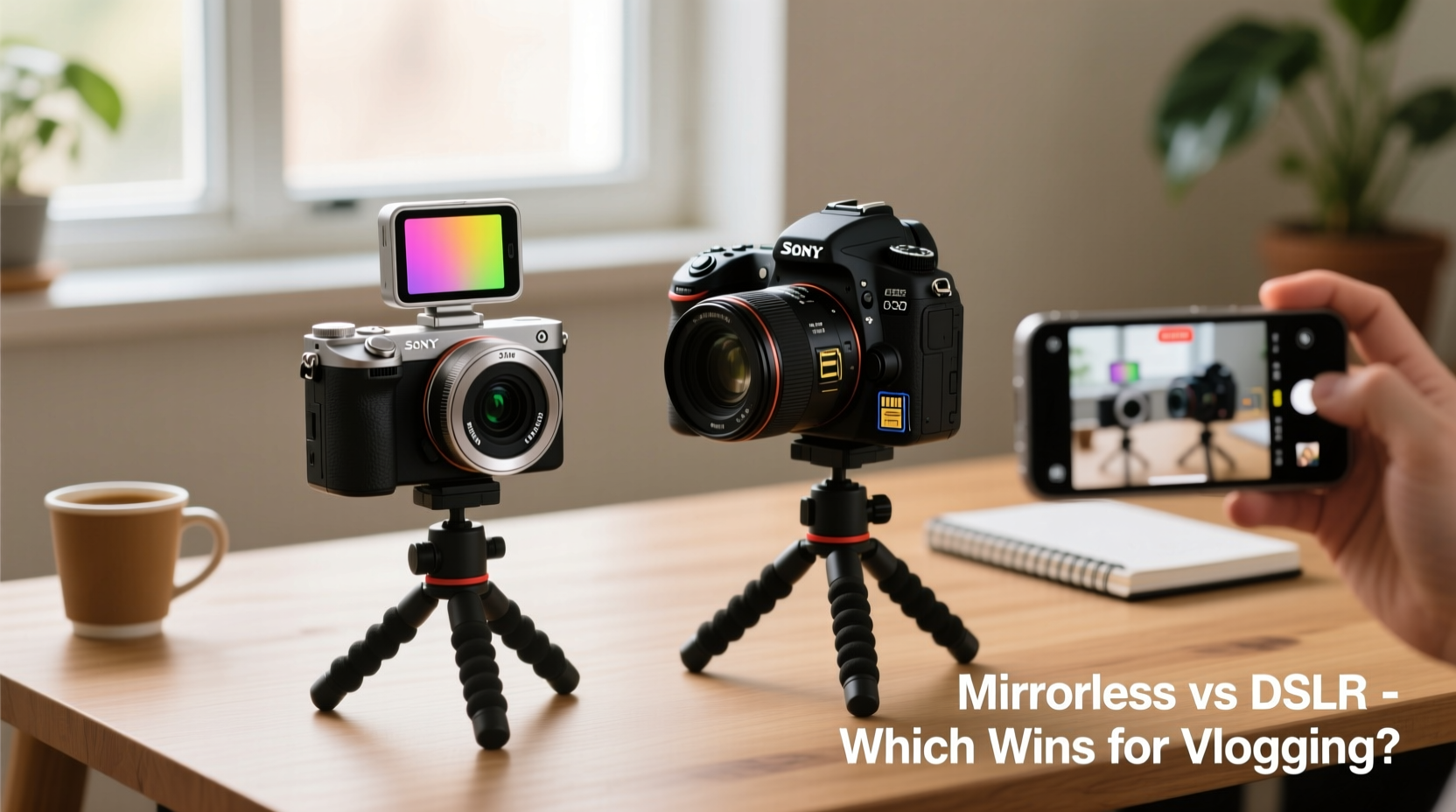
The fundamental distinction lies in design philosophy. DSLRs use a mirror mechanism that reflects light up into an optical viewfinder. When you press the shutter, the mirror flips up, allowing light to hit the sensor. Mirrorless cameras eliminate this mirror system entirely, relying instead on electronic viewfinders (EVFs) or rear LCD screens to preview the image.
This architectural shift gives mirrorless systems several inherent advantages: smaller size, lighter weight, faster autofocus, and better video-centric features. However, DSLRs still hold ground in battery life, lens ecosystem maturity, and hands-on handling for some users.
For vloggers—who often shoot solo, move frequently, and prioritize ease of use—these distinctions are not just technical footnotes; they directly impact workflow efficiency and creative freedom.
Size and Portability: A Game-Changer for Vloggers
One of the most immediate benefits of compact mirrorless cameras is their size. Models like the Sony ZV-E10, Canon EOS R50, or Panasonic Lumix G100 weigh under 400 grams with kit lenses—making them ideal for handheld shooting, travel vlogs, or daily carry.
In contrast, even entry-level DSLRs like the Nikon D3500 or Canon EOS 90D are bulkier and heavier due to the internal mirror box and pentaprism optics. While not unwieldy, the added heft becomes noticeable after hours of filming, especially when paired with microphones, gimbals, or external recorders.
Battery Life: Where DSLRs Still Shine
Mirrorless cameras typically consume more power because the sensor must remain active to feed the EVF and LCD screen. Most compact models offer only 80–120 minutes of continuous recording per charge. That might be enough for short shoots, but longer days demand multiple spare batteries or portable power banks.
DSLRs, by comparison, can last significantly longer—often double the runtime—because their optical viewfinder doesn’t require constant sensor activation. For vloggers who shoot all day without access to charging, this endurance remains a compelling advantage.
Autofocus and Real-Time Tracking Performance
Modern vlogging relies heavily on reliable autofocus. You can’t always manually focus while speaking to the camera, especially if you're moving, gesturing, or switching between wide and close-up shots.
Mirrorless cameras excel here. Nearly all current models feature phase-detection pixels on the sensor, enabling fast, accurate subject tracking. Technologies like Sony’s Real-time Eye AF, Canon’s Dual Pixel AF II, and Panasonic’s Depth-from-Defocus deliver consistent results—even when the subject moves unpredictably.
DSLRs, particularly older or entry-level models, rely on contrast-detection autofocus during video mode, which tends to hunt and stutter. While high-end DSLRs like the Canon 7D Mark II offer decent live-view AF, they still lag behind mirrorless systems in responsiveness and smoothness.
“Reliable autofocus is non-negotiable for solo vloggers. Mirrorless systems have redefined what’s possible in self-shot content.” — Lena Torres, Cinematographer & Creator Educator
Face and Eye Detection: Why It Matters
Imagine turning your head slightly during a monologue and watching your eyes go soft in focus. That frustration is largely eliminated with advanced face and eye detection found in modern mirrorless cameras. These systems lock onto facial features instantly and maintain sharpness even in dynamic lighting.
Some models, like the Sony ZV-1 series, even include AI-based subject recognition that distinguishes between people, animals, and objects—ensuring the camera knows exactly who should be in focus.
Video Quality and Codec Options
Both platforms are capable of capturing Full HD and 4K video, but mirrorless cameras generally offer superior video specifications out of the box.
- Higher bit-rate recording
- Log profiles (like S-Log3 or C-Log) for greater dynamic range
- 10-bit color depth and 4:2:2 chroma sampling on mid-tier models
- Higher frame rates for slow motion (up to 120fps in 1080p)
DSLRs, while capable, often lack these pro-grade video tools. Many still record 8-bit 4:2:0 footage internally, limiting grading flexibility in post-production. Additionally, DSLR sensors tend to overheat faster during extended 4K recording—a critical flaw for long-form vloggers.
| Feature | Mirrorless Cameras | DSLRs |
|---|---|---|
| Max Video Resolution | 4K up to 60fps (some 120fps) | 4K on select models; often limited to 30fps |
| Bit Depth | Commonly 10-bit (external/internal) | Typically 8-bit internal |
| Autofocus in Video | Fast, real-time tracking | Limited, contrast-based, prone to hunting |
| Sensor Overheating | Improved, but still occurs | Less common in HD; worse in 4K |
| Audio Inputs | Dedicated mic + headphone jacks standard | Varies; some lack headphone monitoring |
Low-Light Performance and Sensor Size
Sensor size impacts low-light capability, depth of field, and dynamic range. Both mirrorless and DSLR cameras come in APS-C and full-frame variants, so comparisons depend more on model than category.
However, newer mirrorless designs often incorporate backside-illuminated (BSI) sensors and improved noise reduction algorithms, giving them an edge in dim environments. For indoor vloggers or night shooters, this means cleaner images with less grain at higher ISO settings.
That said, a full-frame DSLR like the Canon EOS 6D Mark II still holds its own in low light. But given the trend toward hybrid shooting and compact setups, few vloggers today opt for such large DSLR bodies unless they already own compatible lenses.
Ergonomics and On-the-Go Usability
Vlogging is rarely done from a tripod. Most creators shoot handheld, using flip-out screens to frame themselves. Here, mirrorless cameras again pull ahead.
Swivel or articulating touchscreens are now standard on vlogging-focused mirrorless models. The Sony ZV-E1, Fujifilm X-S20, and Canon PowerShot V1 all feature fully rotating displays that let you see yourself clearly whether filming at arm’s length or mounted on a rig.
DSLRs vary. Some, like the Canon EOS M50 (technically mirrorless but often confused), have vari-angle screens. But traditional DSLRs like the Nikon D7500 have fixed or partially articulated LCDs, making self-framing awkward.
Integrated Features for Vloggers
Manufacturers now design mirrorless cameras with vloggers in mind. Features once reserved for smartphones are built-in:
- Background defocus (bokeh simulation) with one button press
- Product showcase modes that auto-shift focus to held items
- Wind-noise reduction via specialized microphone grilles
- Auto framing and zoom tracking powered by AI
These conveniences reduce editing time and simplify production—especially for creators working alone.
Lens Ecosystem and Flexibility
DSLRs benefit from decades of lens development. Canon EF and Nikon F mounts have hundreds of affordable primes and zooms available secondhand. If you already own DSLR glass, adapting it to newer systems is possible—but not always ideal.
Mirrorless systems use shorter flange distances, enabling compact lens designs. Manufacturers like Sigma, Tamron, and Samyang now produce lightweight, vlog-friendly lenses with wide apertures and smooth focus rings. The Micro Four Thirds system (Olympus, Panasonic) offers extreme portability with excellent stabilization.
Still, transitioning means investment. While adapters exist, native lenses perform better—especially for autofocus and image stabilization.
Image Stabilization: In-Body vs Lens-Based
Shaky footage undermines professionalism. Mirrorless cameras increasingly include in-body image stabilization (IBIS), which works with any attached lens. Combined with digital stabilization, this creates buttery-smooth handheld results.
DSLRs rely on lens-based stabilization (e.g., Nikon VR, Canon IS). While effective, it only works with compatible lenses and adds cost and weight. IBIS gives mirrorless systems a clear edge for run-and-gun vlogging.
Mini Case Study: Travel Vlogger Chooses Mirrorless
Alex Rivera, a full-time travel vlogger with over 300,000 subscribers, switched from a Canon 80D DSLR to the Sony ZV-E10 in 2022. His reasoning was straightforward: “I was carrying too much. The DSLR, extra batteries, microphone, tripod—it weighed nearly 5kg. After switching, I cut my pack weight by almost half.”
The trade-off? Shorter battery life. “I carry three batteries now instead of one,” Alex admits. “But the autofocus never misses, the skin tones look amazing, and the flip screen makes framing myself effortless.”
He also notes improved engagement: “My audience commented that my videos looked more polished within weeks. The shallow depth of field and smoother transitions made a difference.”
While he occasionally misses the DSLR’s longer battery life, the overall workflow gains far outweigh the drawbacks.
Step-by-Step Guide: Choosing Your Vlogging Camera
- Assess Your Shooting Environment: Do you film mostly indoors, outdoors, or while moving? High mobility favors mirrorless.
- Check Your Budget: Entry-level mirrorless cameras start around $600 with kit lenses. Used DSLRs can be cheaper, but may lack key video features.
- Evaluate Existing Gear: If you own DSLR lenses, factor in adapter costs or resale value before switching.
- Test Autofocus Needs: If you move frequently or speak dynamically, prioritize real-time eye/face tracking.
- Consider Audio Setup: Ensure your camera supports external mics and headphone monitoring for sound checks.
- Prioritize Battery Strategy: Plan for backup power if choosing a mirrorless system.
- Try Before You Buy: Rent or demo both types to feel the difference in grip, screen usability, and menu navigation.
FAQ
Can I use a DSLR for YouTube vlogging?
Yes, especially if you're on a tight budget or already own one. Entry-level DSLRs like the Canon EOS Rebel T7i or Nikon D5600 can produce excellent 1080p video. However, expect compromises in autofocus performance, screen flexibility, and low-light video quality compared to modern mirrorless options.
Do mirrorless cameras overheat during vlogging?
Some do, particularly older or budget models. Newer releases from Sony, Canon, and Panasonic have improved heat dissipation. To minimize risk, avoid continuous 4K recording for over 20–30 minutes, turn off the camera between takes, and consider using an external recorder via HDMI if supported.
Is a full-frame camera necessary for vlogging?
No. While full-frame sensors offer better low-light performance and shallower depth of field, APS-C and Micro Four Thirds mirrorless cameras deliver outstanding results for most vloggers. The smaller size and lower cost often make them more practical choices.
Checklist: Essential Features for a Vlogging Camera
- ✅ Flip-out or articulating touchscreen
- ✅ Reliable autofocus with face/eye tracking
- ✅ External microphone input
- ✅ Headphone jack for audio monitoring
- ✅ 4K video at 30fps or higher
- ✅ Lightweight and compact body
- ✅ Good battery life or easy charging via USB
- ✅ Built-in image stabilization (IBIS preferred)
- ✅ User-friendly menu system
- ✅ Vlog-specific modes (product focus, background blur)
Conclusion: Mirrorless Leads for Modern Vlogging
While DSLRs aren’t obsolete, the momentum has clearly shifted. For vlogging—a discipline rooted in mobility, consistency, and visual polish—compact mirrorless cameras offer superior autofocus, better video specs, smarter features, and easier handling.
DSLRs remain viable for those on a budget or invested in existing lens systems, but they require more workarounds to achieve comparable results. Unless you prioritize battery life above all else or shoot primarily in controlled environments, mirrorless is the future-proof choice.




 浙公网安备
33010002000092号
浙公网安备
33010002000092号 浙B2-20120091-4
Comments
No comments yet. Why don't you start the discussion?