
When a sudden storm rolls in, few accessories are as essential as a reliable umbrella. But not all umbrellas perform equally under high winds and heavy rain. The debate between compact and full-size models often centers on portability versus protection — but when it comes to withstanding strong gusts, performance becomes critical. Choosing the wrong type can mean the difference between staying dry and watching your umbrella invert or break mid-storm.
While compact umbrellas win for convenience, full-size models traditionally offer more coverage and structural resilience. However, modern engineering has blurred the lines, introducing wind-resistant compacts that challenge older assumptions. To determine which truly holds up better in storm conditions, we need to examine design, materials, aerodynamics, and real-world performance.
Understanding Umbrella Construction and Wind Resistance
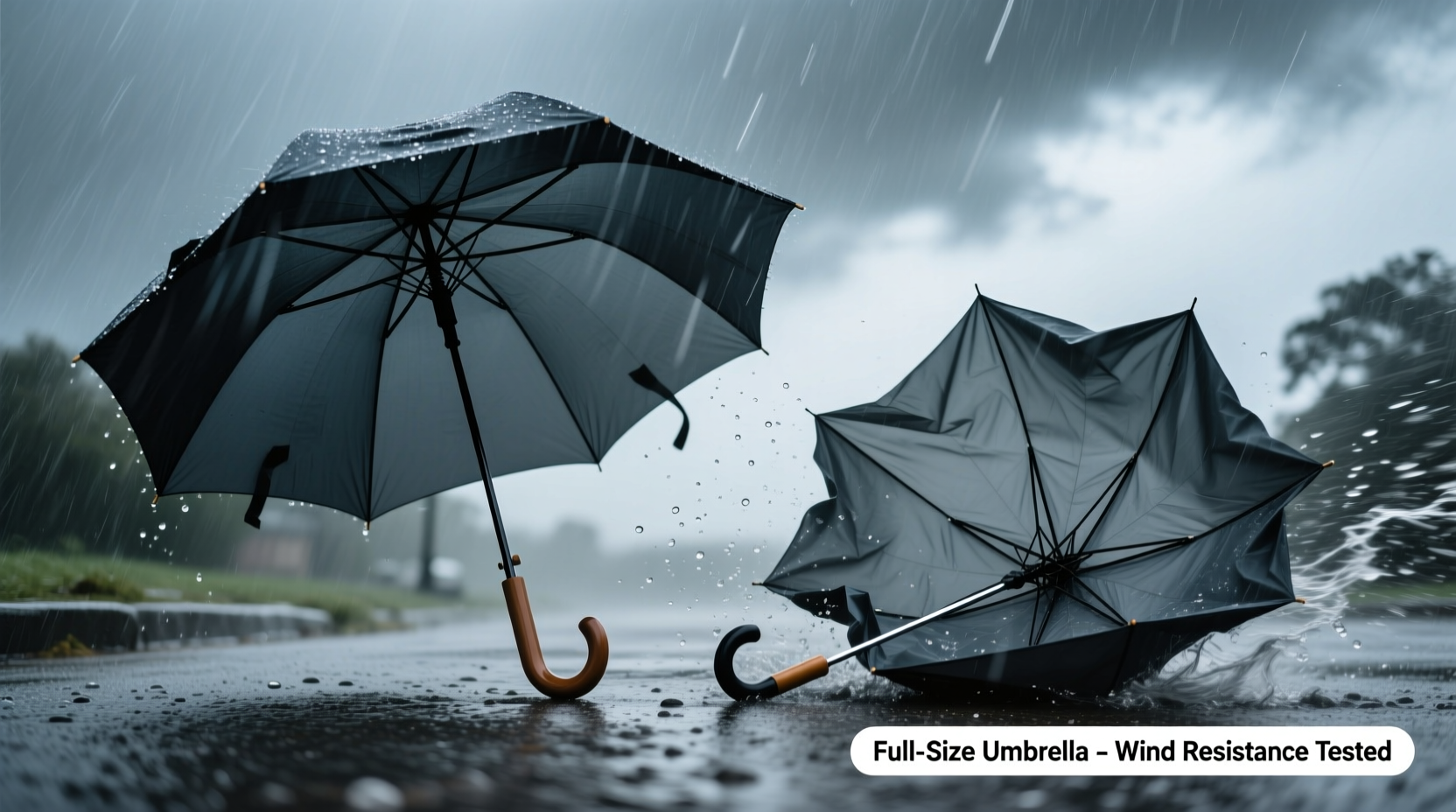
The ability of an umbrella to resist wind depends less on its size and more on how it's built. Key structural elements include the frame material, number of ribs, canopy shape, and shaft durability. In high-wind scenarios, two primary failure modes occur: inversion (where the canopy flips inside out) and breakage (where ribs or the shaft snap).
Wind resistance is achieved through features like vented canopies, flexible fiberglass ribs, double canopies (aerodynamic vents), and reinforced joints. Vented designs allow air to pass through the top layer, reducing lift and pressure buildup that causes inversion. Full-size umbrellas historically had more space for such engineering, but many compact models now incorporate similar technology.
“Umbrella performance in wind isn’t about size — it’s about smart engineering. A well-designed compact can outperform a poorly made full-size model.” — Dr. Alan Reed, Product Engineer at WeatherGear Labs
Full-Size Umbrellas: Advantages in Storm Conditions
Traditional full-size umbrellas, typically measuring 40–48 inches in diameter, have long been the go-to choice for serious weather protection. Their larger surface area provides greater coverage, shielding both the user and their belongings from sideways rain driven by strong winds.
Structurally, full-size models often feature eight or more ribs made from durable materials like fiberglass or aluminum. The longer shaft allows for better weight distribution and improved leverage, making them easier to angle into the wind. Many also come with ergonomic handles that provide a secure grip, even with wet hands.
However, their size can be a drawback. In turbulent conditions, a large canopy acts like a sail, catching more wind. Without proper venting or flexible materials, this increases the risk of inversion or structural damage. That said, when engineered correctly, full-size umbrellas offer superior stability and coverage during prolonged exposure to storms.
Compact Umbrellas: Can They Handle High Winds?
Compact umbrellas, designed for portability, typically range from 28 to 36 inches in diameter when open. They fold down to 8–12 inches, making them ideal for purses, backpacks, or coat pockets. But their smaller frames often use fewer ribs (usually six), thinner materials, and shorter shafts, which can compromise durability in extreme weather.
Despite these limitations, advancements in compact umbrella design have led to surprisingly resilient models. Brands like GustBuster, Repel, and Senz have introduced compact versions with offset canopies, curved aerodynamic shapes, and spring-loaded flexible ribs that bend rather than break. These innovations allow compact umbrellas to flex under pressure and return to shape — a crucial trait in storm conditions.
Still, physics remains a factor. Smaller canopies generate less drag, which can be an advantage in gusty conditions. But they also offer less protection, leaving shoulders and bags exposed to driving rain. For brief commutes or emergency use, a high-quality compact may suffice — but for extended time outdoors in a storm, limitations become apparent.
Real-World Example: Commuter Caught in a Thunderstorm
Sarah, a city commuter, relies on her compact travel umbrella stored in her work bag. One afternoon, a sudden thunderstorm hits with 45 mph winds. She deploys her umbrella, but within minutes, a strong gust forces the canopy inside out. Though the ribs don’t break, the inverted umbrella offers no protection, and she arrives at her office soaked.
The next week, she borrows a colleague’s full-size windproof umbrella with a double canopy and flexible ribs. When another storm strikes, the umbrella bends dramatically in the wind but maintains its shape and coverage. Sarah stays mostly dry and realizes that while her compact was convenient, it wasn’t suited for severe weather.
This scenario illustrates a common trade-off: convenience versus performance. For those frequently caught in unpredictable weather, investing in a storm-rated umbrella — regardless of size — is essential.
Comparative Analysis: Compact vs Full-Size in Wind Tests
| Feature | Compact Umbrella | Full-Size Umbrella |
|---|---|---|
| Average Diameter | 28–36 inches | 40–48 inches |
| Rib Count | 6 (common) | 8 (standard) |
| Frame Material | Fiberglass or steel | Fiberglass, aluminum, or carbon fiber |
| Ventilation System | Sometimes (premium models) | Common in storm-rated models |
| Portability | Excellent – fits in small bags | Limited – requires dedicated space |
| Wind Resistance (Lab Tested) | Moderate to high (depends on model) | High to very high |
| Durability in Storms | Varies widely; budget models fail quickly | Generally better due to robust construction |
The table highlights that while some premium compacts match full-size models in wind resistance, most standard compacts fall short. The key differentiator is not size alone, but build quality and design intent. A $15 compact from a drugstore is unlikely to survive a storm, whereas a $50+ windproof compact may rival many full-size options.
How to Choose the Right Umbrella for Stormy Weather
Selecting the best umbrella for windy conditions requires evaluating several factors beyond size. Here’s a step-by-step guide to help you make an informed decision:
- Assess Your Environment: If you live in a coastal area or a region with frequent thunderstorms, prioritize wind resistance over portability.
- Check for Wind-Resistant Features: Look for terms like “vented canopy,” “flexible ribs,” “double canopy,” or “aerodynamic design.” These indicate engineering focused on storm performance.
- Evaluate Materials: Fiberglass ribs are preferred over steel because they bend without breaking. Aluminum or carbon fiber shafts add strength without excessive weight.
- Test the Mechanism: A smooth, sturdy auto-open/close function reduces strain during deployment in high winds.
- Consider Weight and Balance: Heavier doesn’t always mean better, but a well-balanced umbrella improves control in gusts.
- Read Verified Reviews: Look for user feedback mentioning real storm experiences, not just light rain use.
Checklist: What to Look for in a Storm-Ready Umbrella
- ✅ Vented or double-layer canopy
- ✅ Flexible fiberglass ribs (8 recommended)
- ✅ Reinforced hub and joint connections
- ✅ Ergonomic, non-slip handle
- ✅ Wind tunnel tested or storm-rated certification
- ✅ Durable water-repellent fabric (e.g., pongee or Teflon-coated polyester)
- ✅ Compact enough for daily carry (if needed), but not at the expense of strength
Frequently Asked Questions
Can a compact umbrella really withstand strong winds?
Yes — but only if it’s specifically designed for wind resistance. Premium compact models with flexible ribs, vented canopies, and reinforced joints can perform nearly as well as full-size storm umbrellas. However, most inexpensive compacts lack these features and are prone to inversion or breakage.
Why do full-size umbrellas sometimes flip inside out?
Large canopies create significant surface area for wind to push against. Without a vented design, air pressure builds underneath, forcing the canopy upward and inside out. This is more likely in rigid-frame umbrellas. Modern storm umbrellas counteract this with dual layers that allow airflow while maintaining shape.
Is it worth paying more for a windproof umbrella?
For anyone regularly exposed to inclement weather, yes. A high-quality windproof umbrella can last years, whereas cheap models may fail after one major storm. Over time, the cost per use favors durability and performance, especially when considering replacement frequency and ruined clothing from inadequate protection.
Conclusion: Prioritize Design Over Size for Storm Performance
The question of whether a compact or full-size umbrella withstands wind better doesn’t have a one-size-fits-all answer. While full-size models generally offer superior coverage and structural integrity, modern compact umbrellas engineered for wind resistance can hold their own — provided they include advanced features like flexible ribs and vented canopies.
In storm conditions, design trumps dimensions. A flimsy full-size umbrella will fail just as quickly as a poorly made compact. What matters most is construction quality, material choice, and intentional engineering for high-wind environments.
If you're frequently caught in storms, consider carrying a dedicated windproof umbrella — ideally full-size for maximum protection. For those prioritizing portability, invest in a premium compact explicitly rated for storm use. Avoid impulse buys based solely on price or size; instead, evaluate performance features that ensure reliability when the weather turns harsh.




 浙公网安备
33010002000092号
浙公网安备
33010002000092号 浙B2-20120091-4
Comments
No comments yet. Why don't you start the discussion?