
Ginger is a cornerstone of global cuisine, prized for its pungency, warmth, and complexity. Yet one of the most common points of confusion in both home and professional kitchens is whether to use fresh or dried ginger—and why it matters. The choice isn't merely about convenience; it fundamentally alters aroma, flavor intensity, and chemical composition, affecting everything from curries to baked goods. Understanding the distinctions ensures better seasoning, more balanced dishes, and smarter pantry management. This guide breaks down the essential differences between fresh and dried ginger, offering practical insights on when and how to use each form effectively.
Definition & Overview
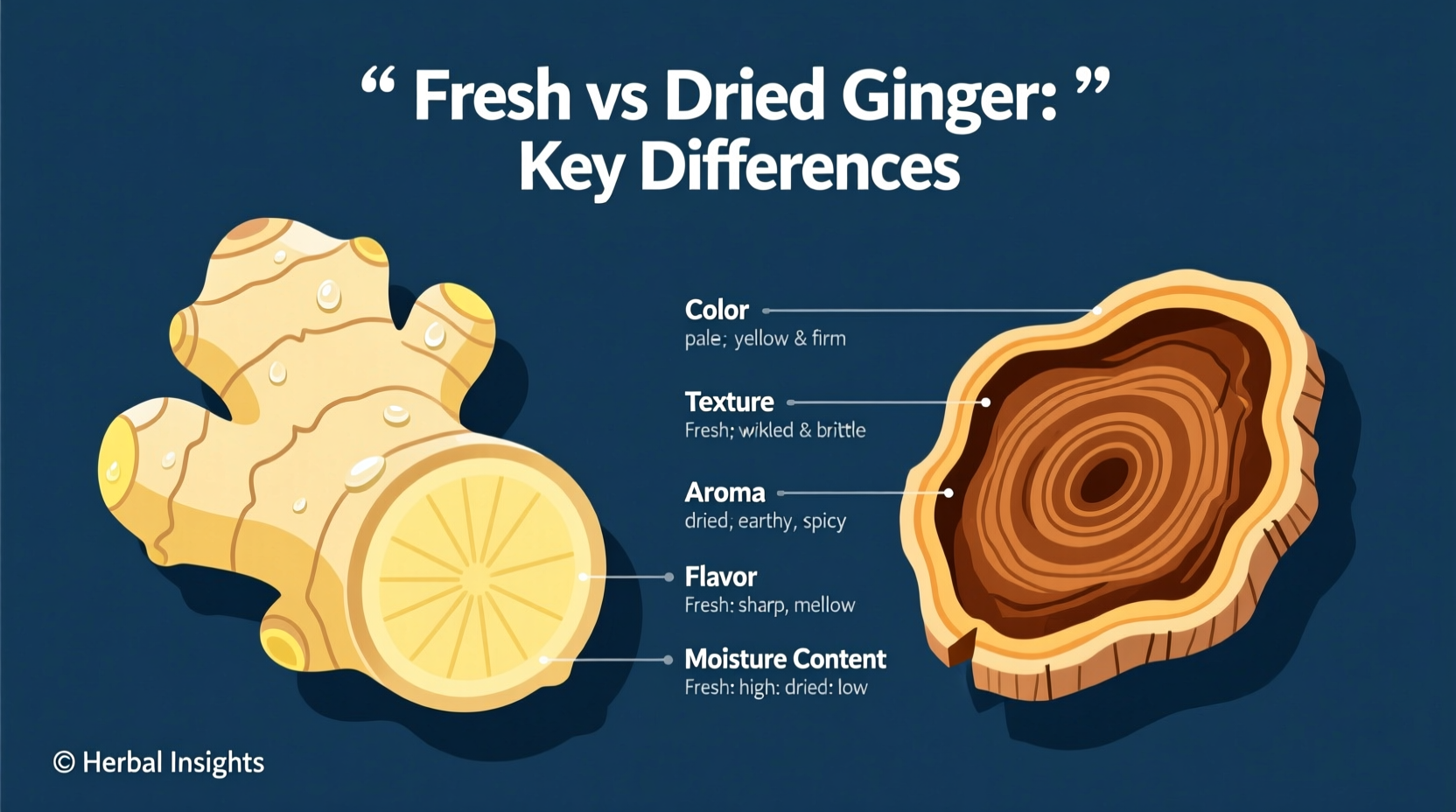
Ginger (Zingiber officinale) is a flowering plant whose rhizome—commonly called \"ginger root\"—is used widely as a spice and herbal remedy. Native to Southeast Asia, it has been cultivated for over 3,000 years and now features in cuisines across India, China, the Middle East, the Caribbean, and beyond. While often grouped with roots, ginger is technically an underground stem that stores nutrients and produces new shoots.
The two primary culinary forms are **fresh ginger** (the raw, peeled or grated rhizome) and **dried ginger** (typically ground into powder). These are not interchangeable without consequence. Each undergoes different processing methods that alter volatile compounds, water content, and enzymatic activity, resulting in distinct sensory profiles and functional roles in cooking.
Fresh ginger is harvested within months of growth and used immediately or stored short-term. Dried ginger starts as mature rhizomes left to cure for several weeks before peeling and grinding. This extended drying process concentrates certain compounds while degrading others, shifting both potency and character.
Key Characteristics: A Comparative Breakdown
The decision between fresh and dried ginger hinges on understanding their core differences. Below is a detailed comparison:
| Characteristic | Fresh Ginger | Dried Ginger (Ground) |
|---|---|---|
| Flavor Profile | Sharp, bright, citrusy, with peppery heat and slight sweetness. Contains zesty top notes and clean finish. | Warmer, earthier, more subdued. Lacks brightness; emphasizes woody, musty, and slightly bitter tones. |
| Aroma | Vibrant, lemony, with camphor-like freshness. Releases volatile oils when cut. | Muted, warm-spicy, reminiscent of nutmeg or cinnamon. Less aromatic due to oxidation during drying. |
| Heat Level | Higher perceived pungency due to gingerol content. Heat builds quickly but fades faster. | Milder initial bite, but longer-lasting warmth. Gingerol partially converts to shogaol (more stable, slightly hotter compound) during drying. |
| Color & Form | Pale yellow interior with tan skin. Sold whole, sliced, or pre-minced. Fibrous texture. | Light to medium brown powder. Uniform consistency, no fibrous strands. |
| Culinary Function | Used for aromatic base layers (e.g., sautéed with garlic), marinades, beverages, and raw applications. | Better suited for dry rubs, spice blends, baking, and long-cooked dishes where dispersion matters. |
| Shelf Life | Up to 3 weeks refrigerated, 6 months frozen. Degrades rapidly at room temperature. | 6–12 months in airtight container away from light and moisture. Loses potency over time. |
| Active Compounds | High in gingerols (anti-inflammatory, antioxidant). Enzymatically active when raw. | Gingerols degrade into shogaols and zingerone during drying, altering medicinal properties. |
Practical Usage: When and How to Use Each Type
Choosing between fresh and dried ginger should be guided by dish type, desired flavor trajectory, and method of preparation. Substitution without adjustment can lead to imbalance—either excessive sharpness or dull flatness.
Fresh Ginger in Cooking
Fresh ginger shines in dishes where vibrancy and aromatic lift are essential. Its juice and fibers release best when crushed, grated, or thinly sliced.
- Stir-fries and Sautéed Dishes: Add minced ginger early in the cooking process along with garlic and aromatics. Heated in oil, it blooms, releasing essential oils that infuse the entire dish.
- Marinades and Dressings: Grate directly into soy-based or citrus marinades for meats, tofu, or fish. In vinaigrettes, it adds a clean, spicy kick without sediment.
- Smoothies and Juices: A ½-inch knob blended into green smoothies or fresh carrot-ginger juice offers digestive benefits and zing.
- Teas and Infusions: Simmer sliced ginger in water for 10–15 minutes to extract full flavor. Add honey and lemon for immune support.
- Raw Applications: Thinly julienned in salads (e.g., Vietnamese green papaya salad) or pickled as a condiment.
Pro Tip: Freeze fresh ginger unpeeled. Grate it directly from frozen using a microplane—no need to thaw. This preserves enzymes and prevents waste from peeling.
Dried Ginger in Cooking
Ground ginger excels in recipes requiring even distribution and deep, rounded warmth rather than sharp punch.
- Baking: Essential in gingerbread, spiced cakes, cookies, and pumpkin pie. Pairs well with cinnamon, cloves, and nutmeg.
- Dry Rubs and Spice Blends: Used in garam masala, Chinese five-spice, and Caribbean jerk seasoning for background warmth.
- Long-Simmered Dishes: Curries, stews, and chutneys benefit from ground ginger’s ability to meld seamlessly into sauces over time.
- Herbal Preparations: Capsules, tinctures, and powdered supplements often use standardized dried extracts for consistent dosing.
Because dried ginger lacks the aqueous phase of fresh, it integrates differently in batters and doughs. It absorbs liquid, so in high-ratio baked goods, too much can dry out the crumb unless balanced with fat or moisture.
Variants & Types of Ginger Products
Beyond fresh and dried, several processed forms of ginger exist, each serving unique purposes:
1. Crystallized (Candied) Ginger
Made by simmering peeled ginger in sugar syrup and coating with granulated sugar. Chewy, sweet with lingering heat. Ideal for desserts, trail mixes, or chopping into biscuit dough.
2. Pickled Ginger (Gari)
Thinly sliced young ginger marinated in rice vinegar, sugar, and salt. Bright pink hue (from natural pigments or added beet juice). Served as a palate cleanser with sushi.
3. White vs. Black Dried Ginger
- White Ginger: Peeled before drying. Lighter color, milder taste. Most common in Western supermarkets.
- Black Ginger: Unpeeled and sun-dried. Darker, more fibrous, with stronger, earthier flavor. Common in traditional Indian and African preparations.
4. Liquid Extracts and Tinctures
Alcohol- or glycerin-based extracts of fresh or dried ginger. Used medicinally or in small amounts for flavoring beverages.
5. Ginger Juice
Pressed from fresh rhizomes. Highly concentrated, ideal for cocktails, dressings, or health tonics. Shelf-stable when pasteurized.
Chef’s Note: For maximum control, make your own ginger juice by grating fresh ginger and squeezing through cheesecloth. Store in ice cube trays for portioned use.
Comparison with Similar Ingredients
Ginger is sometimes confused with other pungent roots or spices. Here’s how it differs:
| Ingredient | Differences from Ginger |
|---|---|
| Galangal | Also a rhizome, but harder, paler, and more floral. Dominant in Thai tom yum soup. Lacks ginger’s heat; has piney, citrus notes. Not interchangeable. |
| Turmeric | Related plant, same family (Zingiberaceae). Earthy, slightly bitter, with minimal heat. Best known for vibrant yellow color and curcumin content. Often paired with ginger but functionally distinct. |
| Horseradish / Wasabi | All deliver pungency via volatile compounds, but target different sinuses. Horseradish and wasabi activate nasal passages instantly; ginger warms the throat gradually. Chemically unrelated. |
| Dried Mustard | Shares a slow-building heat, but mustard derives from glucosinolates, not gingerols. Flavor profile is sulfurous and tangy versus gingery-spicy. |
Practical Tips & FAQs
Can I substitute fresh ginger for ground—or vice versa?
Yes, but not on a 1:1 basis. As a general rule:
- ¼ teaspoon ground ginger ≈ 1 tablespoon freshly grated ginger
- Adjust to taste, especially in delicate dishes.
Substituting ground for fresh in stir-fries will lack textural contrast and aromatic burst. Using fresh in place of ground in cake may introduce excess moisture and fibrous bits.
How do I store fresh ginger properly?
Keep unpeeled rhizomes in a paper bag in the refrigerator's crisper drawer—up to three weeks. For longer storage, freeze whole or sliced. Do not wash until ready to use.
Does dried ginger lose potency over time?
Yes. Ground spices degrade in flavor and phytochemical content after six months. Test freshness by rubbing a pinch between fingers and inhaling—if aroma is faint, replace it.
Is one form healthier than the other?
Both offer benefits, but different ones. Fresh ginger contains higher levels of gingerol, linked to anti-nausea and anti-inflammatory effects. Dried ginger has elevated shogaol, which may have stronger antioxidant properties and better bioavailability in some studies. For nausea (e.g., morning sickness or motion sickness), clinical trials typically use standardized dried extracts.
\"In Ayurvedic practice, we differentiate between 'vrishya' (aphrodisiac) and 'deepana' (digestive stimulant) actions. Fresh ginger is preferred for immediate digestion, while dried is used in rejuvenative formulas for sustained energy.\" — Dr. Meera Patel, Integrative Herbalist
Which is better for colds and immunity?
Fresh ginger tea with lemon and honey remains a gold standard for symptomatic relief due to its volatile oils and soothing warmth. However, for preventive supplementation, encapsulated dried ginger provides consistent dosing.
Why does my recipe call for both fresh and dried ginger?
Some advanced recipes—particularly in Indian or Middle Eastern cuisines—use both to layer flavors: fresh for front-end brightness, dried for depth and longevity in the finish. This technique creates multidimensional spice profiles.
Summary & Key Takeaways
Fresh and dried ginger are not simply different forms of the same ingredient—they are distinct culinary tools with separate strengths. Recognizing these differences elevates cooking precision and flavor balance.
- Fresh ginger delivers bright, sharp, citrusy heat and is ideal for sautéed dishes, marinades, juices, and raw applications.
- Dried (ground) ginger offers a warmer, earthier, more integrated spice suitable for baking, dry rubs, and slow-cooked meals.
- They are not directly interchangeable; substitution requires ratio adjustments and consideration of moisture and texture.
- Processing changes the chemical makeup: fresh retains more gingerol, while dried develops shogaol and zingerone.
- Storage differs significantly: fresh lasts weeks refrigerated, dried lasts up to a year if sealed properly.
- Other forms—crystallized, pickled, juiced—expand ginger’s versatility beyond basic seasoning.
Final Recommendation: Keep both forms in your kitchen. Use fresh for dynamic, aromatic impact and dried for foundational warmth in spice blends and baked goods. Label your containers with purchase dates to ensure peak potency.
Understanding the science and tradition behind ginger transforms it from a mere spice into a strategic element of flavor architecture. Whether you're tempering a curry, crafting a cocktail, or soothing a sore throat, choosing the right form makes all the difference.




 浙公网安备
33010002000092号
浙公网安备
33010002000092号 浙B2-20120091-4
Comments
No comments yet. Why don't you start the discussion?