
For home cooks navigating the world of fresh chiles, choosing between jalapeño and serrano peppers can seem like a minor decision. Yet this choice significantly influences the heat, depth, and character of salsas, stews, marinades, and garnishes. While both are green, slender, and commonly found in Mexican cuisine, they are not interchangeable without consequence. Understanding their distinct heat levels, flavor profiles, textures, and ideal applications allows cooks to make intentional choices that elevate dishes rather than overpower them. This guide breaks down the essential differences between these two popular peppers, offering practical insights for everyday cooking.
Definition & Overview
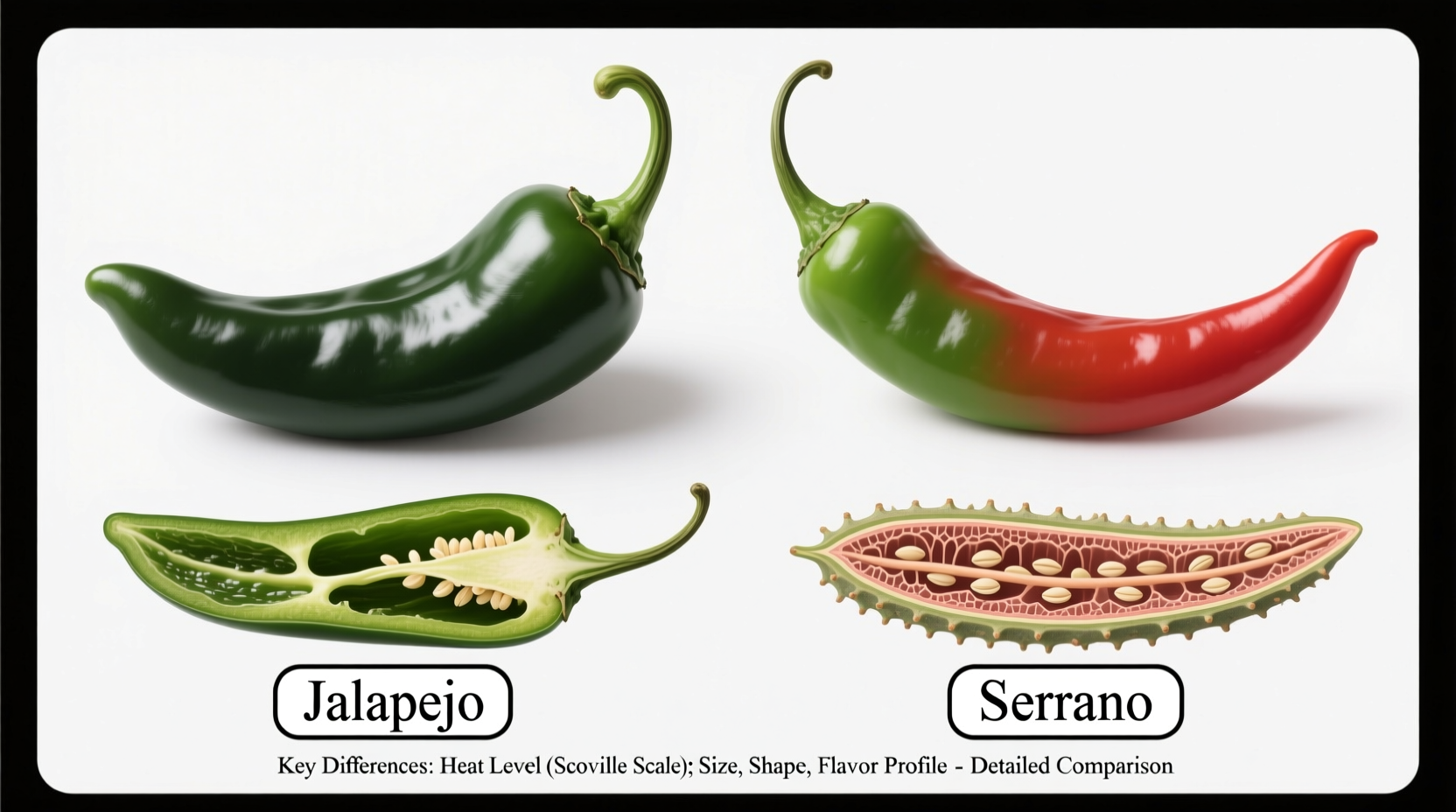
Jalapeño and serrano peppers are both members of the Capsicum annuum species, native to Mexico and central America. They belong to the nightshade family and have been cultivated for thousands of years as integral components of regional cuisines. Both are used fresh, roasted, pickled, smoked, or dried, and serve dual roles as flavor enhancers and sources of controlled heat.
The **jalapeño** (pronounced *hah-lah-PEN-yo*) originates from the city of Xalapa in Veracruz, Mexico—the source of its name. It is one of the most widely recognized chili peppers globally, frequently appearing in Tex-Mex dishes, nachos, poppers, and bottled hot sauces. Mature jalapeños range from bright green to deep red, though green is most common in commercial use.
The **serrano** (from *sierra*, meaning mountain) hails from the mountainous regions of Puebla and Hidalgo in Mexico. Smaller and more tapered than the jalapeño, it grows upright on the plant and is typically harvested while still green. Despite its size, the serrano packs a noticeably sharper punch, making it a favorite among those seeking bold heat without bulk.
Key Characteristics
While both peppers share a grassy, slightly vegetal base note, their differences become apparent upon closer examination. The following table outlines their core attributes:
| Characteristic | Jalapeño Pepper | Serrano Pepper |
|---|---|---|
| Size & Shape | 2–4 inches long; thick-walled, cylindrical with rounded tip | 1–2.5 inches long; slender, straight, thin-walled |
| Heat Level (Scoville Units) | 2,500–8,000 SHU | 10,000–23,000 SHU |
| Flavor Profile | Grassy, mildly sweet, earthy; becomes richer when roasted | Sharper, brighter, more pungent; clean heat with citrusy undertones |
| Color at Maturity | Green → Red (sometimes orange or yellow in cultivars) |
| Characteristic | Jalapeño Pepper | Serrano Pepper |
|---|---|---|
| Size & Shape | 2–4 inches long; thick-walled, cylindrical with rounded tip | 1–2.5 inches long; slender, straight, thin-walled |
| Heat Level (Scoville Units) | 2,500–8,000 SHU | 10,000–23,000 SHU |
| Flavor Profile | Grassy, mildly sweet, earthy; becomes richer when roasted | Sharper, brighter, more pungent; clean heat with citrusy undertones |
| Color at Maturity | Green → Red (sometimes orange or yellow in cultivars) | Green → Red, Brown, or Orange |
| Texture & Flesh | Thick, meaty walls; holds up well to grilling, stuffing | Thin, crisp flesh; excellent raw or lightly cooked |
| Shelf Life (Refrigerated) | Up to 3 weeks | 1–2 weeks |
| Culinary Function | Balanced heat + body; structural ingredient | Pure heat + brightness; accent ingredient |
Practical Usage: How to Use Each Pepper
The physical and thermal properties of jalapeños and serranos dictate how they perform in real-world cooking. Choosing the right pepper depends not just on desired spice level, but also on texture, moisture content, and integration into the dish.
Jalapeño: The Versatile Workhorse
Jalapeños are ideal when you want a moderate amount of heat paired with substantial texture. Their thick walls make them suitable for applications where structure matters:
- Stuffed and baked: Jalapeño poppers filled with cream cheese, wrapped in bacon, and grilled are a classic appetizer. The pepper holds its shape and absorbs smoky flavors during cooking.
- Roasted and blended: Roasting jalapeños over an open flame or under a broiler deepens their flavor, adding a subtle smokiness. Use in salsas verdes, ranchero sauce, or blended into guacamole for complexity.
- Pickled: Pickled jalapeños (often labeled \"sport peppers\" or \"barrel-cured\") add tang and mild heat to sandwiches, tacos, and nachos. The vinegar softens the flesh slightly while preserving crunch.
- In slow-cooked dishes: Add diced jalapeño early in chili, beans, or braises. The heat disperses evenly, and the flesh breaks down gently, contributing body.
Pro Tip: Remove the ribs and seeds to reduce heat significantly—up to 70% of capsaicin resides there. For a balanced kick, leave some inner membranes intact but discard the dense seed clusters.
Serrano: The Precision Heat Injector
Serranos deliver intense heat in a compact form. Their thin walls mean they cook quickly and integrate seamlessly into dishes without dominating by volume.
- Raw in salsas: Finely minced serranos are the backbone of authentic pico de gallo and fresh green salsas. Their crisp texture and sharp bite remain even when uncooked.
- Infused oils and dressings: Steep a sliced serrano in warm olive oil (cooled before use) to create a spicy infusion for drizzling over tacos or grilled vegetables.
- Garnish and finishing: Thinly sliced raw serrano adds visual appeal and a burst of heat to ceviche, soups, or seafood tostadas. A single slice can transform a dish.
- Blended into cocktails: Muddle a small piece in micheladas or bloody marys for a clean, fiery lift without fibrous residue.
Caution: Always wear gloves when handling serranos. Their high capsaicin content can irritate skin and eyes. Wash hands thoroughly afterward—even after glove removal.
Variants & Types
Both peppers come in various forms beyond the fresh whole version, each suited to different culinary needs.
Fresh Variants
- Mature (Red) Jalapeños: As jalapeños ripen to red, their heat increases slightly, and sweetness becomes more pronounced. These are often smoked to produce chipotles, which offer a deep, smoky, raisin-like flavor.
- Black Jalapeños: A rare heirloom variety with dark purple-to-black skin when mature. Slightly fruitier and hotter than standard green jalapeños.
- Yellow and Orange Serranos: Less common but available seasonally. These retain the serrano’s heat but introduce tropical fruit notes—ideal for fruity hot sauces.
- Golden Serrano: Starts green, turns golden-yellow when ripe. Offers similar heat with a honeyed edge, excellent in pickles or relishes.
Processed Forms
| Form | Jalapeño Use Case | Serrano Use Case |
|---|---|---|
| Dried | Rare; sometimes used whole in moles or ground into flakes | Occasionally dried whole; rehydrated for sauces or powdered |
| Smoked | Chipotle (smoked red jalapeño)—core ingredient in adobo sauce | Not traditionally smoked; lacks sufficient flesh for smoking process |
| Pickled | Common; sold in jars or barrels; used in sandwiches, pizzas | Less common but available; sharper, more aggressive tang |
| Flakes/Powder | Used in spice blends, rubs, seasoning salts | Rare commercially; best made at home for maximum freshness |
| Frozen | Pre-diced; convenient for salsas or cooking | Less available frozen; better used fresh due to texture loss |
Comparison with Similar Ingredients
Jalapeños and serranos are often confused with other small green chiles. Clarifying distinctions prevents recipe mishaps.
Jalapeño vs. Serrano
- Heat: Serranos are consistently 2–3 times hotter than jalapeños.
- Size: Jalapeños are larger and meatier; serranos are smaller and more fragile.
- Use: Jalapeños contribute body and moderate heat; serranos deliver concentrated fire and brightness.
- Substitution: Use half a serrano for every one jalapeño to match heat. Never substitute one-for-one unless aiming for extreme spice.
Serrano vs. Thai Bird’s Eye Chili
- Thai chilies reach 50,000–100,000 SHU—much hotter than serranos.
- Serranos have a greener, crisper profile; Thai chilies are fruitier and more floral.
- Thai chilies are common in Southeast Asian dishes; serranos are rooted in Mexican cuisine.
Jalapeño vs. Poblano
- Poblanos are milder (1,000–2,000 SHU) and heart-shaped.
- When dried, poblanos become ancho chiles—used in mole, not fresh salsas.
- Jalapeños are hotter and more versatile raw; poblanos excel when roasted and stuffed.
\"The difference between a good salsa and a great one often comes down to pepper selection. A serrano gives precision; a jalapeño gives comfort. Know which your dish needs.\" — Chef Elena Ruiz, Oaxaca Culinary Institute
Practical Tips & FAQs
How much heat do jalapeños and serranos really add?
Jalapeños provide noticeable but manageable heat—ideal for families or mixed palates. Serranos cross into \"bold\" territory; one whole pepper can dominate a quart of salsa. Always taste-test incrementally.
Can I substitute one for the other?
Yes, but adjust quantity. Replace one jalapeño with ½ to ⅔ of a serrano. Conversely, use 1.5 to 2 jalapeños per serrano for equivalent heat. Adjust based on rib and seed inclusion.
Do color changes affect heat?
Yes. Red jalapeños and red serranos are fully ripe and typically 10–20% hotter than their green counterparts, with added sweetness. Red serranos may develop subtle berry notes.
How should I store them?
Store both in the refrigerator crisper drawer in a paper bag or breathable container. Jalapeños last up to three weeks; serranos degrade faster (1–2 weeks) due to thinner skin. Do not wash until ready to use.
Can I freeze them?
Jalapeños freeze well—whole or chopped—for up to six months. Blanching is optional. Serranos lose texture when frozen and are best used fresh. If freezing, chop finely and use only in cooked dishes later.
Are there low-heat varieties?
Yes. Cultivars like ‘TAM Mild’ jalapeño or ‘Granada’ serrano are bred for reduced capsaicin. These are rare in supermarkets but available through specialty seed suppliers.
Why do some jalapeños have corking?
Corking—light tan scarring on the skin—is a natural stress response during growth. Contrary to myth, it does not reliably indicate higher heat, though some studies suggest a correlation. Corked jalapeños are perfectly safe and often preferred by chefs for appearance in gourmet markets.
Which is better for hot sauce?
Jalapeños yield smoother, milder sauces with body—ideal for creamy or smoky styles (e.g., chipotle mayo base). Serranos produce brighter, cleaner, spicier sauces perfect for table condiments. Many artisanal hot sauces blend both for balance.
Quick Checklist: Choosing the Right Pepper
- Need moderate heat and texture? → Jalapeño
- Want intense, clean heat in small amounts? → Serrano
- Stuffing or roasting? → Jalapeño
- Raw salsa or garnish? → Serrano
- Feeding sensitive palates? → Seed and devein jalapeño
- Seeking authenticity in Mexican street food? → Serrano in pico, jalapeño in guac
Summary & Key Takeaways
Jalapeño and serrano peppers, while visually similar and both staples of Mexican cuisine, serve distinctly different roles in the kitchen. The jalapeño is broader in application—its thick flesh and moderate heat making it ideal for stuffing, roasting, pickling, and blending into hearty dishes. The serrano, smaller and significantly hotter, functions as a precision tool for injecting sharp, bright heat into salsas, garnishes, and fresh preparations.
Understanding their Scoville ratings, flavor evolution with ripeness, and textural behavior during cooking empowers cooks to make informed decisions. Substitutions are possible but require careful adjustment. Storage, handling, and form (fresh, dried, smoked) further expand their utility across global cuisines.
Ultimately, the choice between jalapeño and serrano isn't about superiority—it's about intention. Whether building a comforting chili or crafting a vibrant taco topping, selecting the right pepper ensures flavor harmony and culinary success.
Next Step: Try making two versions of salsa verde—one with seeded jalapeño, one with minced serrano. Taste them side by side to experience the contrast in heat, brightness, and body. This simple experiment will refine your intuition for future recipes.




 浙公网安备
33010002000092号
浙公网安备
33010002000092号 浙B2-20120091-4
Comments
No comments yet. Why don't you start the discussion?