
When it comes to staple root vegetables in global diets, few are as ubiquitous or versatile as potatoes—both sweet and regular. While they share a place on dinner plates across cultures, their nutritional profiles diverge significantly, influencing everything from blood sugar response to antioxidant intake. Understanding these differences empowers home cooks, health-conscious eaters, and culinary professionals to make informed decisions based on dietary goals, flavor preferences, and physiological needs. This article provides a detailed, science-backed comparison of sweet potatoes and regular (white) potatoes, examining macronutrients, micronutrients, glycemic impact, culinary applications, and long-term health implications.
Definition & Overview
Sweet potatoes (Ipomoea batatas) are dicotyledonous plants belonging to the morning glory family, Convolvulaceae. Native to Central and South America, they have been cultivated for over 5,000 years and now feature prominently in cuisines from the American South to West Africa and East Asia. They grow as tuberous roots with smooth skin and moist flesh that ranges in color from pale yellow to deep orange and even purple.
Regular potatoes, often referred to as white or Irish potatoes, are Solanum tuberosum, part of the nightshade family. Originating in the Andes Mountains of South America, they were domesticated over 7,000 years ago and became a dietary cornerstone in Europe and North America after their introduction in the 16th century. These tubers have starchy, off-white flesh and thin brown or tan skin, though varieties vary widely in texture and use.
Despite common names suggesting kinship, sweet potatoes and white potatoes are not botanically related. Their similar culinary roles—as dense, energy-rich starch sources—stem from convergent evolution rather than shared genetics. This distinction is crucial when evaluating how each functions in the body and kitchen.
Key Characteristics
| Characteristic | Sweet Potato | Regular Potato |
|---|---|---|
| Flavor Profile | Sweet, earthy, caramel-like when roasted; subtle vegetal notes | Neutral, starchy, mildly earthy; becomes buttery when cooked |
| Aroma | Faintly floral, slightly nutty when baked | Mild, clean, potato-scented when boiled or steamed |
| Color/Flesh | Orange (most common), purple, white, yellow | Off-white, cream, sometimes yellowish |
| Texture (Cooked) | Moist, soft, creamy; some varieties hold shape well | Variably waxy or mealy; russets flake, reds hold form |
| Shelf Life (Raw, Pantry) | 3–4 weeks in cool, dark, dry conditions | 2–5 weeks depending on variety and storage |
| Culinary Function | Side dish, dessert base, puree, nutrient-dense alternative | Staple carbohydrate, thickener, comfort food base |
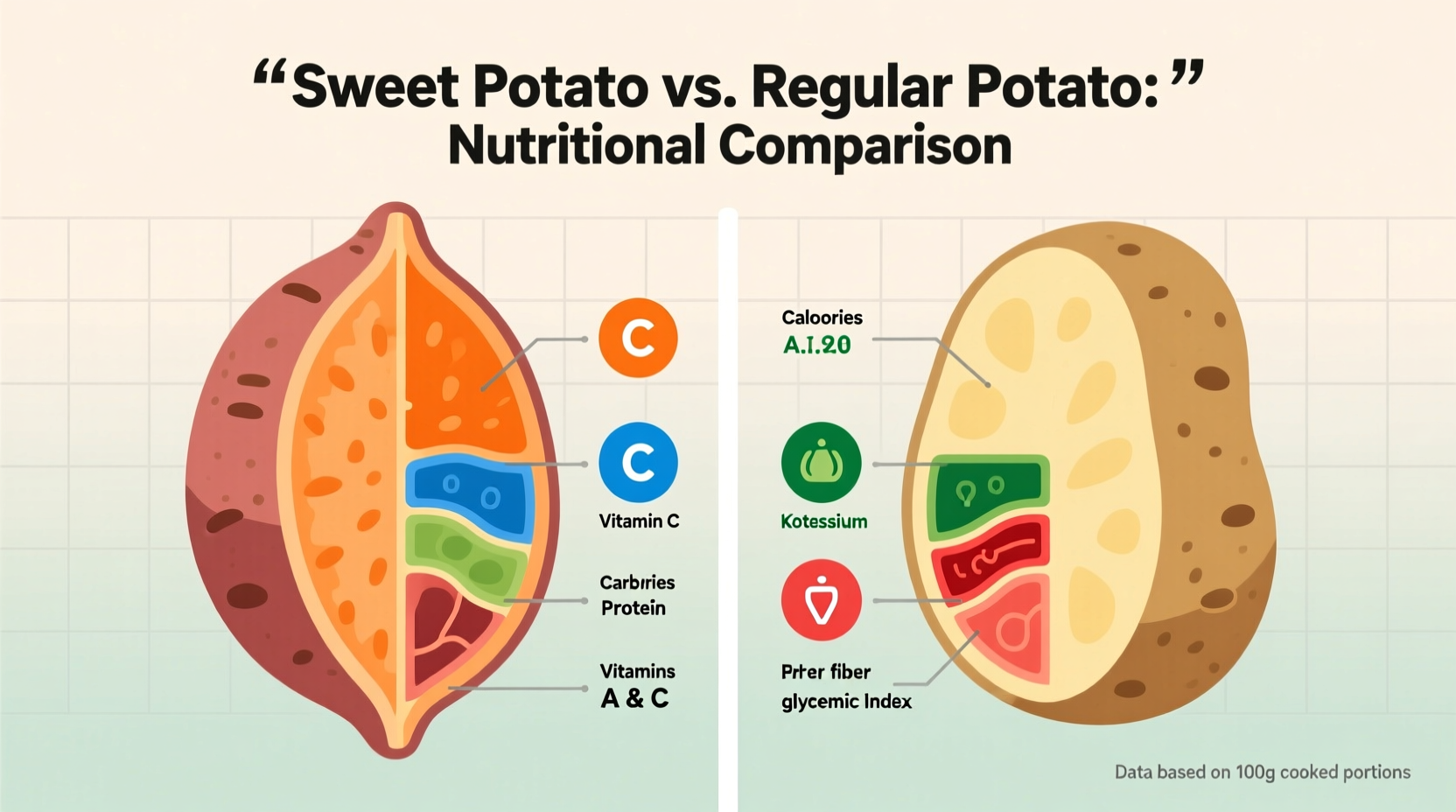
Nutritional Breakdown: Per 100g Cooked (Boiled, No Salt)
To assess true nutritional value, consider standard serving sizes and preparation methods. Boiling preserves most nutrients without adding fat or altering composition through high-heat reactions like roasting or frying. The following data is sourced from the USDA FoodData Central database.
| Nutrient | Sweet Potato (100g) | Regular Potato (100g) |
|---|---|---|
| Calories | 86 kcal | 87 kcal |
| Carbohydrates | 20.1 g | 19.7 g |
| Dietary Fiber | 3.0 g | 2.2 g |
| Sugars | 4.2 g | 0.8 g |
| Protein | 1.6 g | 2.0 g |
| Total Fat | 0.1 g | 0.1 g |
| Vitamin A (RAE) | 709 µg (79% DV) | 0 µg (0% DV) |
| Vitamin C | 21.7 mg (24% DV) | 11.4 mg (13% DV) |
| Potassium | 337 mg (7% DV) | 421 mg (9% DV) |
| Manganese | 0.3 mg (13% DV) | 0.2 mg (9% DV) |
| Glycemic Index (GI) | 44–70 (varies by prep) | 78–111 (high GI, esp. mashed/boiled) |
| Antioxidant Content | High (beta-carotene, anthocyanins in purple types) | Moderate (chlorogenic acid, flavonoids) |
The most striking difference lies in vitamin A content. Orange-fleshed sweet potatoes are among the richest natural sources of beta-carotene, which the body converts into retinol (active vitamin A). Just 100g provides nearly 80% of the daily value—critical for vision, immune function, and skin health. White potatoes contain none. Conversely, white potatoes edge out in potassium and protein, offering marginally more muscle-supportive and electrolyte-balancing minerals.
Practical Usage in Cooking
Both tubers serve as foundational ingredients but behave differently under heat and seasoning. Their unique compositions dictate optimal uses in everyday meals.
Sweet Potatoes: Best Applications
- Roasting: Enhances natural sweetness; toss cubed pieces with olive oil, smoked paprika, and rosemary for a savory side.
- Baking Whole: Ideal for nutrient retention; bake at 400°F (200°C) until tender (45–60 min). Top with Greek yogurt, black beans, and cilantro for a balanced meal.
- Pureeing: Creates silky soups or baby food. Blend cooked sweet potato with vegetable broth, ginger, and a pinch of cumin.
- In Baking: Substitute up to half the flour in muffins or pancakes with mashed sweet potato for moisture and natural sweetness.
Regular Potatoes: Best Applications
- Mashing: Russet or Yukon Gold varieties yield fluffy results. Use warm milk and minimal butter to keep fat content moderate.
- Boiling for Salads: Waxy types like red bliss retain shape. Cool and mix with mustard vinaigrette, celery, and hard-boiled eggs.
- Frying/Crisping: High-starch potatoes achieve crisp exteriors when pan-fried or roasted at high heat. Parboil first for perfect texture.
- Thickening Stews: Diced potatoes break down slightly during slow cooking, naturally thickening braises without flour.
Pro Tip: To maximize nutrient availability, consume sweet potatoes with a small amount of fat—such as olive oil or avocado—since beta-carotene is fat-soluble. For white potatoes, cooling them after cooking increases resistant starch content, improving gut health and lowering glycemic impact.
Variants & Types
Each category includes multiple cultivars suited to different purposes.
Sweet Potato Varieties
- Beauregard (Orange): Most common in U.S. supermarkets; moist, sweet, excellent for roasting and baking.
- Japanese (Satsuma-imo): Purple skin, pale yellow flesh; drier, chestnut-like flavor; ideal for tempura or steaming.
- Okinawan (Purple): Vibrant purple flesh rich in anthocyanins; holds shape well; used in desserts and dumplings.
- White Sweet Potato: Less sweet, drier texture; closer to white potato in taste; good for mashing or frying.
Regular Potato Varieties
- Russet: High-starch, fluffy when baked; best for fries, baked potatoes, and gnocchi.
- Yukon Gold: Medium-starch, buttery flavor; versatile for roasting, boiling, or mashing.
- Red Bliss: Waxy, low-starch; retains shape in salads and soups.
- Fingerling: Small, elongated; firm texture; gourmet choice for roasting with herbs.
- Blue/Purple Potatoes: Contain antioxidants; vibrant color fades slightly when cooked; great for visual appeal in dishes.
Comparison with Similar Ingredients
Confusion often arises between sweet potatoes, yams, and regular potatoes—especially in grocery stores where labeling is inconsistent.
| Feature | Sweet Potato | Yam | White Potato |
|---|---|---|---|
| Origin | Central/South America | West Africa, Asia | Andes, South America |
| Texture | Moist, soft (orange) | Very starchy, dry, fibrous | Variable: waxy to mealy |
| Skin Appearance | Smooth, reddish-brown | Rough, bark-like, shaggy | Thin, brown/tan |
| Availability (U.S.) | Widespread | Limited (ethnic markets) | Ubiquitous |
| Nutrition Focus | Vitamin A, fiber | Complex carbs, potassium | Energy, potassium, vitamin C |
\"In the United States, what’s labeled as 'yam' is almost always a soft variety of sweet potato. True yams are rarely found outside specialty import markets and bear little resemblance in taste or nutrition.\" — Dr. Lena Torres, Agricultural Ethnobotanist
Health Implications and Dietary Considerations
The debate over which is “healthier” depends on individual needs.
For Blood Sugar Management
Sweet potatoes generally have a lower glycemic index (GI), especially when boiled or cooled. Their higher fiber and complex carbohydrate structure lead to slower glucose release. However, baking can raise GI significantly—up to 94 for some preparations. White potatoes, particularly mashed or peeled and boiled, spike blood sugar rapidly due to rapid starch gelatinization. Cooling cooked white potatoes reduces this effect by forming resistant starch, beneficial for gut microbiota.
For Weight Management
Both are low-fat, whole-food carbohydrates. Sweet potatoes offer greater satiety per calorie due to higher fiber and water content. In controlled studies, participants reported feeling fuller after consuming sweet potatoes versus white potatoes of equal weight.
For Immune Support and Longevity
The high beta-carotene content in orange sweet potatoes plays a documented role in reducing oxidative stress and supporting immune cell function. Populations with diets rich in carotenoid-containing vegetables show lower rates of chronic disease. Purple sweet potatoes and blue potatoes both contain anthocyanins—potent anti-inflammatory compounds linked to improved cognitive and cardiovascular outcomes.
Practical Tips & FAQs
Should I peel them?
No need. Both skins are edible and nutrient-dense. Sweet potato skin contains additional fiber and antioxidants. White potato skin houses much of the potassium and iron. Wash thoroughly before cooking.
Can I substitute one for the other?
Yes, but adjust expectations. Replace white potato with sweet potato in soups, hashes, or casseroles for added sweetness and nutrition. Reduce added sugar elsewhere. For neutral-flavored dishes like gratins or croquettes, use white sweet potatoes or blend types.
How should I store them?
Keep both in a cool, dark, well-ventilated place—never refrigerate raw. Cold temperatures alter starch structure, leading to gritty texture upon cooking. Avoid storing near onions, which emit gases that promote sprouting.
Are sweet potatoes better for diabetics?
Generally, yes—but portion control matters. A medium sweet potato (130g) has about 30g of carbs, similar to white potato. Pair with protein and healthy fats to blunt glucose spikes. Monitor personal response using continuous glucose monitoring if possible.
What about frying?
Deep-frying either increases calorie density and acrylamide formation (a potential carcinogen formed in high-heat starchy cooking). Baking or air-frying produces safer, lower-calorie alternatives while preserving flavor.
Storage Checklist:
- Store in mesh bag or basket for airflow
- Temperature: 50–60°F (10–15°C)
- Do not wash before storage—moisture encourages rot
- Use within 3–5 weeks for peak quality
- Discard if soft, moldy, or heavily sprouted
Summary & Key Takeaways
Sweet potatoes and regular potatoes are nutritionally distinct despite their culinary overlap. Sweet potatoes excel in vitamin A, fiber, and antioxidant content, making them ideal for immune support and sustained energy. Regular potatoes offer slightly more potassium and protein and remain a valuable source of complex carbohydrates, especially when prepared mindfully.
The choice between them should reflect your health goals:
- Choose sweet potatoes for enhanced micronutrient density, lower glycemic impact, and anti-inflammatory benefits.
- Opt for white potatoes when seeking a neutral-flavored, high-energy starch suitable for diverse preparations—from rustic mash to delicate pommes Anna.
- Embrace both as part of a varied diet. Rotating root vegetables ensures broader phytonutrient exposure and prevents dietary monotony.
Ultimately, neither is inherently superior. What matters most is preparation method, portion size, and overall dietary context. By understanding their unique strengths, you can harness the full potential of these ancient, nourishing staples in modern, health-forward cooking.




 浙公网安备
33010002000092号
浙公网安备
33010002000092号 浙B2-20120091-4
Comments
No comments yet. Why don't you start the discussion?