
When selecting ribs for a meal, understanding the physical dimensions and proportions of beef versus pork ribs is essential—not only for portion planning but also for cooking technique, flavor development, and overall dining experience. While both are celebrated for their rich taste and tender texture when properly prepared, beef and pork ribs differ significantly in size, bone structure, meat distribution, and yield. These differences influence everything from grill time to serving sizes and recipe selection. For home cooks planning a barbecue, family dinner, or competitive smoking session, knowing how these cuts compare ensures better results and avoids common pitfalls such as undercooking large beef rib sections or over-seasoning smaller pork racks. This guide provides a comprehensive, practical analysis of beef and pork rib sizes, supported by anatomical context, culinary applications, and real-world usage tips.
Definition & Overview
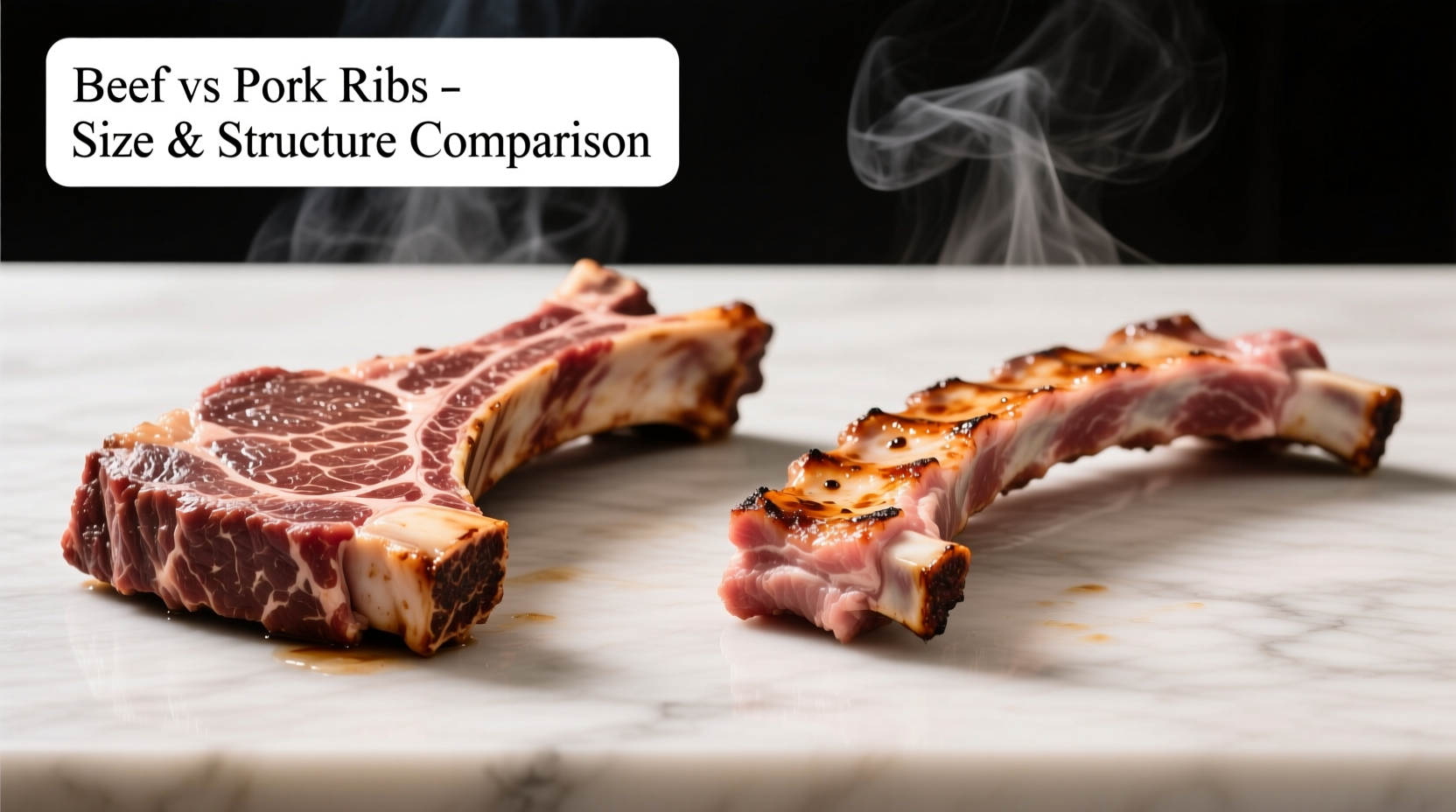
Ribs refer to cuts of meat taken from the rib section of an animal—specifically between the shoulder and loin. In culinary practice, \"ribs\" typically denote either pork spare ribs, baby back ribs, or beef short ribs and plate ribs. Both pork and beef ribs originate from animals raised globally for meat production, with pork having deeper roots in European, Asian, and Southern U.S. cuisines, while beef ribs are staples in Texan barbecue, Argentine asado, and Korean galbi traditions.
Pork ribs come primarily in three forms: baby back ribs (from the top of the rib cage near the spine), spare ribs (cut from the lower belly side), and St. Louis-style ribs (a trimmed version of spare ribs). Beef ribs, on the other hand, are categorized into two main types: short ribs (from the brisket or plate section) and back ribs (from the rib primal, though less commonly available than their pork counterparts).
The distinction in origin affects not just flavor and fat content but also the most noticeable difference: size. A full understanding of rib anatomy allows cooks to anticipate cooking times, select appropriate seasonings, and manage heat zones during grilling or smoking.
Key Characteristics
| Characteristic | Beef Ribs | Pork Ribs |
|---|---|---|
| Average Length per Rib | 6–10 inches (15–25 cm) | 4–7 inches (10–18 cm) |
| Bone Diameter | Thick, dense bones; up to 1.5 inches (3.8 cm) | Thin, curved bones; ~0.5 inch (1.3 cm) |
| Meat Thickness | Substantial marbling and thick meat layers | Leaner, more uniform meat coverage |
| Weight per Full Rack | 4–8 lbs (1.8–3.6 kg) | 2–4 lbs (0.9–1.8 kg) |
| Fat Content | High intramuscular fat; rich marrow | Moderate external fat; less marbling |
| Cooking Time (Smoked) | 5–8 hours at 225°F (107°C) | 3–5 hours at 225°F (107°C) |
| Servings per Rack | 2–4 adults | 2–3 adults |
This comparative data highlights that beef ribs are consistently larger, heavier, and require longer cooking due to greater connective tissue and muscle density. Pork ribs, while flavorful, are more compact and suited to quicker preparations or tighter timelines.
Variants & Types
Types of Pork Ribs
- Baby Back Ribs: Curved, shorter ribs taken from where the rib meets the spine. Typically 3–6 inches long, leaner, and more tender. A full rack contains 10–13 ribs and weighs about 1.5–2.5 lbs.
- Spare Ribs: Cut from the lower chest area, longer and flatter than baby backs, with more fat and connective tissue. Average length: 6–8 inches. Weighs 3–4 lbs per untrimmed rack.
- St. Louis-Style Ribs: Spare ribs trimmed into a neat rectangular shape by removing the sternum and cartilage. More uniform appearance and even cooking. Slightly lighter than full spare racks.
Types of Beef Ribs
- Beef Short Ribs (Plate Ribs): Cut from the 6th through 8th ribs of the cow, known for heavy marbling and substantial meat above the bone. Sold as English-cut (cross-sectioned), flanken-style (thin, across the bone), or boneless. Individual ribs can be 6–10 inches long and 1.5–2 inches thick.
- Beef Back Ribs: Taken from the rib roast area after the ribeye is removed. Less meaty than short ribs but still flavorful, with a broad, flat bone structure. Often overlooked but excellent for slow roasting.
- Dinosaur Ribs / Lambchop-Cut Ribs: Thick-cut, meat-heavy short ribs sometimes marketed for dramatic presentation. Can weigh over 1 lb each and serve two people alone.
Pro Tip: When purchasing beef ribs, ask your butcher for “first-cut” or “meaty” short ribs—these have higher meat-to-bone ratios and deliver superior eating quality compared to leaner second cuts.
Comparison with Similar Ingredients
Despite visual similarities, beef and pork ribs are not interchangeable without adjustments to cooking method, seasoning, and timing. The following table outlines key distinctions beyond size:
| Factor | Beef Ribs | Pork Ribs |
|---|---|---|
| Flavor Profile | Deep, beefy, mineral-rich with umami depth from marrow | Sweeter, milder, slightly nutty; absorbs smoke and rubs well |
| Texture When Cooked | Lush, fall-off-the-bone with gelatinous mouthfeel | Tender yet slightly chewy; retains structural integrity |
| Smoke Penetration | Slower due to thickness; benefits from extended low smoking | Rapid absorption; ideal for 3–4 hour smokes |
| Common Seasoning Approach | Simple salt-and-pepper (Texas-style) or coffee-chili dry rubs | Sweet-smoky blends with brown sugar, paprika, garlic |
| Preferred Cooking Method | Low-and-slow smoking, braising, or reverse sear | Grilling, smoking, or oven-roasting with glaze |
\"Beef ribs aren't just bigger pork ribs—they're a different beast entirely. You need to respect the mass, the collagen, and the time it takes to render them perfectly.\" — Aaron Franklin, Franklin Barbecue
Practical Usage
Selecting between beef and pork ribs depends on event scale, equipment, and desired outcome. Here’s how to use each effectively:
Using Pork Ribs in Home Cooking
- Trim excess fat if using spare ribs; leave some for moisture retention.
- Apply a balanced dry rub (e.g., 3 parts brown sugar, 2 parts smoked paprika, 1 part garlic powder, salt, black pepper).
- Smoke at 225°F (107°C) for 3 hours, wrap in foil with apple juice and butter, cook 1–2 more hours (3-2-1 method).
- Glaze during final 30 minutes using BBQ sauce or honey-mustard mixture.
- Rest 15 minutes before serving.
Pork ribs work well on standard backyard grills or electric smokers. Their moderate size makes them ideal for weeknight meals or small gatherings. One full rack comfortably feeds two hungry adults, especially when paired with sides like coleslaw or cornbread.
Using Beef Ribs in Professional and Home Kitchens
- Dry-brine overnight with coarse kosher salt (1/2 tsp per pound) to enhance crust formation. <2> Season generously with cracked pepper, garlic powder, and optional espresso powder for bark development.
- Smoke at 225°F (107°C) until internal temperature reaches 165°F (74°C)—this may take 4–6 hours depending on rib thickness. <4> Wrap tightly in double-layer foil or butcher paper with a splash of beef broth or red wine, return to smoker until probe-tender (203°F+ / 95°C). <5> Rest for 60–90 minutes, then slice or pull apart.
Due to their size and weight, beef ribs benefit from commercial-grade smokers or offset barrel pits that maintain consistent temperatures over many hours. However, home chefs with pellet grills or Dutch ovens can achieve excellent results via hybrid methods—smoking initially, then finishing in the oven.
Expert Insight: For maximum tenderness, cook beef ribs to an internal temperature of at least 203°F (95°C). At this point, collagen fully converts to gelatin, yielding a luxurious, melt-in-the-mouth texture.
Practical Tips & FAQs
Q1: Are beef ribs always larger than pork ribs?
A1: Yes, in nearly every measurable dimension—length, width, bone diameter, meat thickness, and overall weight—beef ribs exceed pork ribs. Even the smallest beef rib cut (back ribs) tends to be heavier and denser than a full rack of baby backs.
Q2: How do I adjust recipes when substituting one for the other?
A2: Direct substitution is not recommended without recalculating cooking time and seasoning volume. Use 1.5 pounds of pork ribs per person as a baseline; for beef ribs, reduce to 0.75–1 pound per person due to higher meat density and richer flavor.
Q3: Can I cook both types on the same grill?
A3: Technically yes, but not simultaneously unless using zone heating. Beef ribs require longer exposure to low heat and should be placed in the most stable temperature zone. Pork ribs can be added later or cooked separately to avoid overcooking.
Q4: Which type offers better value per pound?
A4: Value depends on priorities. Pork ribs are cheaper per pound ($3–$6/lb), but beef ribs offer more dramatic presentation and deeper flavor. When factoring in edible yield, high-quality pork ribs provide more consistent meat-to-bone ratio, whereas premium beef ribs justify cost through indulgence and novelty.
Q5: Do size differences affect serving suggestions?
A5: Absolutely. Pork ribs are suitable for finger-food platters, sandwiches (pulled rib tacos), or appetizer portions. Beef ribs are centerpieces—best served whole or halved for sharing, often accompanied by minimal sides to highlight their richness.
Storage & Shelf Life
- Refrigeration: Raw ribs last 3–5 days in vacuum-sealed packaging; store in coldest part of fridge.
- Freezing: Wrap tightly in plastic and foil; freeze up to 6 months. Thaw slowly in refrigerator (24–48 hours).
- Cooked Leftovers: Store in airtight container for 3–4 days. Reheat gently in oven at 275°F (135°C) with moisture to prevent drying.
Substitutions
In recipes calling for pork ribs, lamb ribs or veal ribs can mimic size and texture, though flavor will vary. For beef rib substitutes, consider chuck roast or oxtail—both contain abundant collagen and respond well to long braise times, though they lack the iconic rib structure.
Summary & Key Takeaways
Understanding the size differences between beef and pork ribs is fundamental to successful preparation and service. Beef ribs are markedly larger, heavier, and richer, demanding extended cooking and robust equipment. They shine in celebratory settings where bold flavors and impressive presentation matter. Pork ribs, while smaller, offer versatility, faster turnaround, and wide appeal across global cuisines.
Key points to remember:
- Beef ribs average 6–10 inches long and weigh 4–8 lbs per rack; pork ribs are 4–7 inches and 2–4 lbs.
- Beef ribs require 5–8 hours of low-temperature cooking; pork ribs typically need only 3–5 hours.
- The thicker bones and dense connective tissue in beef ribs necessitate precise temperature control and resting periods.
- Pork ribs absorb sweet and smoky flavors readily, making them ideal for complex rubs and sauces.
- Portion planning must account for the sheer mass of beef ribs—one rack can feed multiple guests.
Final Recommendation: Choose pork ribs for weekday dinners, crowd-pleasing menus, or beginner barbecue projects. Reserve beef ribs for special occasions, competitions, or when showcasing mastery of slow-cooked meats. Knowing the size—and what it implies—ensures you match the cut to the occasion, equipment, and expectations.




 浙公网安备
33010002000092号
浙公网安备
33010002000092号 浙B2-20120091-4
Comments
No comments yet. Why don't you start the discussion?