
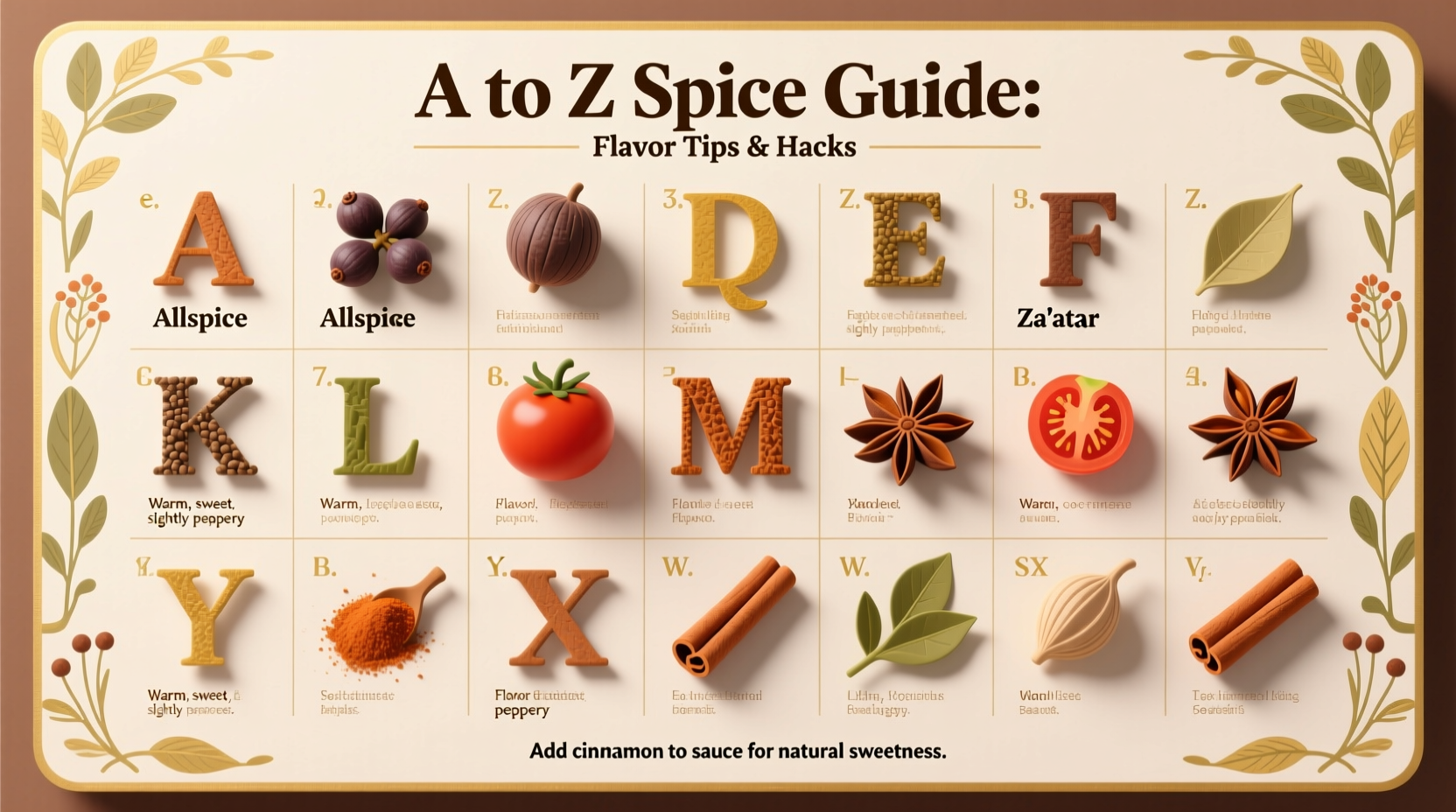
Spices are the silent architects of flavor, transforming simple ingredients into memorable meals. From the warmth of cinnamon in morning oatmeal to the smoky punch of paprika in a stew, each spice carries a unique sensory signature and cultural history. Yet, navigating the vast world of spices—especially when labels blur or substitutions fail—can be overwhelming. This comprehensive A to Z guide demystifies 26 essential spices, offering clear flavor profiles, practical usage tips, expert pairings, and pro-level hacks that elevate everyday cooking. Whether you're building a pantry from scratch or refining your technique, this guide serves as both reference and inspiration.
Definition & Overview
Spices are aromatic plant-derived substances used in small quantities to enhance the taste, color, and aroma of food. Unlike herbs, which typically come from the leafy parts of plants, spices originate from seeds, bark, roots, fruits, or flower buds. Most have tropical origins and were historically traded along ancient routes, shaping global cuisines. Today, they remain central to flavor development in nearly every culinary tradition—from Indian garam masala to Moroccan ras el hanout. Understanding their individual characteristics allows cooks to layer flavors intentionally, balance heat, and create depth without relying on excess salt or fat.
Key Characteristics: The A–Z Breakdown
Each spice contributes distinct qualities to a dish. Below is an alphabetical overview of 26 foundational spices, including flavor profile, heat level, primary use, and shelf life. Use this as a quick-reference guide before diving into detailed applications.
| Spice | Flavor Profile | Heat Level (1–5) | Culinary Function | Shelf Life (Whole/Ground) |
|---|---|---|---|---|
| Allspice | Warm, clove-like with notes of cinnamon and nutmeg | 2 | Braising, pickling, Caribbean jerk seasoning | 4 years / 2 years |
| Basil (dried) | Sweet, slightly peppery, herbal | 1 | Italian sauces, tomato dishes, rubs | 3 years / 1.5 years |
| Cardamom | Fragrant, citrusy, eucalyptus-like | 1 | Desserts, chai, Middle Eastern rice | 4 years / 2 years |
| Cayenne | Sharp, pungent, fiery | 5 | Heat booster in soups, sauces, marinades | 3 years / 1 year |
| Cinnamon | Sweet, woody, warm | 1 | Baking, curries, spiced beverages | 4 years / 2 years |
| Coriander (seed) | Citrusy, floral, slightly sweet | 1 | Curries, sausages, pickles | 4 years / 2 years |
| Cumin | Earthy, nutty, slightly bitter | 2 | Mexican, Indian, Middle Eastern staples | 4 years / 2 years |
| Curry Leaves | Nutty, curry-scented, faintly bitter | 1 | South Indian tempering, chutneys | Freezes well / 6 months dried |
| Dill Seed | Grassy, caraway-like, tangy | 1 | Pickling, breads, potato salads | 3 years / 1.5 years |
| Fennel Seed | Anise-like, sweet licorice | 1 | Italian sausages, braised fish, digestion aids | 4 years / 2 years |
| Ginger (dried) | Warm, sharp, slightly sweet | 2 | Baking, stir-fries, spice blends | 3 years / 1.5 years |
| Mustard Seed | Pungent, sharp when crushed | 2–3 | Tempering, pickling, mustard sauce base | 4 years / 2 years |
| Nutmeg | Warm, sweet, nutty | 1 | Dairy sauces, baked goods, mashed potatoes | 8 years / 1 year |
| Onion Powder | Concentrated savory, umami-rich | 1 | Rubs, soups, stews, seasoning blends | 3 years / 1.5 years |
| Paprika | Earthy, sweet to smoky-hot | 1–4 | Goulash, deviled eggs, color enhancement | 3 years / 1 year |
| Peppercorns (black) | Pungent, floral, mildly hot | 3 | Universal seasoning, grinders, marinades | 5 years / 2 years |
| Quatre Épices | Warm, balanced blend (pepper, cloves, nutmeg, ginger) | 2 | French charcuterie, stews, pâtés | 2 years (blend) |
| Red Pepper Flakes | Spicy, fruity, variable heat | 3–4 | Pasta, pizza, chili oil infusion | 2 years / 1 year |
| Saffron | Floral, honeyed, metallic nuance | 1 | Paella, risotto, biryani, luxury dishes | 5 years (threads) |
| Turmeric | Earthy, slightly bitter, peppery | 1 | Curries, golden milk, anti-inflammatory boost | 3 years / 1 year |
| Uzazi | Pungent, numbing, citrus-tinged (West African) | 3 | Stews, soups, pepper soup base | 2 years (berries) |
| Vanilla (bean/powder) | Rich, creamy, floral-sweet | 1 | Baking, custards, infusions | 5 years / 2 years |
| Wheat-based Spices? None — but Wheat-free Note: | N/A – No true spice derived from wheat | — | Use caution with blends; check for fillers | — |
| Xanthoxylum (Sichuan Peppercorn) | Citrusy, floral, tingling numbness | 1 (numbing, not hot) | Mapo tofu, dan dan noodles, dry pots | 3 years / 1 year |
| Yuzu Kosho (fermented citrus-chile paste) | Spicy, bright, fermented citrus | 3–4 | Seafood, ramen, dressings | 1 year refrigerated |
| Zest (Lemon/Lime/Orange) | Fresh, volatile oils, aromatic | 1 | Finishing, baking, compound butter | 1 month dried / Fresh best |
Practical Usage: How to Use Each Spice Effectively
Understanding how and when to apply spices separates competent cooks from confident ones. Below are actionable techniques, ratios, and real-world applications for key spices.
Toast Dry Spices Before Grinding
Whole spices like cumin, coriander, and fennel release far more aroma when lightly toasted in a dry skillet over medium heat for 1–2 minutes until fragrant. Cool before grinding. This step is non-negotiable in Indian, Middle Eastern, and North African cuisines.
Bloom Spices in Oil
Adding ground spices like turmeric, paprika, or cayenne to hot oil for 30 seconds before adding liquids deepens their flavor and removes raw notes. This is standard in curries, soups, and tomato sauces.
Pro Tip: For maximum impact, combine blooming with toasting. Toast whole cumin seeds, crush slightly, then bloom in oil before adding onions. This builds a foundational flavor layer unmatched by pre-ground shortcuts.
Layer Heat Strategically
Use cayenne for immediate heat, red pepper flakes for texture and delayed burn, and Sichuan peppercorns for tingly complexity. In a chili, start with toasted cumin and coriander, bloom paprika, then finish with a pinch of cayenne and flaked chiles for dimension.
Use Freshly Grated Nutmeg in Dairy-Based Dishes
A quarter-teaspoon of freshly grated nutmeg elevates béchamel, mac and cheese, or scalloped potatoes. Pre-ground loses potency quickly and often contains fillers.
Infuse Liquids with Whole Spices
Add cinnamon sticks, cardamom pods, or vanilla beans to poaching liquids, rice water, or simple syrups. Remove before serving. One pod per cup of liquid is sufficient.
Finish with Citrus Zest
Lemon or orange zest added at the end of cooking brightens heavy dishes like stews or roasted vegetables. Use a microplane for fine shreds without pith.
Variants & Types: Choosing the Right Form
Many spices come in multiple forms, each suited to specific uses.
Cinnamon: Ceylon vs. Cassia
- Ceylon (\"true\" cinnamon): Delicate, layered, less sweet. Ideal for desserts and delicate sauces. Higher price, lower coumarin (safer for daily use).
- Cassia (common grocery store cinnamon): Stronger, hotter, more common. Best in robust dishes like curries or spiced meat rubs.
Paprika: Sweet, Smoked, Hot
| Type | Best Used In | Substitution Caution |
|---|---|---|
| Sweet Paprika | Deviled eggs, chicken paprikash | Can replace smoked in a pinch, but lacks depth |
| Smoked Paprika (Pimentón) | Paella, bean stews, grilled meats | Do not substitute for hot unless aiming for smoke + heat |
| Hot Paprika | Spicy chorizo, Hungarian goulash | Adjust quantity carefully—can overpower |
Pepper: Whole, Cracked, Ground
- Whole peppercorns: For pickling brines, long simmers (remove before serving).
- Cracked pepper: Adds texture to steak crusts, artisan breads.
- Freshly ground: Essential for table use and finishing sauces.
Comparison with Similar Ingredients
Confusion between similar spices leads to flawed dishes. Clarify these common mix-ups.
Coriander Seed vs. Cilantro
Though from the same plant (Coriandrum sativum), the seed and leaf are vastly different. Coriander seed is warm and citrusy; cilantro leaf is polarizing, soapy to some, fresh to others. Never substitute one for the other.
Fennel Seed vs. Anise Seed
- Fennel: Mild, crunchy, used in Italian sausage.
- Anise: Stronger licorice punch, common in Chinese five-spice and Middle Eastern sweets.
Use anise sparingly; it dominates easily.
Ginger (Fresh vs. Dried)
\"Fresh ginger brings zesty brightness to stir-fries and teas, while dried ground ginger offers deeper warmth in cookies and chai. They’re not interchangeable in equal measures—one teaspoon fresh ≈ half-teaspoon dried.\"
— Chef Amara Nkwo, Culinary Instructor, Institute of Global Flavors
Turmeric vs. Saffron
Both yellow, but only saffron delivers floral complexity. Turmeric provides earthiness and color at a fraction of the cost. In paella, use both: saffron for aroma, turmeric for hue if saffron is limited.
Practical Tips & FAQs
How should I store spices?
Keep in airtight glass jars away from heat, light, and moisture—never above the stove. Whole spices last significantly longer than ground. Label with purchase date.
How do I know if a spice is stale?
Stale spices lose aroma and vibrancy. Crush a pinch between fingers and smell: if faint or musty, replace. Ground spices should never clump.
What are reliable spice substitutions?
- No allspice? Use ½ cinnamon + ½ clove.
- No cardamom? Try a pinch of nutmeg + green ginger.
- No za’atar? Mix thyme, sumac, sesame seeds.
Are spice blends worth buying?
Commercial blends vary in quality. Garam masala, curry powder, and berbere are better when homemade. However, reputable brands like Diaspora Co. or Rumi Spice offer clean, vibrant options.
Can I grow my own spices?
Yes—turmeric and ginger rhizomes can be planted in warm climates. Vanilla requires greenhouse conditions. Dried herbs like oregano or thyme are easier for home growers.
How much spice should I use?
General rule: ¼ tsp ground spice per serving. Adjust based on potency. Always taste and layer gradually.
Case Study: Building a Flavor Base
In a classic Indian dal, toast 1 tsp cumin seeds in oil until they pop. Add ½ tsp turmeric, 1 tsp coriander, and ¼ tsp chili powder. Bloom for 30 seconds, then add onions. This sequence creates a flavor foundation that permeates the entire dish—far superior to dumping all spices at once.
Summary & Key Takeaways
Mastering spices is about understanding their individual voices and knowing how to harmonize them. Prioritize whole spices whenever possible, toast and grind them fresh, and store properly to preserve potency. Learn the difference between similar ingredients to avoid flavor missteps. Use blooming and layering techniques to build depth, and don’t underestimate the power of finishing touches like citrus zest or cracked pepper.
The A to Z guide above equips you with precise knowledge—from the warming sweetness of allspice to the electric tingle of Sichuan peppercorns. Apply these insights consistently, and you’ll develop an intuitive sense of balance, heat, and aroma that transforms ordinary meals into extraordinary experiences.
Keep this guide bookmarked, and revisit it each time you explore a new spice. Your palate—and pantry—will thank you.




 浙公网安备
33010002000092号
浙公网安备
33010002000092号 浙B2-20120091-4
Comments
No comments yet. Why don't you start the discussion?