
Fleas are more than just a nuisance—they’re relentless pests that can rapidly infest your home and torment your pets. Cat owners often face recurring flea problems because these insects reproduce quickly and hide in hard-to-reach areas. A surface-level vacuum won’t cut it. To break the flea life cycle and reclaim a healthy living space, you need a comprehensive deep-cleaning strategy. This guide walks you through every critical step—from identifying hotspots to treating your pet and home simultaneously—so you can finally eliminate cat fleas for good.
Understanding the Flea Life Cycle
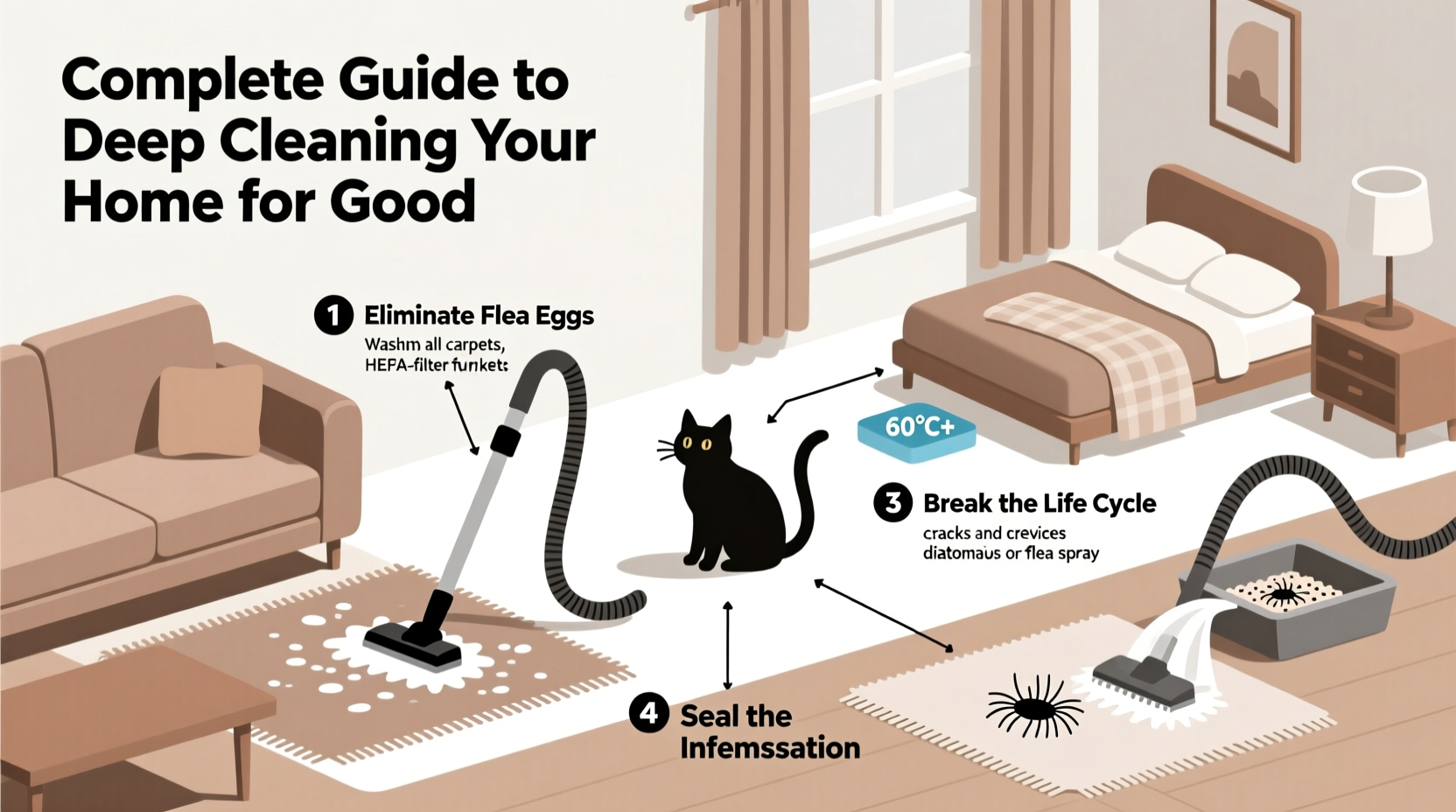
Fleas go through four stages: egg, larva, pupa, and adult. Adult fleas lay eggs on your cat, but these fall off into carpets, furniture, and floor cracks within hours. Eggs hatch into larvae that feed on organic debris and avoid light, burrowing deep into fibers. After spinning cocoons, they enter the pupal stage, which can last weeks or even months. Pupae are highly resistant to chemicals and environmental changes, making them the hardest stage to kill.
The entire cycle can repeat in as little as 14–30 days under ideal conditions (warm and humid). This rapid reproduction means that targeting only adult fleas leaves 95% of the population untouched. Effective elimination requires disrupting all stages—not just on your pet, but throughout your home environment.
“Fleas aren’t just on your pet—they’re in your carpet, bedding, and baseboards. Treating only the animal is like mopping one corner of a flooded room.” — Dr. Linda Chen, DVM, Parasitology Specialist
Step-by-Step Deep Cleaning Protocol
To fully eradicate fleas, follow this detailed sequence over 7–10 days. The process combines mechanical removal, heat treatment, chemical control, and ongoing monitoring.
- Remove all pets from the home temporarily – If possible, board your cat or keep them in a flea-free room during the initial cleaning phase.
- Vacuum every square inch – Focus on carpets, rugs, under furniture, along baseboards, and pet bedding. Use a crevice tool to reach tight spaces. Vacuum daily for at least a week.
- Dispose of vacuum contents immediately – Seal the bag or canister contents in a plastic bag and place it in an outdoor trash bin to prevent re-infestation.
- Wash all washable fabrics in hot water (at least 130°F) – Include bedding, curtains, pet blankets, and sofa covers. Dry on high heat for at least 30 minutes.
- Steam clean carpets and upholstery – High-temperature steam kills eggs, larvae, and adults on contact. Rent a commercial steamer if needed.
- Apply a residual insect growth regulator (IGR) spray – Products containing methoprene or pyriproxyfen disrupt flea development and prevent hatching.
- Treat baseboards and flooring with diatomaceous earth (food-grade) – Sprinkle lightly in corners and under furniture; leave for 24–48 hours before vacuuming.
- Reapply treatments after 7–10 days – This targets newly hatched larvae that survived the first round.
Essential Areas You Can't Afford to Miss
Fleas concentrate in warm, dark, undisturbed zones. Overlooking these spots guarantees a comeback.
- Pet sleeping areas – Even if you’ve moved their bed, fleas remain in the original spot.
- Under furniture – Especially sofas and cat trees where hair and skin flakes accumulate.
- Carpets and area rugs – Larvae thrive in fibers where they can feed and hide.
- Baseboard gaps and floor seams – Ideal for pupae to develop safely.
- Laundry rooms and closets – Often forgotten but can harbor infested laundry baskets or stored linens.
Do’s and Don’ts of Flea Control
| Do’s | Don’ts |
|---|---|
| Use veterinarian-approved flea treatments on your cat | Use dog flea products on cats—they can be toxic |
| Wash pet bedding weekly during infestation | Delay treatment waiting to “see more fleas” |
| Vacuum daily and dispose of contents outside | Use foggers without evacuating the home |
| Combine physical cleaning with chemical controls | Rely solely on natural remedies like essential oils (ineffective against pupae) |
| Monitor for reinfestation using sticky traps | Reoccupy treated areas too soon after pesticide use |
Checklist: Your 10-Day Flea Elimination Plan
- Vacuum all floors, furniture, and car interiors
- Check your cat for fleas using a fine-tooth comb
- Keep pet areas isolated and clean
- Remove all clutter
- Wash all fabric items in hot water
- Begin pet treatment (topical/oral vet product)
Real-World Example: How One Household Broke the Cycle
The Ramirez family had battled fleas for months. Their two cats were treated monthly, yet new fleas kept appearing. They discovered the issue wasn’t their pets—it was their basement guest room, where old carpet padding remained exposed under a moved couch. After pulling up the carpet, they found thousands of flea pupae embedded in the padding. They replaced the padding, steam-cleaned the concrete floor, sealed gaps, and applied an IGR. Combined with consistent vet-prescribed medication, the infestation ended within three weeks. Their key insight? “We were cleaning visible areas, but the real nest was hidden beneath furniture we hadn’t moved in years.”
FAQ: Common Questions About Flea Eradication
How long does it take to get rid of fleas completely?
With consistent effort, most homes see significant improvement within 2–3 weeks. However, complete elimination can take up to 8 weeks due to the resilience of flea pupae. Continued vacuuming and treatment are essential even after no fleas are seen.
Can fleas survive in hardwood or tile homes?
Yes. While fleas prefer carpets, they can lay eggs in cracks between floorboards, area rugs, or pet beds on hard surfaces. Larvae will migrate into any available crevice or fabric. Hardwood floors require just as much attention—especially along edges and under furniture.
Are natural remedies like vinegar or essential oils effective?
No reliable evidence supports vinegar, lemon juice, or essential oils as standalone solutions. Some oils (like tea tree or citrus) are toxic to cats. Stick to vet-approved medications and EPA-registered household sprays for safety and effectiveness.
Conclusion: Take Back Your Home for Good
Eliminating cat fleas isn’t about a single spray or bath—it’s a coordinated campaign across your entire home. Success depends on persistence, thoroughness, and understanding flea biology. By combining rigorous cleaning, targeted treatments, and veterinary-grade pet protection, you can break the cycle permanently. Don’t wait for another bite or scratch to act. Start today: pull back the rug, check under the couch, and commit to the full protocol. Your peace of mind—and your cat’s comfort—depends on it.




 浙公网安备
33010002000092号
浙公网安备
33010002000092号 浙B2-20120091-4
Comments
No comments yet. Why don't you start the discussion?