
Obtaining a state-issued DMV ID is a necessary step for many residents—whether you don’t drive, need official identification for work or government services, or are establishing identity for the first time. Unlike a driver’s license, a DMV ID card confirms your identity without granting driving privileges. While the process may seem straightforward, missing documents or procedural errors can cause delays, multiple visits, or outright denial. This comprehensive guide walks you through each stage of the application process, outlines required documentation, and shares proven strategies to ensure quick and smooth approval.
Understanding the Purpose of a DMV ID
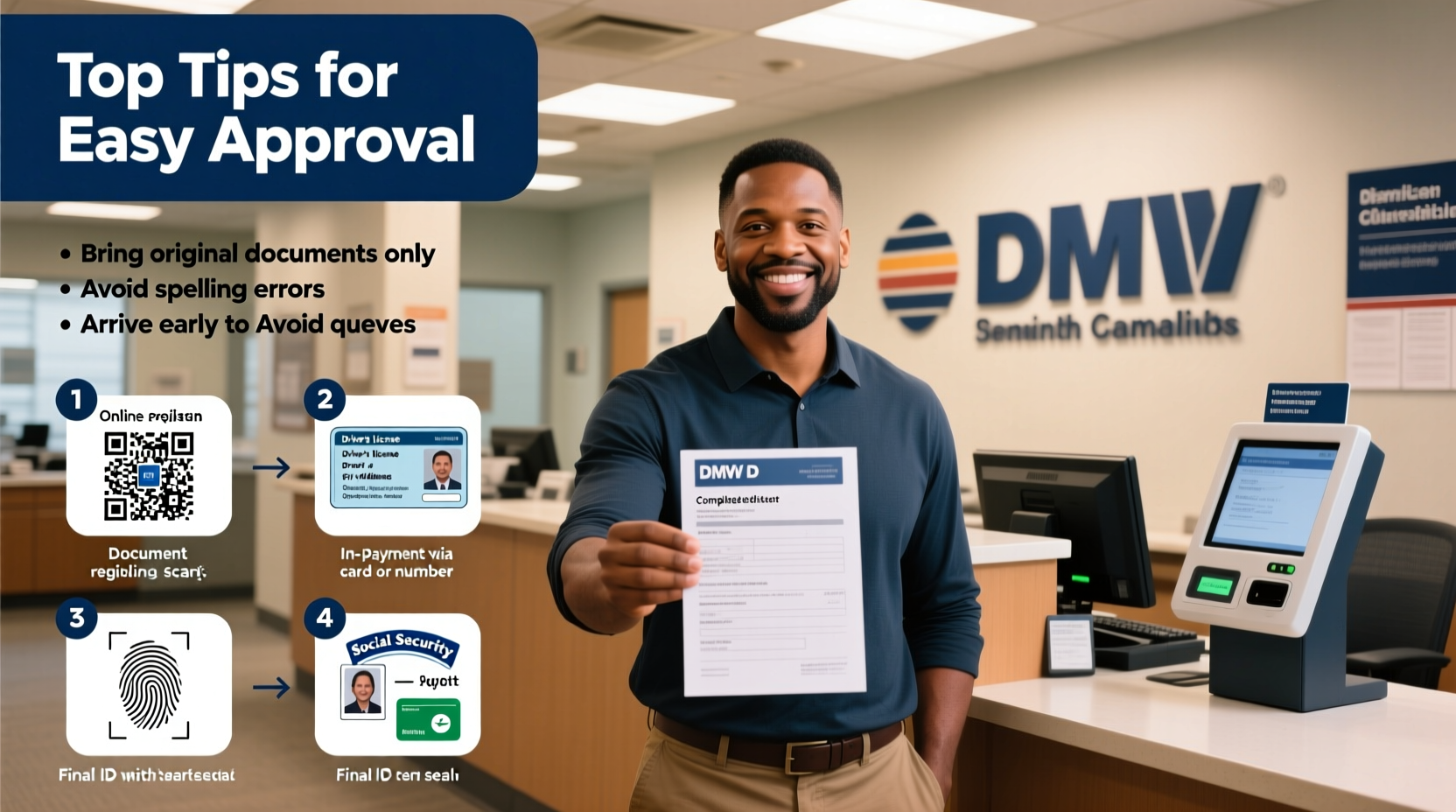
A non-driver identification card issued by your state’s Department of Motor Vehicles (DMV) serves as a government-recognized form of photo ID. It’s accepted for voting, opening bank accounts, boarding domestic flights (when compliant with REAL ID), accessing medical services, and proving residency. Unlike a driver’s license, it does not authorize operation of a motor vehicle, making it ideal for minors, seniors who no longer drive, or individuals who prefer not to hold a license.
Each state administers its own ID program under federal guidelines, particularly those outlined in the REAL ID Act of 2005. As of May 2025, a standard DMV ID must meet enhanced security standards to be used for federal purposes like airport screening or entering secure federal facilities.
Step-by-Step Process to Apply for a DMV ID
- Determine Eligibility: You must be a resident of the state where you’re applying and unable or choose not to obtain a driver’s license. Most states require applicants to be at least 15 years old, though younger children may qualify with parental consent.
- Gather Required Documents: Collect proof of identity, Social Security number, and two proofs of residency. Acceptable documents vary by state but typically include birth certificates, passports, utility bills, and lease agreements.
- Schedule an Appointment: Many DMVs now operate on appointment-only systems. Visit your state’s official DMV website to book a visit and reduce wait times.
- Complete the Application Form: Fill out the Non-Driver ID application online or at the office. Double-check all entries for accuracy.
- Visit the DMV Office In Person: Bring original copies of all documents. No photocopies or digital versions are accepted for verification.
- Have Your Photo Taken: The DMV will capture your likeness under standardized lighting and background conditions. Wear plain clothing and avoid headwear unless religiously mandated.
- Pay the Fee: Fees range from $10 to $35 depending on the state and whether the ID is standard or REAL ID-compliant. Some groups, such as seniors or low-income individuals, may qualify for waivers.
- Receive Your Temporary ID: You’ll get a paper receipt valid as temporary ID while your card is printed and mailed within 7–14 business days.
Required Documents: What You Need to Bring
The key to avoiding rejection lies in submitting correct, verifiable documentation. Most states follow a “document pyramid” system that categorizes acceptable papers into tiers based on reliability.
| Document Type | Acceptable Examples | Notes |
|---|---|---|
| Proof of Identity | U.S. Birth Certificate, Valid Passport, Permanent Resident Card | Must be original or certified copy; expired passports still acceptable as ID proof |
| Proof of SSN | Social Security Card, W-2 Form, SSA-1099 | If card is lost, request a replacement from SSA.gov before visiting DMV |
| Proof of Residency (2 required) | Utility Bill, Bank Statement, Lease Agreement, Paycheck Stub | Documents must show your current address and be dated within the last 90 days |
“One of the top reasons for application rejection is mismatched names across documents. Ensure your name appears exactly as it does on your birth certificate or passport.” — State DMV Supervisor, California Department of Motor Vehicles
Common Mistakes That Delay Approval
- Using Expired or Unsigned Documents: Even if a utility bill is recent, it won’t count if it lacks your name or isn’t officially issued.
- Inconsistent Name Spelling: A nickname on one document versus a legal name on another triggers red flags. Use middle names consistently if applicable.
- Bringing Photocopies Instead of Originals: DMV officers must inspect originals. Copies are only accepted in rare cases with prior authorization.
- Failing to Update Address After Moving: If your documents reflect an old address, bring additional proof like a voter registration card or updated tax notice.
- Choosing Walk-In Service During Peak Hours: Mondays, Fridays, and early mornings often have long lines. Appointments cut average wait time by over 60%.
REAL ID vs. Standard ID: What’s the Difference?
Since enforcement of the REAL ID Act is now active, understanding which type of ID you need is crucial. Both serve as identification, but only REAL ID-compliant cards can be used for domestic air travel and entry into federal buildings.
| Feature | Standard DMV ID | REAL ID |
|---|---|---|
| Domestic Air Travel | No (after May 2025) | Yes |
| Entry to Federal Facilities | Limited access | Permitted |
| Cost | $10–$20 | $25–$35 |
| Documents Required | Basic ID, SSN, 1–2 residency proofs | All standard docs plus additional verification (e.g., full SSN proof, two address proofs) |
To obtain a REAL ID, you must provide more rigorous documentation, including proof of full Social Security number (not just the card) and two forms of physical residency. However, the extra effort pays off in broader usability.
Mini Case Study: Maria’s Smooth DMV Experience
Maria, a 68-year-old retiree in Arizona, decided to replace her outdated driver’s license with a non-driver ID after giving up driving. She researched the Arizona MVD website, downloaded the application form, and gathered her U.S. passport, Social Security card, and two recent utility bills—all showing her current address. She booked an appointment online for a Tuesday morning, arrived 10 minutes early, and was processed in under 20 minutes. Her new REAL ID arrived by mail in nine days. By preparing thoroughly and choosing a less busy time, Maria avoided common pitfalls and completed the process seamlessly.
Checklist: Prepare for Your DMV ID Appointment
- ✅ Confirm eligibility and required documents via your state’s DMV website
- ✅ Obtain original or certified copies of birth certificate or passport
- ✅ Locate your Social Security card or alternative SSN proof
- ✅ Gather two recent proofs of residency (e.g., utility bill + bank statement)
- ✅ Complete the Non-Driver ID application form online or print it
- ✅ Schedule an appointment and note the location and time
- ✅ Dress appropriately for the photo: neutral colors, no hats or sunglasses
- ✅ Bring exact fee payment (check accepted forms: cash, credit, debit, check)
Frequently Asked Questions
Can I apply for a DMV ID online?
No, first-time applicants must appear in person to verify identity and have their photo taken. Some states allow renewal online or by mail for existing ID holders.
How long is a DMV ID valid?
Most non-driver IDs are valid for 8 years. Seniors aged 62+ may qualify for lifetime or extended validity in certain states like Florida and Texas.
What if I don’t have a birth certificate?
You can submit alternative identity documents such as a passport, Consular Report of Birth Abroad, or a Certificate of Citizenship. Contact your state DMV for approved substitutions.
Final Steps and Ongoing Maintenance
Once your ID arrives, verify all information is correct—name, date of birth, address, and endorsement (e.g., “REAL ID”). Report any errors immediately for a free replacement. Store your ID in a protective sleeve to prevent wear, and keep a scanned copy in a secure digital vault for emergencies.
Remember to update your ID if you move or legally change your name. Most states require address updates within 10–30 days of relocation. Doing so ensures your ID remains valid and prevents issues during background checks or travel screenings.
Take Action Today
Getting a DMV ID doesn’t have to be a stressful ordeal. With the right preparation, knowledge of requirements, and attention to detail, you can walk into any DMV office confident and walk out with a valid ID in hand. Don’t wait until you’re denied service at a bank or airport—start gathering your documents today. Share this guide with someone who needs it, and help make the process easier for others navigating the system.




 浙公网安备
33010002000092号
浙公网安备
33010002000092号 浙B2-20120091-4
Comments
No comments yet. Why don't you start the discussion?