
Composting is one of the most effective ways to reduce household waste and support sustainable living. With nearly 30% of what we throw away being organic material, turning food scraps into nutrient-rich soil makes environmental sense. But for many urban dwellers or those without outdoor space, a key concern arises: Can you compost indoors without enduring unpleasant odors? And if so, how does it compare to relying on municipal curbside pickup programs? This article breaks down both approaches—home composting and curbside collection—with a focus on odor control, practicality, and real-world usability.
The Smell Factor: Why Compost Gets Odorous
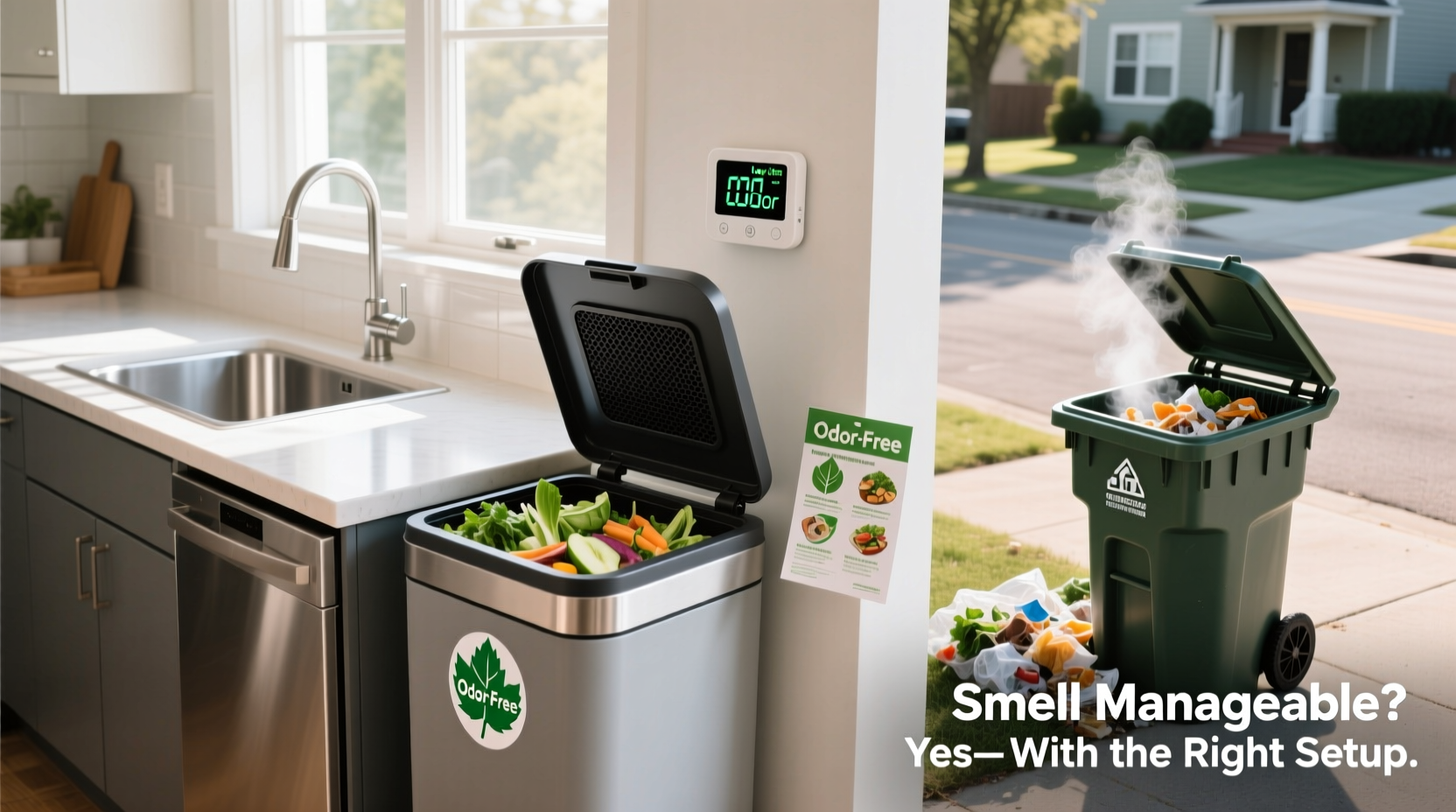
Before comparing methods, it’s essential to understand why compost sometimes smells. The odor isn’t inherent to composting itself—it’s a symptom of improper conditions. When organic matter decomposes anaerobically (without oxygen), it produces foul-smelling gases like hydrogen sulfide (rotten egg smell) and ammonia. This typically happens when:
- There’s too much moisture
- Browns (carbon-rich materials like paper, dry leaves) are lacking
- Airflow is restricted
- Foul items like meat, dairy, or oily foods are added
In a well-balanced system—whether indoor or outdoor—compost should have an earthy, forest-floor scent, not a rancid or sour odor. Managing this balance is the key to odor-free composting, especially when done inside the home.
Home Composting Indoors: Methods That Work
Indoor composting has evolved far beyond the messy buckets of the past. Modern systems are designed specifically for apartments and small kitchens. Here are the most common and effective methods:
1. Countertop Compost Containers (Sealed Bins)
These are small, lidded containers—often made of stainless steel or ceramic—used to collect scraps during the week before transferring them to an outdoor bin or drop-off site. They’re not true composters but odor-control tools.
To keep them fresh:
- Line with compostable bags or paper towels
- Empty every 2–3 days
- Clean weekly with vinegar or baking soda
2. Electric Composters (e.g., Lomi, FoodCycler)
These countertop appliances dehydrate and grind food waste into a dry, odorless “soil enhancer” in just a few hours. While not traditional composting (they don’t rely on microbes), they drastically reduce volume and eliminate smell during processing.
Pros: Fast, compact, no odor during operation
Cons: Energy use, limited capacity, output may need further composting to be fully fertile
3. Vermicomposting (Worm Bins)
This method uses red wiggler worms to break down food waste in a contained bin. Done correctly, worm bins produce rich castings and minimal odor.
Best for: Fruit/veggie scraps, coffee grounds, tea bags, paper
Avoid: Meat, citrus, onions, oily foods (in excess)
Odor control depends on moisture management. A well-maintained worm bin should smell like damp soil.
4. Bokashi Fermentation
Bokashi is a Japanese fermentation process that pickles food waste—including meat and dairy—using beneficial microbes. The sealed bucket prevents oxygen from entering, so decomposition is anaerobic but controlled, avoiding putrefaction.
After 2 weeks, the fermented waste must be buried or added to an outdoor compost pile to finish breaking down.
Smell: Slightly sour (like pickles), but not offensive if sealed properly.
“Bokashi is ideal for city dwellers because it handles all food waste types and locks in odor. It’s not compost yet, but it’s the cleanest way to pre-process waste indoors.” — Dr. Lena Torres, Urban Soil Scientist, University of Massachusetts Amherst
Curbside Compost Pickup: Convenience with Caveats
Many cities now offer curbside compost collection, similar to recycling or trash pickup. Residents place food scraps and compostable packaging in a provided bin, which is collected weekly or biweekly.
This option eliminates the need for personal composting infrastructure and removes the responsibility of odor management from the homeowner. However, it comes with trade-offs:
- Limited availability: Only about 25% of U.S. households have access to curbside composting (EPA, 2023).
- Contamination rules: Many programs reject meat, bones, or compostable plastics due to processing limitations.
- Storage challenges: Even with pickup, you still need to store scraps between collections—especially in summer.
For odor control during storage, residents often use freezer storage (see below) or sealed bins with charcoal filters. Without proper containment, a curbside bin kept in a garage or on a porch can attract pests and develop strong smells.
Comparing the Two: Home Composting vs Curbside Pickup
| Factor | Home Composting (Indoor) | Curbside Pickup |
|---|---|---|
| Odor Control | Manageable with proper technique; electric and bokashi systems excel | Depends on storage; freezing helps, but outdoor bins can smell if delayed |
| Convenience | Moderate effort required daily/weekly maintenance | Very convenient once enrolled; just set out the bin |
| Waste Acceptance | Bokashi accepts all food; others limit meat/dairy | Varies by program; many exclude meat, oils, compostable plastics |
| Output Use | Produce usable compost or soil amendment at home | No direct benefit; compost usually goes to municipal or commercial facilities |
| Cost | Upfront cost ($50–$500); low ongoing expense | May be free or included in trash fees; some charge extra |
| Sustainability Impact | High—closed-loop system, reduces transport emissions | Moderate—depends on fleet efficiency and facility practices |
Step-by-Step Guide to Odor-Free Indoor Composting
Whether you choose to compost at home or simply store scraps for curbside pickup, follow this timeline to minimize smells:
- Day 1: Choose Your Container
Select a sealed bin with a charcoal filter (for countertop use) or a bokashi bucket. Avoid open bowls or plastic bags. - Daily: Layer Smartly
Add a handful of browns (shredded paper, cardboard, coconut coir) after each addition of food scraps to absorb moisture and balance carbon. - Every 2–3 Days: Empty or Process
Transfer scraps to outdoor compost, bury in garden, or process in an electric composter. For bokashi, drain liquid weekly to prevent acidity. - Weekly: Clean the Bin
Wash with hot water and vinegar. Replace liners or filters as needed. - As Needed: Freeze Smelly Items
Meat trimmings, fish scraps, or spoiled produce can be frozen until disposal day to completely halt odor development.
Real Example: Maria’s Apartment Composting Journey
Maria lives in a 700-square-foot Chicago apartment with no balcony. She initially avoided composting, fearing smells would permeate her small kitchen. After researching, she chose a dual-system approach:
She uses a countertop stainless steel bin lined with compostable bags for daily fruit and vegetable scraps. Every three days, she transfers the contents to a bokashi bucket under her sink. Once the bokashi is full, she ferments it for two weeks, then buries the pre-compost in a community garden plot 10 minutes away.
She also keeps a separate freezer bag for chicken bones and cheese rinds, which she adds to the bokashi only when full and ready to ferment.
After six months, Maria reports zero persistent odors. Her neighbors have never noticed her composting, and she enjoys knowing her waste enriches local soil instead of sitting in a landfill.
Checklist: Is Indoor Composting Right for You?
Answer these questions to determine the best path:
- ✅ Do you generate more than 2 lbs of food waste per week?
- ✅ Can you store scraps in a cool area or freezer between disposals?
- ✅ Are you willing to spend 5–10 minutes per week maintaining a system?
- ✅ Do you have access to outdoor space, a drop-off site, or curbside pickup?
- ✅ Do you value closing the loop and using your compost in houseplants or gardens?
If you answered yes to most, home composting is viable. If not, curbside pickup may be a better fit—if available.
Frequently Asked Questions
Can I compost onions and garlic indoors?
Yes, but in moderation. These pungent foods can overwhelm worms or affect microbial balance. Chop them finely and bury deep under browns. In bokashi systems, they ferment well but may increase acidity—drain liquid regularly.
Will my cat or pet get into the compost bin?
Pets can be curious. Use bins with secure, locking lids. For worm bins, ensure the lid seals tightly and avoid adding bread or sugary foods that attract animals. Elevating the bin can also deter access.
Does freezing food waste kill beneficial microbes for composting?
No. Freezing halts decomposition but doesn’t kill microbes. Once thawed, the breakdown process resumes. Freezing is one of the most effective odor-prevention strategies for both home and curbside systems.
Conclusion: Smell Is Manageable—With the Right Approach
The idea that indoor composting must be smelly is outdated. With modern tools and smart habits, odor can be effectively managed—whether you're using a high-tech electric composter, a humble bokashi bucket, or simply storing scraps for curbside pickup. The key lies in understanding decomposition science: balance greens with browns, control moisture, and limit exposure to air when necessary.
While curbside pickup offers convenience, it doesn’t always accept all waste types and removes the personal benefit of producing usable compost. Home composting, though requiring slightly more effort, empowers individuals to close the loop sustainably and odor-free.
No matter which path you choose, the goal remains the same: keeping organic waste out of landfills, where it generates methane—a greenhouse gas 28 times more potent than CO₂. With a little planning, your kitchen can be part of the solution, not a source of stink.




 浙公网安备
33010002000092号
浙公网安备
33010002000092号 浙B2-20120091-4
Comments
No comments yet. Why don't you start the discussion?