
HIV (Human Immunodeficiency Virus) and its advanced stage, AIDS (Acquired Immunodeficiency Syndrome), remain significant global health challenges. However, with modern medical advances and a proactive approach to care, individuals living with HIV can lead long, healthy lives. Effective management is no longer just about survival—it's about thriving. This article outlines comprehensive, practical, and scientifically supported strategies for treating and managing HIV and AIDS, focusing on medical treatment, lifestyle adjustments, mental well-being, and prevention.
1. Antiretroviral Therapy: The Foundation of HIV Management
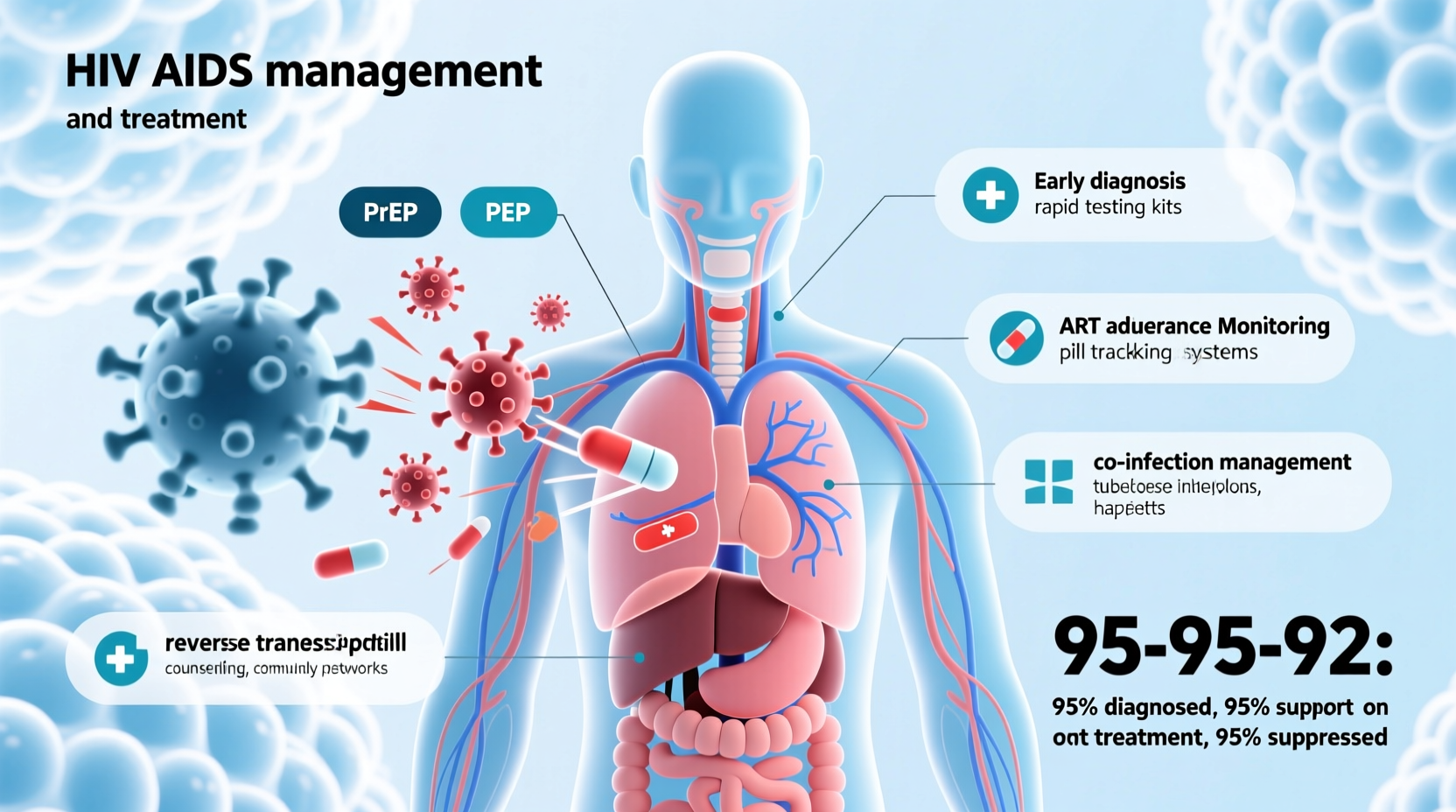
Antiretroviral therapy (ART) is the cornerstone of HIV treatment. ART involves taking a combination of HIV medicines every day as prescribed. These drugs work by reducing the amount of virus in the body—known as the viral load—to undetectable levels. When the viral load is undetectable, the immune system can recover and function more effectively, and the risk of transmitting HIV to others becomes negligible.
There are several classes of antiretroviral drugs, each targeting different stages of the HIV lifecycle:
- Nucleoside Reverse Transcriptase Inhibitors (NRTIs): Interfere with viral replication.
- Non-Nucleoside Reverse Transcriptase Inhibitors (NNRTIs): Bind directly to reverse transcriptase enzyme.
- Protease Inhibitors (PIs): Block the protease enzyme needed to produce mature viruses.
- Integrase Strand Transfer Inhibitors (INSTIs): Prevent HIV DNA from integrating into human DNA.
- Fusion Inhibitors & CCR5 Antagonists: Stop the virus from entering CD4 cells.
Most patients today are prescribed single-tablet regimens combining three drugs from two or more classes, improving adherence and minimizing side effects.
2. Regular Monitoring and Medical Follow-Up
Ongoing medical supervision is essential. Key markers tracked during routine visits include:
| Test | Purpose | Recommended Frequency |
|---|---|---|
| Viral Load Test | Measures amount of HIV in blood | Every 3–6 months (or after starting/changing treatment) |
| CD4 Count | Assesses immune system strength | Every 3–6 months initially, then annually if stable |
| Liver & Kidney Function | Monitors side effects of ART | Every 6–12 months |
| Serology for STIs | Detects co-infections like syphilis, hepatitis B/C | Annually or more frequently for high-risk individuals |
Maintaining regular appointments allows healthcare providers to adjust treatment plans promptly, manage side effects, and prevent opportunistic infections that define progression to AIDS.
“With early diagnosis and consistent ART, most people with HIV now have a near-normal life expectancy.” — Dr. Anthony Fauci, Former Director, National Institute of Allergy and Infectious Diseases
3. Lifestyle and Nutritional Support
While medication controls the virus, lifestyle choices significantly influence overall health and immune resilience. A holistic approach includes diet, exercise, sleep, and substance use management.
Nutrition Guidelines
A balanced diet rich in fruits, vegetables, lean proteins, and whole grains supports immune function and helps counteract inflammation and metabolic side effects of long-term ART.
- Avoid processed foods high in sugar and trans fats.
- Increase intake of antioxidants (vitamins C, E, selenium).
- Stay hydrated; dehydration can worsen medication side effects.
- Consult a nutritionist if experiencing weight loss or lipodystrophy.
Physical Activity
Regular exercise improves cardiovascular health, reduces stress, and combats fatigue. Aim for at least 150 minutes of moderate aerobic activity per week, such as brisk walking, swimming, or cycling.
4. Mental Health and Psychosocial Care
The emotional burden of an HIV diagnosis can be profound. Anxiety, depression, and social stigma remain common barriers to effective treatment. Addressing mental health is not optional—it’s integral to sustained health outcomes.
Strategies include:
- Seeking counseling or cognitive behavioral therapy (CBT).
- Joining peer support groups, either in person or online.
- Practicing mindfulness, meditation, or yoga to reduce stress.
- Disclosing status to trusted individuals when safe and appropriate.
Healthcare systems increasingly integrate mental health services into HIV clinics, recognizing that psychological wellness directly impacts medication adherence and quality of life.
Mini Case Study: Maria’s Journey
Maria, a 34-year-old woman diagnosed with HIV two years ago, struggled with isolation and fear of disclosure. After connecting with a local support group and beginning therapy, she regained confidence. With her counselor’s help, she told her sister and later her employer. Her viral load became undetectable within six months of consistent ART, and today she volunteers at an HIV advocacy organization. Her story underscores how psychosocial support transforms clinical outcomes.
5. Prevention and Harm Reduction Strategies
Effective HIV management extends beyond the individual—it protects communities. Key prevention tools include:
Undetectable = Untransmittable (U=U)
People with HIV who maintain an undetectable viral load for at least six months cannot sexually transmit the virus. This principle, backed by decades of research, empowers individuals and reduces stigma.
Pre-Exposure Prophylaxis (PrEP)
For HIV-negative individuals at higher risk, PrEP (e.g., Truvada, Descovy) reduces the chance of acquiring HIV by over 99% when taken consistently.
Post-Exposure Prophylaxis (PEP)
If exposed to HIV (e.g., needle-stick injury or unprotected sex), starting PEP within 72 hours—and ideally within 24—can prevent infection.
Safe Practices Checklist
- Take ART daily as prescribed.
- Use condoms consistently to prevent other STIs.
- Encourage partners to consider PrEP.
- Never share needles or injection equipment.
- Attend all medical appointments and lab tests.
- Get vaccinated against hepatitis A/B, HPV, flu, and pneumococcus.
FAQ
Can HIV be cured?
Currently, there is no widely available cure for HIV. However, rare cases of functional cures (like the “Berlin Patient” and “London Patient”) involved stem cell transplants for cancer treatment. Research into gene editing and therapeutic vaccines continues, but ART remains the standard for long-term control.
What happens if I miss a dose of my HIV medication?
Occasional missed doses may not be catastrophic, but frequent gaps increase the risk of drug resistance. If you miss a dose, take it as soon as you remember, unless it’s almost time for the next one. Never double up. Discuss adherence challenges with your provider—they can help simplify your regimen.
How soon after exposure should I get tested?
HIV tests vary in detection window. Fourth-generation antigen/antibody tests can detect infection 18–45 days after exposure. Nucleic acid tests (NATs) can detect HIV as early as 10 days post-exposure. For accuracy, test at baseline, then again at 4 and 12 weeks after potential exposure.
Conclusion
Managing HIV and AIDS effectively requires more than medication—it demands a coordinated, lifelong strategy involving medical care, self-care, and community support. With early diagnosis, strict adherence to ART, and attention to physical and mental health, people living with HIV can achieve undetectable viral loads, prevent transmission, and live full, vibrant lives. Advances in science have transformed HIV from a terminal illness into a manageable chronic condition. The power now lies in access, education, and empowerment.




 浙公网安备
33010002000092号
浙公网安备
33010002000092号 浙B2-20120091-4
Comments
No comments yet. Why don't you start the discussion?