
Travelers have long sought ways to maximize luggage capacity without exceeding airline limits. In recent years, compression packing cubes have gained popularity as a space-saving solution. Marketed as a way to “squeeze more into less,” these zippered fabric containers promise to compress clothing and reduce volume. But do they truly save space, or are they simply adding unnecessary weight to your carry-on? The answer isn’t straightforward—it depends on how you pack, what you’re packing, and the type of trip you're taking.
This article examines the mechanics behind compression packing cubes, evaluates their effectiveness across different materials and travel styles, and provides practical insights based on real-world use. Whether you're a minimalist backpacker or a business traveler with multiple outfit changes, understanding the true value of these tools can help you make smarter packing decisions.
How Compression Packing Cubes Work
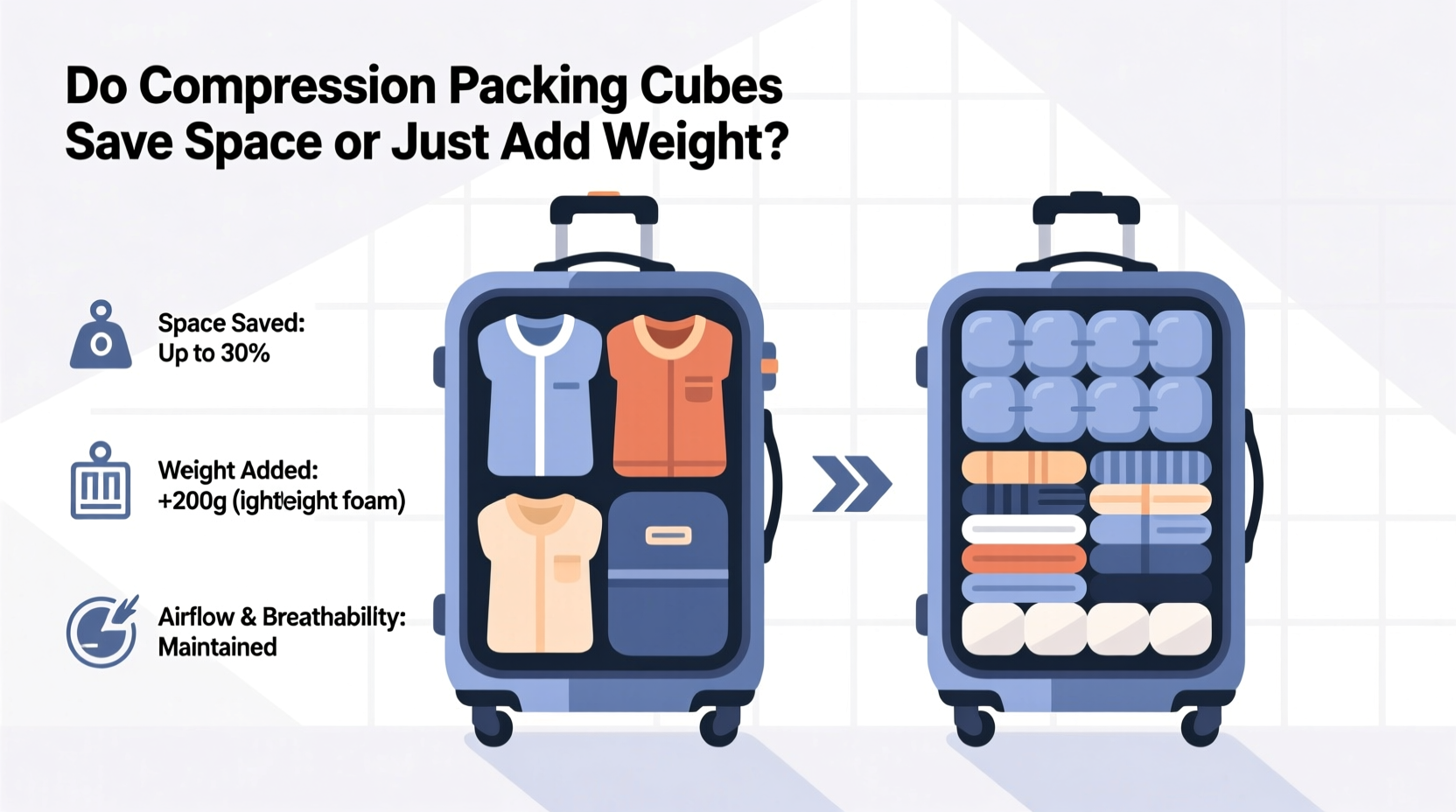
Compression packing cubes differ from standard packing cubes by featuring a second zipper that allows air to be expelled from the compartment after clothes are inserted. The idea is simple: compress the contents by zipping down the outer layer, forcing air out and reducing overall volume. This mechanism mimics vacuum storage bags but in a smaller, more portable format suitable for luggage.
The level of compression varies significantly between models. Some rely solely on manual pressure—squeezing the cube before sealing—while others incorporate one-way valves or double-zipper systems designed to enhance airflow removal. However, physics dictates that only compressible materials will respond meaningfully to this process. Dense fabrics like denim, wool sweaters, or thick jackets may see modest reductions, while bulky items such as down jackets or puffy vests can lose up to 50% of their packed volume.
“Compression works best when applied to low-density, high-loft materials. For tightly woven textiles, the gains are marginal.” — Dr. Lena Torres, Materials Scientist & Travel Gear Consultant
Real Space Savings vs. Added Weight: A Comparative Analysis
To assess whether compression cubes deliver net benefits, it’s essential to compare the volume reduced against the weight added. Most cubes weigh between 70g and 150g each, depending on size and construction. If a single cube reduces packed volume by 1–2 liters but adds 100g of weight, the trade-off may be worthwhile for carry-on travelers constrained by space rather than weight limits.
However, for checked baggage users on weight-restricted airlines (common in Europe and budget carriers), every extra 300–400 grams from multiple cubes could push a suitcase over its limit, resulting in fees. In such cases, the space saved might not justify the added mass.
| Packing Method | Avg. Volume Saved | Avg. Weight Added per Cube | Best For |
|---|---|---|---|
| Standard Packing | 0% | 0g | All travelers; baseline method |
| Regular Packing Cubes | 10–15% | 70–90g | Organization-focused packers |
| Compression Packing Cubes | 25–40% | 100–150g | Bulky clothing; limited luggage space |
| Rolling + Compression | Up to 50% | 100–150g | Maximizing small suitcases |
The data shows that compression cubes offer measurable space savings, particularly when used with soft, compressible fabrics. However, the benefit diminishes when packing rigid or dense garments. The key is strategic application—not using them for everything, but reserving them for specific categories of clothing where compression has the greatest impact.
Step-by-Step Guide to Maximizing Efficiency with Compression Cubes
To get the most out of compression packing cubes without wasting space or adding dead weight, follow this optimized packing sequence:
- Sort by compressibility: Separate clothes into three groups—high-loft (e.g., down jackets, sweaters), medium (knits, pajamas), and low (dress pants, cotton shirts).
- Select appropriate cubes: Assign larger compression cubes to high-loft items, medium ones to sleepwear, and skip cubes entirely for low-compressibility garments.
- Fold or roll strategically: Roll soft items before placing them in the cube to eliminate internal air pockets. Avoid overstuffing, which prevents effective compression.
- Seal and compress: Insert the rolled item, close the inner zipper, then press down firmly while zipping the outer compression layer from top to bottom.
- Stack efficiently: Place compressed cubes at the base of your suitcase, building upward with lighter, non-compressed items to prevent re-expansion.
This method ensures that compression is applied where it matters most, minimizing wasted effort and excess weight. It also preserves garment quality by reducing friction and movement during transit.
Mini Case Study: Two Weeks in Scandinavia – Backpacker vs. Business Traveler
Consider two travelers preparing for a two-week trip to Sweden and Norway—one a backpacker focused on minimalism, the other a consultant attending client meetings.
Backpacker (Carry-on only): Carries a 45L backpack with hiking gear, thermal layers, and casual wear. Uses two large compression cubes: one for a down jacket and sweater, another for underwear and base layers. After compression, total volume reduction is ~3.5L, freeing up space for a sleeping bag liner. Net weight increase: 220g. Verdict: Highly beneficial—space saved outweighs minor weight gain.
Business Traveler (Checked luggage): Packs a 28kg suitcase with tailored suits, dress shoes, and formal shirts. Attempts to use three compression cubes for shirts and trousers. Result: minimal volume reduction (less than 1L total), but adds 390g of weight. Ends up paying an extra $75 overweight fee due to being 500g over the limit. Verdict: counterproductive—cubes added cost without meaningful benefit.
This contrast highlights a crucial point: context determines value. For space-constrained travelers, compression cubes are powerful tools. For those already near weight limits, they can backfire.
Common Misconceptions About Compression Cubes
Despite growing popularity, several myths persist about how these products work:
- Myth: They work like vacuum seal bags. Reality: Without a pump, compression relies on manual force and limited air expulsion. True vacuum-level compression isn't possible.
- Myth: They prevent wrinkles better than folding. Reality: Compression often increases creasing in structured garments. Wrinkle reduction comes from organization, not pressure.
- Myth: More cubes = better efficiency. Reality: Overuse leads to redundancy. Three cubes for socks are inefficient compared to one mesh pouch.
- Myth: All fabrics compress equally. Reality: Cotton T-shirts lose some volume, but denim jeans barely change. Material density dictates results.
Understanding these limitations helps avoid disappointment and misuse. Compression cubes are not magic—they are specialized tools with specific applications.
Checklist: Smart Use of Compression Packing Cubes
Before buying or packing with compression cubes, ask yourself the following:
- Am I traveling with bulky, compressible clothing (e.g., jackets, sweaters)? ✅
- Is my luggage space-limited (carry-on, small suitcase)? ✅
- Am I under strict weight restrictions? ❌ (Avoid if yes)
- Will I need quick access to these items frequently? ❌ (Compression makes retrieval slower)
- Do I already have efficient packing methods (rolling, bundling)? ✅ (Cubes can enhance these)
If you answered “yes” to the first two and “no” to the third, compression cubes are likely a good fit. Otherwise, consider alternatives like packing cells without compression or compression straps built into luggage.
Alternatives and Complementary Techniques
Compression cubes aren’t the only way to save space. Several proven techniques achieve similar or better results without added weight:
- The Bundle Wrap Method: Rolling clothes around a central core minimizes wrinkles and reduces shifting. Achieves ~20% volume reduction with zero added weight.
- Vacuum Storage Bags (for home use): Pre-compress bulky seasonal items before travel. Once packed, they stay compact even without cubes.
- Wearing Bulkiest Items During Transit: Put on your heaviest jacket or boots while flying. Saves both space and weight.
- Multifunctional Clothing: Choose garments that serve multiple purposes (e.g., convertible pants, merino wool layers) to reduce total items packed.
In many cases, combining lightweight organization tools (like mesh cubes) with smart folding techniques yields better overall efficiency than relying solely on compression.
FAQ
Do compression packing cubes damage clothes?
No, they don’t typically damage fabrics. However, prolonged compression of delicate knits or structured garments may cause temporary distortion. Always unpack soon after arrival to restore shape.
Are compression cubes worth it for short trips?
Rarely. For weekend trips with few items, the setup time and added weight usually outweigh any space benefit. Standard packing cubes or simple folding are more efficient.
Can I use compression cubes for liquids or toiletries?
No. Liquids don’t compress, and the pressure could compromise container seals, leading to leaks. Use clear toiletry bags instead.
Conclusion: Strategic Use Beats Blind Adoption
Compression packing cubes do save space—but selectively. Their effectiveness hinges on the type of clothing, luggage constraints, and travel style. When used wisely, they enable travelers to fit more into tight spaces, especially valuable for carry-on-only journeys or outdoor adventures. However, they add measurable weight and offer diminishing returns when misapplied.
The real skill lies not in owning the latest gear, but in knowing when and how to use it. By reserving compression cubes for truly compressible items, pairing them with proven packing techniques, and avoiding overuse, you can harness their benefits without falling into the trap of unnecessary bulk.




 浙公网安备
33010002000092号
浙公网安备
33010002000092号 浙B2-20120091-4
Comments
No comments yet. Why don't you start the discussion?