
In every living room, bedroom, or office, a tissue box sits quietly—functional, often overlooked, yet undeniably present. But what if something as simple as choosing between a contemporary plastic model and a handcrafted wooden one carries more weight than we assume? At first glance, the decision may seem purely aesthetic, driven by personal taste. However, when examined closely, the choice reflects deeper values: functionality, sustainability, emotional resonance, and even social signaling. The question isn't whether style matters—it's how much, and why.
The Functional Foundation: What a Tissue Box Must Do
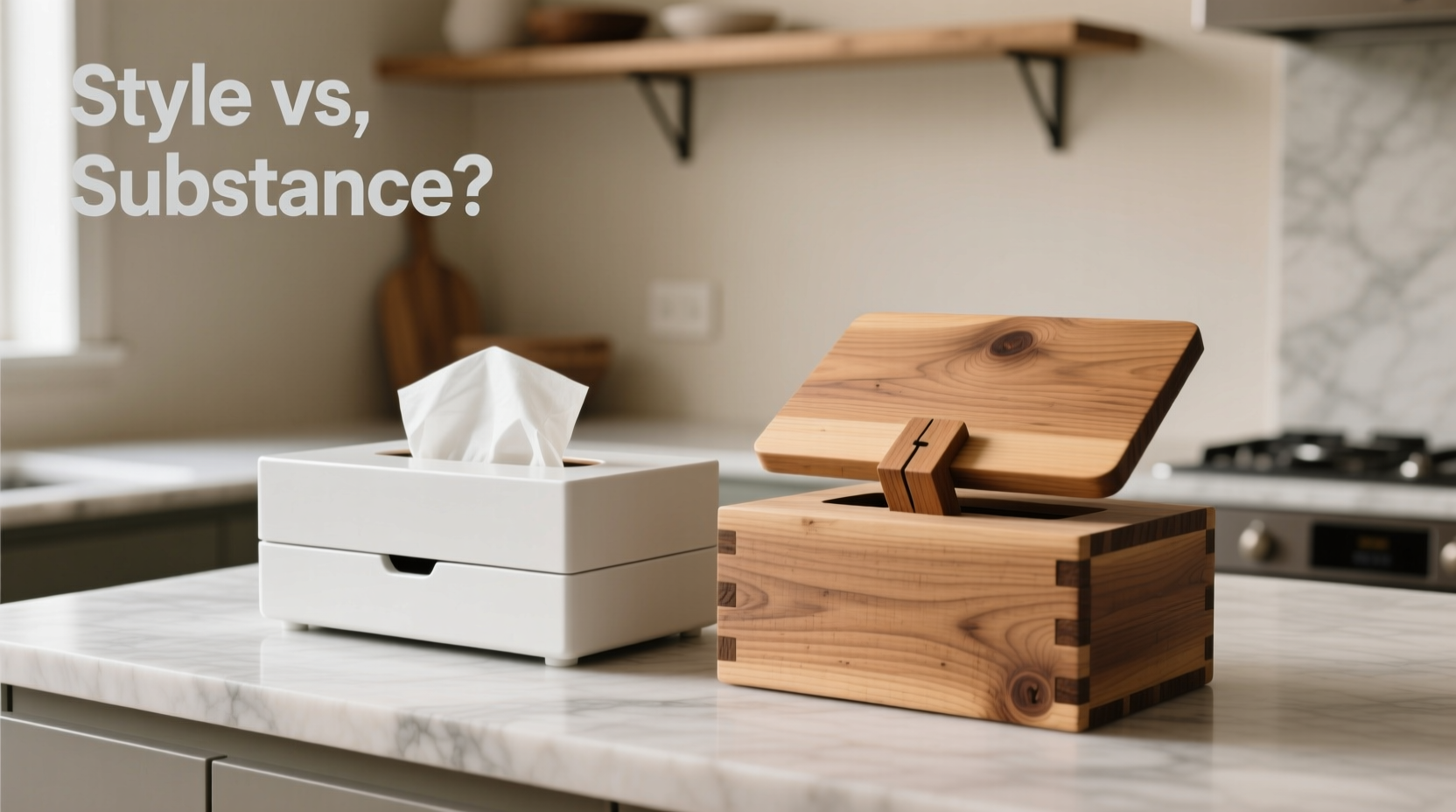
Before aesthetics enter the conversation, a tissue box must fulfill its primary purpose: holding tissues securely, dispensing them easily, and protecting them from dust and moisture. Both contemporary and wooden designs meet these criteria, but they do so in different ways.
Contemporary tissue boxes—typically made from molded plastic, metal, or composite materials—are engineered for mass production, durability, and ease of use. Many feature flip-top lids, sleek cutouts, or minimalist silhouettes that integrate seamlessly into modern interiors. Their surfaces are easy to wipe down, making them ideal for high-traffic areas like hallways or guest bathrooms.
Wooden tissue boxes, on the other hand, often prioritize craftsmanship over modularity. Crafted from solid hardwoods like walnut, bamboo, or teak, they offer sturdiness with a natural warmth. While less likely to be waterproof, many are treated with non-toxic sealants to resist minor spills. Their dispensing mechanisms vary—from open tops to precision-cut slots—but generally require careful handling to avoid snagging tissues.
Design Psychology: How Materials Influence Perception
The material of a tissue box subtly shapes how we—and our guests—perceive a space. Designers and psychologists agree that tactile elements contribute significantly to environmental comfort.
Plastic and metal convey efficiency, cleanliness, and modernity. These materials dominate clinical or minimalist environments because they signal order and control. A chrome-finish tissue box on a glass console table reinforces a sense of curated precision.
Wood, in contrast, evokes nature, warmth, and timelessness. According to Dr. Lena Torres, an environmental psychologist at the Royal Institute of Interior Studies, “Natural materials reduce cognitive load. They create micro-moments of calm in otherwise sterile spaces.” A walnut tissue box on a bookshelf doesn’t just hold Kleenex—it acts as a grounding object, anchoring the room in organic authenticity.
“Every object in a room communicates values. A wooden tissue box says, ‘We care about craft, sustainability, and sensory experience.’ A contemporary one says, ‘We value innovation, hygiene, and streamlined living.’ Neither is superior—just different.” — Marco Villanueva, Interior Design Consultant
Comparative Analysis: Contemporary vs Wooden Tissue Boxes
| Feature | Contemporary (Plastic/Metal) | Wooden (Solid or Engineered) |
|---|---|---|
| Durability | High – resistant to impact and moisture | Moderate to High – depends on wood type and finish |
| Hygiene | Excellent – non-porous, easy to disinfect | Fair – can absorb moisture if unsealed |
| Aesthetic Flexibility | High – available in bold colors, finishes, shapes | Moderate – limited to natural tones and grain patterns |
| Eco-Impact | Low – often petroleum-based, not biodegradable | High – renewable material, compostable at end-of-life |
| Cost | $5–$30 | $25–$120+ |
| Maintenance | Wipe clean with damp cloth | Dust regularly; condition wood occasionally |
Real-Life Application: Two Homes, Two Choices
Consider two households facing the same decision.
In downtown Seattle, Maya Chen, a UX designer, furnishes her loft apartment with Scandinavian-inspired furniture and smart home devices. She chooses a matte-black rectangular tissue box with magnetic lid closure. “It matches my speaker and charging station,” she explains. “I don’t want anything distracting in my space. It’s about flow.” For Maya, the contemporary box aligns with her digital-first lifestyle and clutter-free philosophy.
Meanwhile, in Asheville, North Carolina, Tom and Elise Reed live in a renovated farmhouse filled with heirloom furniture and handmade pottery. They select a cherrywood tissue box with dovetail joints, purchased from a local artisan. “It feels good to touch,” Elise says. “And when guests see it, they always ask where we got it. It starts conversations.” Here, the wooden box isn’t just functional—it’s part of their narrative of slow living and community support.
Neither choice is objectively better. But each reveals intentionality behind seemingly minor decor decisions.
When Style Becomes Substance: Beyond Personal Preference
While personal taste plays a role, reducing the choice to “preference” overlooks broader implications. Style becomes substance when it intersects with ethics, health, and long-term usability.
For instance, families with allergies may benefit from sealed contemporary boxes that prevent dust accumulation. Seniors with arthritis might find flip-top lids easier to operate than lifting a heavy wooden cover. Conversely, individuals pursuing sustainable living will favor wooden options made from FSC-certified timber, especially when paired with recycled tissue paper.
Moreover, workplace environments often standardize on contemporary models for consistency and sanitation. In contrast, boutique hotels and wellness retreats increasingly invest in wooden dispensers to enhance guest experience through sensory design.
Actionable Checklist: Choosing the Right Tissue Box for Your Space
- ✅ Assess the room’s primary function (e.g., entryway vs. nursery)
- ✅ Identify dominant materials and color palette
- ✅ Consider user needs (children, elderly, guests)
- ✅ Evaluate cleaning frequency and maintenance capacity
- ✅ Determine budget range and sustainability priorities
- ✅ Test tissue fit—ensure standard boxes slide in without forcing
- ✅ Check dispenser opening size to prevent tearing
FAQ: Common Questions About Tissue Box Selection
Can I use any tissue brand with a wooden box?
Most standard tissue boxes (approx. 4.5 x 4.5 x 5 inches) fit universal dispensers. However, some artisanal wooden boxes have tighter tolerances. Always verify internal dimensions before purchasing.
Are wooden tissue boxes harder to clean?
Yes, but manageable. Avoid soaking or using harsh cleaners. Instead, use a dry or slightly damp microfiber cloth. For disinfecting, lightly apply vinegar-water solution (1:3 ratio) and wipe immediately.
Do contemporary boxes last longer than wooden ones?
Not necessarily. Well-crafted wooden boxes can last decades with proper care. Mass-produced plastic models may degrade under UV light or crack after repeated drops. Longevity depends more on build quality than material alone.
Conclusion: Make the Invisible Visible
The tissue box is one of the most invisible-yet-omnipresent objects in daily life. Choosing between contemporary and wooden styles isn’t merely decorative—it’s a quiet declaration of values. Whether you prioritize sleek utility or tactile authenticity, your selection influences mood, hygiene, and even environmental impact.
Next time you replace a tissue box, pause. Ask not just “Does this match?” but “What does this say about how I want to live?” The answer might surprise you.




 浙公网安备
33010002000092号
浙公网安备
33010002000092号 浙B2-20120091-4
Comments
No comments yet. Why don't you start the discussion?