
When a recipe calls for fresh parsley but you only have dried on hand—or vice versa—knowing the correct conversion ratio is essential for preserving flavor balance. The general rule of thumb is that **1 tablespoon of fresh parsley equals approximately 1 teaspoon of dried parsley**. This 3:1 ratio reflects the concentration of flavor that occurs during the drying process, where moisture is removed and aromatic compounds become more potent. Understanding this conversion isn't just about measurement—it's about respecting the ingredient’s role in seasoning, color, texture, and overall dish integrity. Whether you're preparing a classic French persillade, garnishing a Middle Eastern tabbouleh, or finishing a hearty Italian stew, using the right form and quantity of parsley can mean the difference between subtle elegance and overpowering bitterness.
Definition & Overview
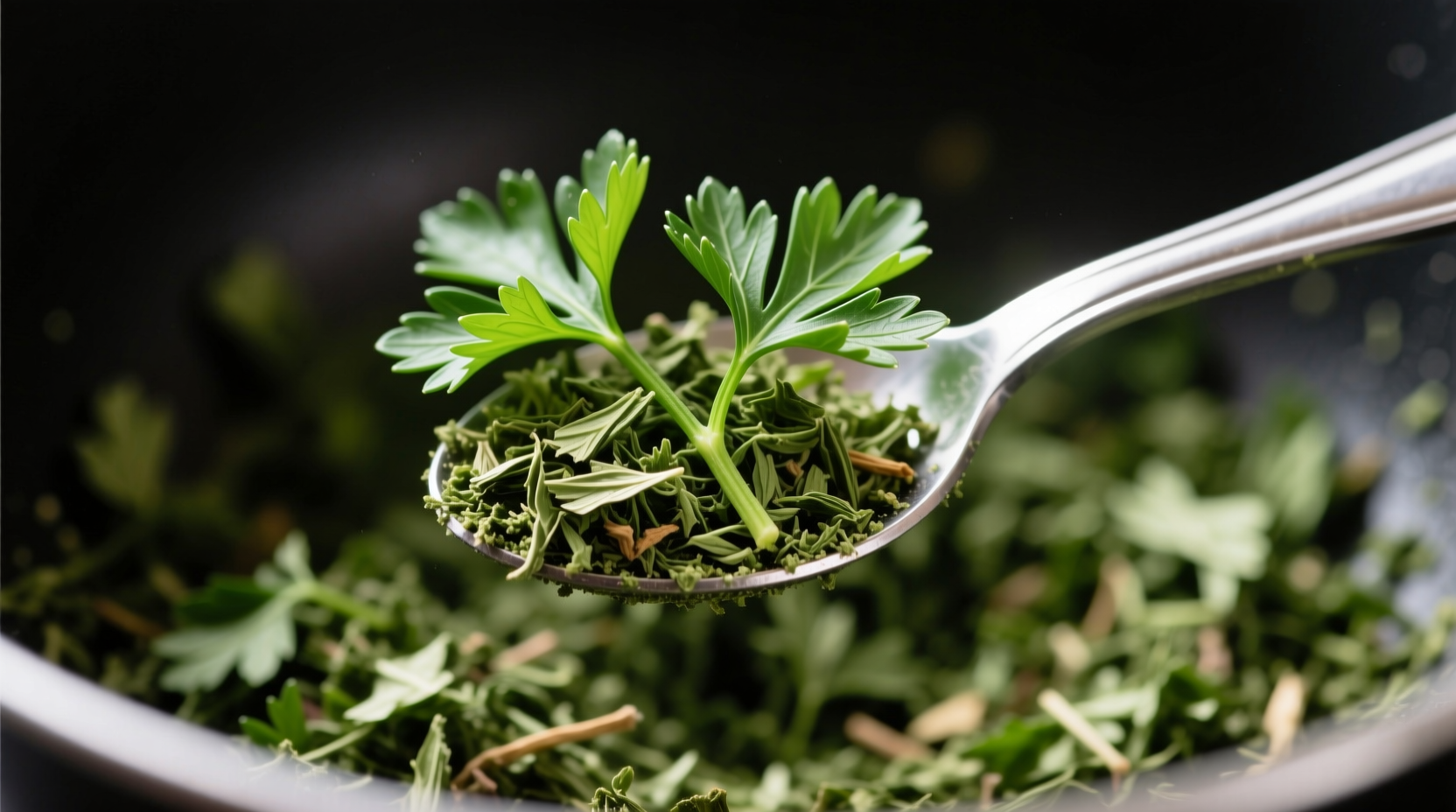
Parsley (Petroselinum crispum) is a biennial herb in the Apiaceae family, widely used across global cuisines for both its vibrant green color and clean, slightly peppery flavor. Native to the central Mediterranean region, it has evolved into two primary culinary varieties: curly leaf and flat-leaf (Italian) parsley. While often dismissed as a mere plate garnish in some Western cultures, parsley plays a foundational role in many traditional dishes—from Lebanese tabbouleh to Brazilian cheiro-verde.
The fresh form offers a bright, grassy note with hints of citrus and anise, while dried parsley undergoes significant chemical transformation due to dehydration. Volatile oils responsible for much of fresh parsley’s aroma dissipate during drying, leaving behind a more muted, earthy profile. As such, dried parsley should not be viewed as a direct flavor replica but rather a convenient, shelf-stable alternative best suited for long-cooked dishes where freshness isn’t the goal.
Key Characteristics
| Characteristic | Fresh Parsley | Dried Parsley |
|---|---|---|
| Flavor Profile | Bright, slightly peppery, with citrusy and herbal notes | Muted, earthy, less aromatic; subtle bitterness may develop |
| Aroma | Strong, green, vegetal scent when crushed | Faint; most volatile oils lost during drying |
| Color | Vibrant emerald green | Olive-green to dull brownish-green |
| Texture/Form | Crisp leaves and tender stems | Fragile, brittle flakes or powder |
| Culinary Function | Garnish, raw component, last-minute finisher | Background seasoning in soups, stews, sauces |
| Shelf Life | 5–10 days refrigerated | 6–12 months in airtight container away from light/heat |
| Best Used In | Tabbouleh, chimichurri, gremolata, salads, seafood finishes | Beef stews, tomato sauces, spice blends, rubs, stuffings |
Practical Usage
Understanding how and when to use fresh versus dried parsley goes beyond simple substitution ratios. Each form serves distinct purposes in cooking:
- Fresh parsley excels in applications where texture and aroma are paramount. It contributes moisture, crunch, and volatile top notes that evaporate instantly upon heating. Use chopped fresh parsley as a finishing touch over grilled meats, blended into vinaigrettes, or folded into compound butters.
- Dried parsley, though diminished in fragrance, retains certain stable flavor compounds and provides consistent background seasoning. It integrates well into dry rubs, marinades, and slow-simmered dishes where prolonged heat would wilt fresh herbs anyway.
For example, consider making a traditional Hungarian chicken paprikash. Adding fresh parsley at the end would wilt it and mute its impact, whereas stirring in 1 teaspoon of dried parsley during the final minutes of simmering allows rehydration and even distribution without sacrificing clarity of flavor. Conversely, in a Moroccan za’alouk salad, fresh parsley adds necessary brightness against smoky roasted eggplant—dried parsley here would taste stale and out of place.
Pro Tip: When substituting dried for fresh parsley in uncooked dishes like dressings or salsas, avoid the swap entirely. Rehydrating dried parsley in cold liquid rarely restores texture or vibrancy. Instead, increase another fresh herb like cilantro or chervil by 25% to compensate for missing volume and flavor.
Variants & Types
Not all parsley is created equal. Choosing the right type affects both measurement accuracy and culinary outcome:
Curly Leaf Parsley
This variety features tightly curled, ruffled leaves and a milder flavor than its flat-leaf cousin. Often used as a garnish due to its attractive appearance, it holds up slightly better in storage but lacks depth for robust dishes. When dried, curly parsley loses nearly all distinctive character and becomes functionally neutral.
Flat-Leaf (Italian) Parsley
With broader, smoother leaves and a more pronounced herbal bite, flat-leaf parsley is preferred by chefs for cooking. Its higher concentration of essential oils means that even when dried, it retains marginally more flavor. For substitutions involving dried parsley, always opt for dehydrated flat-leaf if available.
Freeze-Dried vs. Air-Dried Parsley
A lesser-known distinction lies in drying methods:
- Air-dried parsley: Most common; exposed to warm air over several hours. Results in moderate flavor loss and color degradation.
- Freeze-dried parsley: Flash-frozen and vacuum-dehydrated, preserving cell structure and volatile compounds. Closer in flavor and color to fresh, though significantly more expensive.
If using freeze-dried parsley, reduce the standard 3:1 conversion slightly—to about 2.5:1—since more flavor remains intact. For instance, 1 tablespoon fresh might require only 1¼ teaspoons freeze-dried instead of a full teaspoon for regular dried.
Comparison with Similar Ingredients
Parsley is frequently confused with other green herbs, especially cilantro and culantro. Knowing the differences prevents misapplication, particularly when substitutions are involved.
| Herb | Flavor Profile | Drying Suitability | Substitution Advice |
|---|---|---|---|
| Parsley (flat-leaf) | Clean, mildly peppery, faintly sweet | Moderate – retains base notes when dried | N/A – reference standard |
| Cilantro | Citrusy, soapy (for some), pungent | Poor – dries lose characteristic brightness | Do not substitute dried cilantro for dried parsley; flavors diverge sharply |
| Culantro (Sawtooth Coriander) | Stronger, more metallic version of cilantro | Good – traditionally used dried in Caribbean cuisine | Use half amount if substituting for parsley; stronger and more bitter |
| Chervil | Delicate anise-mint flavor | Poor – too fragile for effective drying | Fresh chervil can replace fresh parsley in fines herbes mixtures; not suitable dried |
Crucially, **dried parsley cannot adequately mimic cilantro**, which oxidizes rapidly and develops off-flavors when dehydrated. Attempting such a substitution in a Mexican salsa or Thai curry base will result in a flat, dusty taste lacking authenticity.
Practical Tips & FAQs
Can I use dried parsley instead of fresh in tabbouleh?
No. Tabbouleh relies on the high volume and fresh bite of chopped parsley—up to 70% of the dish by weight. Dried parsley will absorb liquid unevenly, turn mushy, and lack the necessary crispness and aroma. Always use fresh flat-leaf parsley for authentic results.
How do I store dried parsley to maximize shelf life?
Keep dried parsley in an airtight glass jar, stored in a cool, dark cupboard away from stove heat or sunlight. Exposure to oxygen, moisture, and UV light accelerates degradation of remaining essential oils. Properly stored, it maintains acceptable quality for 6–8 months; after one year, discard for best flavor.
Is there a way to enhance the flavor of dried parsley?
Yes. Bloom dried parsley in warm oil before adding liquids. Heat releases residual aromatic compounds. For example, sauté 1 teaspoon dried parsley in 1 tsp olive oil for 30 seconds before incorporating into soups or sauces. This technique improves integration and perceived freshness.
Why does my dried parsley taste bitter?
Bitterness indicates age or poor storage. Over time, chlorophyll breaks down into compounds with astringent qualities. Additionally, low-grade commercial dried parsley may include stem fragments, which are naturally more fibrous and bitter. Purchase from reputable spice vendors who rotate stock frequently.
What dishes benefit most from dried parsley?
Dried parsley works best in long-cooked preparations where fresh herbs would disintegrate:
- Beef bourguignon
- Homemade sausage blends
- Vegetable pot pies
- Tomato-based pasta sauces
- Stuffing/dressing for poultry
- Dry spice rubs for grilled meats
Can I make my own dried parsley at home?
Absolutely. To preserve maximum color and flavor:
- Wash and thoroughly dry fresh flat-leaf parsley.
- Remove thick stems; leave small leafy ones.
- Spread in a single layer on a baking sheet.
- Dehydrate at 150°F (65°C) for 2–3 hours until brittle, or air-dry in a warm, ventilated area for 5–7 days.
- Crumble leaves and store in a labeled jar.
Home-dried parsley typically tastes fresher than commercial versions because it’s processed closer to harvest and free from preservatives.
“Dried herbs aren’t inferior—they’re different tools. A chef doesn’t replace a paring knife with a cleaver and complain it doesn’t work. Treat dried parsley as a supporting player, not a lead.” — Julia Marchand, Culinary Instructor, Institut Le Cordon Bleu Lyon
Summary & Key Takeaways
Converting 1 tablespoon of fresh parsley to dried equivalent requires understanding both measurement and context. The core conversion is straightforward: 1 tablespoon fresh = 1 teaspoon dried. However, successful application depends on recognizing fundamental differences in flavor, aroma, and culinary purpose.
- Fresh parsley delivers brightness, texture, and aromatic complexity ideal for raw or finishing uses.
- Dried parsley offers convenience and stability, best reserved for cooked dishes where subtlety matters more than punch.
- Always prefer flat-leaf parsley for drying; curly leaf yields weaker results.
- Never substitute dried parsley in fresh herb-heavy recipes like tabbouleh or chimichurri.
- Store dried parsley properly to extend shelf life and prevent bitterness.
- Bloom dried parsley in oil to unlock residual flavor.
- Freeze-dried parsley performs closer to fresh and may require adjusted ratios.
Next time you reach for dried parsley, ask yourself: Is this dish enhanced by background seasoning, or does it demand the vitality of fresh? Mastering that distinction elevates everyday cooking into thoughtful craft.




 浙公网安备
33010002000092号
浙公网安备
33010002000092号 浙B2-20120091-4
Comments
No comments yet. Why don't you start the discussion?