
When a recipe calls for fresh basil but only dried is available—or vice versa—knowing the correct conversion ratio is essential to preserving flavor balance. Many home cooks assume a 1:1 substitution, but this leads to underseasoned or overpowering dishes. Fresh and dried basil differ significantly in moisture content, concentration of essential oils, and aromatic intensity. Understanding the proper equivalent measurements ensures culinary success whether preparing pesto, Italian sauces, soups, or marinades. This guide provides authoritative, kitchen-tested conversions, explains the science behind the differences, and offers practical strategies for using both forms effectively.
Definition & Overview
Basil (Ocimum basilicum) is an aromatic herb in the mint family (Lamiaceae), prized for its sweet, slightly peppery, and anise-like flavor. Native to tropical regions of Asia and widely cultivated across the Mediterranean, it plays a central role in cuisines from Italy to Thailand. The most common variety in Western cooking is sweet basil, though others like Thai basil, lemon basil, and holy basil offer distinct profiles.
In culinary use, basil appears primarily in two forms: fresh and dried. Fresh basil consists of whole or chopped leaves harvested at peak maturity, delivering vibrant aroma and delicate texture. Dried basil is produced by dehydrating fresh leaves, removing approximately 90% of their water content. This process concentrates certain compounds while diminishing volatile aromatics, resulting in a more muted but longer-lasting product.
The transition from garden-fresh to shelf-stable introduces significant changes in potency, making direct volumetric swaps unreliable. A successful conversion requires understanding not just volume, but also flavor dynamics and application context.
Key Characteristics
| Attribute | Fresh Basil | Dried Basil |
|---|---|---|
| Flavor Profile | Sweet, floral, mildly peppery, with hints of clove and anise | Earthy, subdued, less sweet; some bitterness if overused |
| Aroma | Intensely fragrant when crushed; citrusy and herbal | Muted; deeper, hay-like scent |
| Color | Bright green | Olive green to brownish-green |
| Texture | Soft, tender leaves | Crisp, brittle, easily crumbled |
| Shelf Life | 3–7 days refrigerated | 2–3 years stored properly |
| Culinary Function | Used raw or added at end of cooking for brightness | Best infused during cooking to release flavor |
| Moisture Content | Approximately 90% | 5–10% |
Conversion Ratio: Fresh to Dried Basil
The standard conversion accepted by professional chefs and food scientists is:
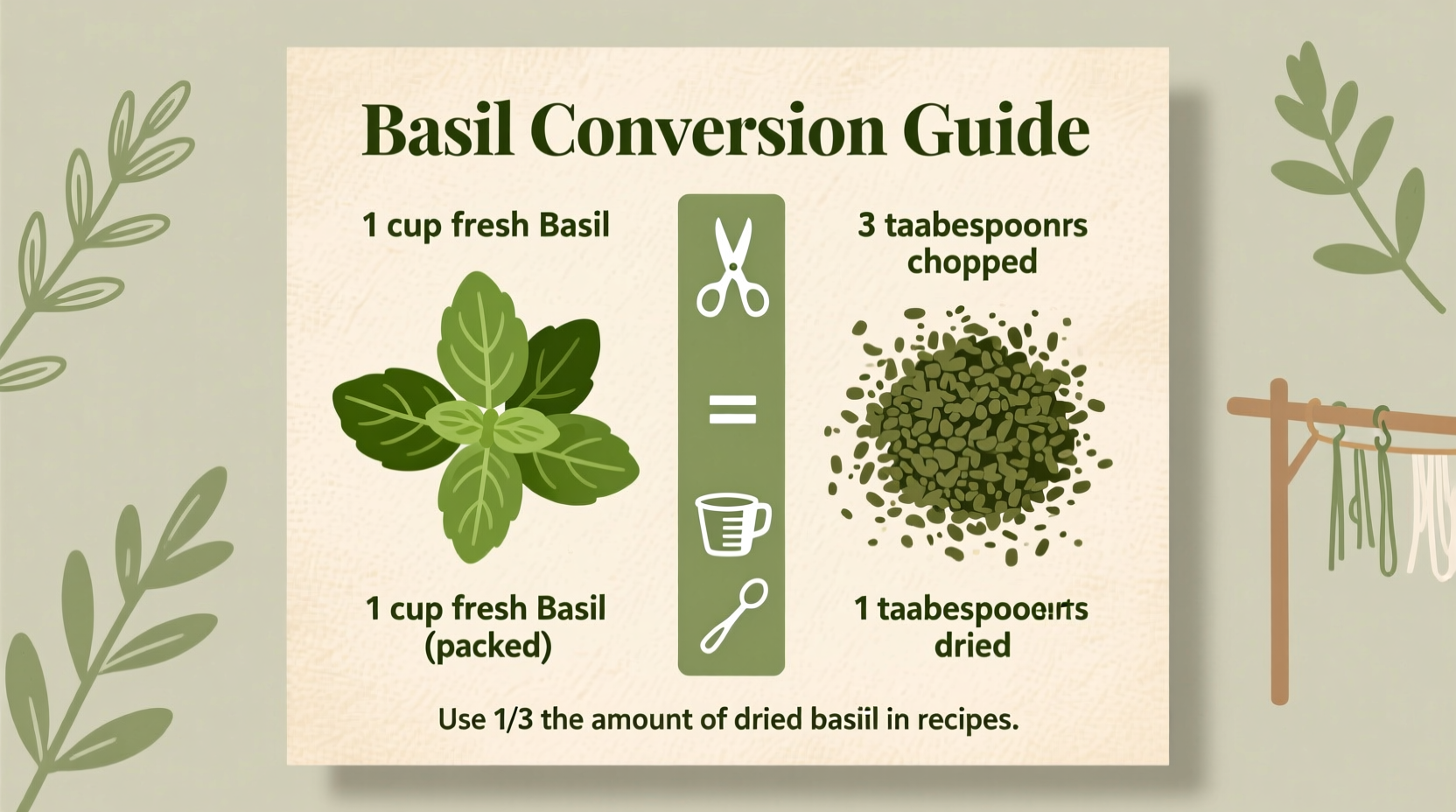
3 parts fresh basil = 1 part dried basil
This means that for every 1 tablespoon of fresh chopped basil, use 1 teaspoon of dried. Similarly, 1 cup of loosely packed fresh basil equals about 1/3 cup of dried.
This 3:1 ratio accounts for the loss of water during drying while acknowledging that not all flavor compounds survive dehydration. While dried basil is more concentrated by weight, it lacks the bright top notes of fresh due to evaporation of volatile oils such as linalool and estragole.
Pro Tip: When substituting, always start with less dried basil—about ¾ of the converted amount—and taste before adding more. You can add, but you can't remove.
Practical Usage: How to Use Each Form Effectively
Fresh Basil: Maximizing Aroma and Color
Fresh basil shines in applications where its delicate nature can be preserved. It should never be cooked for long periods, as heat rapidly degrades its essential oils and turns leaves black.
- Add at the end: Stir into pasta sauces, soups, or risottos in the final 30 seconds of cooking.
- Raw preparations: Essential in pesto, caprese salad, bruschetta, and fresh salsas.
- Infusions: Steep whole sprigs in olive oil or vinegar for flavored bases.
- Garnish: Whole or chiffonaded leaves elevate finished dishes visually and aromatically.
To prepare fresh basil, wash gently and pat dry. Remove leaves from stems (which are fibrous and bitter), then stack and slice into thin ribbons (chiffonade) or chop finely. Avoid metal knives if possible—carbon steel can accelerate browning; ceramic or plastic blades are preferable.
Dried Basil: Building Depth in Long-Cooked Dishes
Dried basil excels in recipes requiring extended simmering, where its stable compounds have time to rehydrate and disperse.
- Stews and braises: Add early so the herb integrates fully into the sauce matrix.
- Dry rubs and spice blends: Combine with oregano, thyme, garlic powder, and marjoram for Italian seasoning.
- Tomato-based sauces: Works well in canned or jarred sauces where fresh herbs aren’t practical.
- Baked goods: Used sparingly in savory breads or focaccia doughs.
For optimal flavor release, crush dried basil between your fingers before adding to hot liquids. This action breaks cell walls and liberates trapped oils. Avoid sprinkling whole dried leaves onto cold dishes—they remain harsh and indigestible.
Variants & Types of Dried Basil
Not all dried basil is created equal. Processing methods and plant varieties influence quality and performance.
1. Air-Dried vs. Freeze-Dried
- Air-dried: Most common. Leaves are hung or placed in dehydrators. Flavor diminishes moderately; color darkens.
- Freeze-dried: Preserves more volatile oils and original green hue. More expensive but closer to fresh in profile. Reconstitutes quickly in liquid.
2. Whole Leaf vs. Crumbled/Ground
| Type | Best For | Storage Life |
|---|---|---|
| Whole leaf (dried) | Custom grinding, visual appeal in rustic dishes | Up to 3 years |
| Crumbled | General cooking, blending into mixes | 2–2.5 years |
| Fine powder | Marinades, rubs, uniform distribution | 1.5–2 years (loses potency faster) |
3. Specialty Varieties
- Dried Thai Basil: Retains licorice-mint notes; suitable for curries and stir-fries.
- Lemon Basil (dried): Citrus undertones work well in seafood and dressings.
- Holy Basil (Tulsi): Medicinal use predominates; less culinary, more often brewed as tea.
Note: Dried specialty basils follow the same 3:1 conversion rule but may require adjustment based on individual potency.
Comparison with Similar Ingredients
Basil is frequently confused with other herbs, especially when dried. Misidentification leads to incorrect substitutions and flawed outcomes.
| Herb | Flavor Difference | Substitution Advice |
|---|---|---|
| Oregano (dried) | More pungent, earthy, slightly bitter; dominant in pizza sauce | Use half the amount if replacing basil; not ideal in sweet applications |
| Marjoram | Sweeter, milder cousin of oregano; sometimes labeled “sweet oregano” | Better substitute than oregano, but still lacks basil’s anise note |
| Thyme | Woody, camphorous, less sweet | No direct substitute; combine with parsley for complexity |
| Parsley (flat-leaf) | Grassy, neutral; used for freshness without strong flavor | Cannot replace basil’s sweetness; acceptable only as garnish stand-in |
“Dried oregano will dominate a dish where fresh basil should sing. Know your herbs—not all greens are interchangeable.” — Chef Elena Rossi, Culinary Instructor, Institute of Italian Cuisine
Practical Tips & FAQs
How do I store dried basil to preserve flavor?
Keep in an airtight container away from light, heat, and moisture. A dark glass jar in a cool pantry is ideal. Label with purchase date. Properly stored, dried basil retains good flavor for 12–18 months, though peak quality fades after one year.
Can I make my own dried basil at home?
Yes. Hang small bunches upside down in a warm, dry, dark room for 1–2 weeks. Alternatively, use a food dehydrator at 95°F (35°C) until brittle. Oven drying is possible at lowest setting (170°F / 77°C) with door slightly open, but risks scorching. Once dry, crumble leaves and discard stems. Store immediately.
Why does my dried basil taste bitter?
Bitterness indicates age or poor storage. Old dried basil oxidizes, producing off-flavors. Excessive heat during drying or cooking can also extract tannins. Always use fresh-smelling, green-toned dried basil. If it smells dusty or musty, replace it.
Is there a weight-based conversion?
Yes. On average:
- 1 ounce (28g) fresh basil ≈ 0.33 ounces (9–10g) dried basil
- 1 cup loosely packed fresh basil ≈ 10g fresh weight → ~3.3g dried
For precision baking or commercial formulations, use a digital scale and adjust for batch-specific density.
Can I rehydrate dried basil?
Yes, and doing so improves integration. Soak 1 teaspoon dried basil in 1 tablespoon warm water, broth, or olive oil for 10–15 minutes before use. This softens texture and releases more flavor. The infused liquid can also be incorporated into the dish.
What dishes should never use dried basil?
Avoid dried basil in:
- Pesto (use fresh only)
- Ceviche or tartare (requires raw freshness)
- Caprese salad (appearance and texture matter)
- Cocktails like basil gimlet
These rely on the crisp, aromatic lift that only fresh basil delivers.
Does freezing count as preservation like drying?
Freezing preserves more flavor than drying but alters texture. Frozen basil turns dark and mushy when thawed, making it unsuitable for garnish. However, it works well in cooked dishes. Blanch leaves briefly, freeze flat on trays, then transfer to bags. Use within 6 months. No conversion needed—frozen basil measures the same as fresh.
Smart Storage Hack: Blend blanched fresh basil with a little olive oil, freeze in ice cube trays, and store cubes in freezer bags. One cube ≈ 1 tablespoon chopped basil. Ideal for soups and stews.
Summary & Key Takeaways
Accurate conversion between fresh and dried basil is critical for balanced seasoning. Remember these core principles:
- The standard ratio is 3:1—three units of fresh basil equal one unit of dried.
- Fresh basil offers bright, floral notes best added at the end of cooking or used raw.
- Dried basil provides earthy depth suited to long-simmered dishes but lacks aromatic complexity.
- Always start with less dried herb and adjust to taste.
- Store dried basil properly to extend shelf life and maintain quality.
- Never substitute dried basil in raw or presentation-focused dishes like pesto or caprese.
- Freeze-dried or home-dried basil may outperform mass-market versions in flavor retention.
Cooking is both art and science—respecting ingredient transformations elevates results. Whether you're adapting a family recipe or improvising with what's on hand, knowing how to convert fresh basil to dried ensures your dishes remain flavorful, authentic, and consistent. Keep this guide handy next to your spice rack, and cook with confidence.
Test the conversion yourself: Prepare two batches of tomato sauce—one with 3 tablespoons fresh basil, another with 1 teaspoon dried, added early. Taste side by side to experience the difference firsthand.




 浙公网安备
33010002000092号
浙公网安备
33010002000092号 浙B2-20120091-4
Comments
No comments yet. Why don't you start the discussion?