
When a recipe calls for fresh thyme but you only have dried in your spice cabinet, or vice versa, knowing the correct conversion ratio is essential for achieving balanced flavor. Many home cooks assume a one-to-one substitution, but that approach often results in dishes that are either under-seasoned or overpoweringly herbal. The truth is, dried thyme is significantly more concentrated than its fresh counterpart due to the removal of water during the drying process. Understanding how to accurately convert between fresh and dried thyme—especially when measuring by the tablespoon—can elevate the consistency and quality of your cooking. This guide provides a detailed, practical reference for converting fresh thyme to dried thyme using standard tablespoon measurements, while also exploring flavor profiles, storage practices, and real-world applications in both everyday and professional kitchens.
Definition & Overview
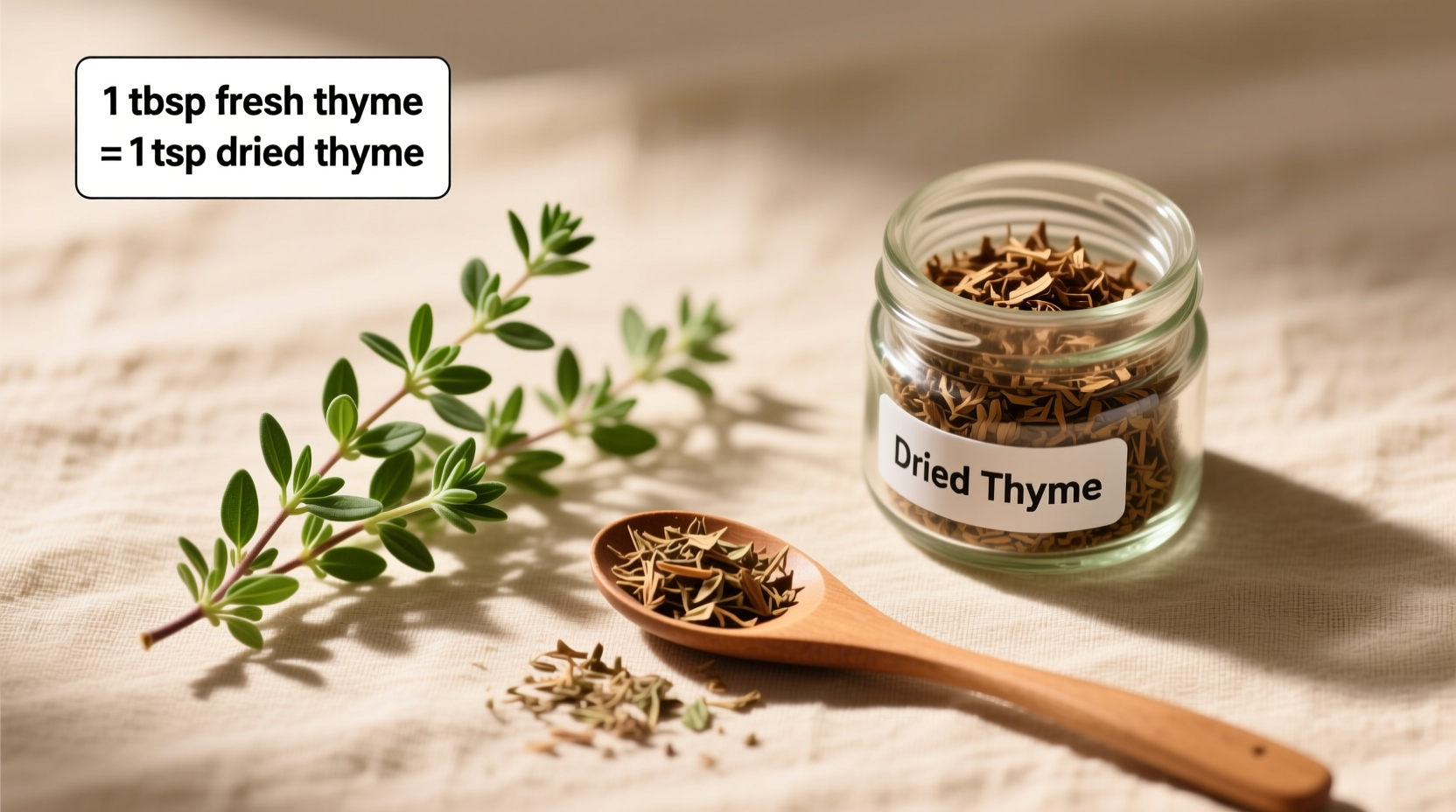
Thyme (Thymus vulgaris) is a perennial herb belonging to the mint family (Lamiaceae), native to the Mediterranean region. It has been used for centuries in both culinary and medicinal contexts, prized for its aromatic leaves and resilience in cultivation. In modern cooking, thyme appears in two primary forms: fresh and dried. Fresh thyme consists of whole sprigs with small green leaves attached to thin, woody stems. Dried thyme is produced by dehydrating fresh leaves, resulting in crumbled, brittle foliage with intensified flavor compounds.
The herb plays a foundational role in many global cuisines. It is a key component of French bouquet garni and herbes de Provence, frequently used in Italian braises, Middle Eastern stews, and Creole seasoning blends. Its subtle yet assertive presence enhances meats, soups, vegetables, and sauces without dominating other ingredients. Because of its widespread use, having a reliable method to convert between fresh and dried forms ensures recipe fidelity whether you're preparing a rustic chicken fricassee or a delicate vegetable gratin.
Key Characteristics
| Characteristic | Fresh Thyme | Dried Thyme |
|---|---|---|
| Flavor Profile | Delicate, slightly floral, with citrusy and earthy notes | More pungent, concentrated, with intensified earthiness and less brightness |
| Aroma | Lightly fragrant, herbal, with hints of lemon and camphor | Sharper, deeper, more resinous scent; loses some top notes |
| Color | Deep green leaves on woody stems | Olive-green to brownish-gray, crumbly texture |
| Heat Level | None – purely aromatic | None – non-pungent, no capsaicin-like heat |
| Culinary Function | Adds freshness, complexity, and aroma during cooking or as garnish | Imparts deep, long-lasting flavor; ideal for slow-cooked dishes |
| Shelf Life | 7–10 days refrigerated in a damp paper towel | 6–12 months if stored properly in an airtight container away from light |
Practical Usage: How to Convert Fresh Thyme to Dried by the Tablespoon
The most widely accepted conversion ratio between fresh and dried thyme is **3:1**—meaning three parts fresh thyme equal one part dried. This accounts for the loss of moisture and concentration of essential oils during dehydration. However, applying this ratio effectively requires understanding volume versus leaf yield, especially when measuring tablespoons.
One tablespoon of **fresh thyme leaves**, stripped from the stem, contains approximately 3 grams of herb material. In contrast, one tablespoon of **dried thyme** weighs about 1.5 grams but delivers a much stronger flavor due to compaction and oil concentration. Therefore, the accurate volumetric substitution is:
- 1 tablespoon fresh thyme ≈ 1 teaspoon dried thyme
- 1 teaspoon fresh thyme ≈ ¼–½ teaspoon dried thyme (depending on dish intensity)
- 3 teaspoons (1 tbsp) fresh = 1 teaspoon dried
This means if a recipe calls for 1 tablespoon of chopped fresh thyme, you should substitute exactly **1 teaspoon of dried thyme**. Using a full tablespoon of dried thyme would result in a flavor that is nine times stronger than intended, potentially overwhelming the dish.
Pro Tip: Always strip fresh thyme leaves from the stems before measuring. Stems are fibrous and inedible, so including them in your tablespoon measurement reduces actual usable herb content. Use your fingers or a fork to drag down the stem and release the tiny leaves efficiently.
Step-by-Step Conversion Guide
- Evaluate the Recipe Requirement: Check whether the recipe specifies \"fresh thyme, chopped\" or \"dried thyme.\" If it says \"1 tbsp fresh thyme leaves,\" proceed to step 2.
- Strip Leaves from Stems: Remove all leaves from fresh sprigs before measuring. One average sprig yields about ¾ tsp of leaves.
- Measure Accurately: Use measuring spoons to level off both fresh and dried thyme. For fresh, lightly pack the leaves; for dried, avoid over-packing unless specified.
- Apply the 3:1 Ratio: Divide the amount of fresh thyme by three to get the equivalent dried quantity. Example: 3 tbsp fresh → 1 tbsp dried.
- Taste and Adjust: Add half the calculated dried amount first, cook for several minutes, then taste. Dried herbs take time to rehydrate and release flavor, especially in dry-heat applications.
Real-World Application Examples
Example 1: Roasted Chicken with Herbs
A traditional roast chicken recipe may call for 2 tablespoons of chopped fresh thyme rubbed under the skin and scattered around the pan. To substitute dried thyme, use 2 teaspoons instead. The reduced volume prevents excessive bitterness while still providing aromatic depth.
Example 2: Beef Stew
In long-simmering dishes like beef stew, dried thyme performs exceptionally well because it slowly releases flavor over time. A recipe specifying 1 tablespoon fresh thyme added at the beginning can be replaced with 1 teaspoon dried thyme. Alternatively, add dried thyme earlier in the cooking process to maximize infusion.
Example 3: Tomato Sauce
For a quick tomato sauce where fresh thyme adds brightness near the end of cooking, substituting dried thyme requires caution. Since dried thyme lacks volatile top notes, consider reducing the amount to ½ teaspoon and finishing with a touch of lemon zest to mimic freshness.
Variants & Types of Thyme
While common garden thyme (Thymus vulgaris) dominates culinary use, several varieties exist, each with unique characteristics affecting substitution accuracy.
- Common (English) Thyme: The standard variety used in most recipes. Has a balanced, slightly peppery flavor. Both fresh and dried versions are interchangeable using the 3:1 rule.
- Lemon Thyme: Features distinct citrus notes due to citral content. When substituting dried lemon thyme for fresh, maintain the same 3:1 ratio, but expect a sharper, more persistent lemon aroma in dried form.
- French (Summer) Thyme: More floral and refined than English thyme. Often preferred in delicate sauces. Drying diminishes its subtlety, so some chefs recommend using only ½ the usual dried amount when substituting.
- Winter Thyme: Hardier and more pungent, better suited to long cooking. Its dried form retains potency longer, making it ideal for winter stews and stocks.
In commercial settings, dried thyme is typically labeled simply as “dried thyme” without varietal distinction, so assume it’s derived from Thymus vulgaris unless otherwise noted. Specialty stores may carry dried lemon or wild mountain thyme, which should be treated as distinct ingredients due to their altered flavor profiles.
Comparison with Similar Ingredients
Thyme is sometimes confused with other small-leafed herbs, particularly oregano and marjoram, which share botanical lineage but differ significantly in flavor and application.
| Herb | Flavor Profile | Substitution for Thyme? | Conversion Notes |
|---|---|---|---|
| Oregano | Bolder, spicier, more robust; dominant in Italian and Mexican cuisine | Limited; not ideal as direct substitute | Use ½ amount oregano if replacing thyme; expect stronger, warmer flavor |
| Marjoram | Sweeter, milder, floral; considered “gentle oregano” | Yes, especially in delicate dishes | Use 1:1 ratio fresh or dried; marjoram fades faster when cooked |
| Rosemary | Pine-like, camphorous, very strong | No; too overpowering | Never substitute rosemary for thyme in equal amounts; use sparingly |
| Savory (Summer/Winter) | Peppery, bean-like; traditional in lentil and bean dishes | Yes, particularly in legume-based recipes | Use 1:1 dried; ¾:1 fresh due to stronger raw bite |
Unlike these herbs, thyme offers a uniquely balanced profile—neither too sharp nor too sweet—making it a cornerstone in seasoning blends rather than a standalone star. Its versatility allows it to complement rather than dominate, which is why precise conversion matters so much in maintaining recipe integrity.
Practical Tips & FAQs
How do I store fresh thyme to extend shelf life?
Wrap fresh thyme sprigs in a slightly damp paper towel and place them in a sealed plastic bag or airtight container in the refrigerator crisper drawer. Properly stored, they will last up to 10 days. Alternatively, stand the stems upright in a glass with an inch of water (like flowers) and cover loosely with a plastic bag.
Can I freeze fresh thyme?
Yes. Freeze whole sprigs on a tray, then transfer to a freezer bag. You can also strip the leaves and freeze them in ice cube trays filled with olive oil or water. Frozen thyme retains flavor well for 6–8 months and can be added directly to soups and stews without thawing.
Is dried thyme as nutritious as fresh?
Dried thyme actually has higher concentrations of certain antioxidants, such as thymol and carvacrol, due to water removal. However, it loses some vitamin C and volatile compounds during drying. From a nutritional standpoint, dried thyme is more potent per gram, but fresh thyme offers broader phytonutrient diversity.
Why does my dried thyme taste dusty or bitter?
This usually indicates age or poor storage. Dried thyme should be vibrant in color and strongly aromatic. If it smells faint or looks grayish, it has likely oxidized and lost potency. Replace it every 6–12 months for optimal performance.
Can I make my own dried thyme at home?
Absolutely. Hang small bunches of fresh thyme upside down in a warm, dry, dark area with good airflow for 7–10 days. Once fully dry, crumble the leaves off the stems and store in an amber glass jar. Homemade dried thyme often retains more flavor than commercially processed versions due to gentler drying methods.
What dishes are best suited for dried thyme?
Dried thyme excels in slow-cooked preparations: braised meats, bean dishes, soups, stews, stuffings, and marinades. It integrates well into dry rubs and spice blends. Avoid using large quantities in cold dishes or garnishes where freshness is key.
Are there any safety concerns with consuming thyme?
Thyme is generally recognized as safe (GRAS) by the FDA when consumed in culinary amounts. However, concentrated thyme essential oil contains high levels of thymol and should not be ingested undiluted. Stick to culinary-grade herbs for cooking.
Expert Insight: “In professional kitchens, we always weigh dried herbs for consistency. But for home cooks, mastering the tablespoon-to-teaspoon shift—from fresh to dried—is the single biggest upgrade in seasoning accuracy.” — Chef Elena Rodriguez, Culinary Instructor, Institute of Artisan Cooking
Summary & Key Takeaways
Converting fresh thyme to dried thyme is not a matter of convenience—it’s a critical element of flavor control in cooking. The standard 3:1 ratio (3 tablespoons fresh = 1 tablespoon dried) must be applied carefully, recognizing that volume measurements require adjustment based on herb density and water content. When substituting, remember:
- 1 tablespoon fresh thyme leaves = 1 teaspoon dried thyme
- Always remove leaves from stems before measuring fresh thyme
- Dried thyme is more potent and less bright; adjust quantity and timing accordingly
- Store dried thyme in a cool, dark place and replace every 6–12 months
- Freeze fresh thyme for long-term preservation and easy use
- Use dried thyme primarily in long-cooked dishes; reserve fresh for finishing touches
Understanding these principles empowers cooks to adapt recipes confidently, maintain flavor balance, and reduce waste. Whether you’re preparing a weeknight pasta sauce or a Sunday pot roast, accurate herb conversion ensures your dishes reflect intentionality and skill. Keep this tablespoon guide handy in your kitchen notebook or save it digitally for quick reference—because great cooking starts with precise seasoning.
Call to Action: Next time you reach for dried thyme, pause and calculate the proper conversion. Taste the difference it makes. Share your experience with others learning the nuances of herb substitution—precision in small details transforms ordinary meals into memorable ones.




 浙公网安备
33010002000092号
浙公网安备
33010002000092号 浙B2-20120091-4
Comments
No comments yet. Why don't you start the discussion?