
Many home cooks assume granulated onion and onion powder are interchangeable without considering the nuances of texture, concentration, and moisture content. While both originate from dehydrated onions, they differ significantly in particle size, potency, and culinary function. Understanding how to convert between granulated onion and onion powder ensures your recipes maintain balanced flavor—especially in spice blends, rubs, soups, and sauces. This guide breaks down the science behind these two forms, provides precise conversion ratios, and offers practical advice for using each effectively in everyday cooking.
Definition & Overview
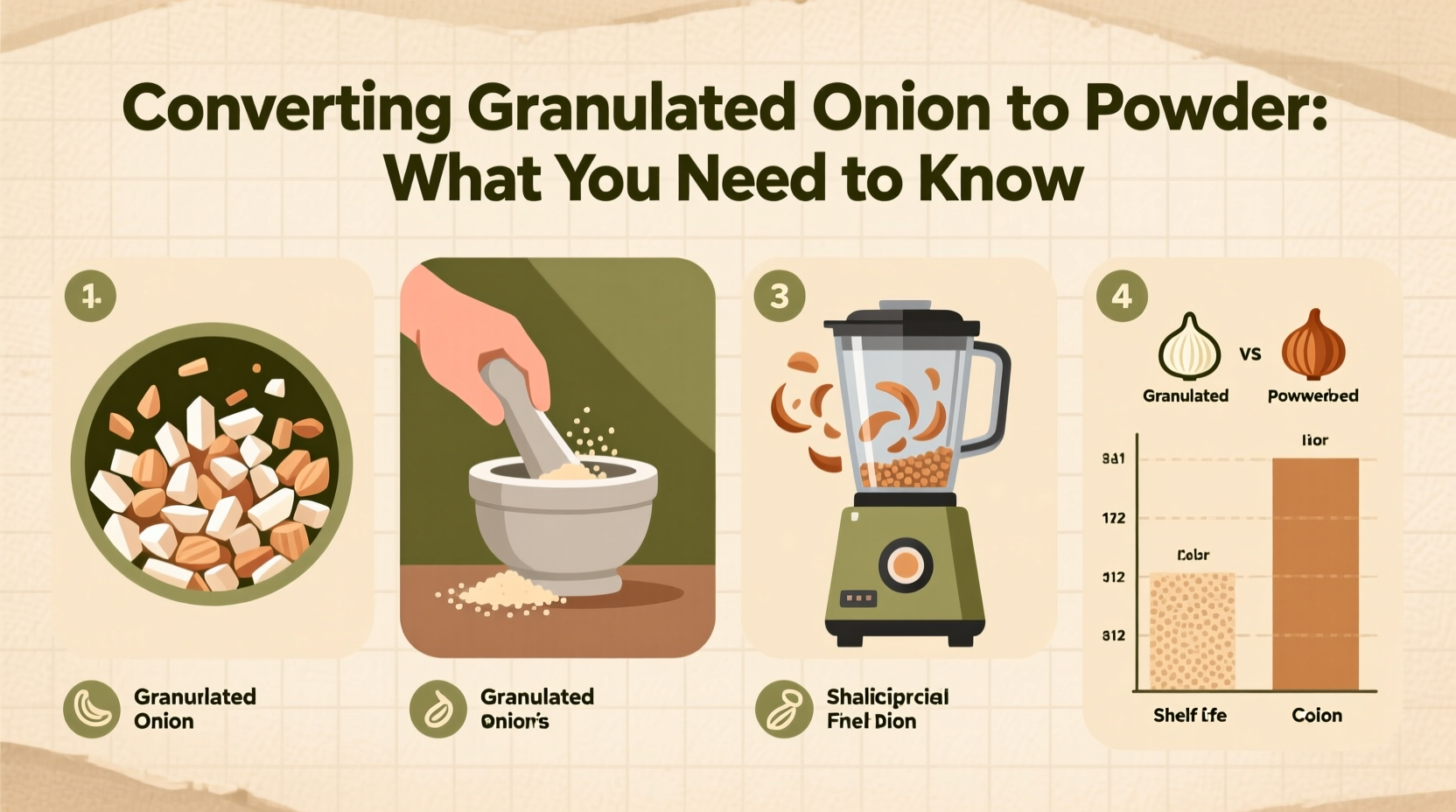
Granulated onion and onion powder are both derived from fresh onions that have been peeled, diced, and dehydrated. After dehydration, the material is milled into different consistencies. Granulated onion consists of small, coarse particles roughly 1–2 mm in diameter, resembling fine sand or coarse cornmeal. It retains a slightly fibrous structure and rehydrates slowly. In contrast, onion powder is ground much finer, typically passing through a 40-mesh sieve, resulting in a soft, flour-like texture that dissolves quickly in liquids.
The production process begins with sweet or yellow onions, chosen for their robust flavor and low water content. These are sliced, blanched (sometimes), and dried using industrial dehydrators at controlled temperatures to preserve volatile sulfur compounds responsible for onion’s characteristic aroma. Once dry, the flakes are either left whole (onion flakes), coarsely ground (granulated), or finely pulverized (powder).
Both forms are shelf-stable, convenient alternatives to fresh onions, offering consistent flavor without the prep work or spoilage concerns. However, because of their differing surface areas and solubility, they behave differently in recipes—making direct substitution without adjustment a common source of flavor imbalance.
Key Characteristics
| Characteristic | Granulated Onion | Onion Powder |
|---|---|---|
| Texture | Coarse, gritty, sand-like granules | Fine, soft, flour-like powder |
| Particle Size | 1–2 mm | Less than 0.5 mm |
| Flavor Intensity | Moderate; slower release | Stronger; rapid dispersion |
| Solubility | Low; dissolves slowly in liquids | High; dissolves almost instantly |
| Aroma | Mildly pungent when dry | Sharper, more concentrated scent |
| Culinary Function | Bulk addition, texture in dry rubs | Uniform seasoning, blending into sauces |
| Shelf Life | 2–3 years (stored properly) | 2 years (loses potency faster) |
| Moisture Content | 4–6% | 3–5% |
The increased surface area of onion powder allows its essential oils and flavor compounds to disperse more rapidly during cooking. This makes it ideal for applications requiring even distribution. Granulated onion, by contrast, contributes subtle bursts of onion flavor and can add slight textural interest in spice blends or coatings.
Practical Usage: How to Use Each Form
Understanding when to use granulated onion versus onion powder can elevate your cooking precision. Their roles are not always interchangeable, but with proper technique, one can be substituted for the other.
Using Granulated Onion
Granulated onion works best in recipes where slow rehydration occurs or where texture matters. It is commonly used in:
- Dry rubs for meats: The coarse texture adheres well to meat surfaces and creates a light crust during searing or smoking.
- Seasoned salts and spice blends: Adds body and visual distinction (e.g., in Old Bay-style mixes).
- Breadings and coatings: Combines with breadcrumbs or flour for chicken, fish, or vegetables.
- Slow-cooked dishes: Soups, stews, and braises allow time for granules to soften and release flavor.
Because granulated onion takes longer to dissolve, it should be added early in the cooking process when used in moist environments. Avoid using it in cold applications like salad dressings or dips unless the dish will sit for several hours.
Using Onion Powder
Onion powder excels in applications demanding uniform seasoning and fast integration:
- Sauces and gravies: Dissolves completely without graininess.
- Marinades: Blends smoothly with oil, vinegar, and other spices.
- Homemade bouillon or seasoning cubes: Provides concentrated flavor without texture.
- Dry soup mixes: Ensures every spoonful tastes consistent.
- Baked goods with savory profiles: Such as cheese biscuits or onion crackers.
Due to its fine grind, onion powder can clump if exposed to humidity. Sift it before use in dry mixes to prevent uneven distribution.
Pro Tip: When making spice blends, combine onion powder with salt first—salt absorbs moisture and helps prevent caking. Store the blend in an airtight container away from heat and light.
Conversion Guidelines: Granulated Onion to Powder (and Vice Versa)
There is no 1:1 volumetric equivalence between granulated onion and onion powder due to differences in density and surface area. However, a reliable conversion framework exists based on flavor concentration and solubility.
Standard Conversion Ratio
As a general rule:
- 1 tablespoon granulated onion ≈ 2¼ teaspoons onion powder
- 1 tablespoon onion powder ≈ 1 tablespoon plus ½ teaspoon granulated onion
This means onion powder is approximately 25% more potent by volume than granulated onion. The finer grind exposes more flavor compounds, increasing perceived strength.
Step-by-Step Conversion Method
- Assess the recipe type: Is it a dry application (rub, seasoning) or wet (sauce, soup)? Wet applications favor powder; dry ones tolerate granules better.
- Measure the original ingredient: Suppose a recipe calls for 1 tbsp granulated onion.
- Apply the ratio: Reduce by 25% when substituting powder. Use 2¼ tsp onion powder instead.
- Taste and adjust: If possible, taste during cooking and add a pinch more if needed.
- Consider rehydration: In no-liquid recipes (e.g., dry rubs), the difference is less critical. In liquid-based dishes, precision matters more.
For reverse substitution (using granulated onion in place of powder), increase the amount slightly and allow extra cooking time for full flavor release.
Quick Reference Chart: Substitution Guide
| If Recipe Calls For: | Substitute With: | Adjustment |
|---|---|---|
| 1 tsp granulated onion | ¾ tsp onion powder | Reduce by 25% |
| 1 tbsp granulated onion | 2¼ tsp onion powder | Use slightly less |
| 1 tsp onion powder | 1¼ tsp granulated onion | Use slightly more |
| 1 tbsp onion powder | 1 tbsp + ½ tsp granulated onion | Increase volume |
Variants & Types of Dried Onion Products
Beyond granulated and powdered forms, several other dried onion products serve specific culinary purposes. Knowing these variants helps you choose the right form—or adapt when substitutions are necessary.
- Onion Flakes: Dehydrated slices, typically 3–5 mm long. Rehydrate easily and mimic cooked onion texture in casseroles or stuffing. Less processed than granulated forms.
- Minced Onion: Smaller than flakes but coarser than granulated. Often used in instant foods and seasoning packets.
- Dehydrated Chopped Onion: Irregular pieces retaining more cellular structure. Best for long-simmered dishes.
- Crispy Fried Onions: Not a direct substitute, but sometimes confused. These are deep-fried and seasoned, used as toppings (e.g., green bean casserole).
- Onion Salt: A blend of salt and onion powder (typically 3:1 ratio). Contains anti-caking agents. Adjust total salt in recipe if substituting.
- Freeze-Dried Onion: Preserves more volatile aromatics and color. More expensive but closer to fresh onion in flavor. Dissolves faster than dehydrated versions.
Each variant has a distinct role. For example, freeze-dried onion is excellent in delicate sauces where fresh onion flavor is desired without added moisture. Onion flakes shine in baked dishes where texture matters.
Comparison with Similar Ingredients
Several allium-based seasonings are often mistaken for granulated onion or onion powder. Understanding the differences prevents flavor mishaps.
| Ingredient | Key Differences | Can Substitute? |
|---|---|---|
| Garlic Powder | Different flavor profile (pungent, sulfurous); stronger aftertaste. Not interchangeable without recipe adjustment. | No—use only if intentional garlic flavor is desired. |
| Onion Salt | Contains salt (usually 60–75%). Using equal amounts increases sodium significantly. | Yes, but reduce added salt by ½ tsp per tsp used. |
| Shallot Powder | Sweeter, more floral. Milder than onion powder. Used in French and Asian cuisines. | Yes, for subtle variation—not for strong onion flavor. |
| Leek Powder | Much milder, grassy note. Rare and specialty item. | Poor substitute for standard onion products. |
| Chives (dried) | Delicate, green onion-like flavor. Loses potency quickly. Texturally different. | No—used as garnish, not base seasoning. |
“In professional kitchens, we keep both granulated onion and onion powder on hand because they serve different mechanical roles. One isn’t better—it’s about function.” — Chef Elena Rodriguez, Culinary Instructor, Institute of Modern Gastronomy
Practical Tips & FAQs
How do I make onion powder from granulated onion?
Grind granulated onion in a clean coffee grinder or spice mill until it reaches a fine, flour-like consistency. Sieve if necessary to remove larger particles. Use immediately or store in an airtight container—note that homemade powder may have shorter shelf life due to residual moisture.
Can I use fresh onion instead of granulated or powdered?
Yes, but adjust for moisture. As a rough guide: 1 tablespoon granulated onion ≈ ¼ cup finely chopped fresh onion, sautéed and drained. Fresh onion adds water and requires longer cooking to eliminate raw bite. Not suitable for dry rubs or shelf-stable mixes.
Why does my onion powder clump?
Humidity is the primary culprit. Always store in a cool, dark, dry place. Add a silica gel packet to long-term storage containers. Sifting before use restores flowability.
Does onion powder lose flavor over time?
Yes. While safe indefinitely, potency declines after 18–24 months. Test freshness by rubbing a pinch between fingers—if the aroma is faint, it’s time to replace it.
Is there a noticeable taste difference between brands?
Yes. Some manufacturers use higher-heat drying, which caramelizes sugars and creates a sweeter profile. Others prioritize pungency. Taste-test small batches before committing to large recipes.
Can I rehydrate granulated onion quickly?
Place 1 tbsp granulated onion in 2 tbsp hot water for 10 minutes. Use both liquid and solids in soups or stews. This mimics the effect of sautéed onions more closely than adding dry granules.
Mini Case Study: Fixing a Bland Chili
A home cook followed a chili recipe calling for 2 tbsp granulated onion but found the final dish lacked depth. Upon review, they realized they had accidentally used onion powder instead—without adjusting the quantity. Because onion powder is more potent, the excess created an acrid, overly sharp background note. The fix? Next batch: reduced onion powder to 1½ tbsp, added ½ tsp smoked paprika and 1 tsp tomato paste to balance. Result: richer, rounder flavor. Lesson: precise conversion preserves harmony.
Storage & Shelf Life Best Practices
To maximize longevity and flavor retention:
- Store in airtight glass or metal containers (plastic can absorb odors).
- Keep away from stove, dishwasher, or windows—heat and moisture degrade quality.
- Label containers with purchase or grinding date.
- Buy in small quantities if usage is infrequent—spices do not improve with age.
- Never store above the stove or near salt, which attracts moisture.
Check potency every 6 months. Rub a small amount in your palm and smell. Strong, sweet-onion aroma indicates freshness. Flat or musty scent means it’s time to replace.
Summary & Key Takeaways
Granulated onion and onion powder are not interchangeable without adjustment. Recognizing their physical and chemical differences ensures accurate seasoning and superior results.
- Onion powder is more concentrated—use about 25% less when substituting for granulated onion.
- Granulated onion adds texture and is preferred in dry rubs and breading.
- Conversion is not 1:1; rely on volume adjustments and recipe context.
- Other dried onion forms (flakes, minced, freeze-dried) serve unique roles.
- Proper storage preserves potency for up to three years.
- Always verify substitutions in critical applications like sauces, marinades, and spice blends.
Mastering the use of dried alliums elevates your pantry’s potential. Whether you’re building a barbecue rub or perfecting a soup base, knowing how to convert granulated onion to powder—and why it matters—puts precision in your hands.




 浙公网安备
33010002000092号
浙公网安备
33010002000092号 浙B2-20120091-4
Comments
No comments yet. Why don't you start the discussion?