
Baking cookies is one of the most satisfying kitchen rituals—until they come out of the oven looking like thick, doughy mounds instead of the golden, slightly crisp-edged treats you expected. When cookies fail to spread properly, it’s usually not bad luck; it’s a sign that something in your recipe or method needs adjusting. The good news? Most issues causing poor cookie spread are easily diagnosed and fixed with small tweaks. Whether you're baking chocolate chip, oatmeal, or sugar cookies, understanding why cookies don’t spread will help you achieve consistent, bakery-quality results.
Why Cookie Spread Matters
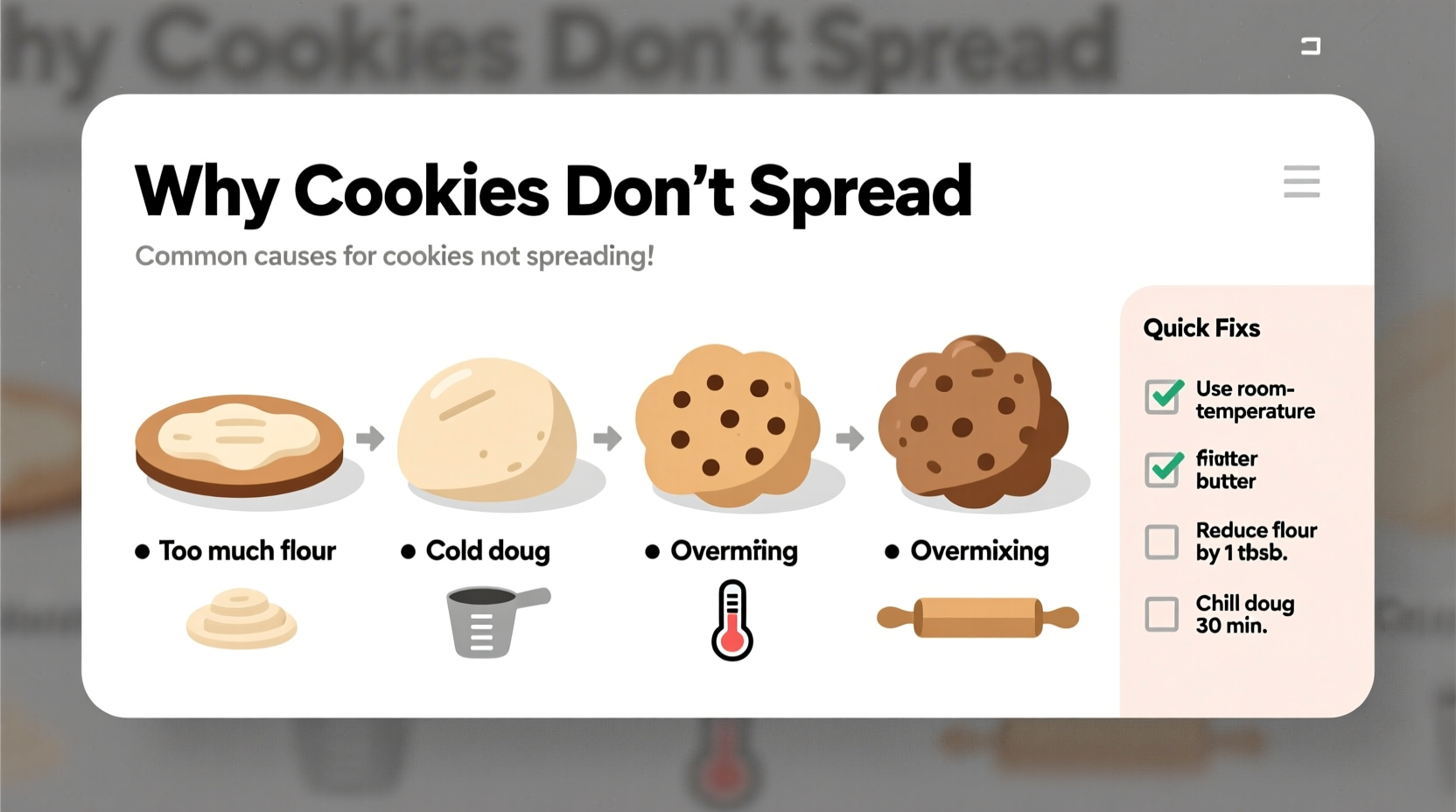
The way a cookie spreads during baking affects its texture, thickness, and overall appeal. Proper spreading creates a balance between chewy centers and crisp edges. Cookies that don’t spread stay too thick, often remaining undercooked inside while browning on the outside. On the flip side, over-spreading leads to thin, crispy wafers that may burn at the edges. Achieving the ideal spread means controlling how the dough melts, sets, and browns in the oven.
Spread begins the moment the fat in the dough starts to melt. As the cookie heats up, the structure softens, allowing gravity to flatten the dough. Then, as proteins set and sugars caramelize, the shape stabilizes. Interrupting this process—through incorrect ingredients, temperature issues, or oven conditions—can halt or delay spreading.
Common Causes of Poor Cookie Spread
Several factors influence how much a cookie spreads. Identifying the root cause is key to fixing the issue. Below are the most frequent culprits behind cookies that refuse to flatten.
1. Too Much Flour
One of the top reasons cookies don’t spread is excess flour. Measuring flour by scooping directly from the bag compacts it, leading to up to 25% more than the recipe intends. This extra flour absorbs moisture and strengthens gluten, making the dough stiff and resistant to spreading.
2. Cold or Soft Butter Issues
Butter temperature plays a crucial role. If butter is too cold, it won’t cream properly with sugar, trapping less air and melting slower in the oven. Conversely, butter that’s too soft or melted can make the dough greasy and cause uneven spreading or excessive spread later.
3. Over-Chilled Dough
Refrigerating cookie dough improves flavor and texture, but if the dough is too cold when placed in the oven, the fats take longer to melt. This delays spreading, often resulting in tall, dense cookies that never flatten.
4. Incorrect Leavening Agents
Baking soda and baking powder help cookies rise and spread. Using expired leavener or substituting one for the other can disrupt the chemical reaction needed for proper expansion. Baking soda requires acid (like brown sugar or buttermilk) to activate; without it, your cookies may not spread fully.
5. Oven Temperature Inaccuracy
An oven that runs too hot sets the outer edges of the cookie too quickly, trapping the center and preventing outward spread. Conversely, an oven that’s too cool delays melting and spreading, leaving cookies doughy and thick.
“Even a 25-degree variance in oven temperature can dramatically alter cookie spread. Always use an oven thermometer.” — Chef Lydia Tran, Pastry Instructor at Boston Culinary Academy
Do’s and Don’ts: A Quick Reference Table
| Do | Don’t |
|---|---|
| Weigh flour using a kitchen scale | Scoop flour directly from the bag |
| Use room-temperature butter (65–70°F) | Use melted or ice-cold butter |
| Let chilled dough sit 10 minutes before baking | Bake straight from the fridge |
| Test baking powder/soda freshness monthly | Assume old leavener still works |
| Verify oven temp with a standalone thermometer | Trust the oven’s display setting |
Step-by-Step Fixes for Better Spread
If your last batch didn’t spread, follow this troubleshooting sequence to diagnose and correct the problem:
- Weigh your ingredients – Replace volume measurements with weight (grams) for precision. For all-purpose flour, use 120g per cup.
- Check butter consistency – It should indent slightly when pressed but not collapse. Leave refrigerated butter at room temperature for 45–60 minutes before use.
- Warm chilled dough – If the dough has been refrigerated, let it sit on the counter for 10–15 minutes before portioning and baking.
- Test your leavener – Drop ½ tsp baking soda into vinegar. It should bubble immediately. For baking powder, mix ½ tsp with hot water—bubbling indicates activity.
- Calibrate your oven – Place an oven thermometer inside and preheat for 20 minutes. Adjust the temperature dial if needed to match the recipe.
- Bake one test cookie first – Bake a single scoop to check spread. If it doesn’t flatten after 2 minutes, the dough is likely too cold or over-floured.
Real Example: Fixing a Family Recipe Gone Wrong
Sarah had been making her grandmother’s famous chocolate chip cookies for years, but recently they came out puffy and doughy. She followed the same steps, yet something changed. After reviewing her process, she realized she’d switched to a new brand of flour with higher protein content and started chilling the dough overnight for better flavor. While both choices improved taste, the combination led to excessive gluten development and cold dough—killing the spread.
She adjusted by reducing flour by 1 tablespoon per cup, letting the dough warm slightly before baking, and switching back to a lower-protein all-purpose flour. The next batch flattened beautifully, with crisp edges and soft centers just like Grandma’s.
Frequently Asked Questions
Can I fix dough that’s already too stiff?
Yes. If the dough feels dry and resists spreading, add 1–2 teaspoons of milk, water, or melted butter per cup of flour used. Mix gently until the dough softens slightly but remains cohesive.
Why do my cookies spread too much sometimes but not enough others?
Inconsistent spread often points to variable butter temperature or inaccurate flour measurement. One day you might use softer butter, another day pack the flour too tightly. Standardizing your prep eliminates these fluctuations.
Does pan type affect spreading?
Absolutely. Dark, nonstick pans absorb more heat and can cause faster edge setting, limiting spread. Light-colored aluminum pans distribute heat more evenly. For best results, use light metal sheets and line them with parchment paper.
Final Checklist Before Baking
- ✅ Flour measured correctly (preferably by weight)
- ✅ Butter at proper room temperature (not melted)
- ✅ Dough not too cold (rested briefly if chilled)
- ✅ Baking soda/powder fresh and appropriate for the recipe
- ✅ Oven preheated and verified with thermometer
- ✅ Baking sheet lined with parchment or silicone mat
Conclusion: Perfect Spread Is Within Reach
Cookies that don’t spread aren’t a lost cause—they’re a signal to fine-tune your technique. With attention to ingredient temperature, accurate measuring, and oven performance, you can consistently bake cookies that spread just right. Small adjustments lead to big improvements in texture and appearance. The next time your cookies come out too thick, resist the urge to scrap the batch. Instead, apply these proven fixes and enjoy the transformation from doughy disappointments to golden perfection.




 浙公网安备
33010002000092号
浙公网安备
33010002000092号 浙B2-20120091-4
Comments
No comments yet. Why don't you start the discussion?