
When it comes to tackling home improvement tasks, few tools are as essential as a reliable drill. Whether you're hanging shelves, assembling furniture, or installing fixtures, choosing between a corded and cordless drill can significantly impact your efficiency, comfort, and results. While both options have loyal followings, understanding their strengths and limitations helps ensure you pick the right one for your specific needs. This guide dives deep into the practical differences between corded and cordless drills, focusing on real-world performance in typical DIY scenarios.
Power and Performance: Where Corded Drills Shine
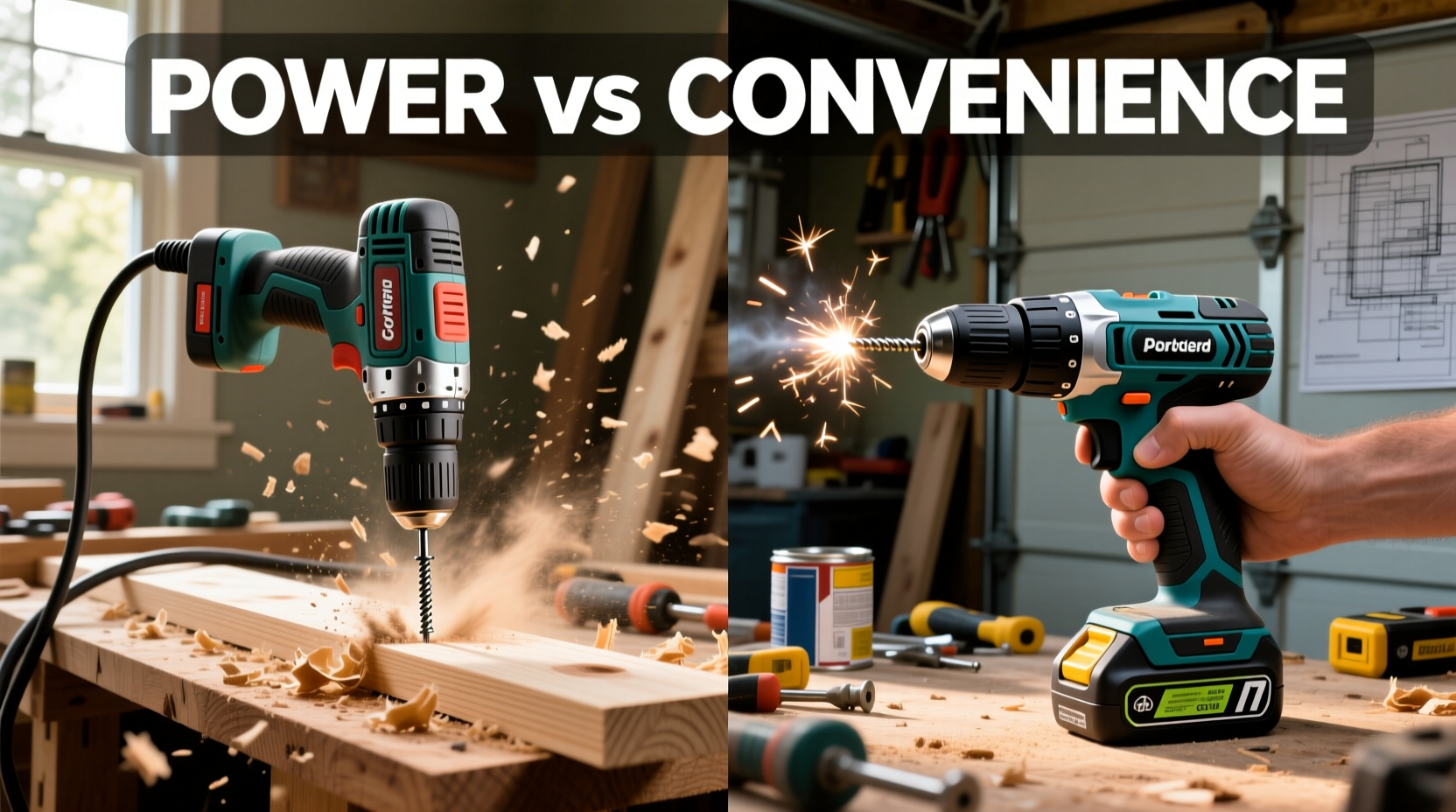
Corded drills have long been the standard in professional construction and heavy-duty applications. Their primary advantage lies in consistent, uninterrupted power delivery. Because they draw electricity directly from an outlet, corded models don’t rely on batteries that degrade over time or lose charge mid-task. This means they can sustain high torque and RPM (revolutions per minute) without faltering, even under prolonged stress.
For DIYers working with dense materials—such as hardwood, masonry, or metal—a corded drill offers superior drilling speed and reliability. Tasks like creating pilot holes for lag bolts, driving screws into joists, or using hole saws benefit greatly from the steady energy supply. There’s no risk of the motor slowing down as the battery drains, which often happens with lower-end cordless units.
“On job sites where continuous operation is key, nothing beats the raw power and endurance of a corded drill.” — Mark Reynolds, Master Carpenter & Tooling Consultant
However, this power comes at a cost: mobility. The power cord limits range and requires access to outlets, extension cords, or power strips. In rooms with limited outlets or during outdoor projects, this can be a major inconvenience. Tangled cords also pose tripping hazards, especially in cluttered workspaces.
Battery-Powered Freedom: The Rise of Cordless Convenience
Cordless drills have evolved dramatically over the past decade. Modern lithium-ion batteries deliver impressive voltage—commonly 12V, 18V, or 20V Max—with faster charging times and longer lifespans than older NiCad models. Today’s top-tier cordless drills rival corded versions in torque and speed, making them viable for most household tasks.
The biggest advantage of cordless drills is portability. You’re not tethered to an outlet, so you can move freely between rooms, work on ladders, or drill in remote areas like attics or garages. This flexibility makes them ideal for homeowners who value ease of use and quick setup. No more hunting for outlets or managing bulky extension cords.
Additionally, cordless drills tend to be lighter and more compact, reducing user fatigue during extended use. Many models come with built-in LED lights to illuminate dark spaces, and electronic clutch settings allow precise control over screw depth—features now standard across mid-range and premium brands.
Comparative Analysis: Key Factors for Home Users
To make an informed decision, consider how each factor aligns with your typical DIY workload. Below is a detailed comparison tailored to common homeowner needs.
| Factor | Corded Drill | Cordless Drill |
|---|---|---|
| Power Output | Consistent, high wattage; ideal for tough materials | Varies by voltage; high-end models approach corded performance |
| Mobility | Limited by cord length and outlet access | Unrestricted movement; excellent for tight or elevated spaces |
| Battery/Runtime | N/A – unlimited runtime with power source | Limited by charge; typically 20–60 minutes under load |
| Weight & Ergonomics | Heavier due to motor and cord; may cause fatigue | Lighter and balanced; easier to handle overhead |
| Maintenance | Minimal; inspect cord for damage | Battery care critical; avoid full discharges and overheating |
| Upfront Cost | Generally lower ($30–$70) | Higher ($80–$200+, depending on kit and brand) |
| Lifespan | Longer with proper care; motors last decades | Batteries degrade after 2–5 years; tool body may outlast them |
This table illustrates that while corded drills win in raw power and longevity, cordless models excel in usability and adaptability—critical factors for casual DIYers.
Real-World Scenario: Choosing Based on Project Type
Consider Sarah, a homeowner planning several weekend projects: mounting a TV bracket, assembling a patio bench, and installing curtain rods. She works primarily indoors, moves frequently between rooms, and prefers minimal setup time. A cordless drill allows her to carry the tool and battery from room to room without plugging and unplugging. The lightweight design makes overhead drilling less taxing, and she completes all tasks efficiently using a single 18V model.
In contrast, her neighbor James is renovating a basement bathroom. He needs to drill through concrete block for anchor bolts, drive numerous long screws into framing, and use a hole saw to cut openings for plumbing. These demands require sustained high torque. A corded drill ensures he doesn’t face battery depletion mid-wall, and the extra power reduces strain on the motor. For him, the cord is a minor trade-off for unmatched reliability.
Your choice should mirror your project profile. Occasional light-duty jobs favor cordless. Frequent, heavy-duty work leans toward corded—or possibly owning both.
Maximizing Value: Smart Usage Tips and Maintenance
Regardless of your choice, proper care extends tool life and maintains performance. Here are actionable steps to get the most from your investment.
- For corded drills: Regularly inspect the power cord for frays or kinks. Store coiled loosely to prevent internal wire damage.
- For cordless drills: Remove the battery when not in use for extended periods. Avoid leaving it on the charger after full charge.
- Keep chuck jaws clean—dust and debris reduce bit grip and accuracy.
- Use the correct drill bit for the material. Using a wood bit on tile or metal accelerates wear and risks motor stall.
- Store in a dry place. Humidity corrodes electrical contacts and battery terminals.
Also, consider future-proofing. Brands like DeWalt, Milwaukee, and Makita offer interchangeable battery platforms across tools. If you later buy a cordless impact driver or circular saw, you can reuse the same battery—saving money and reducing clutter.
Step-by-Step Guide: Selecting the Right Drill for Your Needs
Follow this logical process to determine which drill type suits your DIY lifestyle.
- Assess your typical projects. List recent or planned tasks. Are they occasional (e.g., picture hanging) or intensive (e.g., deck building)?
- Evaluate your workspace. Do you have easy access to power outlets? Will you work in attics, outdoors, or elevated areas?
- Determine frequency of use. Will you use the drill monthly, weekly, or just once a year?
- Set a budget. Cordless kits cost more upfront but offer versatility. Factor in potential future tool purchases within the same system.
- Test before buying. Visit a hardware store and hold both types. Note weight, grip comfort, and trigger responsiveness.
- Read reviews focused on durability. Look for feedback on motor longevity and battery degradation over time.
- Decide: Buy one or both? Many experienced DIYers own a cordless for daily tasks and a corded backup for demanding jobs.
Frequently Asked Questions
Can a cordless drill handle masonry work?
Yes, but only if it’s a hammer drill with sufficient torque (at least 18V). Use carbide-tipped masonry bits and apply steady pressure. However, for large-scale concrete drilling, a corded rotary hammer remains more effective.
How long do cordless drill batteries last?
Lithium-ion batteries typically last 2–5 years or 300–500 charge cycles. Lifespan depends on usage patterns, storage temperature, and whether they’re fully drained regularly. Proper care can extend life beyond five years.
Is it worth repairing a corded drill?
Often yes. Motors and switches are replaceable. Unless the housing is cracked or the cord is internally damaged, repair costs are usually low compared to replacement.
Conclusion: Balancing Power and Practicality
The debate between corded and cordless drills isn’t about declaring a universal winner—it’s about matching the tool to your lifestyle. For most home DIYers, the convenience, portability, and modern performance of cordless drills make them the smarter default choice. They simplify everyday tasks and encourage tool use by lowering friction.
Yet, corded drills retain a vital role for those tackling frequent, high-intensity jobs. Their unwavering power and near-infinite runtime remain unmatched. The most practical solution for many households may be owning both: a cordless for 90% of tasks, and a corded option reserved for the toughest challenges.
Ultimately, your drill should serve you—not slow you down. By understanding the trade-offs between power and convenience, you can invest wisely and complete your projects with confidence, efficiency, and satisfaction.




 浙公网安备
33010002000092号
浙公网安备
33010002000092号 浙B2-20120091-4
Comments
No comments yet. Why don't you start the discussion?