
When it comes to equipping a home workshop or tackling weekend DIY tasks, few tools are as essential as a reliable drill. Whether you're assembling furniture, installing shelves, or building a deck, your choice between a corded and cordless drill can significantly impact efficiency, convenience, and long-term satisfaction. While both types have loyal followings, understanding their strengths and limitations helps ensure you invest in the right tool for your specific needs.
The debate isn't about declaring one type superior overall—it's about matching the tool to the task. For some homeowners, uninterrupted power and high torque matter most. For others, freedom of movement and compact design outweigh raw performance. This guide breaks down the key differences, real-world applications, and expert insights so you can confidently choose the best option for your home projects.
Power and Performance: What You Can Expect
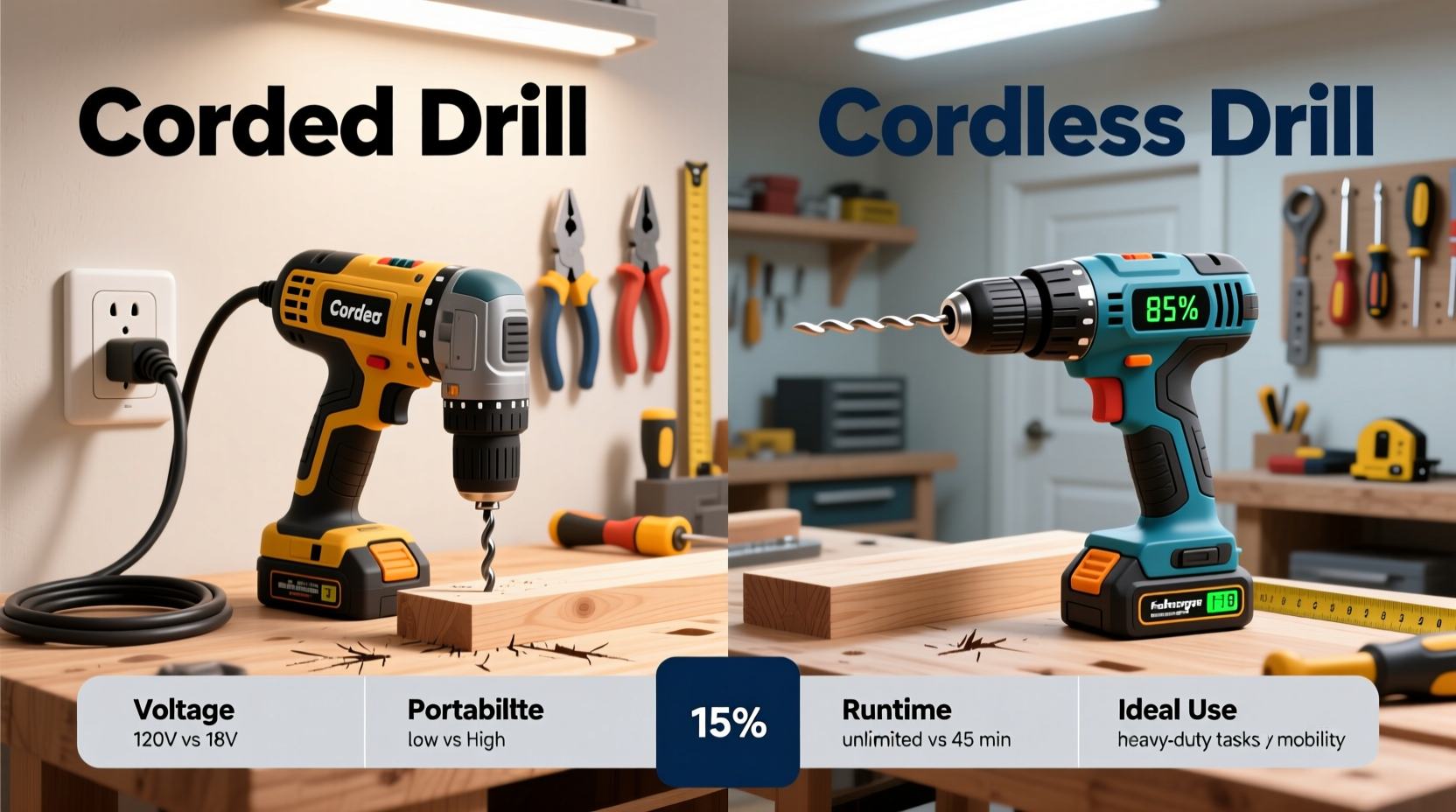
One of the most critical distinctions between corded and cordless drills lies in consistent power delivery. Corded drills draw electricity directly from an outlet, allowing them to maintain full power output without fluctuations. They typically offer higher torque and RPM (revolutions per minute), making them ideal for heavy-duty applications such as drilling through masonry, hardwood, or metal.
In contrast, cordless drills rely on rechargeable lithium-ion batteries, usually ranging from 12V to 20V. While modern models have closed the performance gap significantly, they still face voltage drop under prolonged strain. Once the battery begins to deplete, especially during continuous use, the motor may slow down or lose torque—this can be frustrating when driving multiple large screws or boring deep holes.
“Corded drills remain unmatched for sustained, high-load work. If you're doing demolition or framing, nothing beats constant power.” — Mark Delaney, Residential Contractor with 18 years of experience
However, advancements in brushless motors and battery technology mean that many cordless drills now deliver up to 90% of the performance of their corded counterparts—more than sufficient for typical household repairs and installations.
Portability and Convenience in Real-World Use
Mobility is where cordless drills truly shine. Without being tethered to an electrical outlet, they offer unmatched flexibility. This makes them perfect for overhead work (like mounting ceiling fans), outdoor tasks (installing fence posts), or navigating tight spaces where extension cords would be cumbersome or hazardous.
Cordless models are also generally lighter and more compact, reducing user fatigue during extended use. Many come with built-in LED lights to illuminate dark corners—a small but valuable feature when drilling inside cabinets or under sinks.
On the downside, corded drills require access to a power source and often need extension cords, which limit range and pose tripping hazards. In unfinished basements, garages, or outdoor patios, this can severely restrict workflow unless outlets are strategically placed.
Still, for stationary projects—say, assembling kitchen cabinets along a wall with accessible outlets—a corded drill eliminates worries about battery life and provides steady operation throughout the day.
Real Example: Installing Floating Shelves in a Living Room
Consider Sarah, a homeowner installing floating shelves across her living room. The walls are made of drywall with wooden studs behind them. She plans to anchor each shelf with four lag bolts using toggle anchors for added support.
She starts with a 20V cordless drill-driver combo kit. It handles pilot holes easily and drives screws smoothly. However, after installing three shelves, she notices the fourth battery charge weakening—the drill struggles slightly on the final anchors. She pauses to swap batteries, completes the job, but feels inconvenienced by the mid-task interruption.
If she had used a corded drill plugged into a nearby outlet, she could have worked continuously without monitoring battery levels. But because the project spanned multiple walls and required ladder use, the lack of cord management made the cordless option safer and easier to maneuver.
In this case, while the corded tool offered more consistent power, the cordless model provided greater practicality for the environment and setup.
Battery Life, Charging, and Long-Term Costs
With cordless drills, battery life is a central concern. Most standard batteries last between 15 and 45 minutes of active use, depending on workload and voltage. High-torque applications drain power faster. To mitigate downtime, many users purchase spare batteries—an additional expense that can add $50–$100 per unit.
Charging times vary from 30 minutes (with fast chargers) to several hours. Even with quick-charging tech, waiting for a depleted battery disrupts workflow. Over time, battery capacity diminishes; most lithium-ion packs retain about 70–80% of original performance after 2–3 years of regular use.
Corded drills avoid these issues entirely. There’s no charging, no replacement batteries, and no degradation over time—just plug in and go. Their upfront cost is often lower, too. A quality corded drill typically ranges from $40 to $80, whereas a comparable cordless model (including battery and charger) starts around $100 and can exceed $200 for premium kits.
Yet, consider total ownership value. If you already own batteries from another tool in the same brand ecosystem (e.g., DeWalt, Milwaukee, Ryobi), adding a cordless drill becomes more economical since you won’t need new batteries or chargers.
| Feature | Corded Drill | Cordless Drill |
|---|---|---|
| Average Price | $40–$80 | $80–$200+ (with battery) |
| Power Consistency | Constant, full power | Varies with battery level |
| Mobility | Limited by cord length | Full freedom of movement |
| Battery Replacement Cost | N/A | $50–$120 every 2–4 years |
| Ideal For | Heavy-duty, long-duration jobs | Light to medium tasks, mobility-critical work |
Choosing Based on Your DIY Frequency and Project Type
Your decision should align with how often you use a drill and what kinds of projects you typically undertake.
- Occasional Users: If you only drill a few times a year—for picture hanging, IKEA furniture, or minor repairs—a cordless drill offers excellent convenience with minimal investment. Modern entry-level models are powerful enough for these tasks.
- Frequent DIYers: Homeowners who regularly tackle renovations, shelving, or outdoor builds may benefit from owning both types. Use the cordless for speed and portability, and keep a corded model on hand for demanding jobs requiring sustained effort.
- Rental Properties & Landlords: A cordless drill is often preferred due to its versatility across different units and locations, especially when electrical access varies.
Checklist: How to Decide Between Corded and Cordless
- Assess how often you perform drilling tasks at home.
- Determine whether your common projects involve hard materials (concrete, thick wood).
- Evaluate electrical outlet availability in your usual work areas.
- Decide if portability matters (e.g., ladders, stairs, outdoor use).
- Check compatibility with existing power tool batteries.
- Set a realistic budget including potential future battery replacements.
- Test both types in-store if possible—feel the weight and trigger response.
Expert Recommendations and Industry Trends
Professional builders and electricians increasingly favor cordless systems due to improvements in energy density and motor efficiency. According to data from Grand View Research, the global cordless power tool market is expected to grow at 7.3% annually through 2030, driven largely by consumer demand for wireless convenience.
Still, trade professionals working on large-scale construction sites often maintain both options. “I carry two cordless drills on my belt—one with a fresh battery,” says James Rourke, an electrician. “But when I’m rough-wiring a whole house and need to drill dozens of holes through joists, I’ll bring out the corded hammer drill. It just doesn’t quit.”
For homeowners, the trend leans heavily toward cordless. Major manufacturers now prioritize innovation in battery runtime, brushless motors, and compact designs. Some even offer hybrid solutions—corded drills with auxiliary battery ports—but these remain niche.
“The average homeowner doesn’t need industrial-grade power. Today’s cordless drills handle 95% of household tasks effortlessly.” — Lisa Tran, Tool Editor at *HomeFix Weekly*
FAQ
Can a cordless drill handle masonry work?
Yes, but with caveats. A 20V cordless hammer drill can bore into brick or block, especially with a carbide-tipped masonry bit. However, it will drain the battery quickly and may overheat during prolonged use. For extensive masonry work, a corded hammer drill or dedicated rotary hammer is recommended.
Is it worth repairing a corded drill instead of replacing it?
Often, yes. Corded drills have fewer complex components than cordless models. Common issues like worn brushes or faulty switches can be fixed affordably. Given their durability, a well-maintained corded drill can last decades.
Do all cordless drill batteries fit all brands?
No. Batteries are generally brand-specific and often model-line-specific. DeWalt’s 20V MAX batteries won’t work with Makita’s 18V LXT line, even though voltages are similar. Always verify compatibility before purchasing additional tools or batteries.
Final Thoughts and Recommendation
So, which is better: corded or cordless? The answer depends on your priorities.
If you value raw power, uninterrupted operation, and low lifetime cost—and your projects stay close to power sources—a corded drill remains a smart, dependable choice. It excels in workshops, garages, and fixed-location renovations.
But for most modern DIYers, the cordless drill strikes the optimal balance. Its portability, ease of storage, and adequate power make it the go-to tool for everyday household needs. With spare batteries and proper care, it can handle nearly any task short of professional-grade demolition.
Ultimately, the best approach might be dual ownership. Start with a mid-range cordless drill for general use. As your skills and projects grow, supplement it with a corded model for heavier jobs. This combination gives you maximum flexibility without compromising performance.




 浙公网安备
33010002000092号
浙公网安备
33010002000092号 浙B2-20120091-4
Comments
No comments yet. Why don't you start the discussion?