
For homeowners tackling weekend repairs, assembling furniture, or upgrading their living space, choosing the right drill can make the difference between a smooth job and a frustrating afternoon. The debate between corded and cordless drills isn’t just about preference—it’s about understanding how each tool performs under real-world conditions. While both have loyal followings, the best choice depends on your project frequency, workspace limitations, and performance expectations.
Modern DIYers value convenience, but they also need reliability. A tool that stalls mid-screw or dies halfway through a shelving installation defeats the purpose of efficiency. This guide breaks down the core differences between corded and cordless drills, evaluates their strengths and weaknesses, and helps you decide which model belongs in your garage or toolbox—without relying on marketing hype.
Power and Performance: Where Each Drill Excels
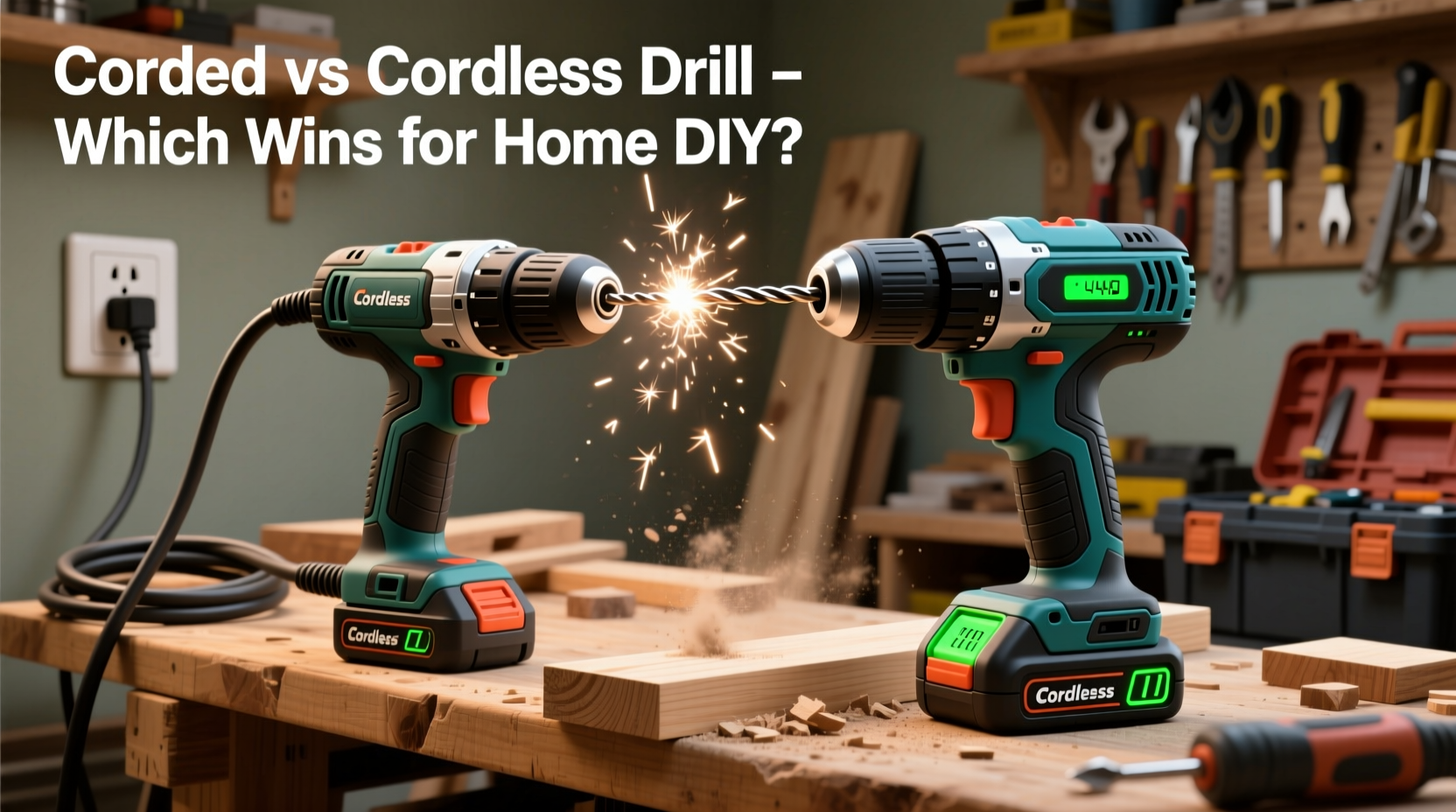
The most fundamental distinction between corded and cordless drills lies in consistent power delivery. Corded drills plug directly into an electrical outlet, providing a constant flow of electricity. This means they deliver full torque and speed without degradation over time. For heavy-duty applications like drilling into masonry, hardwood, or metal, this uninterrupted power gives corded models a clear edge.
Cordless drills, powered by lithium-ion batteries, have improved dramatically over the past decade. High-end models now offer torque ratings that rival corded units—some exceeding 600 inch-pounds. However, even with advanced brushless motors, power output diminishes as the battery drains. Under sustained load, such as driving multiple long screws into dense material, a cordless drill may slow down or heat up, reducing efficiency.
“While cordless tools have closed the gap, nothing matches the continuous high-torque performance of a well-built corded drill for prolonged, intensive work.” — Mark Reynolds, Professional Carpenter & Tool Instructor
For occasional users, this difference may not matter. But if you're installing subflooring, building decks, or doing extensive remodeling, a corded drill will maintain peak performance throughout the task. On the other hand, for light tasks like hanging pictures, assembling ready-to-build furniture, or minor repairs, cordless drills deliver more than enough power with far greater flexibility.
Portability and Workspace Flexibility
Mobility is where cordless drills shine. Without being tethered to an outlet, they allow movement across rooms, up ladders, or into unfinished basements and attics where power sources are limited. This freedom makes them ideal for homeowners who work in varied environments or lack access to grounded outlets near their project area.
Consider a scenario: you’re mounting floating shelves across three walls in a living room. With a corded drill, you’ll need to manage a power cord across the floor, potentially tripping hazards or limiting reach. You might even require multiple outlet adapters or daisy-chained extensions. A cordless model eliminates this entirely—just pick it up and go.
However, cordless drills introduce new constraints: battery life and recharge time. Most standard 18V batteries last between 20 and 45 minutes under moderate use. High-torque applications drain them faster. While having a spare battery solves part of the problem, it adds cost and requires planning. Forgetting to charge your battery before starting a job can halt progress entirely.
In contrast, corded drills never run out of power. As long as there's electricity, they work. This makes them reliable for marathon sessions. But they demand a clean workspace setup and safe cord routing to prevent accidents—especially around children or pets.
Real Example: The Weekend Renovation Dilemma
Sarah, a homeowner in Portland, decided to refinish her basement over two weekends. Her first task was installing wall anchors for storage racks. She started with a cordless drill she already owned. It worked fine for the first few hours, but by Saturday afternoon, the battery died—and her charger was upstairs. With no backup, she had to stop working until the next day.
On Sunday, she borrowed her neighbor’s corded drill. Though heavier and less convenient to move around, it ran continuously without issue. She completed the entire installation in four hours, uninterrupted. “I realized I needed both,” she said later. “The cordless is great for small jobs, but when I’m serious about getting something done, I don’t want to worry about battery levels.”
Battery Life, Maintenance, and Long-Term Costs
One of the hidden costs of cordless drills lies in battery longevity. Lithium-ion batteries typically last 2–3 years with regular use before their capacity drops significantly. After that, they hold less charge, take longer to recharge, and may fail unexpectedly. Replacing a single high-capacity battery can cost $70–$150—nearly as much as a basic corded drill.
Corded drills have no such limitation. They contain fewer components prone to failure (no battery management system, no charging circuit), making them simpler to maintain. Their motors are often built to industrial standards, designed for thousands of hours of operation. While they can still wear out, especially if used improperly, their lifespan generally exceeds that of comparable cordless models.
That said, corded drills aren’t immune to drawbacks. Cords can fray, plugs can break, and motor brushes (in brushed models) eventually wear down and need replacement. But these issues are predictable and often repairable at low cost.
When evaluating total cost of ownership, consider usage patterns. If you use a drill once every few months, a mid-range cordless model offers excellent value. But if you’re frequently engaged in home improvement, a durable corded unit may save money over five years despite higher initial weight and reduced mobility.
Comparison Table: Corded vs Cordless Drills
| Feature | Corded Drill | Cordless Drill |
|---|---|---|
| Power Source | Electrical outlet | Rechargeable battery (e.g., 18V Li-ion) |
| Continuous Power | Yes – consistent torque | No – decreases as battery drains |
| Portability | Limited by cord length and outlet access | High – works anywhere, no cords |
| Battery/Lifespan | Longer motor life; no battery degradation | Batteries degrade after 2–3 years |
| Initial Cost | Lower ($40–$80) | Higher ($100–$200+, plus spare batteries) |
| Weight | Heavier due to motor size | Lighter, especially compact models |
| Best For | Frequent, heavy-duty use | Occasional, mobile, or quick tasks |
Choosing Based on Your DIY Profile
Your personal workflow matters more than general recommendations. Consider these scenarios:
- The Occasional Fixer: You change light fixtures, hang mirrors, and assemble IKEA furniture twice a year. A cordless drill is ideal—lightweight, easy to store, and always ready.
- The Weekend Warrior: You tackle one major project per month—building benches, installing shelving, or refinishing cabinets. A mid-tier cordless with dual batteries balances convenience and capability.
- The Home Remodeler: You’re retiling, framing, or doing structural upgrades. A corded drill provides the stamina and power needed for extended use without interruption.
- The Multi-Tool User: You own other cordless tools (saw, sander, impact driver). Sticking with the same brand’s battery platform saves money and simplifies charging.
Checklist: Choosing the Right Drill for Your Needs
- Assess how often you use power tools (weekly, monthly, rarely).
- Determine your typical project type (light assembly vs. structural work).
- Check available power outlets in your common workspaces.
- Decide whether you already own compatible cordless tools.
- Set a budget that includes potential battery replacements.
- Test weight and grip comfort—if possible—in-store or via reviews.
- Look for key features: variable speed trigger, clutch settings, LED lights (for cordless).
Frequently Asked Questions
Can a cordless drill handle the same jobs as a corded one?
For most household tasks—driving screws, drilling pilot holes, assembling furniture—yes. Modern cordless drills are powerful enough. However, for continuous drilling into hard materials like concrete or thick hardwood beams, a corded drill maintains better performance without overheating or losing power.
Is it worth buying a corded drill in 2024?
Absolutely—if you value reliability and raw power. While cordless technology dominates marketing, professionals and serious DIYers still keep corded drills for specific high-demand applications. They’re also cheaper upfront and don’t suffer from battery obsolescence.
Do cordless drills lose power over time?
Yes, primarily due to battery degradation. Even with proper care, lithium-ion batteries lose capacity after 300–500 charge cycles. The motor remains strong, but reduced runtime makes the tool feel weaker. Eventually, replacing the battery restores performance—or you may need to replace the entire tool if the battery is discontinued.
Final Recommendation: Own Both, If Possible
The most practical solution for many homeowners isn’t choosing one over the other—it’s owning both. Keep a cordless drill for everyday convenience: hanging curtains, tightening loose cabinet handles, or quick fixes. Reserve the corded model for deep projects requiring endurance and maximum torque.
This dual-tool strategy mirrors what many contractors use: cordless for mobility on site, corded for shop work. It eliminates compromise. You gain flexibility without sacrificing performance when it counts.
If budget allows, start with a quality cordless drill (18V, brushless motor, at least 2Ah battery). Then, add a 7–10 amp corded drill for heavier jobs. Store them properly—dry, away from dust—and they’ll serve you reliably for years.
“The right tool isn’t always the newest one. Sometimes, the old-school corded drill is exactly what you need to get through a tough afternoon of work.” — Lena Patel, Home Improvement Educator
Conclusion
When deciding between a corded and cordless drill for home DIY projects, there’s no universal winner. The answer depends on your habits, workspace, and expectations. Cordless drills win on convenience and versatility; corded models triumph in power and durability. Understanding your actual needs—not just the promises on the box—leads to smarter purchases and better results.




 浙公网安备
33010002000092号
浙公网安备
33010002000092号 浙B2-20120091-4
Comments
No comments yet. Why don't you start the discussion?