
When disaster strikes—be it a storm knocking down a tree limb, a pipe bursting behind a wall, or a door jammed shut during an evacuation—the right tool can mean the difference between quick resolution and dangerous delay. Among essential tools, the humble drill often goes overlooked until it's needed most. But when assembling an emergency toolkit, one critical decision arises: Should you include a corded drill or a cordless model?
This isn't just about preference. It’s about reliability under pressure, availability of power, durability in extreme conditions, and speed of response. While both types have their place in home workshops, only one may truly belong in a kit designed for unpredictable, high-stakes situations.
Power and Performance: The Unmatched Strength of Corded Drills
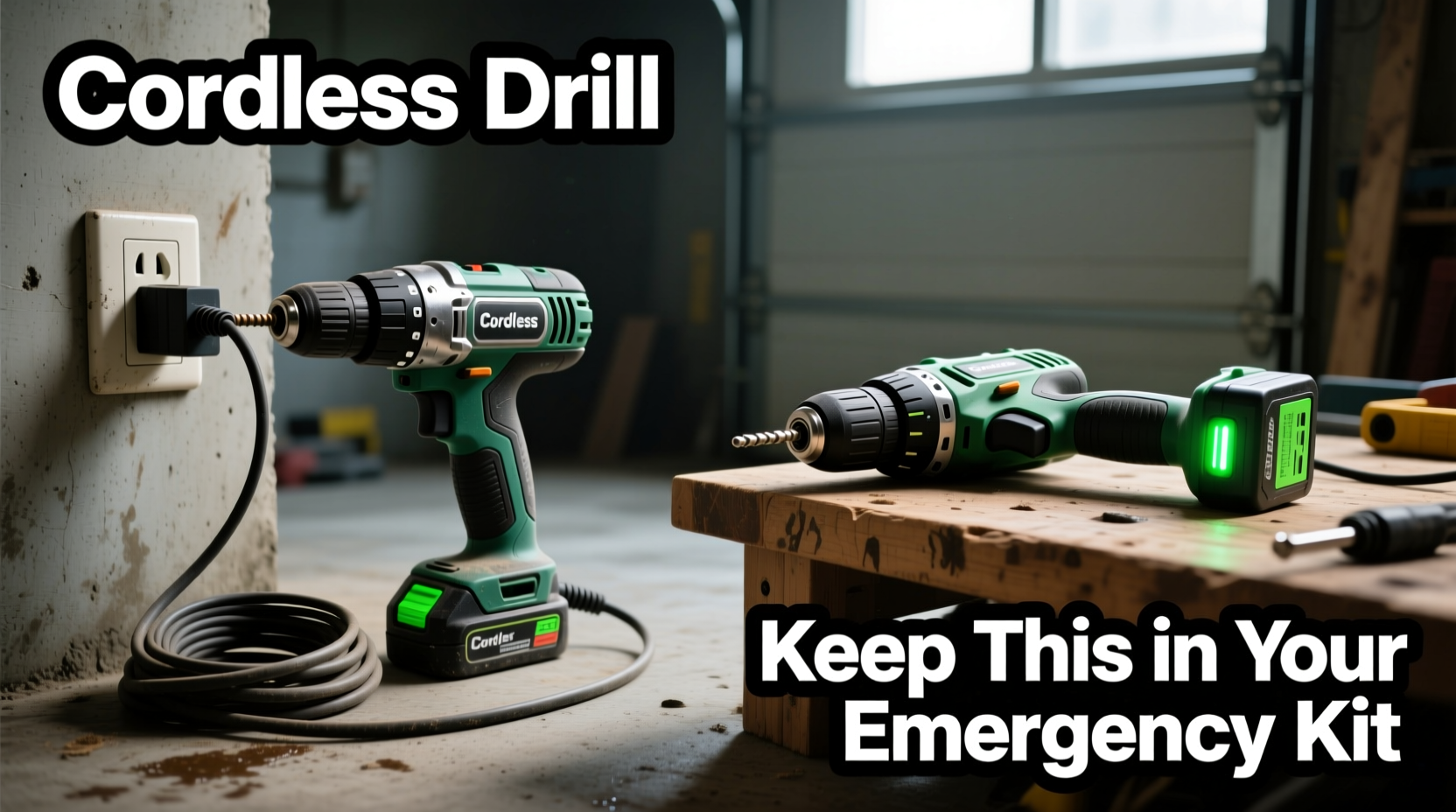
The most immediate advantage of a corded drill lies in its consistent power delivery. Unlike battery-powered tools, corded drills draw electricity directly from an outlet, providing uninterrupted torque and rotational force. This means they can handle tougher materials—thick wood, metal studs, masonry (with the right bit)—without slowing down or overheating.
In an emergency, time is often limited. Imagine needing to drill through a warped door frame to free someone trapped inside after an earthquake. A corded drill delivers sustained RPMs and higher amperage, allowing it to cut through resistance more efficiently than most cordless models—even those with high-voltage batteries.
“Corded drills offer industrial-grade performance that doesn’t dip over time. When lives depend on tool reliability, consistent power matters.” — James Rutherford, Master Electrician & Disaster Response Volunteer
Cordless drills have improved dramatically, especially with the advent of 18V, 20V Max, and even 36V platforms. However, even top-tier models experience voltage sag as the battery drains, leading to reduced torque output. In contrast, a 7–10 amp corded drill maintains full power from start to finish.
Portability and Independence: Why Cordless Wins in Mobility
If power were the only factor, corded drills would dominate every scenario. But emergencies rarely unfold near wall outlets. Power outages are common during storms, fires, or seismic events. In these cases, a corded drill becomes useless without a generator or extension cord setup.
Cordless drills shine here. They operate independently of grid power, making them ideal for remote locations, basements, attics, or outdoor rescue efforts. With spare batteries stored properly, a cordless drill offers true mobility—a crucial asset when seconds count.
Modern lithium-ion batteries hold charges longer, recharge faster, and suffer less from memory effect than older NiCad models. Many emergency responders now carry compact 12V or 18V cordless drills precisely because they’re lightweight, easy to store, and ready to use immediately.
However, this independence comes at a cost: runtime. Even a fully charged high-capacity battery lasts only 20–40 minutes of continuous use, depending on load. Once depleted, recharging requires access to electricity—something not guaranteed post-disaster.
Real-World Scenario: Storm Cleanup After Hurricane Ida
During the aftermath of Hurricane Ida in Louisiana, volunteer crews used both corded and cordless drills to clear debris and reinforce damaged structures. Teams with generators could run corded tools all day, quickly securing tarps and dismantling hazardous roofing. But units operating off-grid relied entirely on cordless systems. One crew reported halting work for hours while batteries recharged using solar chargers—time lost that delayed shelter repairs.
The lesson? Cordless provides unmatched flexibility—but only if you can replenish energy. Without backup charging solutions, its usefulness diminishes rapidly.
Reliability Under Stress: Durability and Environmental Resistance
Emergency environments are harsh: wet floors, dust-filled air, temperature extremes, and physical shocks. How do each drill type fare under such conditions?
Corded drills typically feature heavier-duty motors and metal gear housings, built for prolonged industrial use. Their design prioritizes longevity over weight savings. Most models tolerate brief exposure to moisture and vibration better than budget cordless units. However, they require careful handling around water due to live electrical connections.
Cordless drills, while generally lighter and more ergonomic, often use plastic components to reduce weight. High-end models are sealed against dust and light moisture (rated IP54 or higher), but cheaper variants degrade faster when exposed to humidity or impact. Battery terminals can corrode if stored improperly after exposure to dampness.
| Factor | Corded Drill | Cordless Drill |
|---|---|---|
| Continuous Runtime | Unlimited (with power) | Limited by battery capacity |
| Peak Torque | Higher (7–10+ amps) | Moderate to high (varies by voltage) |
| Mobility | Low (requires outlet/cord) | High (no cords) |
| Performance During Outage | Useless without generator | Functional (if charged) |
| Durability (Long-Term Use) | Excellent | Good to excellent (depends on model) |
| Maintenance Needs | Minimal (check cord/motor) | Battery care required |
Smart Storage and Maintenance: Keeping Your Tool Ready
An emergency toolkit is only as good as its readiness. A drill left unused for months may fail when needed most. Proper storage ensures both types remain functional over time.
For corded drills: Inspect the power cord regularly for fraying or kinks. Store in a dry location to prevent motor corrosion. Plug in occasionally to verify operation, especially before storm season.
For cordless drills: Lithium-ion batteries degrade if left fully charged or completely drained. Best practice is to store them at ~40–60% charge in a cool, dry place. Remove the battery from the tool during long-term storage to prevent parasitic drain.
- Test both drill types quarterly.
- Keep bits organized and coated lightly with oil to resist rust.
- Label cords and batteries clearly for fast identification.
- Include a multi-bit screwdriver adapter for versatility.
Which One Belongs in Your Emergency Toolkit?
The answer depends on your environment, resources, and expected use cases.
If your emergency plan includes a portable generator, power inverter, or access to vehicle charging, a corded drill remains the superior choice for heavy-duty tasks. Its relentless power and lower maintenance make it ideal for prying open jammed panels, installing emergency fasteners, or creating pilot holes in structural beams.
But if you anticipate working off-grid—evacuating to a remote cabin, responding to urban blackouts, or assisting in flood zones—a cordless drill is the only viable option. Its self-contained energy source allows immediate deployment, even in total darkness or flooded rooms where electrical cords pose shock hazards.
Ideally, prepared individuals will own both. But space and budget constraints demand prioritization. For most households, the cordless drill earns the spot in the emergency kit—not because it’s stronger, but because it’s more adaptable.
Step-by-Step: Building a Drill-Ready Emergency Kit
- Choose your primary drill: Select a mid-torque cordless model (18V) with brushless motor for efficiency.
- Add two spare batteries: Store one charged, one at partial charge; rotate monthly.
- Include a universal charger: One that supports USB-C, car adapter, and AC input for maximum flexibility.
- Pack essential bits: Phillips #2, flathead, hex driver, masonry bit, and twist bit set (1/8\", 1/4\").
- Store in a waterproof container: Use a hard-shell case with foam inserts to protect electronics.
- Add safety gear: Include gloves and eye protection—drilling generates sharp debris.
- Label everything clearly: Use glow-in-the-dark tape or printed tags for low-light visibility.
Frequently Asked Questions
Can I use a corded drill with a generator during an outage?
Yes, absolutely. Most standard inverters and portable generators provide enough stable power for corded drills. Just ensure the generator has sufficient wattage (typically 1,500W+) and use a heavy-duty extension cord rated for outdoor use.
How long do cordless drill batteries last in storage?
Lithium-ion batteries retain charge for 1–3 months under ideal conditions (cool, dry, 40–60% charge). After 18–24 months, capacity begins to decline noticeably. Test annually and replace every 3–5 years, even if still functional.
Is it safe to use a cordless drill in wet conditions?
No tool should be used in standing water. However, cordless drills are safer than corded ones in damp environments since there’s no live electrical connection to an outlet. Still, avoid direct contact with moisture and wipe down thoroughly after exposure.
Final Recommendation: Prioritize Adaptability Over Raw Power
In routine home projects, a corded drill often outperforms its wireless counterpart. But emergency preparedness favors resilience and independence. When the lights go out and roads are blocked, having a tool that works without infrastructure is invaluable.
A high-quality cordless drill, paired with disciplined battery management and proper storage, offers the best balance of power, portability, and reliability for crisis situations. It fits neatly into survival kits, functions silently without fuel, and enables rapid action when help is delayed.
That said, never underestimate the value of redundancy. If space allows, include both tools—one for sustained work with power, one for immediate response without it. But if you must choose only one, let necessity guide you: In uncertainty, freedom from the cord wins.




 浙公网安备
33010002000092号
浙公网安备
33010002000092号 浙B2-20120091-4
Comments
No comments yet. Why don't you start the discussion?