
When it comes to tackling DIY tasks around the house—whether you're assembling furniture, installing shelves, or building a deck—the drill is one of the most essential tools in your arsenal. But with two dominant types on the market—corded and cordless—it’s worth asking: which one truly delivers better value and performance for typical home projects?
The answer isn’t as straightforward as “one is better.” Each has strengths that suit different scenarios. Understanding their differences in power, convenience, durability, and cost can help you make an informed decision based on your specific needs.
Power and Performance: Where Each Drill Excels
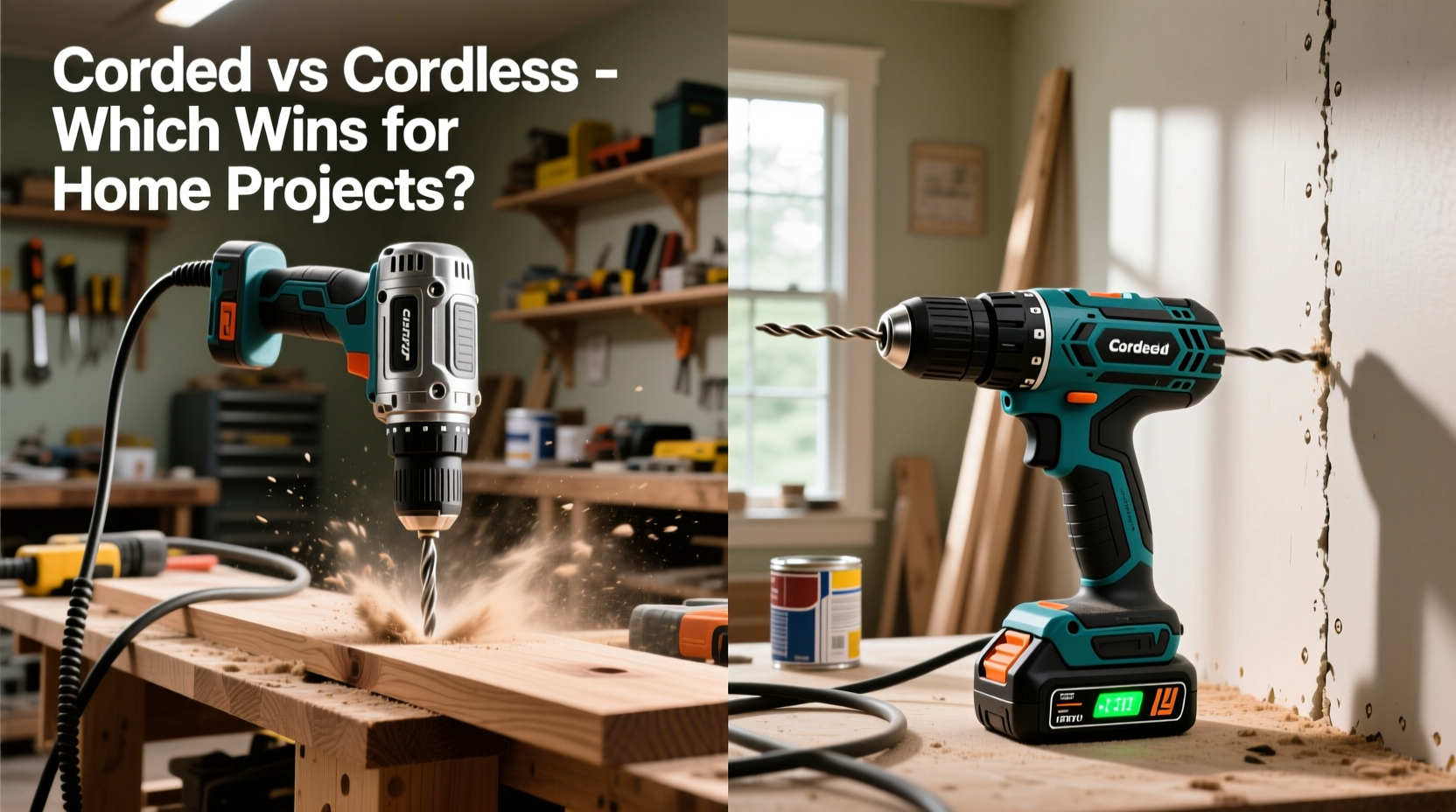
One of the most critical factors in choosing between a corded and cordless drill is performance under load. This includes torque (rotational force), speed consistency, and sustained power delivery during prolonged use.
Corded drills draw continuous electricity from an outlet, meaning they deliver consistent power without voltage drop. They typically offer higher RPM (revolutions per minute) and greater torque, making them ideal for heavy-duty applications like drilling into masonry, hardwood, or metal. If you’re working on a project that demands long periods of continuous operation—such as installing multiple drywall anchors or driving dozens of screws into framing—corded models rarely falter.
In contrast, cordless drills rely on battery packs, usually ranging from 12V to 20V (or even 36V in high-end models). While modern lithium-ion batteries have significantly improved runtime and output, they still experience gradual power loss as the charge depletes. High-torque tasks can drain the battery quickly, especially in lower-voltage models. However, for light-to-moderate household jobs—like hanging pictures, assembling ready-to-assemble furniture, or mounting curtain rods—cordless drills perform more than adequately.
“Corded drills remain unmatched for industrial-grade workloads, but today’s premium cordless models are closing the gap fast—even for serious DIYers.” — Mark Reynolds, Tool Engineering Consultant
Mobility and Convenience: The Cordless Advantage
If there’s one area where cordless drills shine, it’s mobility. Freed from the constraint of a power cord, users enjoy full range of motion whether they’re working overhead, in tight corners, or outdoors. There’s no need to drag extension cords across rooms or worry about tripping hazards.
This makes cordless drills particularly well-suited for homeowners who prioritize ease of use and flexibility. Imagine trying to install ceiling-mounted lights or drill into wall studs behind furniture—tasks that become far simpler without being tethered to an outlet.
However, this freedom comes with trade-offs. You must manage battery charging cycles, carry spares for extended jobs, and ensure compatibility with your existing tool ecosystem if you own other cordless devices from the same brand.
Corded drills, while powerful, limit your workspace to the reach of your extension cord. In older homes with fewer outlets, this can be frustrating. On the plus side, they never run out of juice mid-task, eliminating downtime caused by recharging.
Cost Comparison Over Time
At first glance, cordless drills often appear more expensive. A quality 18V model with one or two batteries and a charger can cost $150–$250. Entry-level corded drills, meanwhile, start as low as $40–$70.
But long-term ownership costs tell a more nuanced story. Consider these points:
- Corded drills are cheaper upfront and require no battery replacements. Their motors are generally built to last longer due to less complex electronics.
- Cordless drills may require new batteries every few years, depending on usage. Replacement packs can cost $50–$100 each. However, many manufacturers offer lifetime warranties or trade-in programs for loyal customers.
- Buying into a cordless platform (e.g., DeWalt 20V MAX, Milwaukee M18) allows you to share batteries across tools—drills, saws, sanders—which can save money over time if you expand your toolkit.
| Factor | Corded Drill | Cordless Drill |
|---|---|---|
| Upfront Cost | $40–$100 | $100–$300+ |
| Battery Replacement | N/A | $50–$120 every 3–5 years |
| Portability | Poor (requires outlet) | Excellent (wireless) |
| Sustained Power Output | High and constant | Varies with charge level |
| Lifespan (with care) | 10+ years | 5–10 years (battery-dependent) |
| Ideal For | Heavy-duty, stationary jobs | Light/moderate, mobile tasks |
Real-World Example: Renovating a Basement Apartment
Consider Sarah, a homeowner converting her basement into a rental unit. Her project includes framing walls, installing electrical boxes, hanging drywall, and mounting cabinets. She initially bought a mid-range cordless drill, assuming its portability would be key.
Early on, the drill worked well for pilot holes and light screw-driving. But when she began securing metal studs with self-tapping screws, the motor struggled, and the battery drained within 20 minutes. Frustrated, she purchased a 7-amp corded drill for $65. Though less convenient to move around, it powered through thick steel with ease and didn’t slow down after hours of use.
Her solution? She now keeps both tools in her garage. The cordless handles quick fixes and small jobs; the corded takes over when power matters most.
Sarah’s experience reflects a growing trend: many savvy DIYers don’t choose between corded and cordless—they use both, strategically.
Which One Should You Choose? A Step-by-Step Decision Guide
Not everyone needs two drills. If you're buying your first or only drill, follow this step-by-step process to determine the best fit:
- Assess Your Typical Projects
Do you mostly hang shelves, assemble furniture, or do minor repairs? A cordless drill is likely sufficient. Do you frequently tackle structural builds, outdoor decks, or major renovations? Lean toward corded—or invest in a high-voltage cordless (18V–20V). - Evaluate Your Workspace
Is your garage or workshop well-outfitted with outlets? Can you easily access power where you work? If not, cordless offers undeniable advantages. - Check Battery Ecosystem Compatibility
If you already own cordless tools (e.g., a circular saw or impact driver), consider sticking with the same brand and voltage platform to share batteries. - Determine Your Budget
If you’re budget-conscious and plan frequent heavy use, a corded drill gives more power per dollar. If convenience and versatility matter more, accept the higher initial cost of a cordless system. - Think Long-Term
Will your needs grow? Starting with a modular cordless system allows you to add tools later. Corded drills are standalone solutions unless you build a dedicated workshop.
Expert Recommendations and Industry Trends
The power tool industry has shifted dramatically toward cordless technology. According to data from Grand View Research, the global cordless power tools market was valued at $15.8 billion in 2023 and is expected to grow at a compound annual growth rate of 6.4% through 2030. Innovation in battery density, motor efficiency, and thermal management continues to close the performance gap.
Still, professionals in construction and manufacturing often keep corded drills on hand for production-line tasks requiring nonstop operation. As one electrician put it: “I’ve got eight cordless tools, but my corded drill is still my go-to for pulling wire through conduit—it just doesn’t quit.”
For homeowners, however, the balance tips toward cordless. Its combination of adequate power, compact design, and wireless freedom aligns perfectly with intermittent, varied-use patterns typical of home maintenance.
Frequently Asked Questions
Can a cordless drill handle heavy-duty tasks like drilling into concrete?
Yes—but only if it’s a hammer drill or rotary hammer model designed for masonry, and preferably 18V or higher. Standard cordless drills lack the percussive action and sustained torque needed for regular concrete work. Even then, expect shorter battery life and potential overheating during extended use.
Are corded drills becoming obsolete?
No. While cordless tools dominate consumer markets, corded drills remain relevant for fixed-station work, commercial applications, and users who prioritize raw power over portability. They also serve as reliable backups when batteries fail or chargers aren’t available.
How long do cordless drill batteries last on a single charge?
It depends on voltage, battery capacity (measured in amp-hours, Ah), and workload. A 2.0Ah 18V battery might drive 150–200 screws in wood before needing a recharge under moderate use. High-drain tasks like drilling through steel or using hole saws reduce runtime significantly. Higher-capacity batteries (4.0Ah–6.0Ah) double that output but add weight.
Final Verdict: Which Is Better for Home Projects?
For most homeowners, a **cordless drill is the better choice**. It strikes the optimal balance between usability, versatility, and performance for everyday tasks. Modern models offer enough power for 90% of common home projects, and their portability eliminates setup hassles.
That said, a **corded drill remains a smart secondary tool**—especially for larger renovations or workshops where consistent power is crucial. It’s also an excellent budget-friendly entry point for beginners testing their interest in DIY.
The truth is, neither tool universally outperforms the other. What matters is matching the drill to your actual use case. By understanding your project frequency, physical workspace, and long-term goals, you can select the right tool—or wisely own both.




 浙公网安备
33010002000092号
浙公网安备
33010002000092号 浙B2-20120091-4
Comments
No comments yet. Why don't you start the discussion?