
Spills on the kitchen floor, pet hair on the couch, crumbs between car seats—quick messes are inevitable in daily life. When seconds count, a handheld vacuum can be your best ally. But choosing between corded and cordless models isn’t as simple as it seems. Each has distinct advantages and trade-offs that affect performance, convenience, and long-term usability. Understanding these differences helps you pick the right tool for fast cleanups without overcomplicating your routine.
Power and Suction: The Core Performance Factor
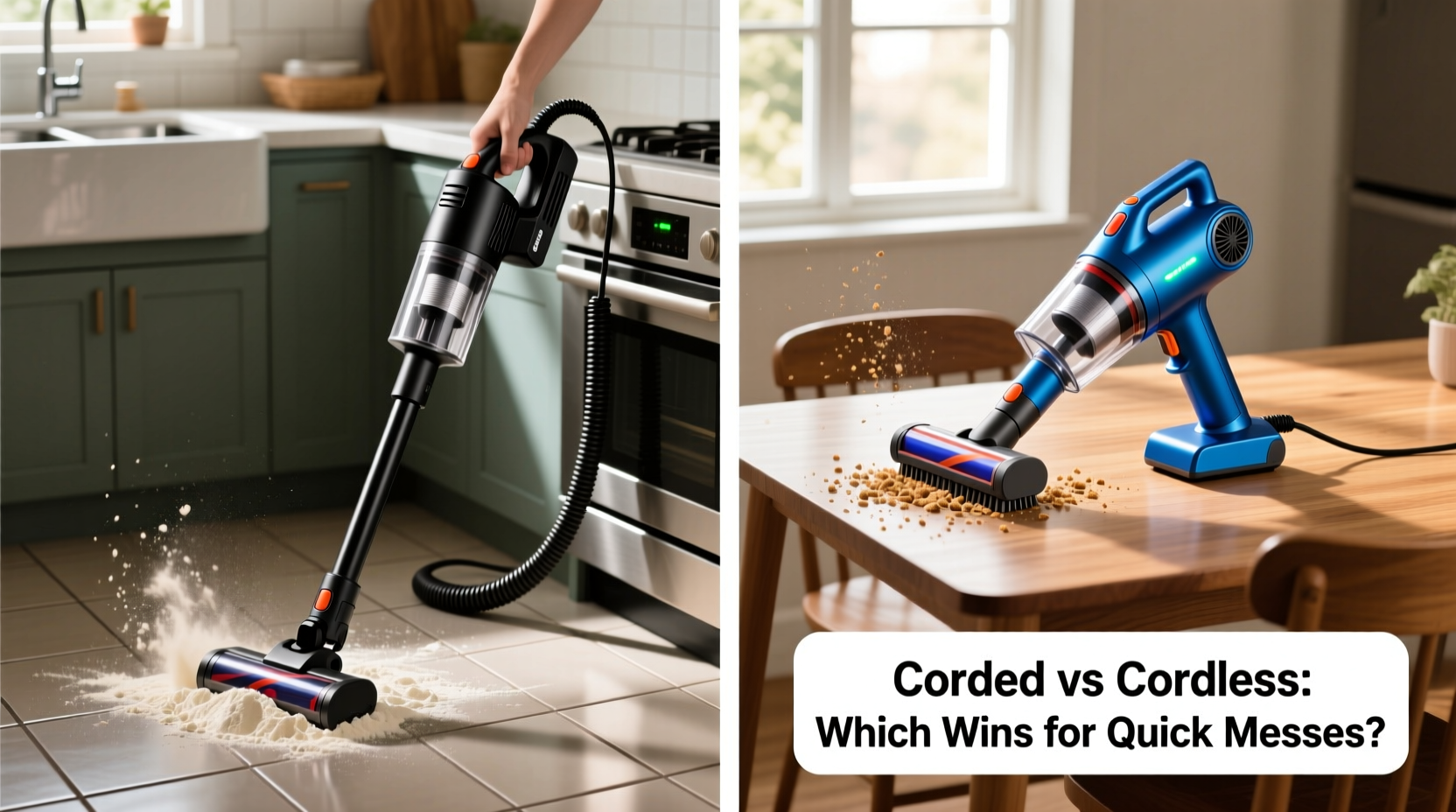
Suction strength is critical when dealing with spills, dust, or debris that cling to surfaces. Corded handheld vacuums draw continuous power from an outlet, allowing them to maintain maximum suction throughout use. Most models operate at consistent wattage, often ranging from 300 to 600 watts, translating into strong airflow measured in airwatts (AW) or cubic feet per minute (CFM).
In contrast, cordless vacuums rely on lithium-ion batteries, typically rated between 15V and 22V. While modern brushless motors have improved efficiency, battery voltage still limits peak suction. Many cordless units start strong but gradually lose power as the battery drains, especially in high-power mode. For light dust or dry cereal spills, this may not matter. But for sticky residues, ground-in dirt, or heavier debris like sand, sustained suction makes a tangible difference.
“Corded models deliver reliable, uninterrupted suction—ideal for households where cleaning demands vary. If raw power matters more than mobility, go corded.” — Derek Langston, Appliance Testing Engineer at HomeTech Labs
Mobility and Convenience: Freedom vs. Limitations
When grabbing a vacuum for a spilled coffee or tracking down cookie crumbs under the sofa, speed and accessibility matter. Cordless handheld vacuums excel here. With no cords to manage, they’re ready to grab and go from a charging dock or storage shelf. Their lightweight design—usually between 2 and 4 pounds—makes them easy to maneuver around furniture, stairs, or tight spaces like car interiors.
Corded models, however, tether you to an outlet. Depending on cord length (typically 15–20 feet), you might need to switch outlets mid-clean. This reduces spontaneity and adds friction to quick jobs. You also need space to coil and store the cord, which some users find cumbersome. Yet, for larger multi-room cleanups or homes without convenient docking stations, the constant power supply eliminates range anxiety.
Consider your typical cleanup pattern: if most messes occur within one zone (e.g., kitchen), a corded vacuum near an outlet works fine. But if spills happen unpredictably across rooms, cars, or entryways, cordless portability becomes a decisive advantage.
Real-World Example: The Morning Spill Test
Sarah, a working mother of two, keeps both a corded and cordless handheld vacuum at home. One Tuesday morning, her toddler knocks over a bowl of Cheerios near the dining table while she’s preparing breakfast. She grabs the cordless model from its wall mount—it takes three seconds to power on and reach the mess. In under a minute, the floor is clear, and she returns the vacuum to charge without unplugging anything.
Later that day, she spills flour while baking. This time, the mess spreads across linoleum and grout lines. She opts for the corded unit, plugging it in nearby. Its stronger motor pulls up the fine powder more effectively, especially in crevices. Though slower to deploy, it finishes the job more thoroughly. Her experience highlights a key insight: different messes favor different tools.
Battery Life and Runtime: The Hidden Cost of Cordless
A major limitation of cordless handheld vacuums is runtime. Most operate between 8 and 15 minutes on high suction mode. Eco modes may extend this to 20–25 minutes, but with reduced cleaning power. Once depleted, recharging takes 2 to 4 hours—during which the vacuum is unusable unless you own a spare battery.
This creates a practical bottleneck for frequent or extended cleanups. Imagine cleaning a car interior with multiple seat rows, floor mats, and cup holders. A single session could exceed the device’s capacity, forcing interruptions. In contrast, corded vacuums run indefinitely as long as they’re plugged in. There’s no downtime, no charging cycles, and no degradation over time due to battery wear.
Moreover, lithium-ion batteries degrade after 2–3 years of regular use. Even with proper care, their capacity diminishes, shortening effective runtime. Corded vacuums don’t face this issue—their motors last significantly longer with minimal maintenance.
“Battery technology has improved, but energy density hasn’t kept pace with consumer expectations. For frequent users, corded reliability still wins long-term.” — Dr. Lena Cho, Energy Systems Researcher at MIT Sustainable Design Lab
Charging, Storage, and Maintenance
Storing and maintaining each type differs significantly. Cordless vacuums benefit from designated charging docks that keep them visible and ready. Wall-mounted units double as storage, reducing clutter. However, leaving them on charge continuously can accelerate battery aging. Experts recommend unplugging once fully charged or using smart docks that cut off power automatically.
Corded models require careful cord wrapping to prevent fraying or tripping hazards. Some come with wrap-around reels or clips, but improper handling leads to damage over time. Dust bins and filters need regular emptying and rinsing regardless of power source, though corded units often feature larger bins due to less size constraint.
Step-by-Step: Optimizing Your Handheld Vacuum Routine
- Assess your most common mess types: Dry crumbs, liquid spills, pet hair, or mixed debris?
- Evaluate your living space: Open layout? Multiple floors? Frequent car cleaning?
- Determine deployment speed needs: Do you value instant access over sustained power?
- Check available storage and outlets: Can you install a charging station near high-traffic areas?
- Test real-world usage: Try borrowing or renting both types before purchasing.
- Factor in long-term costs: Replaceable batteries add expense; corded units rarely need parts.
Comparison Table: Corded vs Cordless at a Glance
| Feature | Corded Handheld Vacuums | Cordless Handheld Vacuums |
|---|---|---|
| Power Source | Electrical outlet (continuous) | Lithium-ion battery (limited) |
| Suction Power | High and consistent | Good initially, decreases with battery |
| Runtime | Unlimited (while plugged in) | 8–25 minutes depending on mode |
| Mobility | Restricted by cord length (~15–20 ft) | Full freedom of movement |
| Startup Time | Requires plug-in and outlet access | Instant-on from dock or drawer |
| Battery Longevity | N/A | 2–3 years before noticeable decline |
| Weight | Heavier (3–5 lbs with cord) | Lighter (2–4 lbs average) |
| Maintenance Needs | Cord care, filter cleaning | Battery care, filter cleaning |
| Best For | Heavy-duty spot cleans, deep pickup | Quick daily messes, cars, stairs |
Who Should Choose Corded?
If your priority is maximum cleaning power and you don’t mind plugging in, corded models are ideal. They suit users who:
- Deal with dense or stubborn messes regularly (e.g., workshop dust, litter box spills)
- Have limited budget for replacements or accessories
- Prefer long-lasting appliances with fewer electronic components to fail
- Live in smaller homes where outlet access is easy
Brands like Black+Decker, Bissell, and Hoover offer durable corded options under $50, making them cost-effective for primary or backup use.
Who Should Go Cordless?
Cordless vacuums shine in scenarios demanding speed and flexibility. They’re best for people who:
- Need to clean multiple locations quickly (home, car, office)
- Value minimalist design and wall-mount storage
- Perform frequent but short cleanups (daily crumb sweeps, pet hair removal)
- Are willing to invest in higher-end models with swappable batteries
Premium brands like Dyson, Tineco, and Shark dominate this space, offering advanced filtration and sleek ergonomics—though often at prices exceeding $100.
FAQ: Common Questions Answered
Can cordless vacuums handle wet spills?
Most handheld vacuums, corded or cordless, are designed for dry debris only. Using them on liquids risks damaging the motor and voiding warranties. Specialized wet/dry handheld models exist but are less common. Always check the manufacturer’s guidelines before attempting liquid pickup.
Do corded vacuums use a lot of electricity?
No. A typical corded handheld vacuum uses about 300–600 watts during operation. Running it for 10 minutes consumes roughly 0.05–0.1 kWh—negligible compared to larger appliances. Over a year, even frequent use adds only a few dollars to your electric bill.
Is it worth buying a cordless vacuum with a removable battery?
Yes, especially if you clean frequently. Removable batteries allow you to swap in a fresh one instead of waiting to recharge. It extends usability and delays obsolescence when one battery wears out. Models like the Tineco A11 Hero or certain Bosch units support this feature.
Final Verdict: Which Wins for Quick Messes?
For the majority of users tackling everyday spills, crumbs, and light debris, **cordless handheld vacuums win**—but not by sheer superiority. They win because of timing, accessibility, and behavioral alignment. Quick messes demand immediate action. The fewer steps between noticing a spill and cleaning it, the more likely it gets done promptly.
Cordless models lower the activation energy required to clean. No searching for an outlet, no untangling cords—just grab, press a button, and go. This frictionless experience encourages consistent use, preventing small messes from becoming larger problems.
That said, “winning” doesn’t mean replacing corded vacuums entirely. The optimal solution for many households is having both: a cordless unit for rapid response and a corded backup for deeper cleanups. Think of them as complementary tools—one for agility, the other for endurance.
Recommended Strategy
- Keep a charged cordless vacuum mounted in your main living area or kitchen.
- Use it for daily touch-ups, car detailing, and stair cleaning.
- Reserve the corded model for heavy-duty tasks or when battery life runs low.
- Rotate usage to extend the lifespan of both devices.




 浙公网安备
33010002000092号
浙公网安备
33010002000092号 浙B2-20120091-4
Comments
No comments yet. Why don't you start the discussion?