
When it comes to cutting hardwoods like oak, maple, or walnut, selecting the right jigsaw isn’t just about convenience—it’s about maintaining control, achieving clean cuts, and avoiding tool strain. The debate between corded and cordless models often centers on mobility versus power. But when hardwood enters the equation, the stakes rise. Hardwood is dense, tough on blades, and demands consistent torque. So, which type of jigsaw—corded or cordless—can truly handle the job without bogging down?
This guide breaks down the real-world performance of both types, evaluates their strengths and limitations, and helps you make an informed decision based on your specific woodworking needs.
Understanding Power in Jigsaws
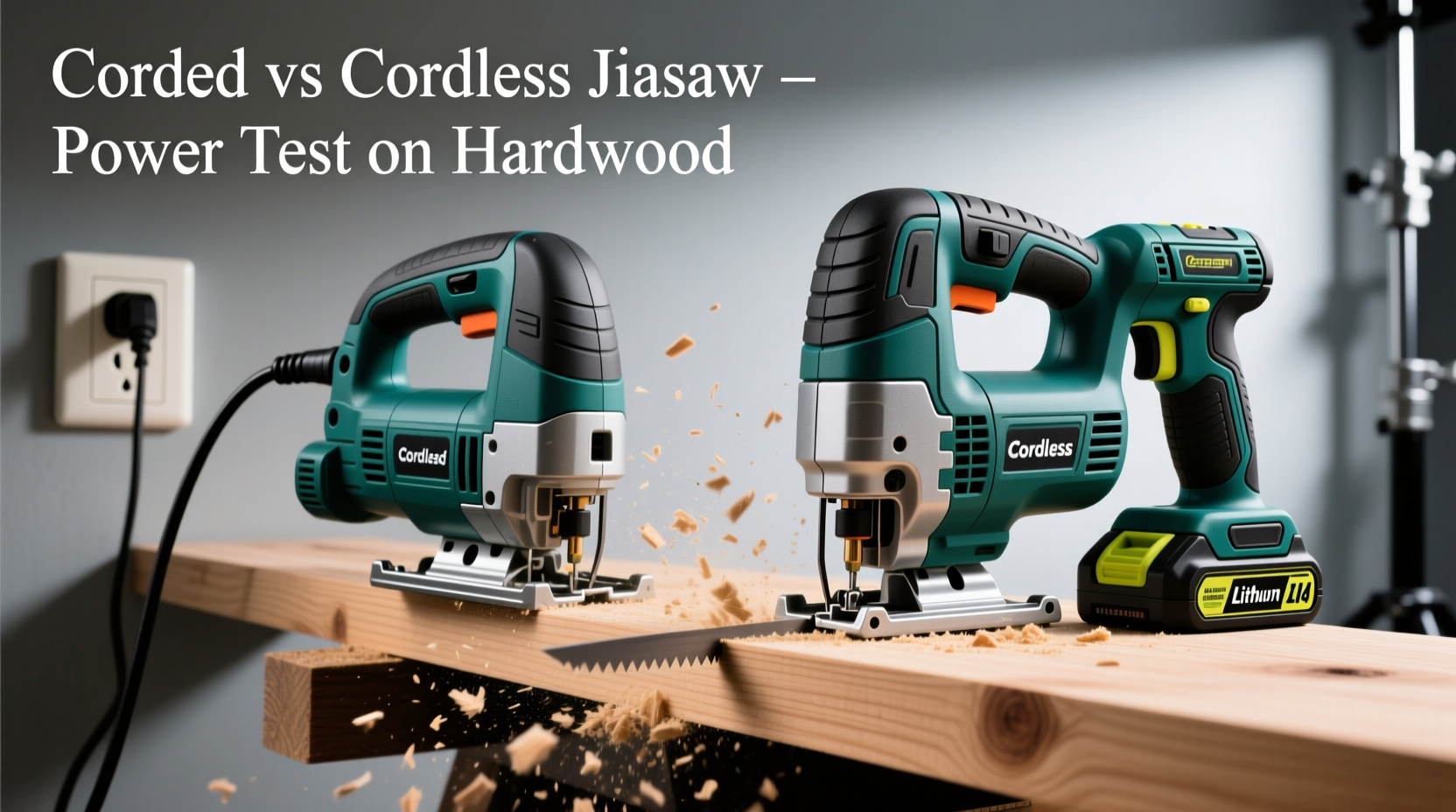
Power in a jigsaw is measured in several ways: motor wattage (for corded), voltage (for cordless), strokes per minute (SPM), and amperage draw. However, raw numbers don’t tell the whole story. What matters most is sustained power delivery under load—especially critical when cutting through dense hardwoods that can quickly stall underpowered tools.
Corded jigsaws typically operate at 5 to 7 amps (600–900 watts), providing continuous power without drop-off. Cordless models range from 12V to 20V max (and sometimes higher with dual-battery systems), but voltage alone doesn't equate to performance. Internal motor design, gear efficiency, and battery discharge rates play crucial roles.
Hardwood requires not only high initial torque but also thermal stability. Prolonged cutting generates heat, and tools lacking robust cooling or consistent power may throttle performance mid-cut. This is where corded models have traditionally held an edge.
Performance Comparison: Corded vs Cordless
To assess real-world capability, consider how each type performs across key metrics relevant to hardwood work.
| Metric | Corded Jigsaw | Cordless Jigsaw |
|---|---|---|
| Power Output | Consistent 600–900W; no drop-off over time | Varies by battery charge; drops as battery depletes |
| Torque Under Load | High and stable; handles 2-inch oak easily | Good in 18V+ models, but may struggle in long cuts |
| Runtime | Unlimited (plugged in) | Limited by battery; 15–30 min under heavy load |
| Mobility | Restricted by cord length and outlet access | Full freedom of movement |
| Heat Management | Superior; motors designed for extended use | Fair; risk of overheating in prolonged cuts |
| Weight & Balance | Heavier due to motor size | Lighter, especially 18V models |
The data shows a clear trade-off: corded tools win on sustained power and durability, while cordless offers unmatched portability. For occasional hardwood trimming—like shaping a table leg or cutting a small decorative piece—a high-end cordless model may suffice. But for larger projects involving repeated thick cuts, corded remains the more reliable option.
Real-World Example: Building a Solid Oak Coffee Table
Consider a woodworker building a live-edge coffee table from a 2.5-inch-thick slab of white oak. The design includes curved cutouts on the apron and legs, requiring precise, deep jigsaw work. Using a top-tier 20V cordless jigsaw, the first few cuts proceed smoothly. By the fourth cut, however, the motor begins to slow, the blade binds slightly, and the cut line veers off course. The battery indicator drops to 30%, and the tool feels noticeably warmer.
In contrast, a professional using a 7-amp corded jigsaw completes all eight major cuts without interruption. The motor maintains full speed, the cuts remain straight, and there's no sign of overheating—even after 45 minutes of continuous operation.
This scenario illustrates a common limitation: even advanced brushless motors in cordless tools can’t match the uninterrupted energy supply of a wall outlet. While modern batteries have improved dramatically, physics still limits their ability to deliver high wattage over extended periods without thermal throttling.
“On production jobs involving hardwood joinery, we stick with corded. The consistency matters more than the convenience.” — Marcus Reed, Cabinet Maker & Workshop Supervisor
Choosing the Right Tool: A Practical Checklist
Not every project demands maximum power. Use this checklist to determine which jigsaw type suits your hardwood tasks:
- ✅ Will you be making multiple deep cuts (>1.5 inches) in hardwood?
- ✅ Do you need to work continuously for over 30 minutes?
- ✅ Is outlet access available at your worksite?
- ✅ Are precision and minimal blade wandering critical?
- ✅ Do you frequently switch between materials (e.g., plywood, MDF, hardwood)?
- ✅ Is portability a top priority (e.g., working on ladders or remote locations)?
If you answered “yes” to the first four questions, a corded jigsaw is likely your best choice. If portability and flexibility dominate your workflow—and hardwood cuts are infrequent or shallow—then a high-voltage cordless model (18V or 20V max) with a brushless motor could meet your needs.
Maximizing Performance: Tips for Both Types
Regardless of whether you choose corded or cordless, technique and setup significantly impact results. Follow these steps to get the most out of your jigsaw on hardwood:
- Select the right blade: Use a fine-tooth (10–14 TPI) bi-metal or carbide-grind blade optimized for hardwood. Coarse blades tear rather than cut.
- Adjust orbital action: Set to Level 2 or 3 for faster cuts in thick stock, but reduce to Level 1 or 0 for cleaner edges.
- Control feed rate: Let the blade do the work. Pushing too hard increases friction and dulls blades prematurely.
- Support the material fully: Use sawhorses or a workbench to prevent vibration and blade binding.
- Use a zero-clearance insert (if possible): Minimizes splintering on the underside of the cut.
- Let the tool cool: After 2–3 deep cuts, pause for 1–2 minutes to allow motor heat to dissipate, especially with cordless models.
Also, ensure your blade is inserted correctly and tightened securely. A loose blade will wander and create inaccurate cuts, regardless of power output.
Modern Cordless Advancements: Closing the Gap?
Recent innovations have narrowed the performance gap. Brushless motors, improved battery chemistry (lithium-ion), and intelligent power management systems now allow some cordless jigsaws to rival entry-level corded models.
For example, the DeWalt DCS331B (20V MAX) and Milwaukee M18 FUEL Jig Saw (2725-20) deliver up to 3,000 SPM and feature constant-speed electronics that maintain RPM under load. These models perform admirably on 1.5-inch maple or walnut, especially when using fresh batteries.
However, they still face two fundamental constraints: limited runtime under heavy load and reduced peak power compared to a 7-amp corded unit. A corded jigsaw can sustain 800+ watts indefinitely; even the best cordless tools dip below that threshold after a few minutes of aggressive cutting.
Additionally, high-performance cordless tools require investment in multiple premium batteries and fast chargers—adding cost and complexity. For hobbyists or those doing light hardwood work, this may be acceptable. For professionals or serious DIYers tackling large hardwood projects, the total ownership cost and operational limitations remain significant factors.
Frequently Asked Questions
Can a cordless jigsaw cut through 2-inch oak?
Yes, but with caveats. High-end 18V or 20V MAX models with brushless motors can cut through 2-inch oak, but expect slower progress, potential slowdowns, and increased risk of blade binding. Success depends heavily on using the correct blade, proper feed rate, and starting with a fully charged, high-capacity battery (5.0Ah or higher). Multiple deep cuts will likely require battery swaps.
Do corded jigsaws last longer than cordless?
Generally, yes. Corded jigsaws have fewer components subject to wear (no batteries to degrade) and are built for continuous operation. With proper maintenance, a quality corded model can last 10–15 years or more in a workshop setting. Cordless tools are durable, but lithium-ion batteries typically lose 20–30% capacity after 2–3 years of regular use, reducing overall effectiveness even if the motor remains functional.
Is orbital action important for hardwood?
Yes. Orbital action moves the blade in an elliptical pattern, increasing cutting speed by lifting the blade slightly on the upstroke. For hardwood, moderate orbital settings (Level 2 or 3) help maintain momentum without sacrificing too much cut quality. Avoid high orbital settings on finish cuts, as they increase chipping and rough edges.
Final Recommendation
For most serious hardwood projects—especially those involving thick stock, repetitive cuts, or precision joinery—a corded jigsaw remains the superior choice. Its consistent power delivery, thermal resilience, and unlimited runtime make it a dependable tool in the workshop. Brands like Bosch, Makita, and Festool offer corded models with excellent balance, variable speed controls, and dust extraction compatibility, further enhancing performance.
Cordless jigsaws have earned their place in the toolbox, particularly for site work, quick repairs, or mixed-material jobs where mobility trumps raw power. Top-tier models can handle modest hardwood tasks, but they should not be relied upon for intensive or prolonged hardwood cutting unless absolutely necessary.
If your work involves both scenarios, consider owning both: a corded jigsaw for shop-based hardwood projects and a cordless model for portability and lighter duties. This dual-tool strategy provides maximum flexibility without compromising on performance.




 浙公网安备
33010002000092号
浙公网安备
33010002000092号 浙B2-20120091-4
Comments
No comments yet. Why don't you start the discussion?