
For homeowners diving into do-it-yourself repairs, renovations, or weekend upgrades, choosing the right power tools is critical. Among the most debated topics in the toolbox: should you go with corded or cordless models? While convenience, portability, and battery life often dominate discussions, one factor consistently separates short-term satisfaction from long-term value—durability. When used over years of intermittent but impactful projects, how do corded and cordless tools hold up? The answer isn’t as simple as “one is better.” It depends on usage patterns, maintenance habits, and what kind of wear and tear matters most.
The Durability Equation: What Makes a Tool Last?
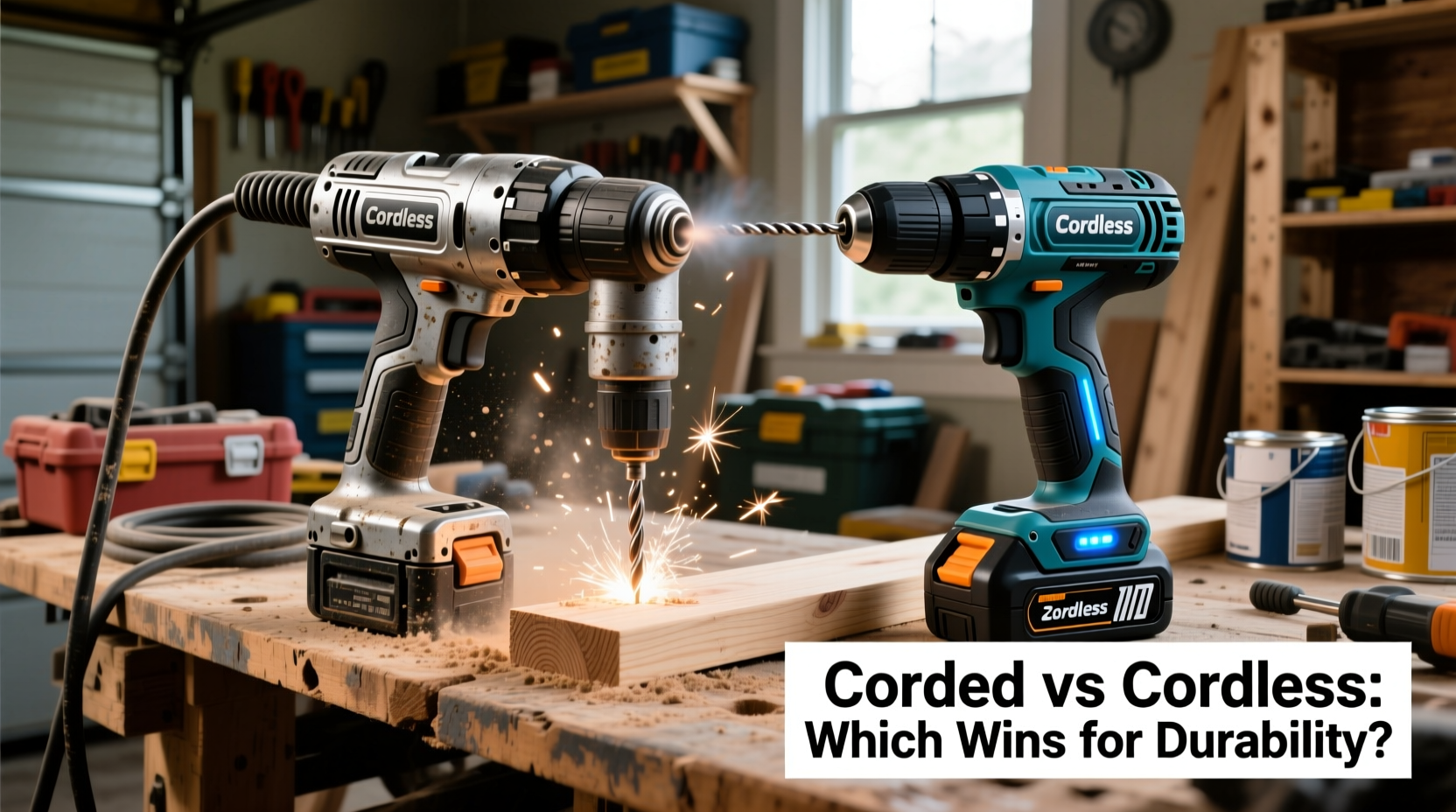
Durability in power tools isn’t just about surviving drops or resisting rust. True longevity involves multiple factors: motor lifespan, resistance to overheating, structural integrity, electronic stability, and component reliability. A tool might seem rugged at first but degrade quickly under repeated stress if its internal design can't handle sustained use.
Corded tools draw consistent power from an outlet, enabling continuous operation without energy depletion. Cordless tools, powered by lithium-ion batteries, offer mobility but introduce additional components—batteries, charging circuits, and thermal management systems—that can fail independently of the tool itself. This complexity affects long-term reliability.
“Durability isn’t just about how hard a tool is built—it’s about how well every part works together over time. In cordless tools, the weakest link is often the battery pack.” — Mark Reynolds, Senior Technician at ProBuild Tools Lab
Mechanical Longevity: Motors and Moving Parts
At their core, both corded and cordless drills, saws, and sanders share similar mechanical designs. However, the way they’re engineered reflects their intended use cases.
Corded tools typically feature larger, more robust motors designed for extended runtime. Since they don’t need to be lightweight or compact, manufacturers can prioritize cooling efficiency and torque consistency. These motors are less prone to heat buildup during prolonged tasks like drilling through masonry or cutting thick lumber.
In contrast, cordless tools must balance power with weight and size constraints. Their motors are often smaller and optimized for peak bursts rather than constant load. While modern brushless motors have improved efficiency and lifespan, they still face greater thermal stress when pushed to maximum capacity—especially when the battery voltage drops mid-task.
Real-World Example: Deck Renovation Project
Consider a homeowner rebuilding a wooden deck over several weekends. The job requires hundreds of screw insertions, multiple angle cuts, and surface sanding. Using a corded drill-driver connected to an extension cord, the user completes each session without interruption. The tool runs cool, maintains consistent speed, and shows no signs of strain after six months.
A neighbor attempts the same project with a high-end 18V cordless drill. While initially effective, the battery depletes faster with each charge cycle. By month four, one battery no longer holds a full charge, and the second begins clicking abnormally under load. The drill motor still functions, but the system as a whole becomes unreliable due to failing peripheral components.
This scenario illustrates a key point: even if the tool body lasts, degraded batteries can render a cordless system functionally obsolete long before its mechanical end-of-life.
Component Lifespan Comparison
To understand durability holistically, it helps to break down the major components of each tool type and compare their expected lifespans under typical home DIY conditions.
| Component | Corded Tool Lifespan | Cordless Tool Lifespan | Notes |
|---|---|---|---|
| Motor | 5–10+ years | 5–8 years | Corded motors run cooler and experience less voltage fluctuation. |
| Power Source | N/A (direct line) | 3–5 years (battery) | Lithium-ion degrades with time, even with minimal use. |
| Switch & Electronics | 7–10 years | 5–7 years | Cordless units have more complex circuitry vulnerable to moisture and dust. |
| Housing & Gears | 8–12 years | 6–10 years | Similar materials used; corded often heavier-duty due to less weight sensitivity. |
| Overall System Reliability | High | Moderate to High | Depends on brand, usage frequency, and battery care. |
The data shows that while individual parts may last years, the integrated nature of cordless systems introduces points of failure absent in corded equivalents. A frayed power cord on a corded tool is easily replaced. A failed battery management system in a sealed lithium pack usually means replacement of the entire unit.
Environmental and Usage Factors That Impact Longevity
No discussion of durability is complete without addressing how tools are stored, handled, and used. Home workshops vary widely—from climate-controlled garages to damp sheds or vehicles exposed to temperature swings.
Corded tools benefit from simplicity. Fewer electronic subsystems mean fewer vulnerabilities. They aren’t affected by battery memory or deep discharge issues. As long as the cord remains intact and the plug functional, the tool operates reliably.
Cordless tools demand more attentive care. Lithium-ion batteries degrade fastest when stored at full charge or in extreme temperatures. Leaving a charged battery in a hot car or cold basement can reduce its lifespan by up to 40% within a year. Additionally, dropping a cordless tool risks damaging not only the housing but also the internal battery cells, which may swell or short-circuit silently.
Expert Insight: Battery Chemistry and Aging
“All lithium-ion batteries begin degrading the moment they leave the factory. Calendar aging happens regardless of use. After five years, even a perfectly maintained battery will lose 20–30% capacity. For DIYers who use tools infrequently, this makes cordless systems less durable in practice.” — Dr. Lena Patel, Materials Scientist at EnergyCore Labs
Cost of Ownership Over Time
Durability directly impacts cost-effectiveness. A $120 corded drill that lasts 10 years costs roughly $12 per year. A $180 cordless kit (tool + two batteries) may require replacing one or both batteries after five years—at $70 each. That brings the decade total to $320, or $32 annually, assuming the tool body survives.
This doesn’t include potential charger failures or compatibility issues when upgrading platforms. Major brands frequently change battery voltages or form factors, making older packs obsolete. Meanwhile, standard electrical outlets haven’t changed in decades.
- Corded advantage: Lower lifetime cost, no consumable power source.
- Cordless advantage: Higher upfront flexibility, but recurring replacement costs.
For occasional users, the convenience of cordless may justify the expense. But for those seeking maximum durability and value, corded systems present a compelling case.
Step-by-Step Guide: Maximizing Tool Longevity
Regardless of type, proper care extends tool life significantly. Follow this routine to protect your investment:
- Clean after each use: Wipe down housings, blow out dust from vents using compressed air.
- Inspect cords and connectors: Check for fraying, kinks, or loose plugs on corded tools.
- Store batteries properly: Remove from tool, store at partial charge in moderate temperatures.
- Lubricate moving parts annually: Apply light machine oil to gear housings if recommended by manufacturer.
- Use correct accessories: Match bits, blades, and attachments to the task—overloading causes premature wear.
- Allow cooldown periods: Especially for cordless tools under heavy load.
- Register your warranty: Many brands offer extended coverage for registered products.
Checklist: Choosing for Durability
Before purchasing, ask these questions to assess long-term viability:
- ✅ Does the tool have a brushless motor? (Lasts longer than brushed)
- ✅ Is the housing made of magnesium or reinforced composite?
- ✅ Are replacement parts (gears, switches, cords) available?
- ✅ For cordless: Can I buy third-party batteries or is it proprietary?
- ✅ Does the brand offer a 3+ year warranty?
- ✅ Is there a history of firmware updates or obsolescence?
- ✅ Am I likely to use this weekly, monthly, or seasonally?
Frequently Asked Questions
Are cordless tools improving enough to match corded durability?
Yes, but incrementally. Modern brushless motors and better thermal design have narrowed the gap. However, the inherent limitations of battery chemistry mean cordless systems still face unavoidable degradation. For light to moderate DIY work, today’s premium cordless tools can last 7–8 years with careful use. But under heavy or frequent loads, corded models remain more resilient.
Can I make my cordless tool last longer?
Absolutely. Avoid full discharges, never leave batteries on the charger overnight, store them indoors, and rotate spares to ensure even wear. Also, keep firmware updated if supported. These habits can extend battery life by 2–3 years beyond average.
Is it worth repairing an old power tool?
It depends. Simple fixes like switch replacements or cord repairs on corded tools are often cost-effective. For cordless tools, if the motor or gearbox fails, repair may exceed half the price of a new unit. Batteries are rarely economical to fix. Evaluate based on sentimental value, rarity, or compatibility with existing tool ecosystems.
Final Verdict: Which Wins in Durability?
When durability is the primary concern, **corded power tools win**—not because they’re inherently superior in every way, but because they eliminate the weakest links found in cordless systems: batteries and complex electronics.
A well-built corded drill, circular saw, or reciprocating saw can operate reliably for a decade or more with basic care. There’s no battery to degrade, no charging cycles to track, and fewer components to fail. For homeowners committed to long-term ownership, reduced waste, and predictable performance, corded tools represent a durable, sustainable choice.
That said, cordless tools excel in accessibility and ease of use. For quick fixes, overhead work, or jobs far from outlets, their portability is unmatched. And for users who replace tools every few years anyway, the difference in longevity may not matter.
If your goal is maximum lifespan, minimal maintenance, and enduring reliability, stick with corded. If you value freedom of movement and accept periodic battery replacements, cordless fits modern lifestyles—but plan for higher long-term costs and earlier system decline.




 浙公网安备
33010002000092号
浙公网安备
33010002000092号 浙B2-20120091-4
Comments
No comments yet. Why don't you start the discussion?