
Choosing between a cordless and a corded drill is more than a matter of preference—it’s about matching the tool to your work environment, project demands, and long-term efficiency. Whether you're a weekend DIYer or a professional contractor, understanding the strengths and limitations of each type can save time, reduce frustration, and improve the quality of your results. The right drill doesn’t just get the job done; it does so safely, efficiently, and with minimal strain.
Power and Performance: Where Each Excels
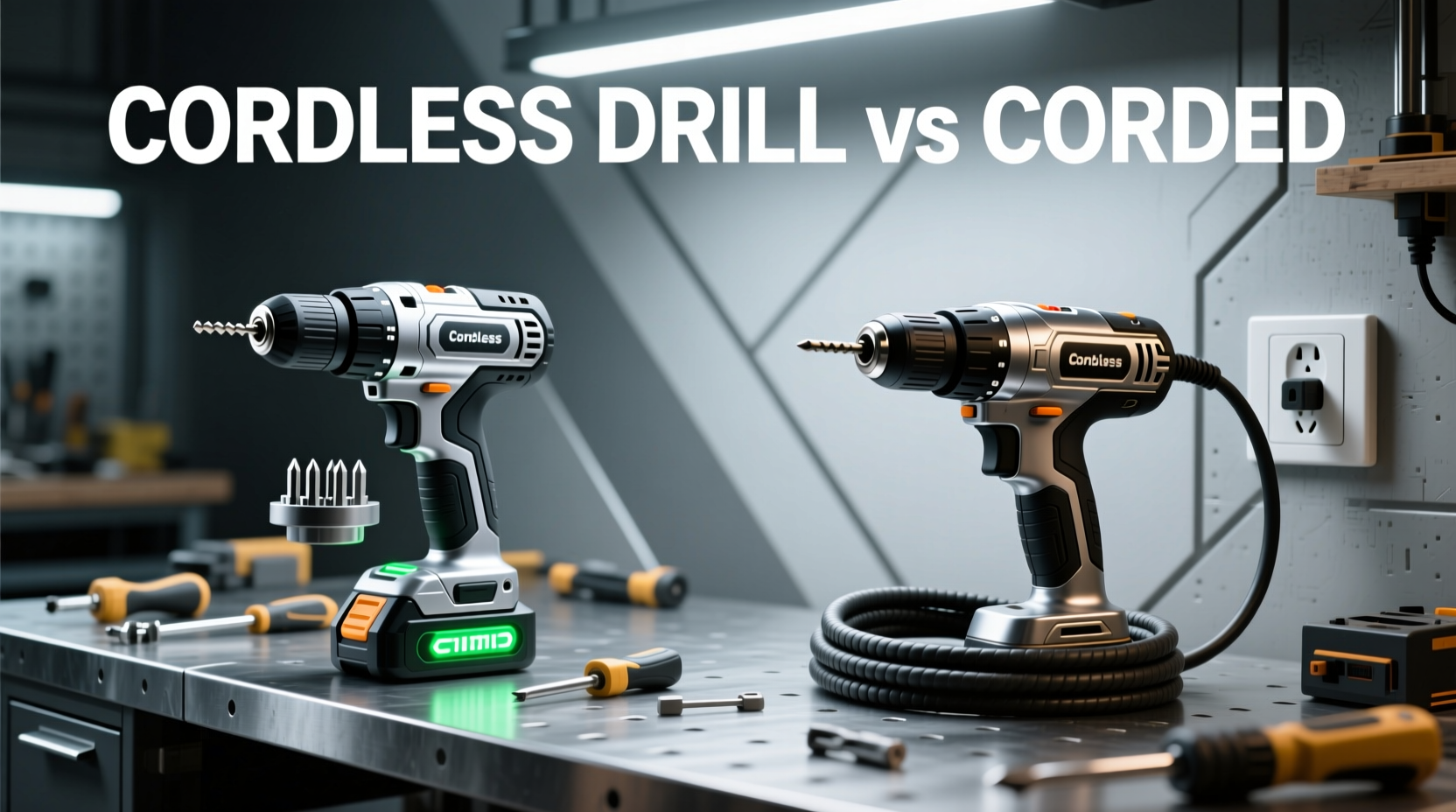
The most fundamental difference between cordless and corded drills lies in their power delivery. Corded drills are directly connected to an electrical outlet, allowing them to draw consistent energy. This translates into higher torque, continuous operation without drop-off, and superior performance when driving large fasteners or drilling through tough materials like masonry, hardwood, or metal.
In contrast, cordless drills rely on battery packs—typically lithium-ion—that provide freedom from cords but come with inherent power constraints. While modern brushless motors have significantly closed the performance gap, cordless models still experience voltage sag under heavy load, especially as the battery charge depletes. For high-volume tasks such as framing, decking, or installing drywall, a corded drill will maintain peak output all day long.
That said, advancements in battery technology have made cordless drills remarkably capable. 18V and even 20V MAX systems now deliver enough torque for most household repairs, furniture assembly, and light construction. If your work involves frequent movement across job sites or limited access to outlets, the convenience of cordless often outweighs the slight reduction in raw power.
Portability and Convenience Compared
Mobility is where cordless drills truly shine. Without being tethered to an outlet, they offer unmatched flexibility. This makes them ideal for attic installations, outdoor decks, ladder work, or any scenario where extension cords would be impractical or hazardous.
Consider this real-world example: A homeowner installing recessed lighting in a second-story ceiling must move frequently between joists and navigate tight spaces. Dragging a cord behind would create tripping hazards, limit reach, and increase setup time. With a cordless drill, the task becomes faster, safer, and less physically taxing.
Corded drills, however, require reliable access to power. While they eliminate concerns about battery life, they introduce logistical challenges. Extension cords can degrade performance due to voltage drop over distance, especially if using low-gauge wire. In remote areas or unfinished construction zones, finding a live circuit may not always be feasible.
Yet, for fixed workshops or indoor remodeling where outlets are abundant, the constant power supply of a corded model ensures uninterrupted workflow. There's no downtime waiting for batteries to recharge, no need to stock spares, and no risk of a dead battery mid-task.
“On commercial jobsites, we use both—but our electricians and finish carpenters rarely put down their cordless drills. The freedom to move quickly between rooms is irreplaceable.” — Mark Reynolds, General Contractor with 22 years in residential construction
Comparison Table: Key Features at a Glance
| Feature | Cordless Drill | Corded Drill |
|---|---|---|
| Power Output | Good (varies by battery voltage) | Excellent (consistent) |
| Portability | Excellent (no cord, lightweight) | Poor (requires outlet and cord) |
| Battery/Runtime | Limited (30–90 mins average) | Unlimited (continuous use) |
| Maintenance Needs | Moderate (battery care, charging) | Low (motor upkeep only) |
| Initial Cost | Higher (includes battery & charger) | Lower (unit only) |
| Lifespan | 5–7 years (battery degrades) | 10+ years (with proper care) |
| Best For | DIY, light-duty, mobile work | Heavy-duty, prolonged tasks |
When Battery Life Becomes a Limitation
No matter how advanced the battery, runtime remains a critical factor. Even high-capacity 5.0Ah lithium-ion packs will drain during intensive use. Drilling hundreds of pilot holes or driving lag bolts into pressure-treated wood can exhaust a fully charged battery in under an hour.
This creates a hidden cost: productivity loss. Switching batteries takes time. Recharging adds downtime. And relying on a single spare means planning work around charging cycles. Professionals often carry multiple batteries and rapid chargers, but this increases both initial investment and logistical complexity.
Corded drills bypass this entirely. Plug in, switch on, and work continuously. No monitoring charge levels, no rotating packs, no unexpected shutdowns. For contractors billing by the hour or managing tight deadlines, this reliability is invaluable.
However, for infrequent users, battery limitations are rarely an issue. Most home projects take under two hours and involve fewer than 50 screw drives. In these cases, a single charge lasts well beyond completion, making cordless the smarter choice for simplicity and storage.
Step-by-Step: Choosing the Right Drill for Your Needs
Follow this decision-making process to determine which drill fits your situation best:
- Assess your typical workload: Are you mostly assembling furniture, hanging pictures, or doing minor repairs? Opt for cordless. Do you regularly drill into concrete, steel, or thick timber? Lean toward corded.
- Evaluate your workspace: Is power readily available? Will you be working at height, outdoors, or in unfinished spaces? If yes, prioritize cordless for safety and ease of movement.
- Consider frequency of use: Occasional use favors cordless. Daily or extended use benefits from corded consistency.
- Review budget constraints: Cordless kits cost more upfront due to batteries and chargers. Corded units are cheaper initially but may require extension cords or power upgrades.
- Think long-term value: Corded drills last longer with minimal maintenance. Cordless tools depend on battery health, which declines after 2–3 years regardless of care.
Real Example: Two Contractors, Two Choices
Take two professionals: Lena, a finish carpenter specializing in trim and cabinetry, and Jamal, a structural framer handling roof trusses and floor joists.
Lena works room-to-room, often on ladders or in corners. She needs precision and agility. Her cordless 12V compact drill lets her drive screws with one hand while holding molding in place. She changes bits frequently and values quiet operation. A cord would tangle, limit range, and pose a hazard near polished floors. For her, cordless is non-negotiable.
Jamal, meanwhile, spends full days nailing engineered lumber and securing beams. He uses a hammer drill function daily and works in open structures without electricity. His solution? A corded drill with a generator-powered outlet box. It delivers relentless torque, never quits mid-beam, and withstands dust and vibration. He keeps it plugged into a rugged jobsite extension reel. For him, corded provides the stamina his job demands.
Their choices aren’t about brand loyalty or trends—they’re rooted in practical necessity.
Expert Insight: What Industry Pros Recommend
“You don’t choose one over the other—you need both. Think of corded as your workhorse and cordless as your utility player. One gives you endurance, the other gives you reach.” — Sarah Lin, Master Electrician and Tool Safety Instructor
Lin emphasizes that serious tradespeople rarely rely on a single type. Instead, they maintain a dual-system approach. Corded drills handle marathon tasks; cordless handles sprints. This hybrid strategy maximizes efficiency without compromising capability.
Frequently Asked Questions
Can a cordless drill replace a corded one completely?
For most homeowners and light-duty professionals, yes—especially with modern 20V MAX or 18V brushless models. However, for continuous heavy-load applications like masonry drilling or industrial fabrication, corded drills still outperform and remain more cost-effective over time.
Are cordless drills less durable than corded ones?
Not inherently. The motor and gearbox in quality cordless drills are built to last. However, the battery is a wear component with a finite lifespan (typically 3–5 years with regular use). Once battery performance degrades, the tool’s usefulness diminishes unless replaced—a recurring cost corded tools don’t face.
Is voltage the only thing that matters in a cordless drill?
No. While voltage indicates potential power, amperage-hour (Ah) rating affects runtime, and brushless motors improve efficiency and longevity. Also, electronic clutch settings, gear ratios, and ergonomics play crucial roles in real-world performance.
Checklist: Selecting Your Ideal Drill
- ☐ Define your primary use case (home repair, construction, crafting, etc.)
- ☐ Determine average job duration and intensity
- ☐ Check availability of power sources at your worksite
- ☐ Evaluate existing tool ecosystem (same brand batteries?)
- ☐ Set a realistic budget including accessories
- ☐ Test grip comfort and weight balance in-store if possible
- ☐ Prioritize brands with strong service networks and warranty support
Conclusion: Build a Smarter Toolkit
The question isn't whether cordless or corded drills belong in your toolkit—it's recognizing that each has a distinct role. The cordless drill offers liberation from cords, enabling speed, adaptability, and ease in dynamic environments. The corded drill delivers unwavering power and endurance, perfect for sustained, demanding work.
For most people, starting with a quality cordless drill makes sense. It covers 80% of common tasks and grows with your needs. As your projects become larger or more frequent, adding a corded model expands your capabilities without redundancy.




 浙公网安备
33010002000092号
浙公网安备
33010002000092号 浙B2-20120091-4
Comments
No comments yet. Why don't you start the discussion?