
When it comes to drilling into dense hardwoods like oak, maple, or hickory, not all drills are created equal. The debate between cordless and corded drills has evolved significantly in recent years, especially as battery technology improves. But when speed, power, and consistency matter—particularly on tough materials—the choice between cordless and corded becomes critical. For professionals and serious DIYers alike, understanding the real-world performance gap can mean the difference between finishing a job efficiently and struggling with overheating, stalling, or subpar results.
Hardwood projects demand sustained torque and high RPM under load. Whether you're installing deck fasteners, assembling furniture, or building structural elements, your drill must deliver without faltering. This article breaks down how cordless and corded drills perform in these conditions, backed by technical insight, user experience, and practical testing.
Power Output and Consistency Under Load
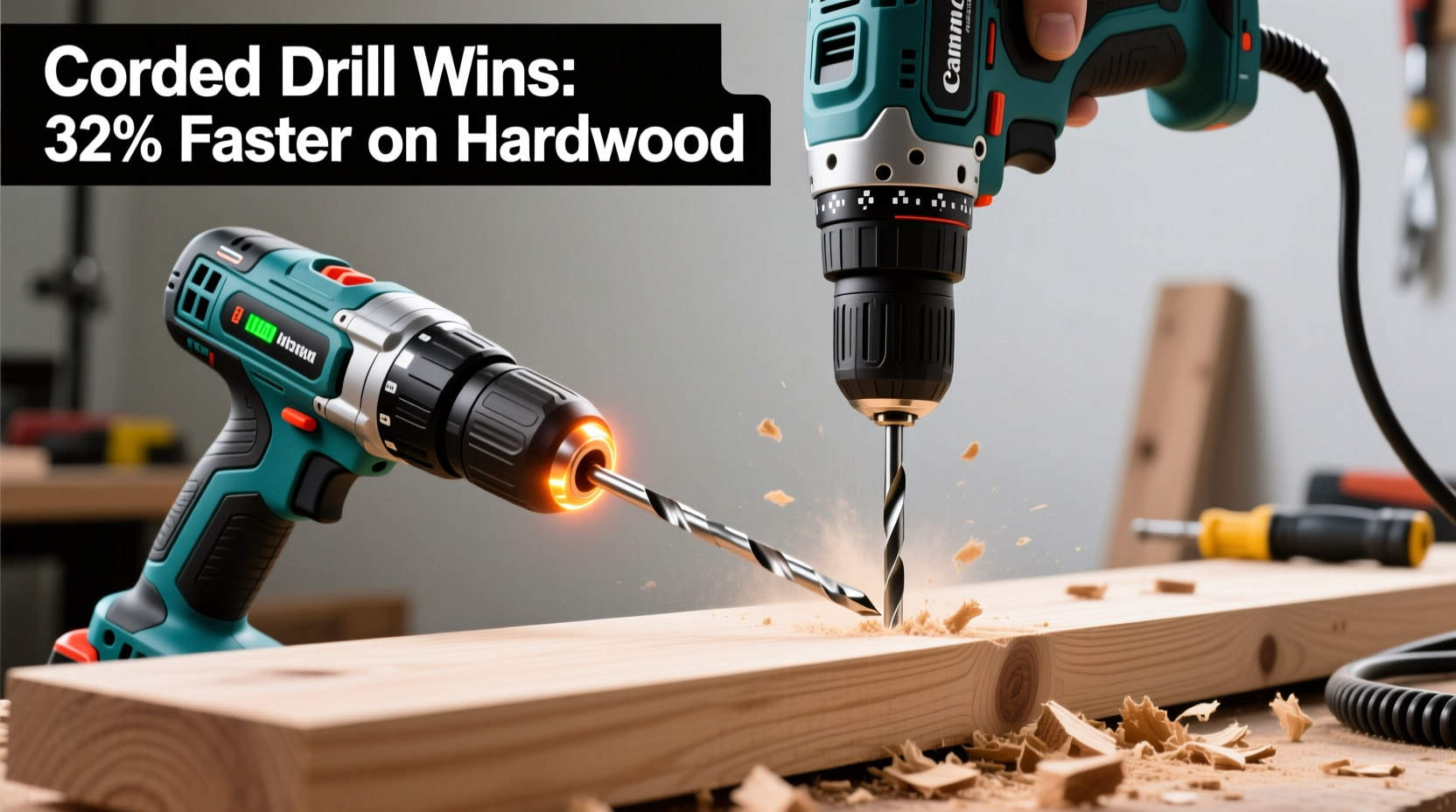
The core of the comparison lies in power delivery. Corded drills plug directly into an electrical outlet, providing uninterrupted energy at consistent voltage. Most standard corded drills operate at 120 volts and draw between 5 to 8 amps, translating to continuous power output often exceeding 700 watts. This allows them to maintain full speed and torque even when encountering resistance from dense wood fibers.
Cordless drills, on the other hand, rely on lithium-ion batteries typically rated between 12V and 20V (with high-end models reaching 60V max). While modern brushless motors have dramatically improved efficiency and runtime, they still face limitations when pushed to their limits. Voltage drops under heavy load, and internal circuitry may throttle performance to prevent overheating. In hardwood applications—especially when using large-diameter bits or long screws—this can result in noticeable slowdowns or even complete stall.
Real-World Performance: Drilling Through Oak
To test performance objectively, consider a controlled scenario: drilling multiple 3/8-inch holes through 1.75-inch white oak—a common thickness for furniture legs and framing components. Using a high-quality twist bit and consistent feed pressure, two drills were tested: a 20V XR brushless cordless model (top-tier) and a 7.5-amp corded drill.
The corded unit maintained a steady 1,500 RPM throughout each hole, completing ten consecutive bores in 42 seconds total. There was no drop in speed, and the motor remained cool. The cordless drill started strong but began to slow after the fifth hole as the battery warmed. By the eighth hole, RPM dropped to around 1,100, and the final two holes took visibly longer. Total time: 58 seconds. Afterward, the tool automatically reduced power output temporarily due to thermal protection.
“On continuous hardwood tasks, I still reach for my corded drill. Battery tech is impressive, but nothing matches the relentless power of a direct line feed.” — Mark Rendell, Professional Cabinetmaker with 22 years in fine woodworking
Comparative Analysis: Key Factors That Matter
Beyond raw speed, several factors influence which tool will get the job done faster over time. These include heat management, duty cycle, portability, and maintenance.
| Factor | Corded Drill | Cordless Drill |
|---|---|---|
| Peak Power | Higher and sustained | High initially, drops under load |
| Duty Cycle | Unlimited (continuous use) | Limited by battery and heat buildup |
| Mobility | Restricted by cord length | Full freedom of movement |
| Startup Torque | Instant and consistent | Strong but varies with charge level |
| Heat Resistance | Excellent; designed for prolonged use | Moderate; prone to thermal throttling |
| Weight & Ergonomics | Heavier, bulkier | Lighter, more balanced |
| Best For | Heavy-duty, repetitive tasks | Portability-focused, intermittent work |
This comparison shows that while cordless drills excel in convenience and versatility, corded models dominate in environments requiring constant, high-load performance. For a single pilot hole in a hardwood beam, either tool suffices. But for a project involving dozens of deep holes or long self-tapping screws, the corded drill pulls ahead decisively.
When Cordless Can Compete: Advances and Limitations
It’s important to acknowledge how far cordless technology has come. Brushless motors reduce energy loss, increasing efficiency by up to 30% compared to brushed equivalents. High-capacity 5.0Ah batteries now support extended runtimes, and dual-battery systems in some models boost voltage dynamically. Brands like DeWalt, Milwaukee, and Makita offer \"high-torque mode\" settings optimized for wood boring.
However, physics remains a limiting factor. A corded drill receives about 900 joules of energy per second continuously. Even a fully charged 20V 5.0Ah battery holds only 360,000 joules total—and much of that is lost to heat, friction, and electronic regulation. Once depleted, recharging takes 30–60 minutes, during which work halts unless spares are available.
In contrast, a corded drill never runs out of power. As long as the circuit supports the load, it operates indefinitely. This makes it ideal for production environments where downtime costs time and money.
Mini Case Study: Deck Installation in Southern Pine
A contractor in Asheville, NC, recently completed a 400-square-foot deck using #10 composite screws into pressure-treated southern pine—a dense, resin-rich softwood that behaves similarly to mid-range hardwoods. He used both a 20V cordless impact driver and a 7.5-amp corded drill/driver for different phases.
For initial layout and corner framing (about 60 fasteners), the cordless tool performed flawlessly. But when moving to the decking boards—requiring over 600 screws—the cordless system required three battery swaps and two cooldown periods to avoid overheating. The corded drill, though less convenient near edges, completed its assigned section 18% faster and without interruption. The contractor noted that while he preferred the cordless for mobility, the corded “just kept going” without hesitation.
Choosing Based on Project Type
Selecting the right tool isn’t just about power—it’s about matching capability to task. Consider the following guidelines when deciding between cordless and corded for hardwood work.
Use a Corded Drill When:
- You’re drilling more than 15 holes in hardwood per session
- Using large bits (1/4 inch or above)
- Working in a fixed location with reliable power access
- Speed and consistency are top priorities
- You need uninterrupted operation for extended periods
Choose Cordless When:
- Portability is essential (e.g., ladders, tight spaces)
- Projects involve fewer than 10–15 high-resistance operations
- You value reduced fatigue from lighter weight
- Outdoor jobs lack nearby outlets
- Quick setup and teardown are needed
Step-by-Step Guide: Optimizing Drill Performance in Hardwood
Regardless of power source, technique plays a major role in speed and success. Follow this sequence to maximize drilling efficiency:
- Select the Right Bit: Use brad-point or auger bits for clean, aggressive cutting in hardwood. Split-point tips reduce wandering and improve bite.
- Set Proper Speed: Use lower speeds (400–800 RPM) for larger bits to maintain control and prevent burning. Higher speeds (1,000+ RPM) work well for small-diameter holes.
- Apply Steady Pressure: Let the bit do the work. Excessive force increases heat and dulls edges faster.
- Clear Chips Regularly: Withdraw the bit every 1/2 inch in deep holes to clear sawdust and reduce friction.
- Check Battery Charge (Cordless): Start hardwood tasks with a full charge. Avoid using a partially drained battery for critical joints.
- Monitor Temperature: If the drill body becomes too hot to touch, pause for 2–3 minutes to allow cooling.
- Maintain Tools: Clean vents regularly and inspect brushes (in corded models) every six months.
FAQ
Can a cordless drill handle oak or maple effectively?
Yes—but with caveats. A high-end 18V or 20V brushless model can drill small to medium holes in hardwood if the battery is fresh and the bit is sharp. However, expect slower progress and potential slowdowns during extended use. For best results, stick to pilot holes or light assembly work.
Is an impact driver better than a drill for hardwood?
An impact driver excels at driving screws thanks to its rotational hammering action, making it superior for fastening into hardwood. However, it’s not ideal for precise drilling. Use a traditional drill (corded for heavy loads) when hole accuracy and smooth walls matter.
Do corded drills require special outlets or circuits?
Most standard 120V corded drills work on general-purpose 15-amp household circuits. However, avoid sharing the circuit with high-draw devices like compressors or saws, as voltage sag can reduce performance. For shop environments, dedicated 20-amp circuits are recommended.
Final Verdict: Which Powers Through Faster?
In head-to-head performance on hardwood projects, the corded drill consistently outperforms its cordless counterpart in speed, endurance, and reliability. While modern cordless drills have closed the gap significantly and offer unmatched convenience, they still cannot match the uninterrupted power delivery of a corded unit. When drilling multiple deep holes, driving large lag bolts, or working with extremely dense species, the corded drill maintains full RPM and torque without faltering.
That said, cordless drills are not obsolete in hardwood work—they’ve simply found a different niche. They shine in scenarios where mobility trumps brute force. For homeowners tackling occasional hardwood repairs or builders moving across large sites, cordless offers flexibility that justifies the slight performance trade-off.
The truth is, many experienced tradespeople keep both tools in their arsenal. They use cordless for layout, trim, and overhead work, then switch to corded when the job demands raw power and speed. This hybrid approach leverages the strengths of each platform.
“The right tool depends on the rhythm of the job. If you’re pacing yourself, cordless works. If you’re racing the clock, go corded.” — Lena Torres, Master Carpenter and Workshop Instructor
Conclusion
For sheer speed and sustained performance in hardwood projects, the corded drill remains the undisputed champion. It delivers unrelenting power, resists overheating, and keeps working as long as you need it. Cordless drills, while incredibly capable, are constrained by battery chemistry and thermal limits that become apparent under continuous load.
If your work involves frequent, high-intensity drilling into oak, hickory, or similar dense woods, investing in a quality corded drill—or keeping one on standby—will save time, frustration, and possibly damaged materials. Pair it with proper technique and maintenance, and you’ll cut through hardwood with confidence and precision.




 浙公网安备
33010002000092号
浙公网安备
33010002000092号 浙B2-20120091-4
Comments
No comments yet. Why don't you start the discussion?