
When it comes to modern home cleaning, two technologies dominate the conversation: cordless stick vacuums and robot vacuums. Both promise freedom from cords and greater convenience, but they deliver on that promise in very different ways. One gives you powerful, manual control over every inch of your floor; the other operates autonomously, quietly navigating your space while you focus on other tasks. But here's the real question many homeowners are asking: Is a robot vacuum actually helpful, or does it mostly just get stuck?
The answer isn’t simple. While robot vacuums have made impressive strides in navigation, suction power, and smart features, they still face limitations—especially in cluttered homes or multi-level layouts. On the other hand, cordless vacuums offer immediate, high-powered cleaning but require time and physical effort. Understanding the strengths and weaknesses of each can help you decide which tool—or combination of tools—best suits your lifestyle.
How Cordless Vacuums Work: Power in Your Hands
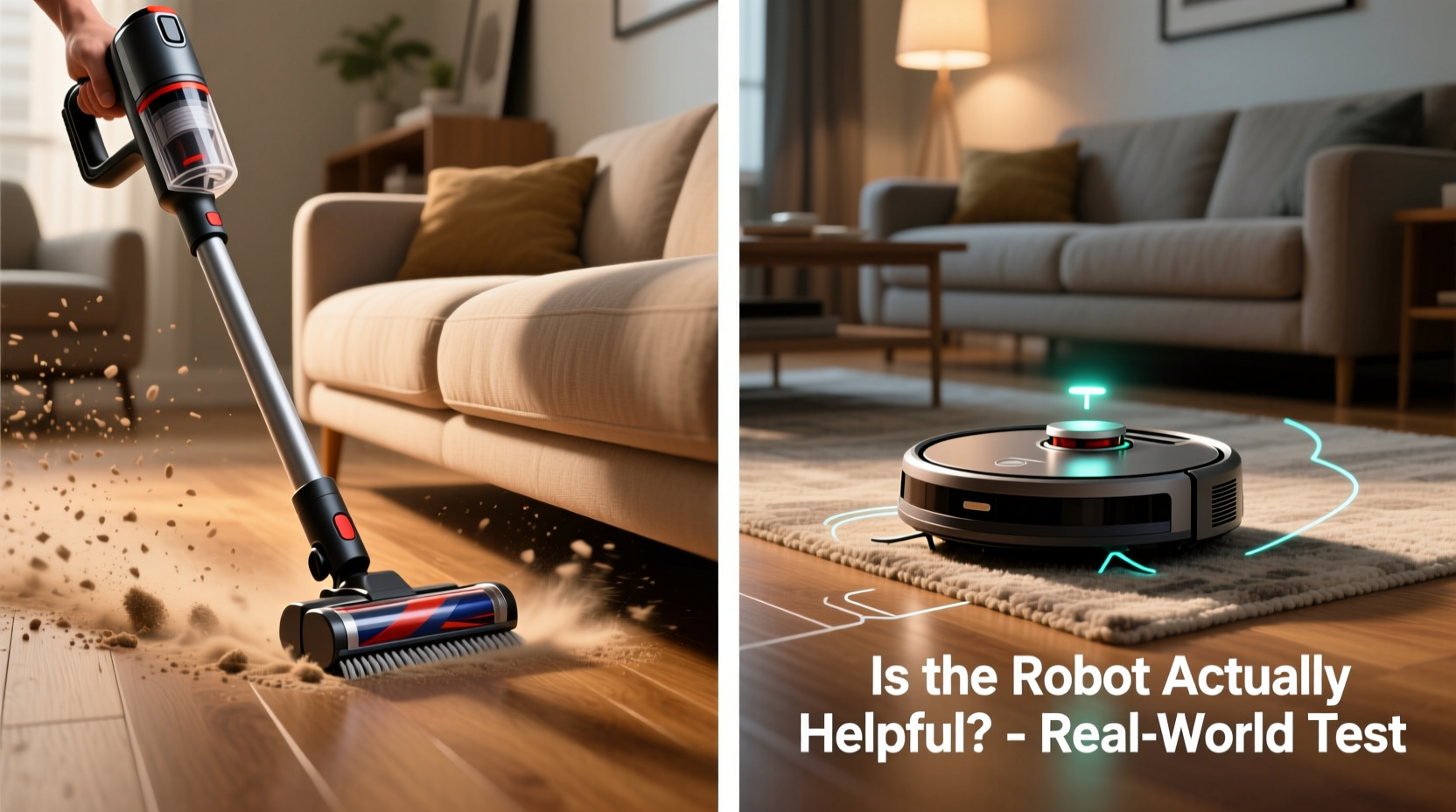
Cordless vacuums, also known as stick or handheld vacuums, operate on rechargeable lithium-ion batteries and are designed for quick, targeted cleaning. They typically feature detachable components, allowing them to function as upright cleaners, handheld units, or even mini tools for upholstery and crevices.
Modern models from brands like Dyson, Shark, and Tineco boast strong suction (measured in air watts), HEPA filtration, swivel steering, and run times between 20 and 60 minutes on a single charge. Their lightweight design makes them ideal for daily spot cleaning, pet hair removal, and reaching under furniture without bending over.
Because they’re manually operated, cordless vacuums give users full control over where and how long they clean. You can target spills instantly, adjust suction based on surface type, and empty the bin immediately after use. This level of responsiveness is unmatched by any robot vacuum.
How Robot Vacuums Work: Set It and (Hope) Forget It
Robot vacuums like those from iRobot (Roomba), Roborock, Ecovacs, and Eufy are autonomous machines programmed to clean floors with minimal human intervention. Using sensors, cameras, and mapping technology, they navigate rooms, avoid obstacles, and return to their charging docks when low on power.
Many high-end models now create detailed floor plans via LiDAR or visual navigation, remember multiple floor levels, and allow room-specific cleaning through smartphone apps. Some even empty their dustbins automatically into a base station, reducing maintenance to nearly zero for weeks at a time.
However, autonomy comes with trade-offs. Despite advanced algorithms, robots frequently struggle with dark rugs, cables, pet toys, and threshold transitions. They may spin in place, get cornered, or fail to reach tight spaces behind furniture. And while they run quietly, their cleaning passes are often less thorough than a single sweep with a cordless vacuum.
“Robot vacuums excel at maintenance cleaning, not deep cleaning. They keep floors acceptable between deeper sessions.” — Dr. Lena Patel, Home Automation Researcher at MIT Media Lab
Direct Comparison: Cordless vs Robot Vacuum
| Feature | Cordless Vacuum | Robot Vacuum |
|---|---|---|
| Cleaning Power | High suction (up to 200+ AW) | Moderate suction (50–100 AW typical) |
| User Effort | Manual operation required | Fully automated |
| Run Time | 20–60 mins per charge | 60–120 mins (with auto-recharge) |
| Navigational Accuracy | Controlled by user | Varies—can miss spots or get stuck |
| Floor Type Handling | Excellent across all surfaces | Good, but struggles on thick carpets or thresholds |
| Pet Hair Performance | Superior with motorized brush rolls | Decent, but tangles common |
| Maintenance Frequency | After every use | Daily or weekly, depending on model |
| Price Range | $150–$700+ | $300–$1,200+ |
This comparison shows that neither device universally outperforms the other. Instead, their value depends heavily on your expectations and household dynamics.
When Robots Shine—and When They Struggle
Robot vacuums perform best in homes with open floor plans, minimal clutter, and hard flooring. If you live alone or with a partner, work long hours, and want your floors cleaned daily without lifting a finger, a robot vacuum can be genuinely helpful.
For example, consider Sarah, a software engineer living in a one-bedroom apartment with hardwood floors and a cat. She works from home but often has back-to-back meetings. Her Roborock Q5 runs every morning at 9 AM, cleaning the main living area while she’s on calls. It avoids her desk chair and rug edges reliably and returns to dock before running out of battery. Over six months, she reports noticeably less dust and fur buildup, especially near entryways.
But contrast this with James, who lives in a three-level townhouse with two kids, a dog, and frequent toy scatter. His Roomba frequently gets trapped under playpens, tangled in headphone wires, or stuck trying to climb a ¾-inch threshold. He finds himself rescuing it multiple times a week, sometimes finding it motionless halfway under the couch with a half-empty battery. For him, the robot adds more frustration than relief.
Step-by-Step: Choosing the Right Tool for Your Home
Follow this decision-making process to determine whether a cordless vacuum, robot vacuum, or both make sense for your needs.
- Assess your floor plan. Open, single-level homes favor robots. Multi-room, multi-level, or cluttered spaces reduce robot effectiveness.
- Evaluate your schedule. If you rarely have time to vacuum, automation becomes more valuable—even if imperfect.
- Consider pet and kid factors. Homes with pets or young children generate more messes and obstacles, increasing the risk of robot failure.
- Determine your cleaning standards. Do you need spotless floors daily, or is light maintenance sufficient between deeper cleans?
- Budget for both purchase and upkeep. High-end robots cost more upfront and may require replacement brushes, filters, or bins annually.
- Test hybrid solutions. Many households benefit from using a robot for daily upkeep and a cordless vacuum for weekly deep cleaning.
Checklist: Is a Robot Vacuum Right for You?
- ✅ I have mostly hard floors (wood, tile, vinyl)
- ✅ My home layout is relatively open and obstacle-free
- ✅ I’m away during the day and want cleaning to happen automatically
- ✅ I don’t expect perfection—just consistent light cleaning
- ✅ I’m willing to do some prep (clearing cords, closing doors)
- ✅ I can invest $400+ in a reliable model with good reviews
- ✅ I already own a strong cordless vacuum for deeper cleaning
If you checked most of these boxes, a robot vacuum could be a worthwhile addition. If not, you might find it more hassle than help.
FAQ: Common Questions About Robot and Cordless Vacuums
Can a robot vacuum replace a cordless vacuum entirely?
For most households, no. Robot vacuums lack the suction power, maneuverability, and precision of cordless models. They’re better suited as supplements rather than replacements. Only in very small, tidy homes with minimal mess might a robot suffice on its own.
Why does my robot vacuum keep getting stuck?
Common causes include dark-colored rugs (which sensors misread as drop-offs), loose cords, small objects on the floor, uneven thresholds, and furniture with low clearance. Regular home prep and using virtual boundaries in the app can significantly reduce incidents.
Are expensive robot vacuums worth the price?
Higher-priced models (e.g., Roborock S8, Roomba j9+) offer better navigation, stronger suction, self-emptying docks, and smarter obstacle avoidance (like recognizing shoes or pet waste). If you’ve had bad experiences with budget bots, upgrading may solve reliability issues. However, they still won’t match the cleaning quality of a direct pass with a Dyson V15.
Expert Insight: The Future of Autonomous Cleaning
While today’s robots aren’t perfect, experts agree they’re improving rapidly. AI-driven object recognition, improved edge cleaning, and dual vacuum-mop systems are making them more capable every year.
“The next generation of robot vacuums will understand context—knowing not just *where* to clean, but *what* they’re cleaning. Imagine a robot that sees a cereal spill and increases suction, then alerts you via app.” — Dr. Alan Zhou, Robotics Engineer at Stanford University
Still, full autonomy remains limited by physics and environment. No robot can currently move furniture, clean ceilings, or respond to sudden messes without human input. Until then, manual vacuums will remain essential for responsive, high-quality cleaning.
Conclusion: Use the Right Tool for the Job
The debate between cordless and robot vacuums isn’t about which is better overall—it’s about which is better for you. A cordless vacuum delivers instant, powerful cleaning whenever you need it. A robot vacuum offers convenience and consistency, automating the mundane task of daily floor maintenance.
For many, the smartest solution is not choosing one over the other, but using both. Let the robot handle light debris and pet hair on a daily schedule, preserving your floors between deeper cleans. Then, break out the cordless vacuum weekly to tackle corners, stairs, upholstery, and problem areas the robot missed.
If you're tired of tripping over your robot or disappointed by its performance, reevaluate your setup. Clear pathways, set boundaries, and pair it with a strong cordless model. With realistic expectations and proper integration, your robot vacuum can be genuinely helpful—not just another gadget that gets stuck.




 浙公网安备
33010002000092号
浙公网安备
33010002000092号 浙B2-20120091-4
Comments
No comments yet. Why don't you start the discussion?