
When temperatures drop and the need for layered outerwear intensifies, two wardrobe staples often rise to the surface: the corduroy jacket and the denim trucker. Both are rooted in workwear history, yet have evolved into fashion-forward essentials. But when it comes to building a flexible, functional winter wardrobe, one must ask: which truly delivers greater versatility?
Versatility isn’t just about how many ways you can wear a piece—it’s about adaptability across occasions, compatibility with other garments, seasonal performance, and longevity in style. In this comparison, we examine not only fabric behavior in cold weather but also how each jacket interacts with sweaters, turtlenecks, coats, and accessories. The goal is to determine which jacket—corduroy or denim—serves as the more reliable foundation for thoughtful winter layering.
The Fabric Factor: Corduroy vs Denim in Winter Conditions
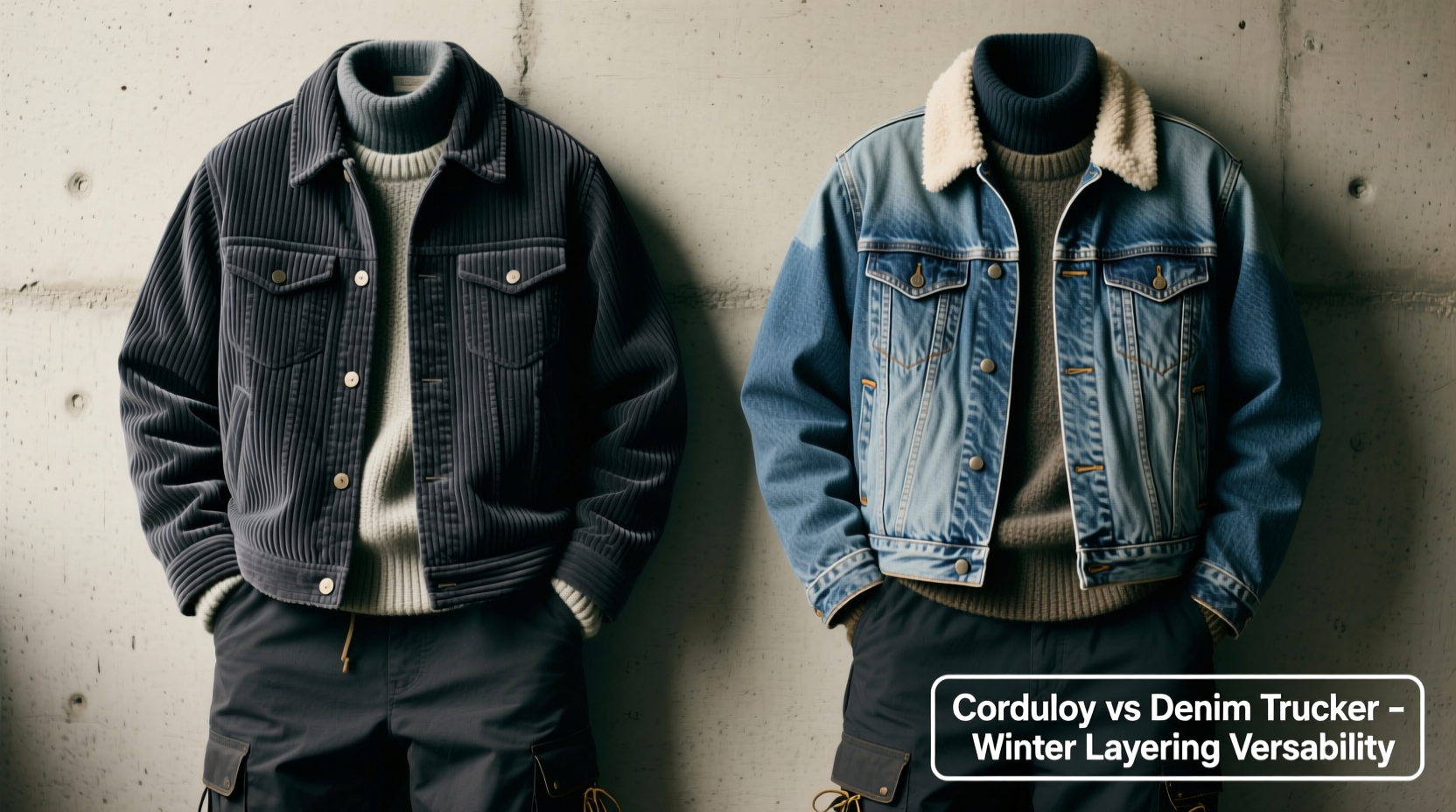
Corduroy and denim differ fundamentally in construction and thermal properties. Understanding these differences is key to assessing their winter utility.
Corduroy is a woven cotton fabric with a distinct ridged texture formed by cut piles of yarn. This pile creates tiny air pockets that trap heat, offering natural insulation. Thicker wales (the width of the ridges) provide more warmth, making wider-wale corduroy ideal for colder months. However, corduroy can be prone to crushing if packed tightly under heavier layers and may absorb moisture more readily than treated denim.
Denim, particularly in 12- to 14-ounce weight, is densely woven and inherently durable. While raw or untreated denim doesn’t insulate as effectively as corduroy, its structure allows it to act as a stable mid-layer beneath heavier coats. When paired with flannel-lined versions or worn over chunky knits, denim gains significant winter functionality. Its resistance to abrasion and water (especially when sanforized or waxed) gives it an edge in unpredictable winter conditions.
Layering Performance: How Each Jacket Functions in a Cold-Weather Wardrobe
Versatility in winter hinges on how well a garment integrates into multiple layering systems. Let’s break down real-world performance.
Corduroy Jacket: The Textured Mid-Layer
A corduroy jacket excels as a standalone outer layer on milder winter days or as a textured mid-layer under wool overcoats or parkas. Its soft hand-feel makes it comfortable over sweaters, while its visual depth adds richness to monochrome ensembles. However, due to its slightly bulkier profile, stacking it under tight-fitting topcoats can be restrictive.
- Best paired with: Turtlenecks, shawl-collar cardigans, flannel shirts
- Topcoat compatibility: Works well under structured overcoats with generous cuts
- Downside: Can create excessive volume when layered too aggressively
Denim Trucker: The Structured Base Layer
The classic denim trucker jacket, with its clean lines and sturdy silhouette, functions like a canvas for layering. It’s typically cut trimmer than corduroy styles, allowing it to sit neatly beneath pea coats, duffle coats, or field jackets. Denim’s rigidity provides structure, preventing collapse when compressed under heavier pieces. Over time, it molds to the body, enhancing comfort during prolonged wear.
- Best paired with: Hoodies, quarter-zips, cable-knit sweaters
- Topcoat compatibility: Ideal under minimalist wool blends or technical shells
- Downside: Limited inherent warmth; relies heavily on underlying layers
“Denim’s strength lies in its neutrality. It doesn’t dominate a look—it enables it.” — Marcus Reed, Menswear Stylist & Former Buyer at Mr Porter
Style Adaptability Across Occasions
Versatility also means transitioning seamlessly from casual to semi-formal settings. Here, both jackets face different challenges.
The corduroy jacket leans toward heritage and academic aesthetics. In earth tones—mustard, burgundy, forest green—it pairs effortlessly with chinos, oxfords, and even tweed trousers. This makes it suitable for weekend brunches, creative workplaces, or evening dinners in relaxed venues. However, its tactile nature can appear overly casual in corporate environments unless balanced with refined tailoring.
The denim trucker, especially in dark indigo or black, has broader stylistic reach. With jeans and boots, it’s quintessentially rugged. But when worn over a roll-neck sweater with tailored trousers and Chelsea boots, it reads as modern and intentional. Designers like Jil Sander and Lemaire have long championed denim in elevated contexts, proving its capacity to transcend informality.
| Occasion | Corduroy Suitability | Denim Trucker Suitability |
|---|---|---|
| Casual Weekend | Excellent | Excellent |
| Creative Office | Good (with tailored pieces) | Very Good (especially dark wash) |
| Evening Out | Fair (depends on color/texture) | Excellent (with minimalist styling) |
| Rugged Outdoor Use | Fair (less abrasion-resistant) | Excellent (durable, weather-tolerant) |
Climate Responsiveness and Long-Term Wearability
In regions with fluctuating winter temperatures—mild days followed by freezing nights—the ability to adjust layers matters greatly.
Corduroy performs best in consistent cold, where its insulating properties shine. However, in humid climates, it may retain dampness longer than denim, leading to discomfort. Breathability is moderate; ventilation depends on wale density and lining material.
Denim, by contrast, handles variable conditions more gracefully. Once broken in, it regulates temperature reasonably well. Lighter-weight versions suit transitional winters, while heavyweight or lined variants endure true cold. Additionally, denim develops a unique patina over time, increasing personal value and reducing the urge to replace it—a hallmark of versatile, sustainable fashion.
Mini Case Study: Two Men, One Winter, Different Approaches
Case 1: Julian, Urban Professional (Chicago)
Julian lives in a city with harsh winters and a mix of indoor heating and outdoor exposure. He owns a moss-green corduroy chore jacket and a vintage-inspired black denim trucker. During early winter, he favors the corduroy with a merino turtleneck and wool trousers. As snowfall increases, he finds the corduroy too bulky under his parka. He switches to the denim trucker, which fits cleanly beneath his coat and layers well with a hoodie underneath. By February, the denim becomes his default mid-layer.
Case 2: Naomi, Creative Freelancer (Portland)
Naomi experiences damp, cool winters with frequent drizzle but rarely sub-zero temps. She prefers the tactile warmth and vintage charm of her caramel corduroy bomber. She wears it open over oversized sweaters and closed during light rain. The fabric resists light moisture surprisingly well, and she appreciates its aesthetic consistency across her wardrobe. Her denim trucker, while owned, remains secondary—used primarily for bike commutes when durability matters most.
These examples illustrate a critical truth: versatility is context-dependent. Climate, lifestyle, and existing wardrobe influence which jacket proves more adaptable.
Step-by-Step Guide: Building a Winter Layering System Around Each Jacket
Follow this sequence to maximize the utility of either piece.
- Assess your local winter climate: Determine average temperatures, humidity, and precipitation patterns.
- Evaluate your core wardrobe: Identify staple tops (turtlenecks, flannels), base layers (thermal, merino), and outer coats (wool, parka).
- Select jacket type based on primary use:
- Choose corduroy if warmth and texture are priorities for moderate cold.
- Choose denim if layering under coats and durability are essential.
- Test fit with common combinations: Try the jacket over a hoodie and under your main coat. Note any restriction or gap in coverage.
- Adjust layer thickness accordingly: Use thinner knits with corduroy to avoid bulk; add insulating mid-layers under denim.
- Seasonally rotate: Use corduroy during stable cold spells; reserve denim for variable or wet conditions.
Checklist: Choosing Your Most Versatile Winter Jacket
- ☐ Does it fit comfortably over a thick sweater?
- ☐ Can it be worn under your primary winter coat?
- ☐ Is the color neutral enough to pair with multiple outfits?
- ☐ Does it transition from day to night with minor styling changes?
- ☐ Is the fabric resistant to moisture and abrasion?
- ☐ Will it age well and develop character over time?
- ☐ Is it easy to care for during frequent winter wear?
Expert Insight: The Role of Fabric Memory in Long-Term Versatility
Unlike synthetic materials, natural fabrics like cotton (in both corduroy and denim) develop “memory” through repeated wear. This affects how they interact with layers over time.
“Fabrics that mold to the body become more versatile because they stop fighting your movement and start supporting your routine.” — Dr. Lena Torres, Textile Researcher at Royal College of Art
Denim, especially raw or unsanforized, undergoes significant adaptation in the first 50 wears. It conforms to shoulder shapes, sleeve bends, and collar folds, eventually becoming an extension of the wearer. Corduroy, while softer initially, tends to retain its original form unless subjected to heavy compression. This means denim may offer superior long-term integration into dynamic layering systems.
Frequently Asked Questions
Can I wear a corduroy jacket in the rain?
Brief exposure is manageable, but sustained rain can cause water absorption, staining, and pile flattening. If caught in a shower, let it dry naturally away from direct heat. For regular wet conditions, consider a water-resistant spray designed for cotton fabrics.
Is a denim trucker warm enough for winter?
On its own, no—but it’s not meant to be. Its strength lies in layering. Worn over a thermal base and a sweater, then under a warm coat, it becomes part of a highly effective insulation system. For standalone warmth, opt for a lined or heavyweight version.
Which jacket lasts longer?
Denim generally outlasts corduroy in high-friction areas like collars and cuffs. Corduroy’s pile can wear down over time, especially in narrow-wale varieties. However, with proper care, both can last a decade or more. Denim’s fade progression often increases desirability, whereas corduroy’s color may dull.
Final Verdict: Which Adds More Versatility?
The corduroy jacket brings undeniable warmth and aesthetic richness to winter dressing. It stands out in curated, texture-driven outfits and performs admirably in stable cold climates. However, its limitations in bulk and moisture resistance restrict its range.
The denim trucker, while less inherently warm, proves more adaptable across diverse winter scenarios. It layers efficiently, transitions between formality levels, withstands daily wear, and ages with character. Its structural integrity allows it to function reliably beneath heavier outerwear—an essential trait when layering is non-negotiable.
Therefore, while the corduroy jacket wins on cozy appeal, the **denim trucker offers greater overall versatility** in a practical winter wardrobe. It serves not just as a jacket, but as a foundational layer capable of anchoring countless combinations across changing conditions.




 浙公网安备
33010002000092号
浙公网安备
33010002000092号 浙B2-20120091-4
Comments
No comments yet. Why don't you start the discussion?