
Fall fashion hinges on balance—style and function, warmth and breathability, structure and comfort. Two outerwear staples dominate this transitional season: the corduroy jacket and the denim trucker. Both are rugged, timeless, and rooted in workwear heritage. Yet when it comes to building effective fall layering outfits, they perform differently. Choosing between them isn’t just about aesthetics; it’s about understanding fabric behavior, insulation properties, compatibility with other garments, and adaptability to fluctuating autumn temperatures.
This comparison dives deep into how each jacket performs in real-world fall conditions, from crisp mornings to mild afternoons. Whether you're navigating city streets or weekend hikes, the right jacket can elevate your look and keep you comfortable. Let’s break down their strengths and weaknesses to determine which truly excels in fall layering.
Fabric Performance: Texture, Insulation, and Breathability
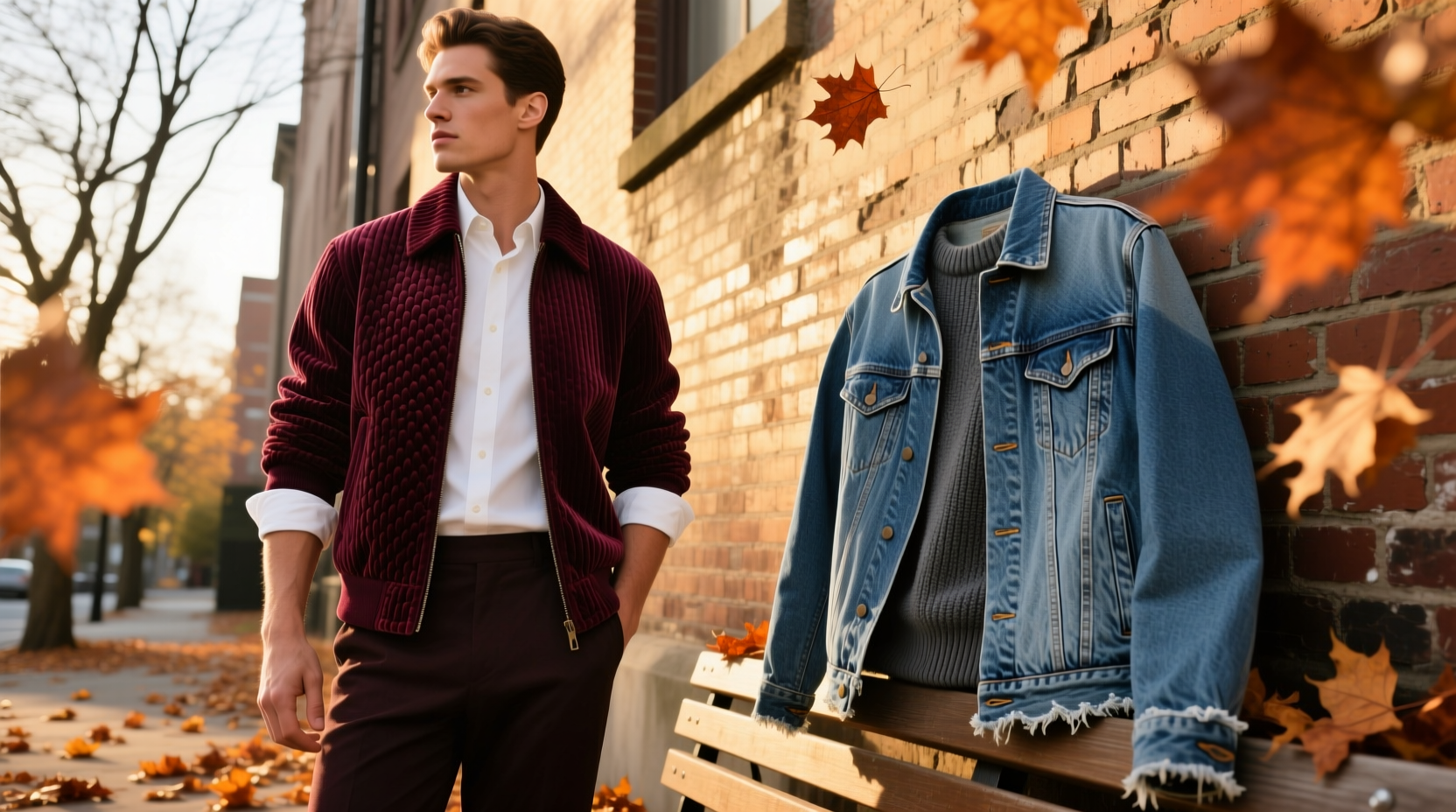
The foundation of any good layering piece lies in its fabric. Corduroy and denim differ significantly in composition, texture, and thermal efficiency.
Corduroy is a woven cotton fabric with a distinctive ribbed texture (called “wales”) formed by cut pile yarns. The thickness of the wales—measured as “wide-wale” (fewer ribs per inch) or “fine-wale” (more ribs)—affects both appearance and performance. Thicker wales add more bulk and trap more air, enhancing warmth. Because of its raised surface, corduroy has natural loft, which acts as a passive insulator. This makes it particularly effective during early fall when nights grow cool but days remain temperate.
Denim, typically made from tightly woven cotton twill, lacks pile but compensates with density. A standard 10–14 oz denim trucker jacket offers wind resistance and moderate insulation. However, unlike corduroy, denim doesn’t inherently trap air unless it’s lined or worn over thick layers. Its strength lies in durability and structure, not heat retention. Over time, denim molds to the body, improving comfort but offering minimal thermal upgrade.
In terms of breathability, both fabrics allow airflow but respond differently to moisture. Corduroy can feel stuffy if layered heavily under synthetic materials, while denim tends to breathe more evenly across temperature shifts. However, neither is water-resistant; both absorb moisture and take time to dry, making rainy fall days a challenge without an additional shell layer.
Layering Compatibility and Styling Flexibility
Effective fall layering involves stacking garments that complement each other in weight, fit, and silhouette. How well a jacket integrates into this system determines its practicality.
A **corduroy jacket** typically features a slightly heavier hand feel and a soft interior. It pairs exceptionally well with lightweight merino wool sweaters, flannel shirts, or turtlenecks. Its inherent texture adds depth to an outfit, making it ideal for creating visual interest in monochrome or earth-toned ensembles. Because corduroy has some natural stretch along the bias, it accommodates mid-layers without restricting movement—provided the cut isn’t too slim.
On the other hand, a **denim trucker jacket** has a stiffer construction, especially when new. While this gives it sharp lines and a structured shoulder profile, it can limit mobility when worn over chunky knits. To maximize layering potential, choose a slightly oversized trucker or break it in with regular wear before relying on it for heavy layering. Once softened, denim becomes more forgiving and works best with thin to medium-weight layers like Oxford shirts, hoodies, or lightweight crewnecks.
“Corduroy’s nap creates micro-insulation, making it a smarter base layer in variable climates. Denim shines when you need durability over warmth.” — Marcus Lin, Menswear Textile Consultant
Styling-wise, corduroy leans toward vintage sophistication. Earthy tones like rust, olive, and chocolate brown align naturally with fall palettes. Denim, meanwhile, offers universal neutrality. Indigo or black truckers blend seamlessly with nearly any wardrobe, acting as a consistent outer layer regardless of season. But in fall, where warmth is prioritized, denim often needs reinforcement—either through lining or additional layers—to match corduroy’s standalone utility.
Comparison Table: Key Features at a Glance
| Feature | Corduroy Jacket | Denim Trucker Jacket |
|---|---|---|
| Insulation Level | High (due to pile structure) | Moderate (depends on weight and lining) |
| Breathability | Medium (can retain heat) | High (tight weave allows airflow) |
| Layering Ease | Excellent (soft, flexible fabric) | Good (stiff initially, improves with wear) |
| Wind Resistance | Fair (pile can compress) | Good (dense twill resists wind) |
| Style Versatility | Seasonal (strongest in fall/winter) | Year-round (adaptable to all seasons) |
| Care Requirements | Delicate (wash inside out, air dry) | Durable (machine washable, fades over time) |
| Lifespan (with care) | 5–7 years | 8+ years |
Real-World Example: A Week of Fall Layering
Consider Alex, a graphic designer living in Portland, Oregon—a city known for damp, unpredictable autumns. One week, temperatures ranged from 48°F (9°C) in the morning to 67°F (19°C) at noon. Alex tested both jackets across five workdays.
On Monday and Wednesday, Alex wore the corduroy jacket over a merino turtleneck and under a wool overcoat during commutes. The combination provided ample warmth without overheating indoors. On Thursday and Friday, the denim trucker was used as a mid-layer beneath a waterproof shell. While it held up well against drizzle, Alex felt chilly during early rides due to denim’s lower insulation. By Tuesday, after light rain, the corduroy took two days to fully dry and developed slight water marks—highlighting its vulnerability to moisture.
The takeaway: corduroy excelled in dry, cool conditions where warmth was key. Denim proved more adaptable in wet weather when paired with protective outerwear, though required extra thermal layers underneath.
Step-by-Step Guide: Building the Ideal Fall Outfit with Each Jacket
Maximizing the potential of either jacket requires intentional layering. Follow these sequences to optimize comfort and style.
For the Corduroy Jacket
- Base Layer: Choose a breathable long-sleeve tee or thermal shirt in cotton or merino wool.
- Mid-Layer: Add a lightweight shawl-collar cardigan or flannel shirt for added texture and warmth.
- Outer Layer: Zip or button the corduroy jacket—ensure it’s unlined or lightly padded to avoid overheating.
- Optional Shell: In rain, wear a tailored nylon raincoat over the entire ensemble to protect the corduroy.
- Bottoms: Pair with chinos, wool trousers, or dark jeans to maintain a cohesive earth-tone palette.
For the Denim Trucker Jacket
- Base Layer: Start with a moisture-wicking undershirt or lightweight henley.
- Mid-Layer: Layer a hoodie or quarter-zip pullover—ideal for adding volume without bulk.
- Outer Layer: Slip on the trucker jacket; select a version with slight stretch or relaxed fit for ease.
- Wind/Water Protection: Top with a field jacket or chore coat in inclement weather.
- Bottoms: Match with raw denim, fatigues, or utility pants for a rugged, functional aesthetic.
The difference lies in intention: corduroy works best as a primary insulator, while denim functions optimally as a structural outer or mid-layer depending on conditions.
Care and Longevity: Maintaining Your Investment
Both jackets represent long-term wardrobe investments, but their maintenance needs differ significantly.
Corduroy should be washed sparingly—ideally once every 4–6 wears—and always turned inside out. Use cold water and a gentle cycle to prevent crushing the wales. Never tumble dry; instead, lay flat to preserve texture. Over time, improper washing can lead to pilling or flattening of the pile, diminishing its insulating properties.
Denim, especially raw or selvedge varieties, benefits from minimal washing to preserve color and integrity. Spot clean when possible, and freeze occasionally to kill odor-causing bacteria. When laundering, use cold water and hang dry to prevent shrinkage. With proper care, a denim trucker can last a decade or more, developing a personalized fade pattern that enhances character.
“Washing corduroy like denim will ruin it. Respect the pile. Wash less, dry flat, and store folded—not hung.” — Lila Chen, Sustainable Fashion Technician
Frequently Asked Questions
Can I wear a corduroy jacket in the rain?
Not ideally. Corduroy absorbs moisture quickly and dries slowly, which can lead to water spots and mildew. If caught in light rain, blot gently with a towel and air dry away from direct heat. For wet climates, consider wearing it under a waterproof shell.
Is a denim trucker warm enough for fall?
It depends on your climate and layering strategy. In mild fall conditions (above 60°F), a trucker with a long-sleeve shirt is sufficient. Below 55°F, add a sweater or hoodie underneath. Unlined versions offer limited warmth, so prioritize lined or heavyweight denim (12 oz+) for cooler regions.
Which jacket is more sustainable?
Both can be sustainable if made from organic cotton and cared for properly. However, denim generally has a longer usable life due to its durability. Corduroy’s shorter lifespan—especially if mishandled—can increase environmental impact over time. Look for brands using recycled fibers and low-impact dyes in either category.
Final Verdict: Which Works Better for Fall Layering?
When evaluating purely on **fall layering performance**, the **corduroy jacket edges out the denim trucker** in most categories. Its superior insulation, soft drape, and compatibility with multiple mid-layers make it a more effective core piece during the heart of autumn. It excels in dry, cool environments where maintaining body heat is essential and style nuance matters.
However, the **denim trucker remains unmatched in versatility and resilience**. It transitions better across seasons, withstands rough use, and integrates effortlessly into casual and semi-formal wardrobes alike. While it may require additional layers to match corduroy’s warmth, its longevity and adaptability give it enduring value.
The smart approach? Own both—but lean on corduroy when building layered fall outfits centered on warmth and texture. Reserve the denim trucker for transitional days, urban commutes, or as a secondary layer when weather demands flexibility.




 浙公网安备
33010002000092号
浙公网安备
33010002000092号 浙B2-20120091-4
Comments
No comments yet. Why don't you start the discussion?