
When it comes to building a long-lasting wardrobe, few materials are as iconic or widely trusted as corduroy and denim. Both have deep roots in workwear, military gear, and countercultural fashion. But when worn year after year, how do they truly compare in terms of resilience? Is the soft texture of corduroy worth the trade-offs? Does denim’s reputation for toughness hold up over decades? The answer isn’t always straightforward—durability depends on fiber quality, weave structure, usage patterns, and maintenance habits. This article breaks down the performance of both fabrics under long-term wear, offering practical insights for anyone deciding between a corduroy jacket and a denim one—or wondering which will outlast the other in their closet.
Fabric Composition and Weave: The Foundation of Longevity
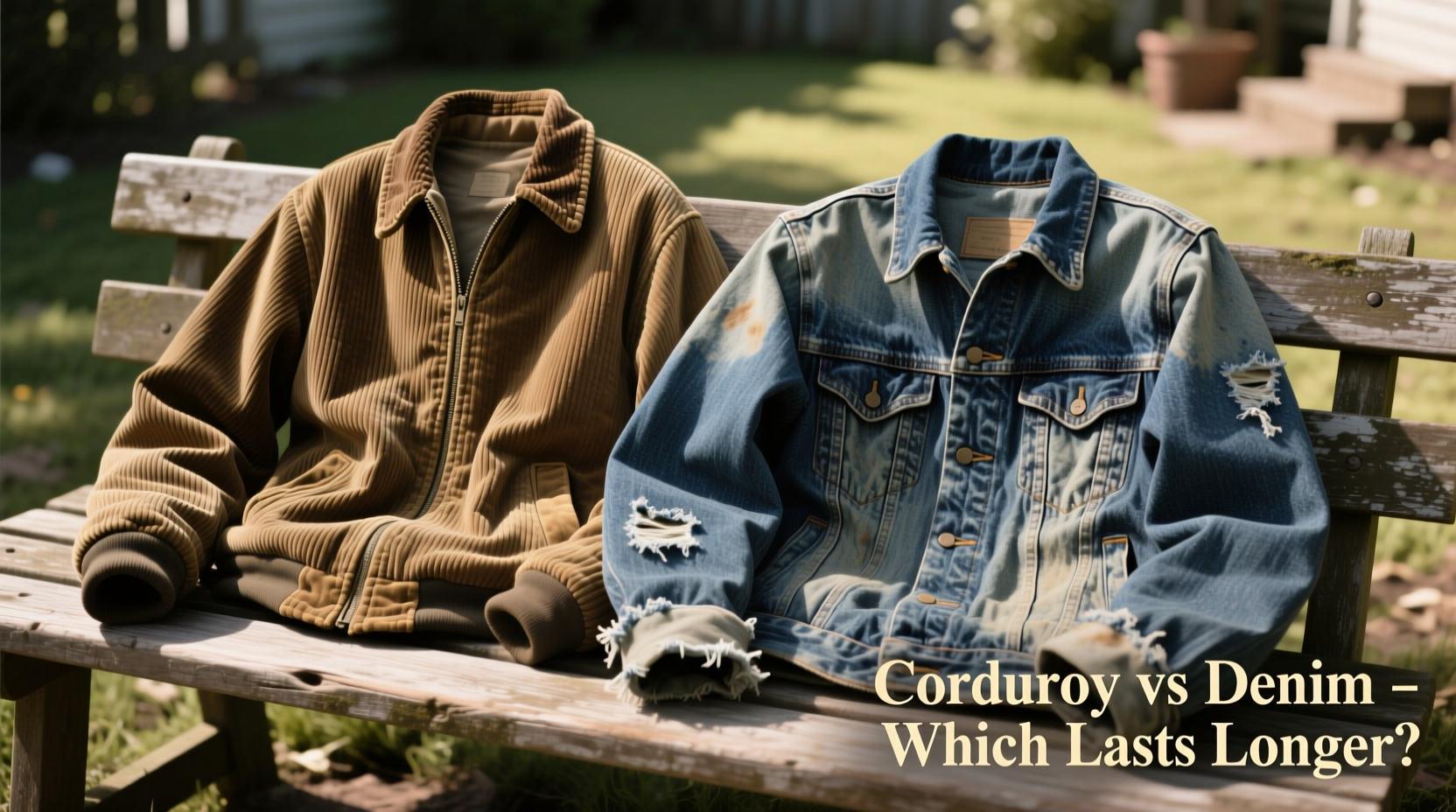
The lifespan of any garment begins with its construction. Denim is typically made from cotton using a twill weave, where threads pass over one and under two (or more) others, creating a diagonal rib pattern. This tight, durable weave resists abrasion and fraying, making it ideal for heavy-duty use. Most denim ranges from 9–14 ounces per square yard, with heavier weights generally lasting longer due to increased thread density.
Corduroy, by contrast, is a pile fabric woven with vertical ridges known as “wales.” These wales are formed by extra sets of weft yarns that are cut during finishing, resulting in a soft, textured surface. The number of wales per inch determines the thickness: fine wale (11+ wales/inch) is sleeker but less durable; wide wale (3–5 wales/inch) is thicker and sturdier. However, the pile structure inherently makes corduroy more vulnerable to crushing, matting, and wear from friction.
While both fabrics are primarily cotton-based, modern blends often include synthetic fibers like polyester or elastane. These can affect breathability and aging characteristics. Pure cotton denim tends to age beautifully, developing fades and whiskers that many consider desirable. Corduroy with high synthetic content may resist shrinking but can pill more easily and lose its nap faster under regular stress.
“Denim’s strength lies in its simplicity—a tightly woven cotton fabric designed to endure. Corduroy offers comfort and character, but its pile demands more careful handling to maintain integrity.” — Daniel Reyes, Textile Historian & Sustainable Fashion Consultant
Wear Patterns and Real-World Durability
In daily use, denim consistently demonstrates superior resistance to mechanical stress. Jackets made from raw or sanforized denim withstand repeated friction from backpacks, seatbelts, and outdoor activity without significant degradation. Over time, denim develops a personalized patina—fades at elbows, collar edges, and cuffs—but rarely suffers structural failure unless subjected to extreme neglect.
Corduroy jackets, while warm and stylish, show signs of wear more quickly. High-contact areas like collars, cuffs, pockets, and underarms tend to flatten or shine as the pile compresses. Once flattened, the texture becomes uneven, and the visual appeal diminishes. In damp climates, corduroy is also prone to mildew if not aired properly, further weakening fibers. Additionally, folding or stacking corduroy garments can create permanent creases that distort the wale alignment.
A key factor influencing longevity is frequency of wear. A denim jacket worn weekly for five years will likely remain structurally sound, though visibly aged. A corduroy jacket worn just as frequently may begin to look shabby by year three, especially if machine-washed regularly or exposed to moisture.
Comparative Analysis: Denim vs Corduroy Over Time
| Factor | Denim Jacket | Corduroy Jacket |
|---|---|---|
| Abrasion Resistance | Excellent – tight twill weave resists pilling and tearing | Moderate – pile wears down with friction, especially at stress points |
| Color Retention | Good to excellent – fades evenly, considered part of character | Poor to fair – prone to localized fading and shading differences in pile |
| Maintenance Needs | Low – infrequent washing preserves integrity | High – requires careful cleaning to avoid flattening pile |
| Structural Integrity After 5 Years | High – seams and fabric remain strong with minimal repairs needed | Variable – may require patching, reweaving, or lining repair |
| Climate Suitability | Versatile – works in cool to mild weather, breathable when broken in | Better in dry cold – traps heat but retains moisture if wet |
| Aesthetic Aging | Highly valued – develops unique fade patterns | Less predictable – can look worn rather than vintage if not cared for |
Case Study: Two Jackets, Ten Years Later
Consider the experience of James L., a field researcher based in Portland, Oregon. In 2014, he purchased two jackets: a 12-ounce indigo selvage denim trucker and a medium-brown wide-wale corduroy chore coat, both from reputable heritage brands. He wore each roughly 100 days per year, primarily for commuting and outdoor work.
After ten years, the denim jacket shows pronounced honeycombs behind the knees (from sitting), faded elbows, and a softened collar. One button was replaced, and a small hole near the hem was patched using a hidden reinforcement stitch. Despite this, the jacket remains fully functional and is still part of his regular rotation.
The corduroy jacket, however, tells a different story. By year six, the collar had flattened significantly, losing its original texture. The cuffs began to fray at the seams due to frequent glove removal. Moisture exposure led to slight discoloration along the shoulders. Though cleaned only twice using professional pressing methods, the nap never fully recovered. By 2023, James retired the corduroy piece, keeping it as a backup layer but no longer wearing it socially due to its worn appearance.
This real-world example illustrates that while both garments were well-made and similarly used, denim demonstrated greater resilience to environmental and mechanical stressors.
Care Practices That Influence Longevity
No fabric survives time untouched—but proper care can dramatically extend its usable life. Denim benefits from minimal intervention. Experts recommend washing no more than once every 10–15 wears, turning inside out, using cold water, and air-drying. Some enthusiasts even freeze jeans to kill odor-causing bacteria without laundering. Overwashing denim strips natural oils, accelerates fiber breakdown, and causes premature fading.
Corduroy requires a more nuanced approach. Machine washing, especially with agitation, can crush the pile permanently. Hand-washing in lukewarm water with a mild detergent is preferable. When drying, lay flat or hang vertically to prevent stretching. Ironing should be done inside-out with a pressing cloth to avoid shine. Steam can help revive flattened areas, but results vary.
Storage matters too. Denim can be folded or hung without issue. Corduroy should ideally be hung on broad, padded hangers to support shoulder shape and prevent creasing across the back. Avoid storing either fabric in plastic bags; breathable cotton garment covers are best.
📋 **Maintenance Checklist for Long-Term Wear**- Wash denim infrequently—only when soiled or odorous
- Always turn corduroy garments inside out before cleaning
- Air-dry both fabrics; avoid direct heat sources
- Inspect seams and buttons annually for loose stitching
- Store in a cool, dry, ventilated space away from sunlight
- Use cedar blocks instead of mothballs to deter pests naturally
- Repair minor tears promptly to prevent worsening
Environmental and Lifestyle Factors
Where you live and how you wear your clothes plays a major role in fabric longevity. In humid regions, cotton-based textiles absorb moisture, increasing susceptibility to mold and mildew. Corduroy, with its dense pile, traps humidity more readily than denim, making it riskier in coastal or rainy climates unless meticulously dried after exposure.
Active lifestyles also influence outcomes. People who bike, hike, or work outdoors place greater physical demands on outerwear. Denim’s ruggedness shines here—it handles scrapes, dirt, and repetitive motion better. Corduroy, while cozy, is less forgiving under constant movement and pressure.
Conversely, in low-activity, urban environments with moderate climate control, corduroy can thrive. Its insulating properties make it ideal for office-to-dinner transitions in fall and winter. With careful rotation and gentle cleaning, a corduroy jacket can last seven to eight years—respectable, though still trailing behind well-maintained denim.
FAQ: Common Questions About Fabric Longevity
Can corduroy be restored once the pile is flattened?
Limited restoration is possible. Steaming the fabric while gently brushing with a soft clothes brush may lift some fibers. However, severely crushed areas often cannot regain their original loft. Prevention through proper storage and cleaning is more effective than repair.
Does raw denim last longer than washed denim?
Yes, generally. Raw denim hasn’t undergone industrial pre-washing, meaning fewer chemicals and less mechanical stress during production. It also allows the wearer to develop personal fade patterns gradually. Pre-washed denim may already show signs of wear and has reduced fiber strength from initial processing.
Are there hybrid fabrics that combine the best of both worlds?
Some manufacturers blend cotton with durable synthetics or use reinforced weaves. For example, cotton-cordura blends offer corduroy-like texture with enhanced abrasion resistance. Similarly, denim-cotton blends with brushed interiors provide warmth without sacrificing toughness. These hybrids are worth exploring for those seeking balance between comfort and endurance.
Final Verdict: Which Holds Up Better?
After years of use, denim emerges as the more durable choice. Its tightly woven structure, resistance to abrasion, and ability to age attractively give it a clear edge in long-term performance. While corduroy offers unmatched tactile appeal and seasonal warmth, it demands higher maintenance and shows wear more visibly, particularly in high-friction zones.
That said, “better” depends on priorities. If you value rugged functionality and a garment that improves with age, denim is the superior investment. If you prioritize texture, vintage charm, and seasonal versatility—and are willing to care for it delicately—corduroy remains a worthwhile addition to a curated wardrobe.
Ultimately, both fabrics can last for years when treated with respect. But when judged purely on structural endurance, resistance to wear, and ease of upkeep, denim proves itself the more resilient fabric over time.




 浙公网安备
33010002000092号
浙公网安备
33010002000092号 浙B2-20120091-4
Comments
No comments yet. Why don't you start the discussion?