
Creating a striking cosplay look often hinges on the details—and few elements stand out more than dramatic, gravity-defying hair. For characters with spiky styles, from anime warriors to video game protagonists, maintaining upright spikes can be one of the most frustrating challenges for newcomers. Too often, carefully styled wigs droop or collapse within minutes of being worn. The good news? With the right materials, techniques, and understanding of synthetic fibers, even beginners can achieve long-lasting, stable spikes that hold their shape all day at conventions, photo shoots, or stage performances.
This guide walks through the science behind wig fiber behavior, essential tools, step-by-step styling methods, and practical maintenance strategies—all tailored specifically for those just starting in cosplay. Whether you're portraying Goku, Sephiroth, or any character with bold, upward-facing hair, mastering spike stability is within reach.
Understanding Synthetic Wig Fibers and Heat Response
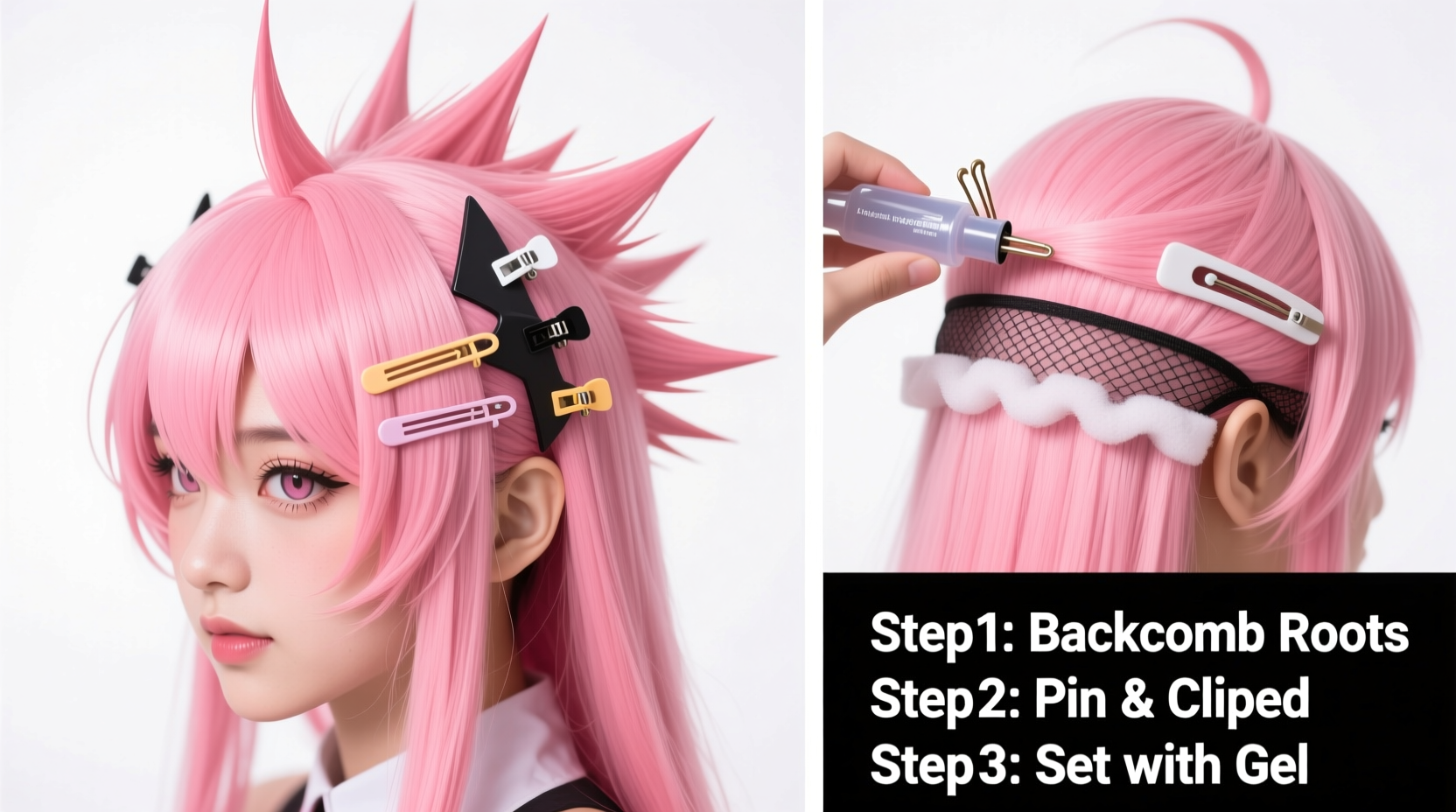
Synthetic cosplay wigs are typically made from heat-resistant Kanekalon or Toyokalon fibers. These materials are engineered to mimic natural hair texture while allowing for vibrant colors and pre-styled shapes. However, their response to heat is what makes them both versatile and finicky when it comes to styling spikes.
When heated, these fibers become pliable. Once cooled, they retain the new shape—this is the foundation of setting spikes. But if not handled correctly, excessive heat can melt the strands, while insufficient heat may fail to set the form. Most quality cosplay wigs use heat-resistant fibers rated between 150°C and 180°C (300°F–350°F). Exceeding this range causes irreversible damage: frizz, clumping, or even melting.
The key to durable spikes lies in shaping the fiber while hot and locking it in place during cooling. This process, known as \"heat setting,\" is far more effective than relying solely on hairspray or glue, which only offer temporary support.
“Many beginners think more product equals better hold, but overuse of spray leads to stiffness and brittleness. It’s the heat technique that truly defines lasting structure.” — Lila Tran, Professional Cosplay Stylist & Wig Technician
Essential Tools and Materials
Success starts with preparation. Having the correct tools ensures precision and prevents accidental damage to your wig. Here's what every beginner should have:
- Heat-resistant gloves – Protects fingers during styling.
- Wig stand or mannequin head – Maintains shape while working.
- Heat tool (curling iron, straightener, or steam wand) – Choose based on desired spike type.
- Alligator clips or bobby pins – Holds sections in place during cooling.
- Low-hold hairspray (optional) – Use sparingly after heat setting.
- Cooling fan or open air space – Ensures rapid, even cooling.
A common mistake is using household flat irons not designed for wigs. These often exceed safe temperatures and lack precise control. Instead, invest in a dual-voltage mini flat iron with adjustable settings, or consider a steamer wand designed specifically for cosplay wigs.
Step-by-Step Guide: Creating Stable Spikes That Last
Follow this methodical approach to build spikes that resist sagging under movement, humidity, or time.
- Prepare the wig: Place it on a wig stand. Detangle gently with a wide-tooth comb. Avoid brushing dry synthetic fibers aggressively—they snag easily.
- Section the hair: Identify where spikes will originate. Use clips to separate non-target areas. Work one spike at a time for maximum control.
- Select your heat tool:
- For sharp, narrow spikes: Use a flat iron.
- For soft, rounded spikes: Try a curling iron or steam wand.
- For thick, wild spikes: Twist strands before heating.
- Apply heat gradually: Clamp the root of the strand with the heated tool. Slowly pull upward in a single motion. Do not linger—1–2 seconds per inch is sufficient.
- Shape and hold: Immediately after heating, twist or point the strand into its final position. Secure with clips against the wig cap or use a pin to anchor it temporarily.
- Cool completely: Allow at least 2–3 minutes per spike before releasing. Rushing causes rebound deformation. A small fan accelerates cooling without disturbing alignment.
- Repeat and refine: Style adjacent spikes, ensuring symmetry. Let the entire wig rest for 10 minutes once complete.
- Final touch (optional): Lightly mist with low-hold, flexible hairspray. Never soak the wig—this weakens fiber integrity over time.
This process sets the memory of the fiber. Unlike natural hair, synthetic strands don’t reabsorb moisture or respond to humidity changes once properly heat-set—making them ideal for consistent造型 (造型 means \"styling\" in Chinese, used here symbolically).
Do’s and Don’ts: Common Mistakes and How to Avoid Them
Even with the right tools, poor habits can undermine your efforts. Refer to the table below to identify pitfalls and safer alternatives.
| Do’s | Don’ts |
|---|---|
| Use heat tools within recommended temperature ranges (150–180°C) | Set irons above 200°C or leave them clamped too long |
| Cool each spike fully before touching or moving | Adjust spikes immediately after heating—this breaks the set |
| Work in small, manageable sections | Try to style multiple spikes at once without securing them |
| Store the wig on a stand or in a box upright | Fold or crush spikes when storing |
| Use minimal, flexible-hold hairspray only if needed | Drench the wig in extra-strong spray hoping for “extra hold” |
One frequent issue arises when cosplayers attempt to fix collapsed spikes by reheating repeatedly. Each exposure to heat stresses the fiber, increasing brittleness. Limit re-styling to once per convention day, and always allow full cooling between attempts.
Maintaining Spike Integrity Throughout the Day
Once styled, preserving your spikes requires proactive care—not just reactive fixes. Environmental factors like sweat, wind, and physical contact pose real threats, especially during crowded events.
Carry a small emergency kit: include mini clips, travel-sized flexible hairspray, and a foldable brush. If a spike begins to droop, avoid reapplying heat unless necessary. Instead, try reshaping it by hand and securing it with a clip until you can safely reheat it later.
Humidity is another silent enemy. Moisture in the air can soften heat-set fibers slightly, especially if the original cooling phase was rushed. To counteract this, store your wig in a climate-controlled area when not in use. Avoid leaving it in car trunks or near food stalls where steam and heat accumulate.
Mini Case Study: From Floppy to Fierce – A Beginner’s Breakthrough
Riley, a first-time cosplayer preparing for her debut as Asuna Yuuki from *Sword Art Online*, struggled with the iconic front spikes constantly folding forward. She initially tried layering triple-strength hairspray, which left her wig stiff and unnatural-looking. After two failed practice runs, she consulted an experienced stylist who introduced her to heat-setting.
Using a temperature-controlled mini flat iron set to 160°C, Riley sectioned her wig and slowly pulled each front strand upward, clipping them into place and letting them cool for three minutes. She repeated the process for five main spikes. At the event, despite hours of walking and photos, the spikes remained upright with only minor touch-ups needed midday. The transformation boosted her confidence—and earned her praise at the costume contest.
Her takeaway: patience during the cooling phase made all the difference.
Alternative Methods When Heat Isn't an Option
Not all wigs are heat-resistant. Some budget-friendly options use standard synthetic fibers that degrade at high temperatures. In such cases, mechanical support becomes essential.
One reliable method involves internal armature: inserting thin, bendable wire into the base of each spike. Aluminum craft wire (1–2mm thickness) works well. Cut pieces to match spike length, thread them inside hollowed strands using a needle, then shape and lock the wire. The wig retains form regardless of external conditions.
Another option is strategic pinning. Small U-pins or bobby pins can anchor spikes to the wig cap or underlying mesh. This works best for shorter spikes and requires careful placement to remain invisible.
While these alternatives lack the seamless finish of heat setting, they’re invaluable for non-heat-safe wigs or last-minute fixes.
Checklist: Preparing Your Spiked Wig for Longevity
Use this checklist before, during, and after styling to ensure optimal results:
- ☐ Confirm wig fiber type (heat-resistant or not)
- ☐ Test heat tool on a hidden strand
- ☐ Detangle gently with wide-tooth comb
- ☐ Section hair clearly; clip away unused parts
- ☐ Apply heat in smooth, upward motions (no lingering)
- ☐ Secure each spike immediately after shaping
- ☐ Allow full cooling (minimum 2–3 minutes per spike)
- ☐ Inspect symmetry and adjust before finalizing
- ☐ Pack emergency kit: clips, mini brush, light spray
- ☐ Store properly post-use: upright, protected from pressure
Frequently Asked Questions
Can I use a hairdryer to set spikes?
No. Standard hairdryers do not generate enough focused heat to reshape synthetic fibers effectively. They may warm the surface but won’t create a lasting set. Use a proper heat tool like a flat iron or steamer instead.
Why do my spikes fall over after 30 minutes?
This usually means the fiber wasn’t cooled properly after heating. The shape must be locked in place while still warm by holding it steady until completely cool. Movement during this phase breaks the structural memory.
Is it safe to sleep in a spiked wig?
Absolutely not. Sleeping flattens the style permanently and damages fibers due to friction and pressure. Always remove and store your wig properly after use.
Conclusion: Master the Method, Not the Mess
Styling cosplay wigs with stable, upright spikes isn’t magic—it’s mechanics. By understanding how synthetic fibers respond to heat and cooling, using the right tools, and respecting the process, beginners can achieve professional-grade results. The goal isn’t perfection on the first try, but progress through mindful repetition.
Start small: perfect one spike, then two. Document your process. Share your struggles and successes. The cosplay community thrives on collaboration, and your journey could inspire someone else facing the same floppy frustrations.




 浙公网安备
33010002000092号
浙公网安备
33010002000092号 浙B2-20120091-4
Comments
No comments yet. Why don't you start the discussion?