
Synthetic cosplay wigs are essential for bringing anime, video game, or fantasy characters to life. Their vibrant colors, consistent styles, and affordability make them a favorite among cosplayers. However, unlike human hair, synthetic fibers require specific care to maintain their shape, shine, and durability. Many enthusiasts unknowingly damage their wigs through improper handling, heat exposure, or incorrect cleaning techniques. With the right knowledge, a single wig can last through multiple conventions and photo shoots without losing its appeal.
The key lies in understanding the material you're working with. Most synthetic wigs are made from modacrylic fibers—engineered to mimic natural hair but with different structural responses to heat, moisture, and friction. Treating them like real hair often leads to frizz, matting, or irreversible melting. This guide provides a comprehensive breakdown of styling methods, maintenance routines, and preservation strategies tailored specifically for synthetic cosplay wigs.
Understanding Synthetic Wig Fibers
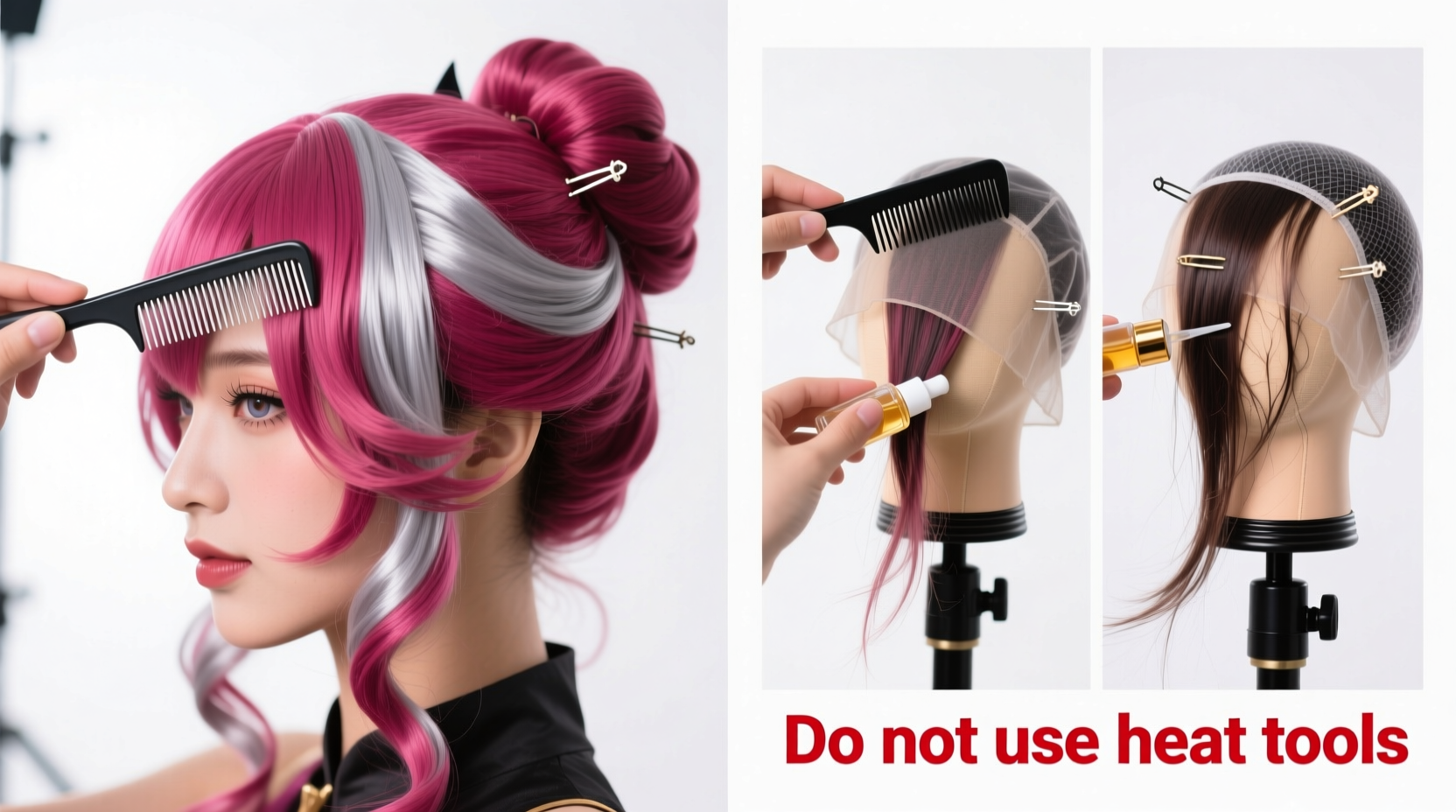
Synthetic wigs used in cosplay are typically constructed from modacrylic or kanekalon fibers. These materials are lightweight, hold color exceptionally well, and retain pre-styled shapes such as curls, waves, or spikes. Unlike human hair wigs, which respond to heat tools and deep conditioning, synthetic fibers have limited tolerance for high temperatures and moisture-based products.
There are two main types of synthetic fibers: standard heat-sensitive and heat-resistant. Standard fibers begin to deform at temperatures above 160°F (71°C), meaning even a hot room or direct sunlight can cause slight warping. Heat-resistant fibers, often labeled as \"heat-friendly,\" can withstand up to 350°F (177°C) and allow limited use of curling irons or flat irons. However, they still require caution—overheating leads to irreversible clumping or shiny patches.
“Most damage occurs not during events, but in storage and cleaning. A well-maintained synthetic wig can last over a year with regular use.” — Lila Tran, Professional Cosplayer & Wig Stylist
Step-by-Step Guide to Styling Synthetic Wigs
Styling a synthetic wig requires patience and precision. Since most styles come pre-set from the factory, the goal is usually to refresh or slightly modify the look—not completely transform it. Follow this timeline to achieve polished results safely.
- Wash and Condition (if needed): If the wig has accumulated dust or odor, clean it first using cool water and wig-specific shampoo. Rinse thoroughly and air dry completely before styling.
- Detangle Gently: Use a wide-tooth comb or a wig brush starting from the ends and working upward. Never start at the roots, as this increases breakage and tugging.
- Determine Heat Tolerance: Confirm whether the wig is heat-resistant. If unsure, assume it is not and avoid all heated tools.
- Use Steam for Reshaping Curls: For non-heat-resistant wigs, hold the wig near (not in) steam from a kettle or garment steamer. Move sections slowly through the vapor to reactivate curls or waves.
- Apply Low Heat (Heat-Resistant Only): Set your curling iron or straightener to no more than 280°F (138°C). Work in small sections, holding the tool for no longer than 5–8 seconds per strand.
- Set the Style: Once styled, let the wig cool completely before touching. Lightly spray with a synthetic-fiber-safe hairspray to lock the shape.
- Final Inspection: Check for symmetry, flyaways, or uneven sections. Use fingers or a soft brush to smooth minor imperfections.
Maintenance Routine for Longevity
Regular upkeep extends a wig’s lifespan significantly. A consistent routine prevents tangling, color fading, and fiber degradation. Below is a weekly and post-event checklist to keep your wig in top condition.
Weekly Maintenance Checklist
- Inspect for tangles or loose wefts
- Gently detangle with a wide-tooth comb
- Wipe surface with a microfiber cloth to remove dust
- Store on a wig stand or mannequin head
After Every Wear (Especially at Conventions)
- Rinse out sweat or makeup residue with cool water
- Use a mild wig shampoo diluted in water; soak for 5 minutes
- Rinse thoroughly—no suds should remain
- Blot excess water with a towel (do not wring)
- Air dry on a styrofoam head away from direct sunlight
“Cosplay wigs get handled a lot—by hands, costumes, and props. Cleaning after each use prevents buildup that dulls the fibers over time.” — Jordan Reyes, Prop & Costume Conservator
Do’s and Don’ts: Synthetic Wig Care Table
| Do’s | Don’ts |
|---|---|
| Use cool or lukewarm water only | Use hot water—it melts fibers |
| Comb from ends to roots gently | Brush aggressively or when wet (unless specified) |
| Store on a wig stand or in a breathable bag | Leave it crumpled in a box or plastic container |
| Use synthetic-specific wig spray or mist | Apply alcohol-based or oil-heavy products |
| Steam curls back into shape | Use flat irons on non-heat-resistant wigs |
| Clean every 3–5 wears | Wait until the wig looks dirty or smells |
Real Example: Reviving a Damaged Anime Wig
Maya, a frequent convention attendee, purchased a bright pink twin-tail wig for her Sailor Moon costume. After three events, the curls had flattened, and the left tail developed a large tangle near the base. She assumed the wig was beyond repair—until she followed a proper restoration process.
First, she soaked the wig in cool water with a teaspoon of synthetic wig shampoo for five minutes. After rinsing, she applied a leave-in detangler formulated for synthetic fibers. Using a wide-tooth comb, she worked through the tangle from the bottom up, applying minimal pressure. Once smooth, she placed the wig on a foam head and used a handheld steamer to gently restore the curls. She avoided direct contact and moved the steam in slow passes. Within 20 minutes, the curls rebounded, and the wig looked nearly new. By storing it on a stand afterward, she prevented future matting.
This case illustrates that even heavily used wigs can be revived with correct technique. The mistake wasn’t wear—it was skipping routine maintenance.
Storage Solutions to Prevent Damage
Improper storage is the leading cause of premature wig deterioration. Folding, crushing, or exposing wigs to heat deforms the fibers and weakens the cap structure. Ideal storage preserves the wig’s shape and protects against environmental stressors.
Always store your wig on a wig stand, mannequin head, or styrofoam form. This maintains volume and prevents creasing. If traveling, use a ventilated wig box or a tall hat container with tissue paper around the sides (never on top of the wig). Avoid sealed plastic bags—they trap moisture and encourage mildew.
Keep wigs in a cool, dark closet away from windows or heating vents. UV rays fade colors, and heat distorts styles. For long-term storage, place the wig inside a cotton pillowcase or breathable fabric bag to shield it from dust while allowing airflow.
FAQ: Common Questions About Synthetic Wig Care
Can I wash my cosplay wig in the sink?
Yes, but only with cold or lukewarm water and wig-specific shampoo. Fill the sink with water, submerge the wig gently, and swirl without rubbing. Rinse the same way. Never twist or wring the fibers.
How often should I wash my wig?
Every 3 to 5 wears, or immediately after heavy sweating, smoke exposure, or makeup transfer. Over-washing strips the fibers of their factory coating, leading to dryness and frizz.
Why does my wig feel stiff after washing?
This is normal. Synthetic fibers are coated with a protective layer that gives them shine and softness. Washing removes some of this coating. To restore softness, use a fabric conditioner diluted in water (one capful per liter) during the final rinse. Do not use regular hair conditioner.
Conclusion: Elevate Your Cosplay with Proper Wig Care
A well-styled, vibrant wig can elevate a cosplay from good to unforgettable. But its impact depends not just on initial appearance, but on sustained quality. By treating synthetic fibers with the care they require—avoiding heat, using proper tools, and maintaining a cleaning routine—you preserve both aesthetics and functionality. Whether you’re preparing for a photoshoot, stage performance, or weekend convention, your wig should perform as reliably as your passion.
Great cosplay isn’t just about accuracy—it’s about respect for the craft. That includes the materials you use. Start implementing these practices today: detangle with intention, store with purpose, and style with knowledge. Your wigs will thank you with lasting brilliance.




 浙公网安备
33010002000092号
浙公网安备
33010002000092号 浙B2-20120091-4
Comments
No comments yet. Why don't you start the discussion?