
Leather keychains are more than just functional accessories—they're personal statements. From rugged everyday carry items to refined gifts, the choice of leather matters. Among the most common options are cowhide and calf leather, both derived from cattle but with distinct differences in quality, feel, and longevity. As calf leather typically commands a 30–50% premium over standard cowhide, many buyers ask: is the upgrade truly worth it? The answer depends on usage, expectations, and appreciation for craftsmanship.
Understanding the Source: Cowhide vs Calf Leather
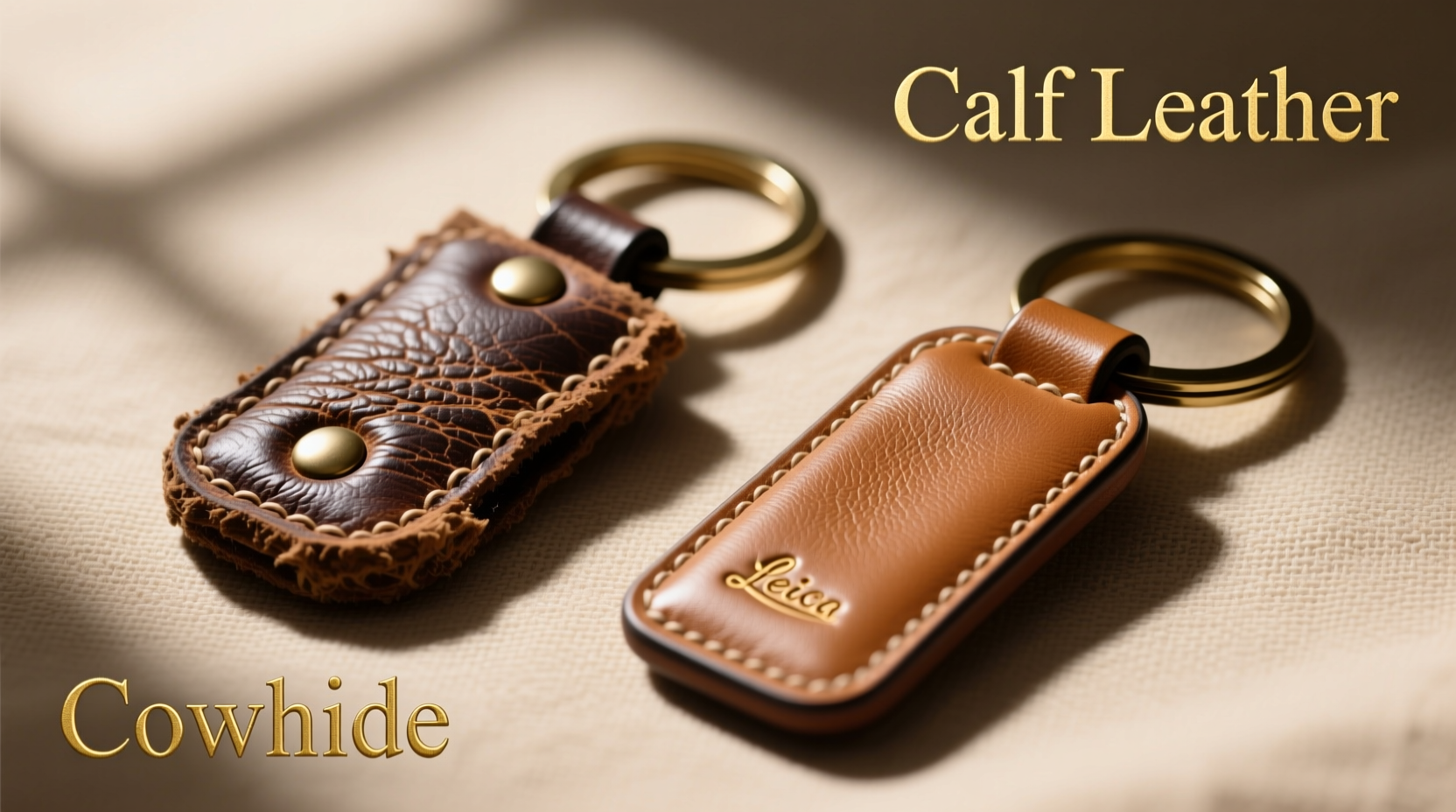
Cowhide comes from mature cattle, usually several years old. It’s thick, durable, and widely used in furniture, footwear, and accessories due to its availability and resilience. Because the animal has lived longer, the hide develops natural imperfections—scars, insect bites, stretch marks—that remain visible even after processing. These traits contribute to a rugged aesthetic prized in casual or utilitarian designs.
In contrast, calf leather is sourced from younger animals, typically under one year old. Their skin is smoother, thinner, and more uniform in grain structure. This results in a supple, fine-textured material that takes dyes and finishes exceptionally well. Calf leather is often associated with luxury goods—think high-end shoes, wallets, and watch straps—because of its refined appearance and soft handfeel.
The biological difference translates directly into performance. While cowhide excels in toughness, calf leather shines in elegance and tactile appeal. But raw characteristics alone don’t determine value—it's how they serve your needs that counts.
Performance Comparison: Durability, Texture, and Aging
Durability isn’t just about strength; it includes resistance to wear, flexibility, and how the material ages over time. Here’s a breakdown of how these two leathers compare across key dimensions:
| Feature | Cowhide | Calf Leather |
|---|---|---|
| Thickness | Thicker (1.4–2.0 mm) | Thinner (0.8–1.2 mm) |
| Tensile Strength | Higher – resists tearing | Moderate – more prone to punctures |
| Grain Uniformity | Variable – visible scars and marks | Consistent – smooth surface |
| Softness | Firm, stiff initially | Supple from the start |
| Aging Behavior | Develops rugged patina; may crack if untreated | Develops rich, even patina; ages gracefully |
| Water Resistance | Naturally higher due to density | Lowers; requires conditioning |
While cowhide wins in brute strength, calf leather offers superior comfort and visual refinement. Over time, both develop character, but calf leather tends to age more uniformly, deepening in color and developing a lustrous sheen when properly maintained. Cowhide, especially lower-grade versions, may show uneven fading or dry out at stress points like attachment loops.
Real-World Use Case: Daily Carry vs Occasional Use
Consider Sarah, a graphic designer who uses her keychain daily. She owns two: one made from full-grain cowhide, another from Italian-sourced calf leather. After six months, the cowhide version shows scuffing near the split ring, minor fraying at the edge, and has darkened unevenly due to pocket lint and moisture. It’s still functional, but no longer pristine.
The calf leather piece, though thinner, remains smooth and retains its shape. It has developed a subtle honey-toned patina and feels more comfortable in her hand. Despite being carried alongside keys and phones, it hasn’t cracked or peeled. Why? The tighter fiber structure of calf leather resists abrasion better at the microscopic level, and its finish was applied more evenly during tanning.
This example illustrates an important point: thickness doesn’t always equal longevity. In frequent use scenarios, the structural integrity and finishing quality of calf leather can outperform thicker, coarser cowhide—especially when the latter is not top-grain or vegetable-tanned.
“Calf leather isn’t inherently more durable, but its consistency allows for finer construction and better long-term aesthetics.” — Daniel Ruiz, Artisan Leatherworker, 15+ years in bespoke accessories
Cost Analysis: Is the Premium Justified?
Calf leather keychains typically range from $25 to $50, while comparable cowhide versions sell for $15 to $30. The price gap stems from limited supply (fewer calves slaughtered annually), specialized handling, and higher demand in luxury markets.
To assess whether the cost is justified, consider three factors:
- Frequency of Use: If you carry your keychain daily, investing in calf leather pays off through better aging and comfort.
- Aesthetic Preference: Those who appreciate clean lines, rich color depth, and a polished look will find calf leather more satisfying.
- Lifespan Expectation: With proper care, a calf leather keychain can last 3–5 years or more. Poorly finished cowhide may degrade within 1–2 years despite initial toughness.
However, for occasional use—such as a spare set at home or a promotional gift—cowhide provides excellent value. Its ruggedness suits environments where appearance matters less than function.
When Cowhide Makes More Sense
- Budget-conscious buyers
- Outdoor or workshop settings (exposure to dirt, grease, moisture)
- Desire for a “lived-in” look from day one
When Calf Leather Is Worth the Upgrade
- Professional or gift contexts
- Daily carry with attention to detail
- Preference for lightweight, soft-to-the-touch materials
Maintenance Requirements and Longevity Tips
Both leathers benefit from basic care, but calf leather demands slightly more attention due to its sensitivity to oils and water. Follow this simple checklist to extend the life of any leather keychain:
✅ Leather Keychain Care Checklist
- Wipe clean monthly with a dry, soft cloth
- Apply leather conditioner every 3–4 months
- Avoid prolonged exposure to direct sunlight
- Remove during swimming, showering, or heavy sweating
- Store separately when not in use to prevent scratches
For calf leather, avoid silicon-based polishes that can clog pores. Instead, opt for natural conditioners like beeswax or neatsfoot oil in moderation. Over-conditioning can soften the leather too much, reducing structural support around metal attachments.
Frequently Asked Questions
Can I repair a scratched calf leather keychain?
Yes. Minor surface scratches often blend into the patina over time. For deeper marks, a small amount of leather balm rubbed gently can help restore moisture and reduce visibility. Avoid abrasive buffing, which may damage the grain.
Does cowhide ever match the quality of calf leather?
Only in rare cases. Full-grain, vegetable-tanned cowhide from premium suppliers can approach calf leather in longevity and appearance. However, due to natural markings and coarser fibers, it rarely achieves the same level of refinement.
Are there ethical concerns with calf leather?
Some consumers object to calf leather on animal welfare grounds. Most calf leather is a byproduct of the dairy industry, where male calves are culled early. If ethics are a priority, look for brands that certify responsible sourcing or offer vegan alternatives without compromising style.
Final Verdict: When to Pay More, When to Save
The decision between cowhide and calf leather isn’t about which is objectively better—it’s about alignment with your lifestyle and values. If you prioritize rugged utility and budget efficiency, cowhide delivers solid performance. But if you appreciate craftsmanship, consistent beauty, and a luxurious feel, calf leather justifies its premium.
Think of it like choosing between a work boot and a dress shoe. Both serve their purpose, but one elevates the experience. For a small item that touches your hand daily, that elevation can make a meaningful difference.




 浙公网安备
33010002000092号
浙公网安备
33010002000092号 浙B2-20120091-4
Comments
No comments yet. Why don't you start the discussion?