
Adding crackers to soup is more than a nostalgic childhood memory—it’s a culinary technique that elevates texture, enhances flavor, and transforms a simple bowl into a satisfying meal. The right cracker introduces a deliberate contrast: a crisp, flaky, or salty bite against the soft, warm embrace of broth, stew, or chowder. While many reach instinctively for saltines or oyster crackers, the world of soup-friendly crackers is far broader, more nuanced, and deeply tied to regional traditions and ingredient quality. Understanding which crackers work best—and why—allows home cooks to make intentional choices that complement rather than overwhelm their dishes. This guide explores the most effective crackers for soups, their sensory profiles, how to use them properly, and the subtle art of balancing crunch with cohesion.
Definition & Overview
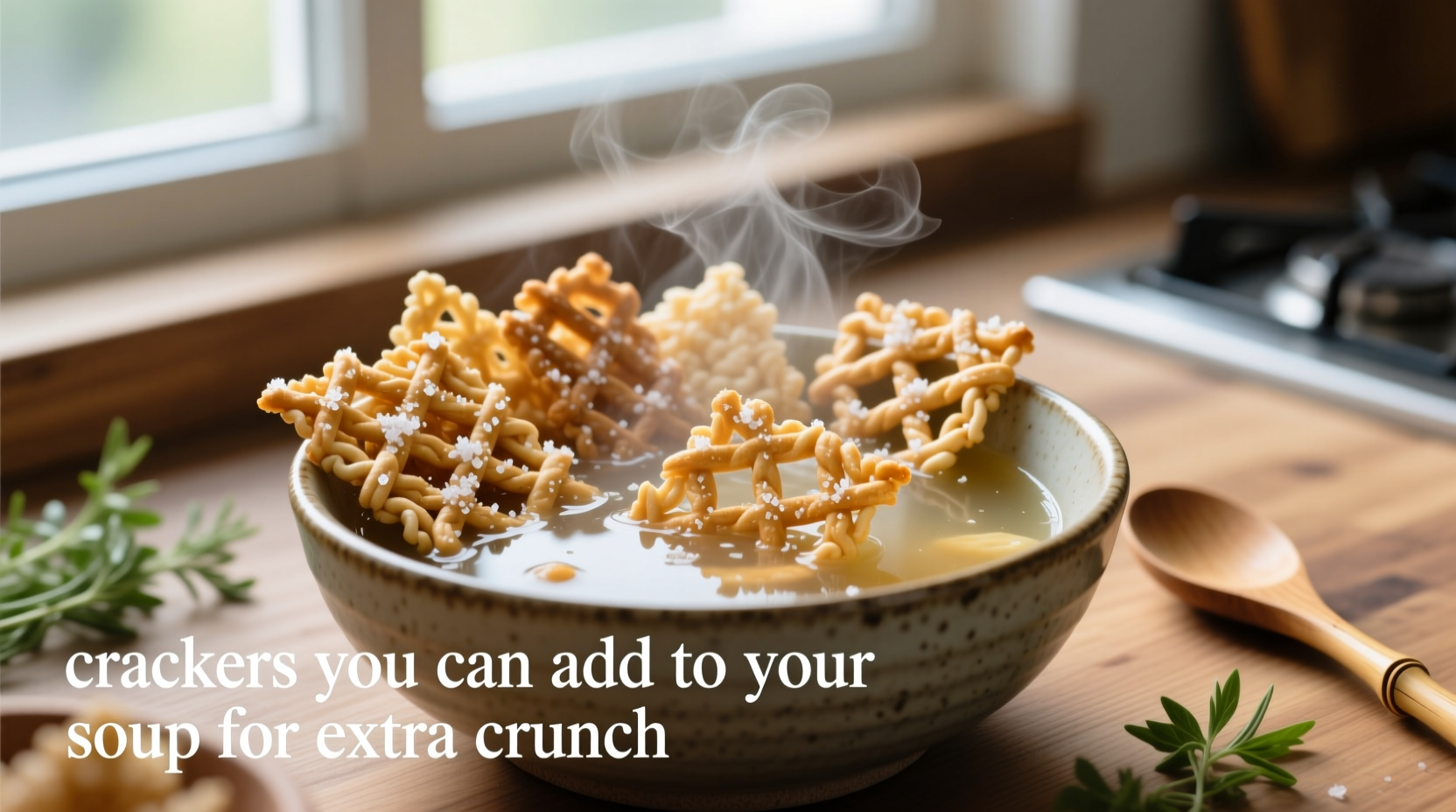
Crackers are thin, baked flour-based products typically made from wheat, water, fat (such as butter, oil, or shortening), and salt. They range from simple unleavened wafers to complex layered or fermented varieties. When used in soups, crackers serve primarily as textural enhancers, though they can also contribute salt, fat, acidity, or umami depending on their formulation. Unlike bread, which soaks and collapses quickly, well-chosen crackers maintain structural integrity long enough to deliver a satisfying bite before softening into the dish. Historically, cracker use in soups emerged from practicality—preserving dry goods and stretching meals—but evolved into a refined element of comfort cuisine across cultures, from New England clam chowder topped with oyster crackers to Korean miyeokguk garnished with seaweed-studded rice crisps.
Key Characteristics of Soup-Suitable Crackers
Not all crackers perform equally in soup. The ideal candidate balances durability, flavor compatibility, and mouthfeel. Below are the essential traits to consider:
| Characteristic | Description |
|---|---|
| Texture | Must retain initial crunch for at least 30–60 seconds after contact with hot liquid. Overly porous or airy crackers dissolve too quickly. |
| Flavor Profile | Should complement, not dominate. Salty, buttery, nutty, or earthy notes work best. Avoid overly sweet or spiced varieties unless intentionally paired. |
| Size & Shape | Small to medium pieces (1–2 inches) integrate well. Large crackers should be broken manually. Round, square, or hexagonal shapes distribute evenly. |
| Fat Content | Moderate fat (e.g., butter or olive oil) slows moisture absorption and improves mouthfeel. Fat-free crackers disintegrate rapidly. |
| Salt Level | Crucial for flavor lift. Low-sodium versions may underseason the dish unless adjusted elsewhere. |
| Shelf Life | Freshness matters. Stale crackers lose crispness; rancid fats alter taste. Store in airtight containers away from heat and light. |
Practical Usage: How to Incorporate Crackers into Soup
The timing, quantity, and method of adding crackers significantly affect the final dish. Here are professional guidelines for optimal results:
- Add at the end: Always introduce crackers just before serving. Premature addition leads to sogginess and texture loss.
- Portion control: Use 1/4 to 1/2 cup per bowl, depending on cracker size and desired intensity. Overloading can turn soup into mush.
- Layering technique: For composed presentation, place a small handful in the bottom of the bowl, ladle hot soup over it, then top with another layer. This creates multiple textural zones.
- Custom seasoning: Elevate plain crackers by lightly toasting them with garlic powder, smoked paprika, or grated Parmesan for 3–5 minutes at 350°F (175°C).
- Dipping alternative: Serve crackers on the side for dipping, preserving maximum crunch and allowing diners to control texture.
Pro Tip: If reheating soup with pre-added crackers, expect complete softening. For leftovers, store crackers separately and add fresh when serving.
Variants & Types of Crackers for Soup
Different cracker types offer distinct advantages based on soup style and cultural context. Below is a breakdown of the most effective varieties:
1. Oyster Crackers
Nearly synonymous with American-style creamy soups like chicken noodle or clam chowder, oyster crackers are small, round, and slightly domed with a neutral, mildly salty flavor. Despite the name, they contain no oysters—historically named for their shape resembling oyster shells. Their dense structure resists rapid breakdown, making them ideal for brothy soups.
2. Saltine Crackers
Thin, square, and four-perforated, saltines are lightly leavened with yeast and feature a sharp saline finish. Best suited for tomato-based soups, bean stews, or chili, where their crispness cuts through richness. Break into halves or quarters for even distribution.
3. Ritz Crackers
Buttery, laminated, and slightly sweet, Ritz adds richness to cream soups such as broccoli cheddar or mushroom bisque. Their high fat content slows soaking, but they soften faster than denser crackers. Use sparingly to avoid greasiness.
4. Whole Wheat or Multigrain Crackers
With nutty depth and fiber-rich composition, these pair well with hearty vegetable soups, lentil stews, or minestrone. Choose brands with visible seeds and minimal added sugar. Their coarser texture provides prolonged crunch.
5. Water Crackers
Simple, unleavened, and crisp, water crackers are made from flour and water only. Their neutrality makes them excellent for delicate soups like consommé or fish broth, where strong flavors would distract. Opt for thicker-cut versions to prevent instant dissolution.
6. Cheese Crackers (e.g., Goldfish, Cheese-Its)
Bold in flavor and often brightly colored, cheese crackers work best in casual or kid-friendly contexts. Pair with mac and cheese soup or tomato bisque. Their cheddar-derived tang amplifies savory notes but can clash with subtler broths.
7. Asian-Inspired Rice Crisps and Seaweed Crackers
Light, airy, and often seasoned with sesame, soy, or nori, these are perfect for miso soup, ramen, or pho. Korean kkaennip ppoongppoong (perilla leaf crackers) or Japanese sakaki senbei add aromatic complexity. Handle gently—they shatter easily.
8. Crostini and Toasted Baguette Slices
Technically not crackers, but functionally equivalent. Thick-cut, oven-toasted bread rounds provide robust crunch and can be rubbed with garlic or brushed with olive oil. Ideal for French onion soup or cioppino.
9. Matzo
An unleavened Jewish flatbread traditionally used during Passover, matzo breaks into irregular shards and softens gradually. Excellent in matzo ball soup or beef barley stew, where its mild wheat flavor blends seamlessly.
10. Gluten-Free Crackers
Made from rice, almond, or chickpea flour, these vary widely in performance. Look for brands with added starch or oil to improve structural resilience. Nut-thins or cassava-based crackers often outperform corn-only versions in soups.
Comparison with Similar Ingredients
Crackers are sometimes confused with other crunchy soup toppings. Understanding the differences ensures proper usage:
| Ingredient | Cracker | Crisp Bread / Crostini | Crumbs (Breadcrumbs, Panko) | Croutons |
|---|---|---|---|---|
| Form | Pre-baked, thin, uniform | Thick, toasted slices | Granular, loose particles | Cubed, oven-dried bread |
| Texture Duration | Short to medium (30 sec – 3 min) | Medium to long (2–5 min) | Very short (dissolves in seconds) | Long (up to 5+ min) |
| Best For | Creamy, brothy soups | Hearty, chunky stews | Thickening agent or light garnish | Cream soups, salads, bisques |
| Flavor Impact | Moderate to strong | Earthy, toasty | Subtle, blends in | Pronounced, often herbed |
| Convenience | High (shelf-stable, ready-to-use) | Medium (requires prep) | High (ready-to-sprinkle) | Medium (homemade or store-bought) |
“The crunch factor isn’t just about texture—it’s a psychological trigger. That audible snap tells the brain the food is fresh, safe, and worth eating. In soup, it re-engages the diner after each spoonful.” — Chef Elena Rodriguez, Culinary Instructor, Institute of Food Arts
Practical Tips & FAQs
Can I use stale crackers in soup?
No. Stale crackers have already lost moisture and will absorb soup too quickly, turning gummy. However, you can revive slightly soft crackers by baking at 300°F (150°C) for 5–7 minutes until crisp again.
Are there low-sodium options that still work?
Yes, but adjust seasoning in the soup itself. Use herbs like thyme, rosemary, or lemon zest to compensate for reduced salt in the cracker. Kettle-cooked whole grain crackers often have natural savoriness without added sodium.
How do I store crackers to maintain freshness?
Keep in airtight containers or resealable bags. Include a silica gel packet if storing long-term. Avoid humid environments. Once opened, consume within 2–3 weeks for peak crispness.
What soups should I avoid topping with crackers?
Delicate chilled soups like vichyssoise or gazpacho lose their silky texture when mixed with crunch. Similarly, emulsified soups such as velouté may break if stirred vigorously after cracker addition. Serve crackers on the side in these cases.
Can I make homemade soup crackers?
Absolutely. A basic recipe includes 1 cup flour, 1/4 tsp salt, 3 tbsp cold butter, 1/4 cup ice water, and optional seasonings. Roll thin, cut into shapes, prick with a fork, and bake at 375°F (190°C) for 12–15 minutes until golden. Cool completely before use.
Do crackers affect soup nutrition significantly?
Per 1/4 cup serving, most crackers add 60–100 calories, 1–3g fat, and 150–300mg sodium. Whole grain or seed-based versions increase fiber and protein. Consider dietary needs when selecting types and portion sizes.
Is there a vegan-friendly cracker option?
Yes. Many water crackers, rice crisps, and whole wheat varieties are naturally vegan. Avoid brands containing milk derivatives, whey, or animal fats. Check labels for honey, which some strict vegans avoid.
Storage Hack: To extend shelf life, freeze crackers in a single layer on a tray, then transfer to a freezer-safe bag. Thaw at room temperature before use—no loss of crispness.
Expert Pairing Guide: Matching Crackers to Soups
The harmony between soup and cracker hinges on flavor balance and texture contrast. Below is a curated pairing chart based on culinary principles:
| Soup Type | Recommended Cracker | Rationale |
|---|---|---|
| Chicken Noodle | Oyster crackers or saltines | Neutral flavor doesn’t compete; small size integrates well with noodles. |
| Clam Chowder | Oyster crackers or Ritz | Traditional pairing; buttery Ritz enhances creaminess. |
| Tomato Basil | Garlic-thyme crostini or water crackers | Acidity in tomato matches crisp, herbal notes; avoids sweetness clash. |
| Miso Soup | Rice crisps or nori-seaweed crackers | Umami synergy; light texture complements delicate broth. |
| French Onion | Toasted baguette with Gruyère (open-faced) | Structural support for cheese pull; withstands long simmering. |
| Lentil or Minestrone | Whole wheat or multigrain crackers | Earthy tones match legumes; fiber adds satiety. |
| Chili | Saltines or cornmeal crackers | Salt cuts richness; corn flavor echoes Southwestern roots. |
| Seafood Broth (e.g., bouillabaisse) | Plain water crackers or grissini | Non-invasive; allows briny, herbal notes to shine. |
| Broccoli Cheddar | Ritz or cheese crackers | Double cheese effect; buttery base complements creamy sauce. |
| Matzo Ball Soup | Matzo or unsalted soda crackers | Cultural authenticity; gradual softening mimics dumpling texture. |
Summary & Key Takeaways
Crackers are not mere afterthoughts but strategic components in soup preparation. The right choice enhances aroma, texture, and flavor balance, turning a humble bowl into a multidimensional experience. Key considerations include the cracker’s structural integrity, salt level, fat content, and flavor compatibility with the soup base. While oyster crackers and saltines remain staples, adventurous cooks can explore global variants—from Korean rice crisps to Italian grissini—for unique pairings.
Timing is critical: always add crackers at the table or immediately before serving. Store them properly to preserve crispness, and consider homemade versions for full ingredient control. Whether feeding a family or crafting a restaurant-worthy dish, the cracker-soup relationship is one of contrast and harmony—a fleeting crunch that lingers in memory long after the last spoonful.
Final Thought: Next time you ladle soup, pause before reaching for the cracker box. Ask: Does this cracker elevate the dish? Will it hold up? Does it belong? The answer could redefine your definition of comfort food.




 浙公网安备
33010002000092号
浙公网安备
33010002000092号 浙B2-20120091-4
Comments
No comments yet. Why don't you start the discussion?