
Your About Me page is often the first place visitors go to understand who you are, what you stand for, and whether they can trust you. Unlike a resume or LinkedIn profile, this space isn’t just about credentials—it’s about connection. A well-crafted About Me section turns passive readers into engaged followers, clients, or collaborators. Yet many people either write something too formal and detached or overshare without purpose. The key lies in balance: authenticity, clarity, and intention.
Whether you're a solopreneur, creative professional, coach, or blogger, your story matters. But telling it effectively requires structure, strategy, and emotional intelligence. This guide walks you through how to build an About Me section that resonates, converts, and reflects the real you—without sounding self-indulgent or overly promotional.
Why Your About Me Section Matters More Than You Think
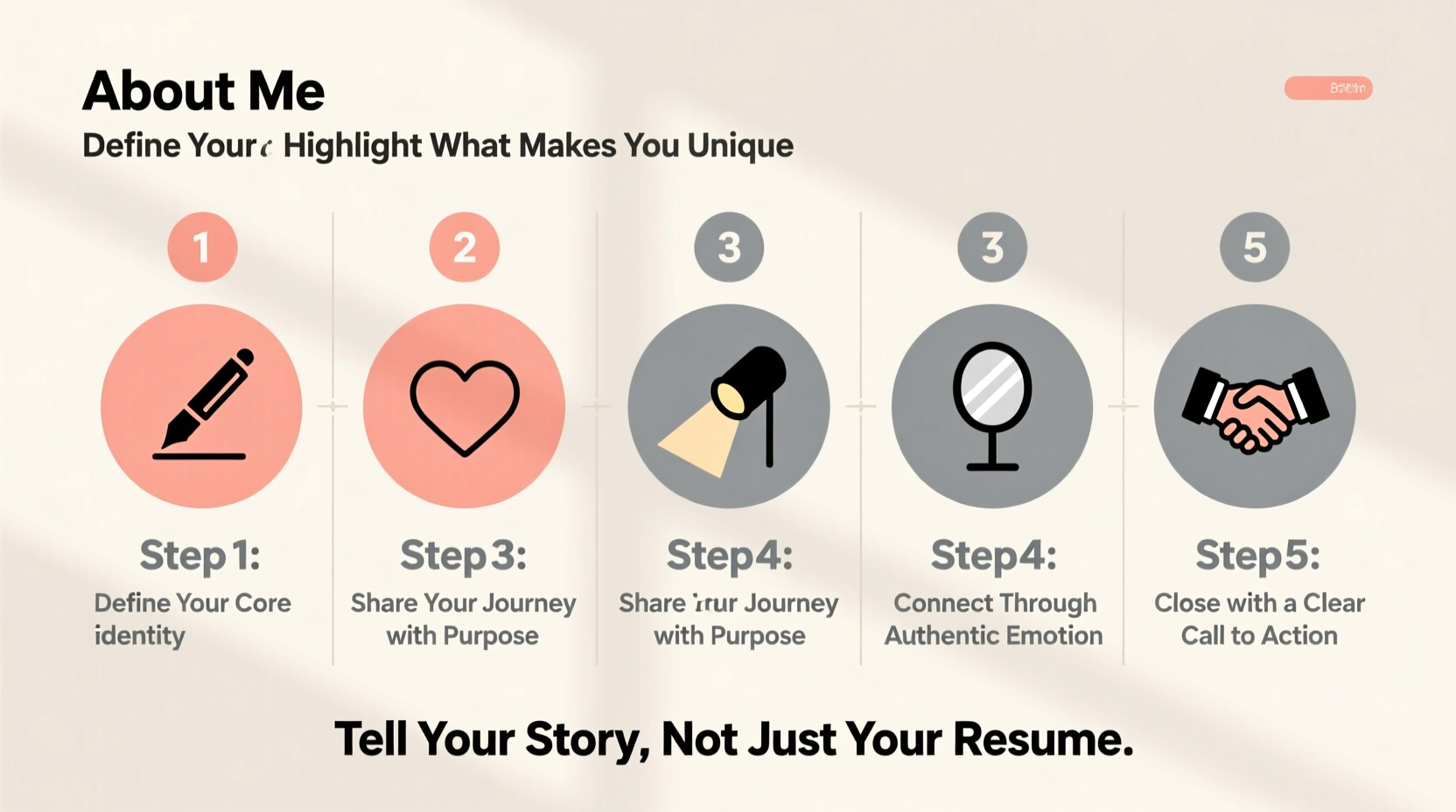
Think of your About Me page as the bridge between curiosity and commitment. When someone lands on your website, they’re silently asking: “Can I relate to this person? Do they understand my problem? Are they credible?” Your bio answers those questions—often within seconds.
According to research from HubSpot, personalized storytelling increases time-on-page by up to 40%. People don’t connect with logos or taglines; they connect with people. A strong narrative builds empathy, establishes authority, and differentiates you in crowded markets.
“People will forget what you said, but they’ll never forget how you made them feel.” — Maya Angelou
This emotional resonance is exactly what a powerful About Me section achieves. It’s not about listing achievements—it’s about framing your journey so others see themselves in it.
Step-by-Step Guide to Building Your Story
Creating a compelling About Me section doesn’t require literary genius. What it does require is honesty, focus, and a clear framework. Follow these steps to craft a narrative that flows naturally and drives engagement.
- Start with Purpose, Not Chronology
Don’t begin with “I was born in…” Instead, open with why you do what you do. What problem were you trying to solve? What gap did you see? Lead with mission, not milestones. - Identify Your Turning Point
Every good story has a moment of transformation. Was it a career shift? A personal struggle? A failure that led to insight? Highlight the experience that redirected your path and gave your work meaning. - Showcase Expertise Through Experience
Instead of saying “I’m an expert in branding,” say “After rebranding over 50 small businesses, I realized most entrepreneurs underestimate the power of visual consistency.” Let results and experiences speak for your credibility. - Include Relatable Struggles
Audiences connect with vulnerability. Mention challenges you faced—not to dwell on them, but to show growth. For example: “I used to burn out every quarter until I redesigned my workflow around energy, not hours.” - End With a Vision
Close by describing the future you’re working toward. Who are you helping? What change do you want to create? This gives readers a reason to follow along or take action.
Do’s and Don’ts: Crafting a Bio That Works
Even with a great story, poor execution can weaken impact. Use this table to avoid common pitfalls and reinforce best practices.
| Do | Don’t |
|---|---|
| Use first-person voice (“I help…”, “My journey began…”) | Write in third person unless required (e.g., editorial bios) |
| Focus on the reader’s benefit (“You’ll learn how to…”) | Make it all about your awards or titles |
| Keep paragraphs short (2–3 sentences max) | Use long blocks of text that are hard to scan |
| Include one or two personality quirks (e.g., “coffee snob,” “cat dad”) | Overshare personal details unrelated to your brand |
| Align tone with your audience (professional, playful, bold) | Mimic someone else’s voice instead of being yourself |
Real Example: From Generic to Compelling
Consider Sarah, a freelance web designer. Her original About Me read:
“I’ve been designing websites for 7 years. I specialize in WordPress and UX design. I’ve worked with clients across industries.”
It’s factual—but forgettable. After restructuring using the steps above, she rewrote it:
“I used to dread opening my laptop. As a former marketing manager, I spent nights fixing clunky websites that didn’t convert—until I taught myself to build clean, client-winning designs from scratch. Now, I help service-based entrepreneurs launch websites that look professional, load fast, and actually bring in leads. No tech jargon. No endless revisions. Just sites that work as hard as you do. When I’m not tweaking code, you’ll find me hiking with my rescue dog, Milo.”
The revised version tells a story, shows transformation, highlights expertise, and adds warmth. It invites connection.
Checklist: Is Your About Me Section Ready?
Before publishing, run through this checklist to ensure your bio hits all the right notes:
- ✅ Opens with purpose or passion, not job title
- ✅ Includes a pivotal moment or turning point
- ✅ Demonstrates expertise through real experience
- ✅ Mentions a challenge or lesson learned
- ✅ Reflects your unique personality or voice
- ✅ Ends with a forward-looking statement or invitation
- ✅ Written in first person and conversational tone
- ✅ Free of jargon, clichés, and buzzwords (“guru,” “rockstar,” “disruptive”)
- ✅ Under 300–500 words (ideal for online reading)
- ✅ Reviewed by someone who knows your audience
Frequently Asked Questions
How personal should my About Me section be?
Share only what serves your message. A hobby, pet, or travel passion can humanize you—but only if it adds character without distracting. Avoid deeply private topics unless directly relevant (e.g., a mental health advocate sharing their journey).
Should I include my qualifications or degrees?
If they’re essential to credibility (e.g., MD, PhD, licensed therapist), mention them briefly in context. Instead of “I have a Master’s in Psychology,” try “After earning my degree in clinical psychology, I noticed a gap in accessible anxiety resources—which led me to create…”
Can I update my About Me section over time?
Absolutely. Your story evolves, and so should your bio. Revisit it every 6–12 months. Did your focus shift? New achievement? Expanded audience? Update accordingly. Authenticity includes growth.
Conclusion: Your Story Is Your Strongest Asset
In a world saturated with polished personas and AI-generated content, real human stories stand out. A compelling About Me section isn’t about perfection—it’s about presence. It’s where professionalism meets personality, where data meets desire, and where visitors decide whether to stay or leave.
You don’t need a dramatic origin story or a viral breakthrough. You just need to be honest, specific, and focused on the value you offer. By following this guide, you’re not just writing a bio—you’re building trust, one sentence at a time.




 浙公网安备
33010002000092号
浙公网安备
33010002000092号 浙B2-20120091-4
Comments
No comments yet. Why don't you start the discussion?