
Puppies are joyful additions to any home, but their first few weeks often come with disrupted sleep, accidents, and confusion—especially at night. One of the most debated decisions new pet owners face is whether to crate train their puppy or allow them to free roam during nighttime hours. While both approaches have advocates, research and behavioral expertise consistently show that structured crate training leads to faster progress in helping puppies sleep through the night. Understanding the science behind each method, along with practical implementation strategies, can make all the difference in building healthy habits from day one.
The Science of Puppy Sleep Patterns
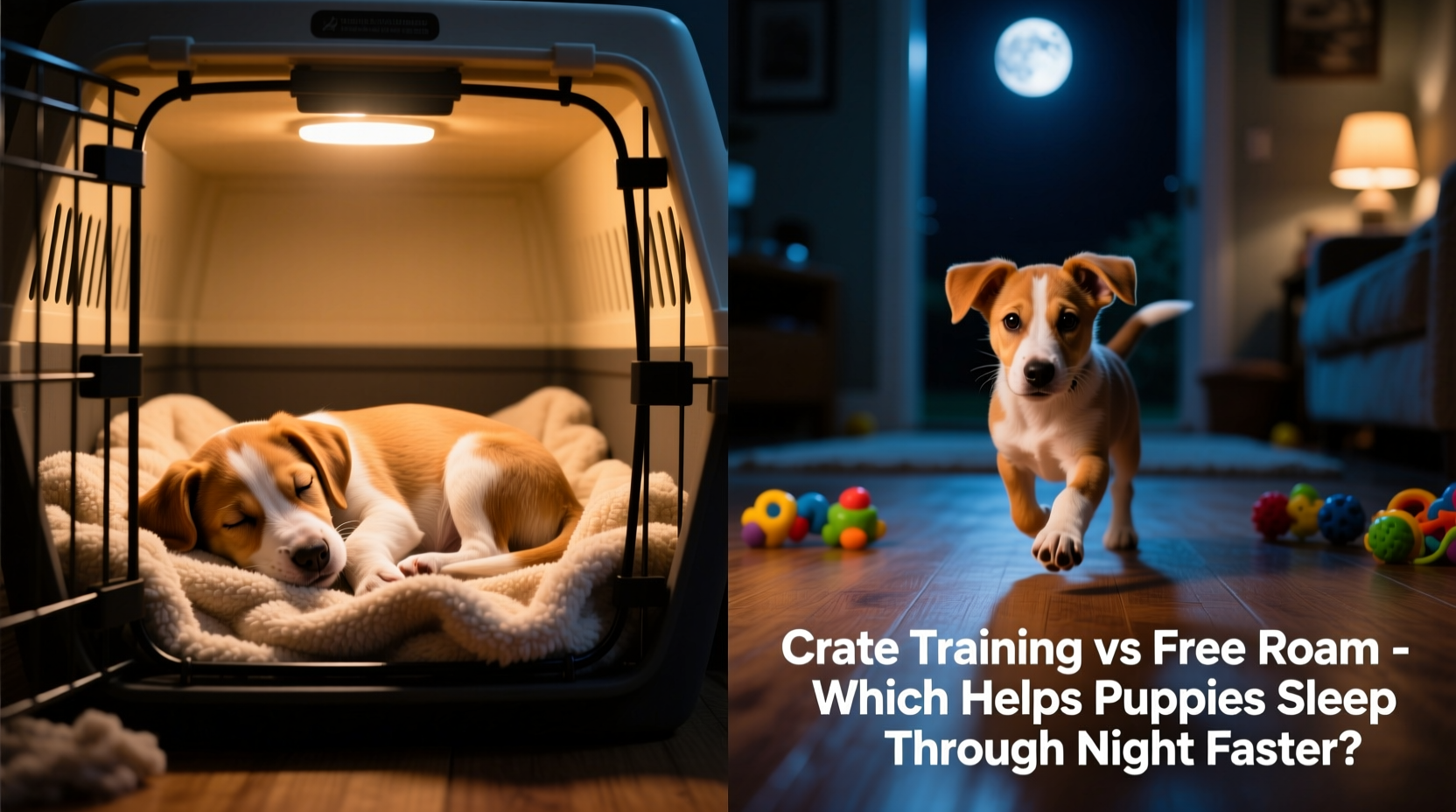
Puppies under 16 weeks old typically cannot hold their bladder for more than two to four hours, depending on age, breed, and size. Their developing nervous systems require frequent elimination, especially after eating, drinking, playing, or waking. Without guidance, they lack the instinct to avoid soiling their sleeping area—unless taught otherwise.
Crate training leverages a dog’s natural denning instinct. In the wild, canines seek enclosed, secure spaces to rest and raise young. A properly sized crate mimics this den environment, encouraging the puppy to keep it clean. Conversely, free roaming removes boundaries, increasing the likelihood of indoor accidents and reinforcing poor habits if not closely supervised.
According to Dr. Ian Dunbar, veterinarian and animal behaviorist, “Puppies thrive on structure. The absence of limits leads to anxiety and confusion. A crate isn’t confinement—it’s a sanctuary when introduced correctly.” This foundational understanding explains why consistency plays such a critical role in early training success.
How Crate Training Supports Faster Nighttime Progress
Crate training accelerates a puppy’s ability to sleep through the night by combining physical containment with behavioral conditioning. When used appropriately, the crate prevents access to areas where accidents might occur and teaches self-control.
A well-implemented crate routine includes:
- Placing the crate near the owner’s bedroom to reduce separation anxiety.
- Using positive reinforcement (treats, praise) to create a positive association.
- Maintaining a consistent bedtime and wake-up schedule.
- Taking the puppy out immediately before bed and upon waking.
Over time, the puppy learns to associate the crate with safety and comfort. More importantly, because dogs naturally avoid eliminating where they sleep, the confined space encourages bladder control. Most puppies begin sleeping six to eight consecutive hours within two to four weeks when crate trained consistently.
Why Free Roaming Often Delays Progress
Free roaming allows puppies unrestricted movement throughout the home at night. Proponents argue it promotes independence and reduces stress. However, without supervision, this freedom often undermines housebreaking efforts.
In unstructured environments, puppies may eliminate wherever they please, especially if they’ve already learned they won’t be corrected. Once an accident occurs in a carpeted or quiet corner, scent markers encourage repeat offenses. Unlike crates, open spaces don’t provide the psychological boundary needed to develop impulse control.
Additionally, free-roaming puppies are more prone to destructive behaviors—chewing shoes, knocking over trash, or accessing hazardous items. These incidents increase owner frustration and delay trust-building. Even with baby gates or playpens, unsupervised access increases the risk of negative associations with correction after the fact, which hinders learning.
“Freedom without foundation leads to chaos. Puppies need clear rules to feel secure.” — Sarah Wilson, Certified Professional Dog Trainer
Side-by-Side Comparison: Crate Training vs Free Roam
| Factor | Crate Training | Free Roam |
|---|---|---|
| Housetraining Speed | Fast (typically 2–6 weeks) | Slow (often 3+ months) |
| Nighttime Accidents | Rare with proper routine | Common without supervision|
| Sleep Quality (Owner & Puppy) | Improves steadily | Frequently disrupted|
| Destructive Behavior Risk | Low (when crated) | High (unsupervised) |
| Emotional Security | High (with proper introduction) | Variable (depends on temperament) |
| Training Consistency | Easier to maintain | Harder to enforce |
This comparison highlights why crate training is overwhelmingly recommended by veterinarians and trainers for puppies under six months old. While free roaming may work for older, well-trained dogs, it lacks the structure necessary for effective early development.
Step-by-Step Guide to Successful Crate Training
Implementing crate training effectively requires patience and consistency. Follow these steps to help your puppy adapt quickly and comfortably:
- Choose the Right Crate: Select a size that allows the puppy to stand, turn, and lie down—but not much larger. Use dividers if needed for growth.
- Introduce Gradually: Leave the crate door open and place treats, toys, or meals inside to encourage voluntary entry.
- Add Comfort: Line the crate with soft bedding and include a chew-safe toy or blanket with familiar scents.
- Establish Location: Place the crate in your bedroom initially to ease separation anxiety and monitor nighttime needs.
- Build a Bedtime Routine: Take the puppy outside to eliminate, then settle into the crate with calm activity (no play).
- Respond to Crying Wisely: Wait briefly to see if the puppy self-soothes. If crying persists, assess need for potty break—don’t reinforce attention-seeking.
- Gradual Independence: After several weeks of success, slowly move the crate to another room if desired.
Most puppies adapt within three to ten days when the process is positive and predictable. Rushing or forcing the puppy into the crate can create fear-based resistance that delays progress.
Real-World Example: Two Puppies, Two Approaches
Consider two eight-week-old Labrador puppies adopted simultaneously by neighboring families.
Family A chose crate training. They placed a properly sized wire crate in their bedroom, fed meals inside, and used treats to encourage entry. They took the puppy out every two hours during the day and right before bed. Within 10 days, the puppy slept five hours straight. By week four, she was sleeping seven to eight hours and had zero indoor accidents at night.
Family B allowed free roaming in a gated living room with a dog bed and water. They believed confinement would stress the puppy. However, the puppy began eliminating in corners, chewing furniture legs, and waking frequently. After repeated setbacks, they consulted a trainer who recommended switching to crate training. Only after implementing the crate did progress accelerate.
This scenario reflects common outcomes observed in veterinary clinics and training centers. Structure—not space—is what enables puppies to succeed.
Common Misconceptions About Crating
Many owners hesitate to crate due to myths about cruelty or restriction. However, when done correctly, crating is not only humane—it’s beneficial.
One misconception is that crating causes behavioral issues. In reality, improper use (such as excessively long confinement or using the crate for punishment) leads to problems, not the tool itself. The American Kennel Club emphasizes that “a crate is a training aid, not a cage,” and should never replace exercise or socialization.
Another myth is that free roaming builds confidence. While exploration is important, it should occur during supervised daytime hours. At night, predictability fosters security. A puppy that knows where to sleep and when to go potty develops greater confidence than one left to navigate chaos.
Checklist: Setting Up for Success
Use this checklist to ensure your nighttime routine supports fast, stress-free progress:
- ✅ Choose a crate appropriate for your puppy’s adult size (use divider panels).
- ✅ Introduce the crate gradually with treats and toys.
- ✅ Keep the crate in your bedroom for the first 4–6 weeks.
- ✅ Establish a fixed bedtime routine including a final potty break.
- ✅ Limit water intake one hour before bed (but ensure hydration during the day).
- ✅ Respond to nighttime whining based on need—not emotion.
- ✅ Clean up accidents quickly with enzymatic cleaner to prevent re-soiling.
- ✅ Avoid free roaming until your puppy has consistently slept through the night for at least two weeks.
Frequently Asked Questions
How long does it take for a puppy to sleep through the night?
With consistent crate training, most puppies achieve six to eight hours of uninterrupted sleep by 12 to 16 weeks of age. Smaller breeds may take longer due to higher metabolism and smaller bladders.
Can I let my puppy cry it out in the crate?
Not entirely. Brief periods of whining as the puppy adjusts are normal. However, prolonged crying may indicate a need to eliminate, discomfort, or fear. Rule out medical or environmental causes before assuming it’s behavioral.
Is it okay to switch from free roam to crate training later?
Yes—and it’s often necessary. Many owners start with free roaming hoping for independence, only to realize it’s counterproductive. Transitioning to crate training later can still yield success, though it may take extra time to build trust in the crate.
Conclusion: Building Better Habits from Day One
When it comes to helping puppies sleep through the night, crate training proves more effective than free roaming in nearly every measurable way. It supports faster housetraining, reduces accidents, minimizes destructive behavior, and provides emotional security. Free roaming, while appealing in theory, lacks the boundaries essential for early learning and often prolongs the adjustment period.
The goal isn’t just a quiet night—it’s raising a confident, well-adjusted dog. That begins with consistent routines, clear expectations, and compassionate guidance. By choosing crate training and following a thoughtful approach, you lay the foundation for lifelong good behavior.




 浙公网安备
33010002000092号
浙公网安备
33010002000092号 浙B2-20120091-4
Comments
No comments yet. Why don't you start the discussion?