
Raising a puppy is one of the most rewarding experiences a pet owner can have—but it’s also one of the most demanding. Among the earliest decisions new owners face is how to manage their puppy’s space during the critical first months. Two popular approaches dominate the conversation: crate training and using a playpen. Both aim to provide safety, structure, and behavioral guidance, but they differ significantly in philosophy, execution, and long-term impact on a puppy’s temperament. The central question isn’t just about convenience or control—it’s about what truly fosters a calm, confident, and emotionally balanced dog.
The goal isn’t merely to contain a puppy while you’re away or busy. It’s to lay the foundation for emotional regulation, impulse control, and trust. When done correctly, either method can support these outcomes. But when misapplied, both can inadvertently increase anxiety, frustration, or fear. Understanding the nuances between crate training and playpen use—along with real-world application, timing, and integration with broader training—is essential for making an informed decision that aligns with your puppy’s needs and your lifestyle.
The Psychology Behind Puppy Confinement
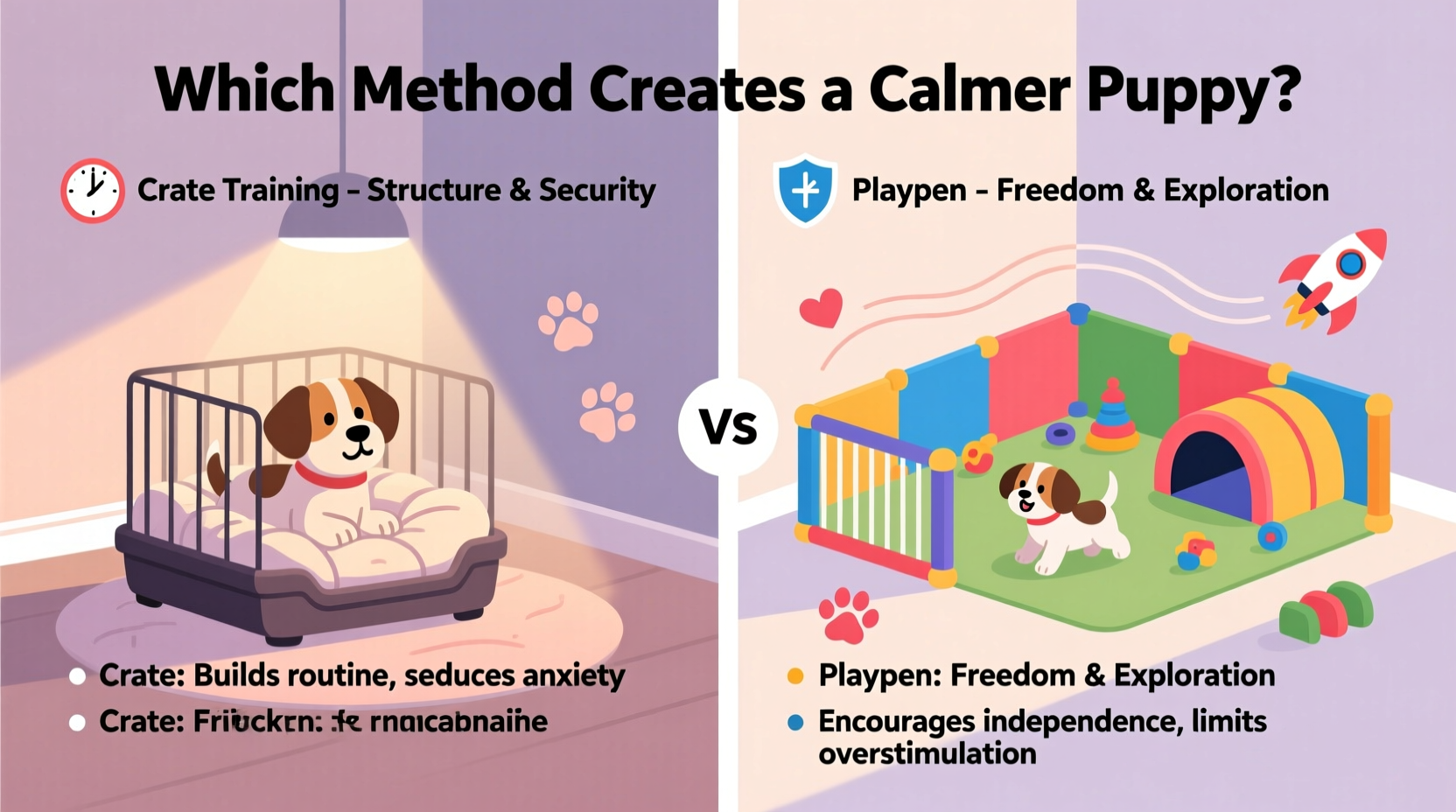
Puppies are not born with an innate understanding of boundaries or self-control. Their early environment shapes how they respond to stress, novelty, and isolation. Confinement, whether in a crate or playpen, serves as a management tool that limits access to unsafe areas, prevents destructive chewing, and supports housebreaking. However, from a psychological standpoint, the way confinement is introduced and maintained can either reinforce security or trigger distress.
Dogs are den animals by instinct. In the wild, canids seek enclosed, sheltered spaces to rest and raise their young. This natural preference makes crates—when used appropriately—feel like safe retreats rather than punishment zones. A properly sized crate offers a den-like atmosphere where a puppy can relax, nap, and feel protected. On the other hand, playpens provide more freedom of movement and environmental interaction, which can be stimulating but also overwhelming if not monitored.
The key difference lies in sensory input and perceived control. A crate minimizes distractions, helping sensitive puppies focus and settle. A playpen, especially in a busy household, may expose the puppy to constant noise, activity, and temptation—leading to overstimulation. For high-energy or anxious breeds, this distinction can significantly affect their ability to develop calm behavior.
“Confinement isn’t about restriction alone—it’s about creating predictability. Puppies thrive on routine and safe spaces. Whether it’s a crate or a playpen, consistency and positive association are what build confidence.” — Dr. Laura Bongiorno, Certified Applied Animal Behaviorist
Crate Training: Structure, Security, and Self-Control
Crate training involves teaching a puppy to accept a confined space—typically a wire, plastic, or fabric kennel—as a personal sanctuary. When implemented with patience and positive reinforcement, crate training can accelerate housebreaking, reduce separation anxiety, and prevent destructive behaviors.
One of the primary advantages of crate training is its role in establishing boundaries. Because the crate is small enough that the puppy won’t want to eliminate inside (due to their natural instinct to keep sleeping areas clean), it encourages bladder and bowel control. Over time, this builds impulse regulation—a skill that translates into broader obedience and emotional maturity.
Moreover, crates offer portability and consistency. Whether traveling, visiting the vet, or staying at a friend’s house, a crate-trained puppy already has a familiar, secure space. This continuity reduces stress during transitions and helps maintain calmness in unfamiliar environments.
Best Practices for Crate Training Success
- Introduce the crate gradually—leave the door open and let the puppy explore it on their own terms.
- Feed meals near or inside the crate to create positive associations.
- Use treats and praise to encourage voluntary entry, never force.
- Start with short durations while you’re present, then slowly extend time as the puppy becomes comfortable.
- Avoid crating for longer than 2–3 hours at a time for young puppies (under 6 months).
For puppies prone to anxiety, covering part of the crate with a breathable blanket can enhance the den-like feeling and reduce visual stimulation. However, ensure proper ventilation and avoid overheating.
Playpen Use: Freedom Within Boundaries
A playpen—often a collapsible metal or plastic enclosure—offers a larger contained area than a crate. It allows puppies room to move, play with toys, stretch out, and sometimes even access a potty pad or grass patch. Playpens are often favored by owners who worry that crating feels too restrictive or who want their puppy to have more physical freedom during confinement periods.
The expanded space can benefit active breeds or puppies undergoing socialization, as it allows them to observe household activity without full access. Some owners set up playpens in living areas so the puppy feels included while still being safely contained. This visibility can reduce feelings of isolation and help prevent attachment-related stress.
However, the very openness that makes playpens appealing can also undermine their effectiveness in promoting calmness. Without clear boundaries within the pen, puppies may engage in frantic pacing, excessive barking, or obsessive chewing on the bars. If the playpen becomes a place of boredom or frustration, it can heighten anxiety rather than soothe it.
Additionally, because playpens typically allow for elimination inside, they don’t naturally support housebreaking in the same way crates do. Unless strict routines are enforced, puppies may learn it’s acceptable to go to the bathroom wherever they are confined—making outdoor training more difficult.
When a Playpen Works Best
- During daytime supervision when the owner is nearby.
- For older puppies transitioning out of full-time crating.
- In multi-dog households where interaction needs monitoring.
- As a temporary space during home renovations or guest visits.
To maximize calmness in a playpen, structure is crucial. Include a cozy bed, chew toys, and visual barriers (like a covered side) to create a “quiet zone” within the larger space. Rotating toys and providing mental enrichment can prevent restlessness.
Comparing Outcomes: Which Method Builds Calmer Puppies?
The ultimate measure of success isn’t just compliance—it’s emotional resilience. A calm puppy is one who can relax when alone, recover quickly from excitement, and adapt to change without panic. So which method better supports these traits?
| Factor | Crate Training | Playpen Use |
|---|---|---|
| Housesoiling Prevention | High – leverages den instinct | Low to Moderate – depends on setup |
| Emotional Security | High – den-like, predictable space | Variable – depends on environment |
| Impulse Control Development | Strong – limited stimuli promote settling | Weaker – more opportunities for over-arousal |
| Suitability for Absences | Ideal for short to moderate periods | Risk of overstimulation or accidents |
| Portability & Consistency | Excellent – easy to transport | Limited – bulky and less standardized |
| Long-Term Calmness | Higher likelihood with proper use | Requires careful management |
The data suggests that crate training, when done humanely and consistently, more reliably produces calm, self-assured puppies. Its structured nature supports neurological development by reducing chaotic input and reinforcing downtime. That said, playpens aren’t inherently inferior—they serve a different purpose and can be effective when integrated thoughtfully into a broader training plan.
Real-World Example: Two Puppies, Two Approaches
Consider two 10-week-old Labrador puppies, Milo and Luna, both adopted into loving homes at the same time. Milo’s owners chose crate training. They introduced the crate slowly, feeding him meals inside and using it for naps and overnight sleep. By 14 weeks, Milo happily entered his crate with a stuffed Kong and could remain calm for up to two hours while his owners worked nearby.
Luna’s owners preferred a playpen, believing it offered more freedom. They set it up in the kitchen with toys, a bed, and a potty pad. While Luna had room to move, she began developing a habit of barking at every sound and chewing the mesh walls. Without the natural inhibition against soiling her space, she frequently eliminated in one corner, reinforcing the idea that it was acceptable.
By five months, the difference was clear. Milo remained relaxed during car rides and vet visits, retreating calmly to his crate when overwhelmed. Luna struggled with focus, showed signs of separation distress, and required intensive retraining to learn outdoor potty habits. Her owners eventually transitioned her to a crate-based routine to rebuild structure.
This case illustrates that freedom without guidance doesn’t always lead to confidence. Sometimes, healthy boundaries are what allow a puppy to truly relax.
Step-by-Step: Building a Calm Puppy Routine
Regardless of your chosen method, the following timeline integrates best practices for fostering calmness:
- Week 1–2: Introduce the crate or playpen with zero pressure. Toss treats inside, feed nearby, and let the puppy explore freely.
- Week 3–4: Begin closing the door briefly while you’re present. Pair confinement with calming activities like chewing a frozen toy.
- Week 5–6: Gradually extend duration. Start leaving the room for short intervals (1–2 minutes), returning before the puppy becomes anxious.
- Week 7–8: Incorporate the space into daily routines—naps, mealtime, short absences. Maintain a consistent schedule.
- Month 3+: Assess progress. If using a playpen, consider adding a crate inside for downtime. Transition to longer, supervised absences as confidence grows.
Throughout this process, monitor your puppy’s body language. Signs of comfort include yawning, licking lips, lying down, and falling asleep. Signs of stress include panting, whining, pacing, or attempting to escape. Adjust accordingly.
FAQ: Common Questions About Crate vs Playpen Training
Can I use both a crate and a playpen?
Yes—and many trainers recommend it. Use the crate for sleep, rest, and travel, and the playpen for supervised daytime activity. This hybrid approach combines the benefits of structure and freedom.
Isn’t crating cruel if my puppy cries?
Short-term crying is normal during acclimation, much like a child adjusting to a new bed. However, prolonged distress indicates improper introduction. Never ignore continuous crying. Reassess your method, shorten sessions, and rebuild positive associations.
How big should the playpen be?
Large enough for the puppy to stand, turn, and lie down comfortably—but not so large that they can eliminate in one end and sleep in the other. For calmness, divide the space: one zone for sleeping, one for potty (if needed), and one for play.
Conclusion: Choosing What Builds Lasting Calm
The debate between crate training and playpen use isn’t about which is universally better—it’s about which better serves the goal of raising a calm, resilient dog. Evidence and expert consensus point to crate training as the more reliable method for instilling emotional balance, primarily because it aligns with canine instincts, supports housebreaking, and reduces environmental overload.
That doesn’t mean playpens have no place. They can be valuable tools for daytime supervision, socialization, and transitional phases. But when it comes to cultivating calmness—especially in young, impressionable puppies—structure tends to outperform unstructured freedom.




 浙公网安备
33010002000092号
浙公网安备
33010002000092号 浙B2-20120091-4
Comments
No comments yet. Why don't you start the discussion?