
For over two decades, creatine has been one of the most researched and widely used supplements in fitness. Among its many forms, creatine monohydrate and creatine hydrochloride (HCl) dominate shelf space and online debates. One persistent claim: creatine monohydrate causes bloating, while creatine HCl avoids it. But is this based on clinical evidence—or just gym lore? Let’s dissect the chemistry, physiology, and research behind each form to determine whether the bloating risk is real, exaggerated, or misunderstood.
The Science Behind Creatine Absorption and Water Retention
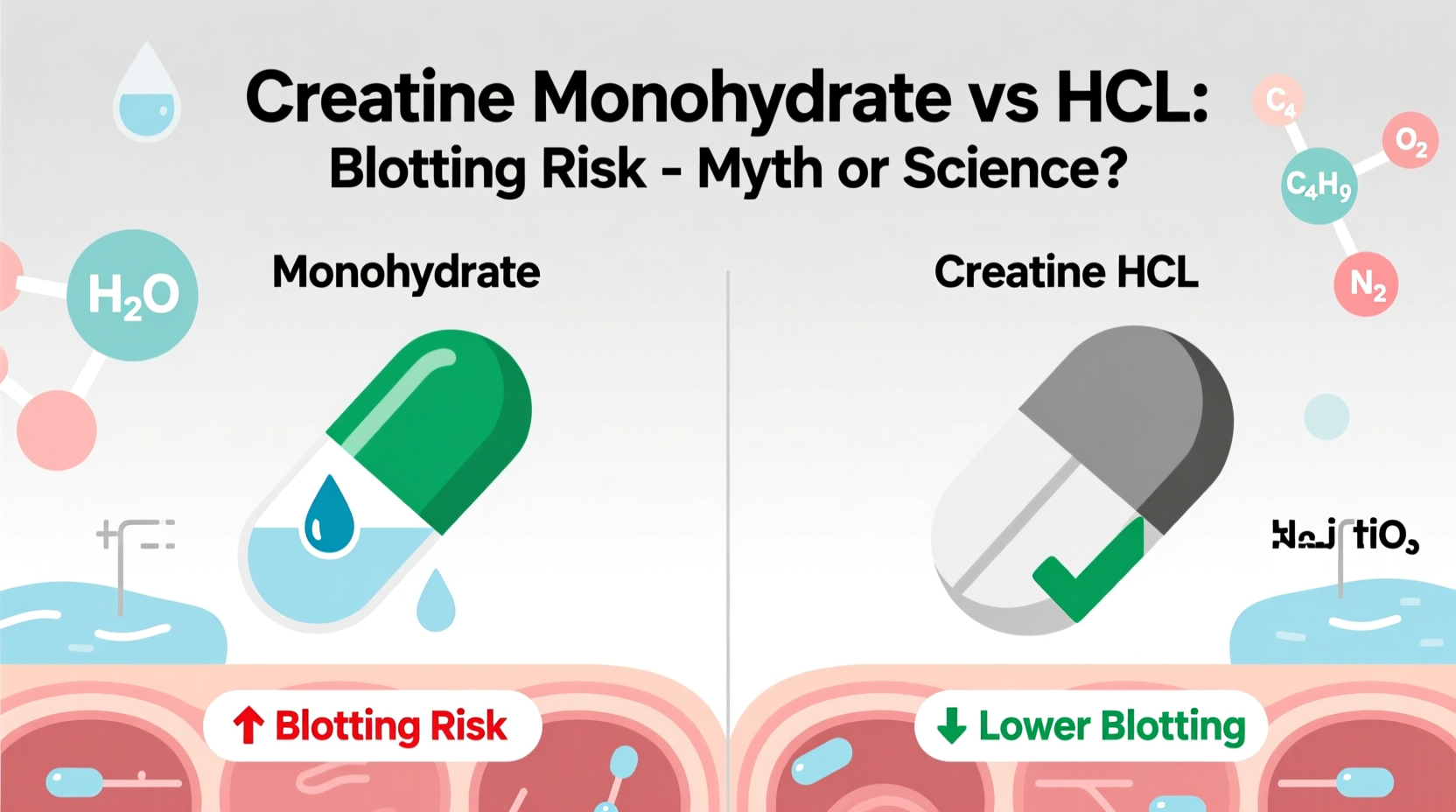
Creatine works by increasing phosphocreatine stores in muscle cells, which helps regenerate ATP—the primary energy currency during short bursts of intense activity. When creatine enters muscle tissue, it draws water with it through osmosis. This intracellular water retention is a normal physiological response and is not the same as subcutaneous bloating or fat gain.
The key difference between creatine monohydrate and HCl lies in solubility and absorption efficiency. Creatine monohydrate has lower solubility in water, which some believe leads to slower uptake and potential gastrointestinal discomfort when taken in high doses. Creatine HCl, bonded with hydrochloric acid, is significantly more soluble—up to 60 times more, according to manufacturer claims—and requires smaller doses (typically 750 mg vs. 3–5 g for monohydrate).
However, higher solubility doesn’t automatically mean less bloating. The mechanism of water retention is tied to creatine’s action inside muscle cells, not its delivery method. If creatine reaches the muscles—regardless of form—it will promote cellular hydration.
“Water retention from creatine is intramuscular, not abdominal distension. Confusing the two leads to myths about ‘bloating’ that aren’t supported by physiology.” — Dr. Stuart Phillips, Professor of Kinesiology, McMaster University
Comparing Creatine Monohydrate and HCl: A Direct Breakdown
| Feature | Creatine Monohydrate | Creatine HCl |
|---|---|---|
| Form | Creatine + one water molecule | Creatine + hydrochloric acid |
| Dosage (Daily) | 3–5 grams (loading: 20g/day for 5–7 days) | 750–1000 mg (no loading phase claimed) |
| Solubility in Water | Low (~1.4% at room temp) | High (~60x more soluble than monohydrate) |
| Research Backing | Extensive (>1,000 studies) | Limited (mostly industry-funded) |
| Cost per Dose | $0.10–$0.25 | $0.50–$1.20 |
| Bloating Reports | Occasional, usually during loading | Rarely reported, but low sample size |
| Gastrointestinal Tolerance | Good; may cause discomfort at high doses | Claimed superior; anecdotal support |
The table reveals a critical point: while HCl promises better absorption and lower dosage, the long-term performance and safety data simply don’t match the volume available for monohydrate. Most claims about HCl reducing bloating stem from marketing, not peer-reviewed trials.
Is Bloating From Creatine Real?
Yes—but only if you redefine “bloating” as increased intramuscular water. True abdominal bloating—gas, distension, discomfort—is not a typical effect of standard-dose creatine monohydrate. In fact, a 2021 meta-analysis published in *Sports Medicine* concluded that gastrointestinal issues occur in less than 5% of users taking 3–5 g/day, and symptoms are dose-dependent.
The myth likely originated during the early use of creatine, when athletes loaded with 20 grams per day split into four doses. At that volume, undissolved creatine could sit in the gut, drawing water osmotically and causing temporary fullness or mild diarrhea. Modern protocols recommend either a slow load (5 g/day for 2–3 weeks) or skipping loading altogether, minimizing these effects.
In contrast, creatine HCl users report fewer stomach issues anecdotally, but controlled comparisons are scarce. One small study funded by a supplement company found HCl caused less bloating than monohydrate, but the trial lacked blinding and independent replication. Without larger, neutral studies, we can't conclude HCl is definitively gentler on the gut.
Real-World Case: Two Lifters, Two Forms
Consider Mark and Alex, both 28-year-old resistance trainers with similar routines: 5-day splits, focused on strength and hypertrophy. Both started creatine supplementation to boost workout capacity.
Mark began with creatine monohydrate, using a 5-day loading phase (20 g/day). By day three, he noticed his abdomen felt tighter, and his scale weight jumped 2.5 lbs. He assumed he was “bloating” and almost quit. After consulting a sports nutritionist, he learned the weight gain was muscle hydration, not fat or puffiness. His jeans fit snugger around the thighs, not the waist—a sign of improved muscle fullness.
Alex opted for creatine HCl, attracted by ads claiming “no bloat, no loading.” He took 1 g daily with his pre-workout. After four weeks, he saw modest gains in training volume but no noticeable change in muscle appearance. When tested via DEXA scan, his lean mass increase was 1.2 lbs—slightly less than Mark’s 1.8 lbs over the same period. Neither experienced gas or cramping.
This example illustrates how perception shapes experience. Mark’s initial concern was psychological, not physiological. Alex’s choice avoided a rapid shift in water balance but didn’t deliver superior results. Both got benefits—just differently.
Evidence-Based Tips for Minimizing Discomfort
If you’re sensitive to supplements or want to avoid any chance of digestive upset, consider these strategies—regardless of which creatine form you use:
- Start low and go slow: Skip the loading phase. Use 3–5 g of monohydrate daily for 2–3 weeks to gradually saturate muscles.
- Choose micronized creatine: Finely ground particles dissolve better and may reduce GI stress.
- Take it with food: Especially meals containing carbs and protein, which stimulate insulin and improve creatine transport.
- Stay hydrated: Drink plenty of water throughout the day. Dehydration worsens perceived bloating.
- Time it wisely: Post-workout intake may enhance absorption and reduce stomach irritation.
Step-by-Step Guide to Choosing Your Creatine
- Assess your goals: Are you maximizing strength, endurance, or muscle growth? All forms support these, but monohydrate has proven efficacy.
- Evaluate your tolerance: If you’ve had GI issues with other powders, HCl might be worth trying—but start with low-dose monohydrate first.
- Check the budget: HCl costs 3–5x more per month. Is the convenience worth the price?
- Review third-party testing: Choose brands certified by NSF, Informed Sport, or USP to ensure purity and label accuracy.
- Monitor your response: Track changes in performance, weight, and comfort over 4 weeks. Adjust based on data, not anecdotes.
Frequently Asked Questions
Does creatine make your stomach look bigger?
Not in the way most people think. Creatine increases water inside muscle cells, particularly in the arms, legs, and torso muscles. This can create a fuller appearance, but it doesn’t cause visceral fat or subcutaneous puffiness. Any “bigger stomach” feeling is likely due to rapid loading or concurrent dietary changes.
Can I switch from monohydrate to HCl to reduce bloating?
You can, but there’s no guarantee. If you’re already taking 3–5 g of monohydrate without discomfort, switching offers little benefit. If you experience bloating, first rule out other factors like sodium intake, fiber consumption, or irritable bowel patterns before blaming creatine.
Is creatine HCl better absorbed than monohydrate?
It’s more soluble, which may improve dissolution in the gut. However, creatine monohydrate already has high bioavailability (~95%) when taken correctly. Superior solubility doesn’t equate to better muscle uptake, especially at standard doses.
Expert Consensus and Final Verdict
The overwhelming consensus among sports scientists is that creatine monohydrate remains the gold standard. It’s effective, safe, affordable, and backed by decades of research. Claims that it causes problematic bloating are largely overstated and often misinterpret normal physiological responses.
Creatine HCl isn’t ineffective—it likely works, though at a higher cost and with less evidence. Its advantage in reducing bloating remains anecdotal. As Dr. Eric Rawson, a leading researcher in ergogenic aids, notes:
“People blame creatine for bloating when they’re actually seeing the early signs of muscle volumization. The real issue is education, not formulation.” — Dr. Eric Rawson, Exercise Physiology Lab Director, King’s College
Marketing plays a powerful role in shaping supplement beliefs. “No bloat” sounds appealing, but it implies monohydrate has a flaw—when in reality, its side effect profile is excellent. For 95% of users, creatine monohydrate causes no meaningful discomfort.
Conclusion: Make Your Choice Based on Evidence, Not Hype
The debate between creatine monohydrate and HCl isn’t really about science—it’s about perception. Bloating fears are rooted more in gym-floor hearsay than clinical observation. Monohydrate’s reputation suffers from outdated loading practices and misunderstanding of water retention. Meanwhile, HCl benefits from modern branding but lacks equivalent validation.
If you're looking for the most effective, well-researched, and cost-efficient option, creatine monohydrate wins hands down. If you have a sensitive stomach and find HCl easier to tolerate, it may be a reasonable alternative—just recognize you’re paying for convenience, not proven superiority.




 浙公网安备
33010002000092号
浙公网安备
33010002000092号 浙B2-20120091-4
Comments
No comments yet. Why don't you start the discussion?