
Starting a fitness journey often comes with a flood of supplement advice. Among the most common recommendations are creatine and whey protein—two of the most researched and widely used supplements in the strength and bodybuilding world. But for beginners, the question isn’t just which one to take—it’s whether they need both at all. With gym shelves packed with powders and claims, it's easy to get overwhelmed. The truth is, both creatine and whey protein serve distinct roles, and understanding their functions can help new lifters make informed decisions without overspending or overcomplicating their routines.
What Is Whey Protein and How Does It Support Muscle Growth?
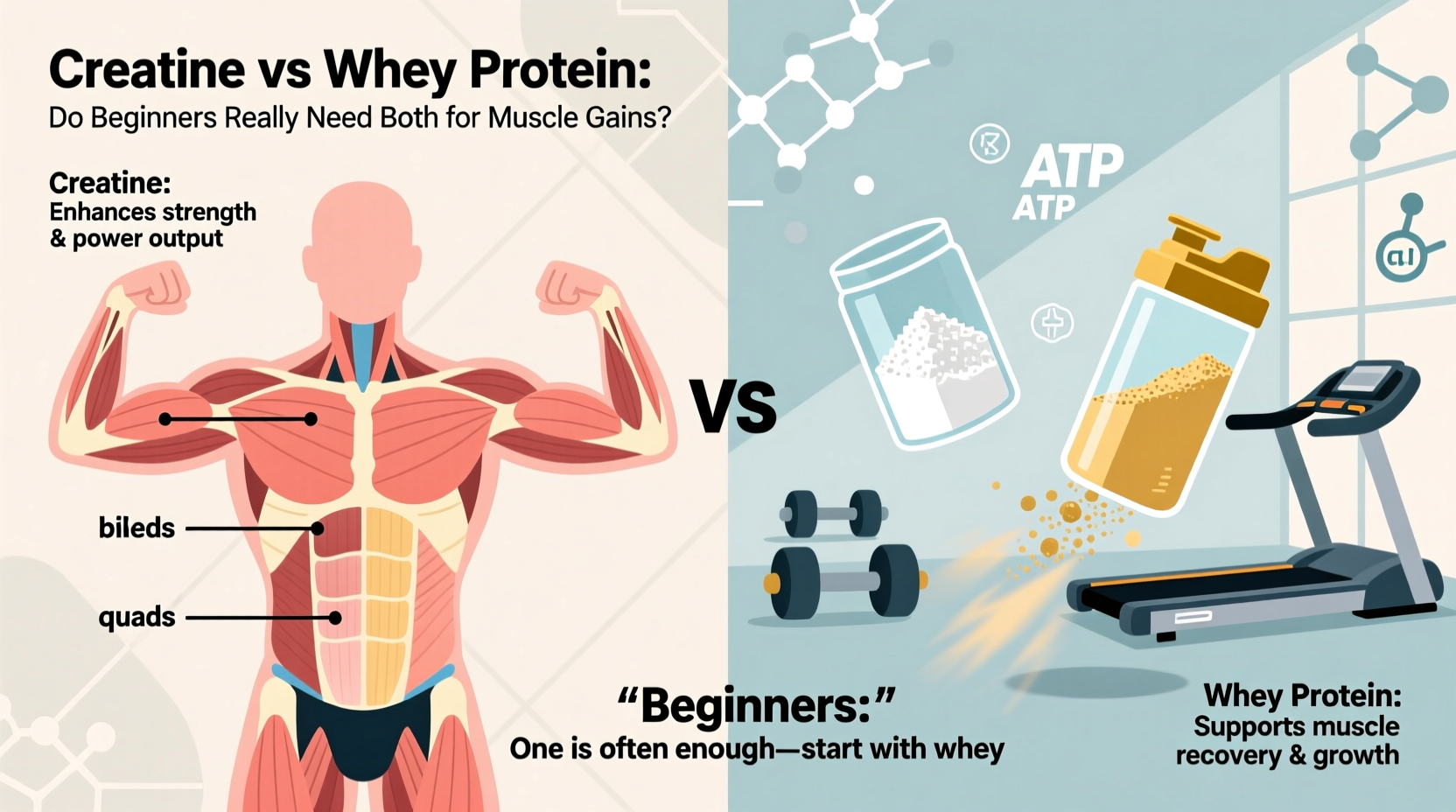
Whey protein is a byproduct of cheese production and is considered a complete protein, meaning it contains all nine essential amino acids. It’s particularly rich in leucine, an amino acid that plays a pivotal role in initiating muscle protein synthesis—the process through which your body builds new muscle tissue.
For beginners, meeting daily protein requirements is crucial because resistance training increases the body’s demand for protein. Most experts recommend 1.6 to 2.2 grams of protein per kilogram of body weight per day for those engaged in regular strength training. While this can be achieved through whole foods like chicken, eggs, and legumes, whey protein offers a convenient, fast-absorbing option—especially post-workout when muscles are primed to absorb nutrients.
Whey comes in three main forms:
- Whey concentrate: Contains about 70–80% protein, along with some fat and lactose. Ideal for general use.
- Whey isolate: Processed to remove most fat and lactose, resulting in 90%+ protein content. Better for those with lactose sensitivity.
- Whey hydrolysate: Pre-digested for faster absorption, though more expensive and not necessarily more effective.
What Is Creatine and Why Is It So Effective?
Unlike whey protein, creatine isn’t a protein at all—it’s a compound made from amino acids (arginine, glycine, and methionine) that is naturally produced in the liver, kidneys, and pancreas. It’s also found in small amounts in red meat and fish.
Creatine works by increasing phosphocreatine stores in your muscles, which helps regenerate ATP (adenosine triphosphate)—the primary energy currency of cells—during short bursts of high-intensity activity like weightlifting or sprinting. This means you can train harder, push out more reps, and recover faster between sets.
Decades of research support creatine as the most effective ergogenic aid available for improving strength, power, and lean mass gains. Studies consistently show that individuals supplementing with creatine gain significantly more muscle and strength compared to placebo groups, especially during the initial phases of training.
The standard protocol is to take 3–5 grams per day. Some choose to “load” with 20 grams per day (split into 4 doses) for 5–7 days to saturate muscles faster, but this is optional. After loading—or starting directly with maintenance dosing—muscle creatine levels peak within about 28 days and remain elevated with continued use.
“Creatine is arguably the single most effective supplement for increasing high-intensity exercise capacity and lean body mass during training.” — Dr. Eric Rawson, PhD, ACSM Fellow and creatine researcher
Key Differences: Creatine vs Whey Protein
While both supplements support muscle development, they operate through entirely different mechanisms. Understanding these differences is key to determining whether you need one, the other, or both.
| Feature | Whey Protein | Creatine |
|---|---|---|
| Primary Function | Provides amino acids for muscle repair and growth | Boosts cellular energy for high-intensity performance |
| Best Time to Take | Post-workout, or anytime daily protein intake needs a boost | Daily, with or without food; timing is less critical |
| Onset of Effects | Near-immediate nutrient delivery; long-term gains over weeks | Performance benefits in 1–2 weeks; full saturation in ~4 weeks |
| Dosage | 20–30g per serving, based on total daily protein goals | 3–5g daily (or 20g/day for 5–7 days if loading) |
| Cost per Month (approx.) | $15–$30 depending on brand and form | $5–$10 (one of the cheapest supplements available) |
| Side Effects | Rare; possible digestive discomfort at high doses | Mild water retention; no serious side effects in healthy individuals |
Do Beginners Need Both Supplements?
The short answer: No, not necessarily—but both can provide meaningful, complementary benefits.
Let’s break it down:
If your diet already includes sufficient high-quality protein sources (e.g., eggs, dairy, poultry, fish, legumes), then adding whey may not be essential. However, for many beginners, tracking macros and preparing protein-rich meals consistently can be challenging. In such cases, whey acts as a practical tool to bridge dietary gaps.
On the other hand, creatine doesn’t replace any dietary component—it enhances performance. Even if you eat meat regularly, you’re only getting about 1–2 grams of creatine per day from food. Supplementing with 3–5 grams ensures optimal muscle saturation, leading to measurable improvements in strength and training volume.
Here’s what research shows: Beginners experience rapid strength and muscle gains due to the \"newbie effect\"—a period of accelerated adaptation to training. Creatine amplifies this by allowing higher-quality workouts from day one. Whey supports the recovery side of the equation, helping muscles rebuild stronger after each session.
A Realistic Example: Jake’s First 12 Weeks
Jake, 24, started lifting weights for the first time. His goal was to build muscle and improve overall fitness. He weighed 160 lbs and wasn’t consistent with his protein intake—often skipping breakfast and relying on processed lunches.
His trainer suggested two paths:
- Path A: Focus on whole-food nutrition and add only creatine.
- Path B: Add both creatine and whey protein.
Jake chose Path B. He began taking 5 grams of creatine daily and added one 25-gram scoop of whey protein post-workout. He also made modest improvements to his diet, adding Greek yogurt and grilled chicken.
After 12 weeks, Jake gained 6.5 pounds of lean mass and increased his bench press by 45 pounds. His squat went from 135 lbs to 225 lbs. While genetics and consistency played roles, his trainer noted that the combination of creatine (for better workout performance) and whey (for reliable protein intake) created an environment where progress was maximized.
Had Jake chosen Path A, he likely would have still made solid gains—especially with creatine boosting his training output. But the addition of whey helped him hit his protein targets effortlessly, reducing muscle soreness and supporting faster recovery.
When One Might Be Enough
Not everyone needs both supplements. Here’s how to decide based on your situation:
- You eat enough protein (1.6g/kg+): Skip whey. Use creatine to enhance performance.
- You struggle to eat enough protein: Start with whey. Creatine can wait until your routine and budget allow.
- You're on a tight budget: Choose creatine. It’s cheaper and improves your training quality, which drives long-term gains.
- You're focused on endurance, not strength: Whey may be more relevant than creatine, which has minimal benefit for low-intensity, long-duration activities.
Step-by-Step Guide: How to Incorporate Creatine and Whey as a Beginner
- Week 1: Assess your current protein intake. Track food for 3–5 days using an app like MyFitnessPal.
- Week 2: If you’re below 1.6g/kg of body weight, add one scoop of whey to your daily routine—ideally post-workout or with breakfast.
- Week 3: Begin creatine supplementation with 5 grams per day. Mix it with water, juice, or even your whey shake—timing doesn’t matter.
- Week 4 and beyond: Focus on consistency. Stick with your training program, maintain good sleep and hydration, and let the supplements support—not replace—your fundamentals.
- ✅ Calculate your daily protein target (aim for 1.6–2.2g/kg)
- ✅ Evaluate current diet: Are you hitting protein goals?
- ✅ Choose a reputable creatine monohydrate brand (no fancy blends needed)
- ✅ Pick a whey form that suits your digestion (isolate if lactose-sensitive)
- ✅ Set a daily reminder to take creatine
- ✅ Time whey around workouts or as a snack replacement
- ✅ Reassess progress every 4–6 weeks
Frequently Asked Questions
Can I mix creatine and whey protein in the same shake?
Yes. There’s no negative interaction between creatine and whey. In fact, the insulin spike from whey may slightly enhance creatine uptake, though the effect is minor. Mixing them is convenient and perfectly safe.
Will creatine make me bloated or look puffy?
Some people experience mild water retention under the skin during the first week, especially if loading. This usually subsides and is not the same as fat gain. Intramuscular water retention can actually make muscles appear fuller and more defined over time.
Is whey protein safe for long-term use?
Yes. Numerous studies confirm that whey protein is safe for healthy individuals, even at higher intakes. Kidney function is not impaired in people without pre-existing conditions. As always, balance with whole foods is ideal.
Final Thoughts: Simplicity Wins for Beginners
The fitness industry often overcomplicates supplementation. For beginners, the priority should be mastering the basics: consistent training, adequate protein intake, sleep, and recovery. Creatine and whey aren’t magic—they’re tools that amplify what you’re already doing right.
You don’t need both to succeed. But if your goal is to optimize early gains and set a strong foundation, using both can be a smart, cost-effective strategy. Creatine makes your workouts more productive. Whey makes it easier to fuel recovery. Together, they address two key drivers of muscle growth: mechanical tension and protein synthesis.
Start with what fits your lifestyle and budget. Track your progress. And remember: no supplement replaces effort, consistency, and patience. The best stack isn’t creatine and whey—it’s dedication and time.




 浙公网安备
33010002000092号
浙公网安备
33010002000092号 浙B2-20120091-4
Comments
No comments yet. Why don't you start the discussion?