
Natural fermentation is experiencing a renaissance in home kitchens, driven by growing interest in gut health, traditional food practices, and artisanal beverage crafting. At the heart of many fermented drinks lies a simple yet powerful ingredient: the ginger bug starter. This living culture—teeming with wild yeast and beneficial bacteria—serves as a natural leavening and carbonation agent, transforming sweetened herbal infusions into effervescent, probiotic-rich sodas. Unlike commercial yeasts or chemical additives, a ginger bug harnesses microbes present in the environment and on fresh ginger, offering a sustainable, low-cost method for creating complex, tangy, and health-supportive beverages at home. Understanding how to cultivate and maintain a ginger bug empowers cooks to explore fermentation safely and creatively, bridging ancestral techniques with modern wellness goals.
Definition & Overview
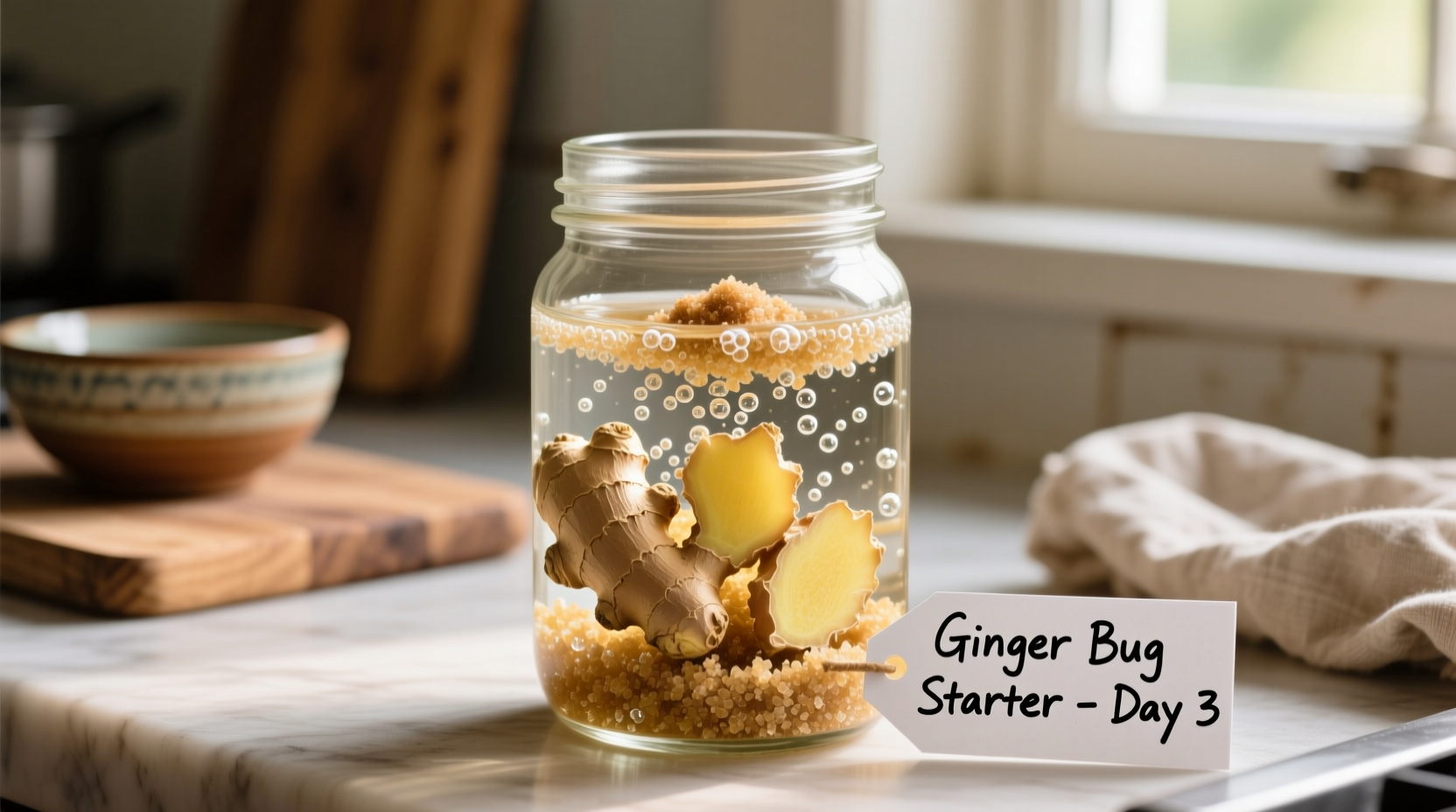
A ginger bug is a wild fermentation starter made from fresh organic ginger, sugar, and water. Over the course of 5 to 7 days, this mixture captures naturally occurring yeasts and lactic acid bacteria from the air and the surface of the ginger root, forming a symbiotic culture capable of fermenting sugars into carbon dioxide and small amounts of alcohol and organic acids. The result is a fizzy, slightly spicy, aromatic liquid base used primarily to carbonate homemade sodas, switchels, shrubs, and even fermented teas.
The practice of using ginger bugs dates back to at least the 19th century, when home cooks relied on wild ferments before commercial yeast became widely available. Historically, ginger-based starters were common in Caribbean, Southern American, and British colonial households, where they were used to make “ginger beer plant” or “ginger wine.” These traditions predate modern probiotic science but align remarkably well with current understanding of microbial diversity and digestive health. Today’s ginger bug is a revival of that heritage, adapted for contemporary kitchens with attention to hygiene, consistency, and flavor control.
Unlike commercial baking sourdough starters (which rely on wheat flour and lactobacilli), the ginger bug thrives on sucrose and the essential oils in ginger, particularly gingerol and shogaol, which not only contribute flavor but also exhibit antimicrobial properties that help shape a favorable microbial environment. This selective pressure discourages harmful pathogens while promoting resilient, acid-tolerant strains such as Saccharomyces cerevisiae, Lactobacillus brevis, and Pediococcus spp.—microorganisms now recognized for their role in gut microbiome balance.
Key Characteristics
| Attribute | Description |
|---|---|
| Flavor Profile | Spicy, pungent, slightly sweet with tangy acidity; evolves toward vinegar-like notes if over-fermented |
| Aroma | Freshly grated ginger dominant, with developing yeasty, bready, or cider-like undertones |
| Color/Form | Turbid amber liquid with visible bubbles and sediment; fibrous ginger particles suspended throughout |
| Microbial Activity | Active bubbling within 3–5 days; sustained fizz indicates healthy fermentation |
| pH Level | Drops from ~6.5 (initial) to ~3.5–4.0 (mature), creating an inhospitable environment for pathogens |
| Shelf Life (Active) | Up to 2 weeks at room temperature with daily feeding; indefinitely refrigerated with weekly maintenance |
| Culinary Function | Natural carbonation agent, probiotic inoculant, flavor enhancer in fermented beverages |
Practical Usage: How to Make and Use a Ginger Bug
Creating a ginger bug requires minimal equipment and ingredients but demands consistency and observation. Success depends on regular feeding, proper ratios, and environmental conditions conducive to microbial growth.
Step-by-Step Guide to Cultivating a Ginger Bug
- Gather Supplies: A clean glass jar (quart-sized), non-chlorinated water (spring or filtered), organic raw ginger (unpeeled), granulated cane sugar, breathable cover (coffee filter or cloth), and rubber band.
- Day 1 Preparation: Grate 2 tablespoons of fresh ginger (skin on) and add to the jar. Mix in 2 tablespoons sugar and 2 cups water. Stir vigorously with a clean spoon.
- Cover and Place: Secure the jar with a breathable cover. Store at room temperature (68–75°F / 20–24°C), away from direct sunlight.
- Daily Feeding (Days 2–7): Each day, discard half the volume (optional but recommended for pH balance), then add 1 tablespoon grated ginger and 1 tablespoon sugar. Stir well.
- Monitor Activity: By Day 4–5, look for consistent bubbling, cloudiness, and a faint yeasty aroma. If no activity occurs by Day 6, extend feeding for another 1–2 days.
- Test Readiness: When the mixture bubbles vigorously after feeding within 24 hours, it is ready to use.
Pro Tip: Use a chopstick or popsicle stick to mark the liquid level after each feeding. A rise in volume accompanied by bubbles confirms active CO₂ production—a reliable sign of microbial vitality.
Using Your Mature Ginger Bug in Fermented Beverages
Once active, the ginger bug can be used to ferment any sugar-containing liquid. The standard ratio is ½ cup ginger bug per quart (4 cups) of sweetened tea, juice, or syrup.
Example Recipe: Classic Fermented Ginger Soda
- Brew 4 cups strong black tea or herbal infusion (e.g., hibiscus or mint).
- Add ½ cup dissolved sugar or honey; cool to room temperature.
- Stir in ½ cup active ginger bug and pour into flip-top bottles.
- Seal tightly and ferment at room temperature for 2–3 days until fizzy.
- Refrigerate to halt fermentation before opening carefully.
This same process applies to fruit juices, maple syrup tonics, or herbal syrups. Always ensure liquids are cooled before adding the bug, as heat above 110°F (43°C) will kill the cultures.
Variants & Types of Ginger-Based Starters
While the classic ginger bug uses raw ginger and cane sugar, variations exist based on regional practices, dietary needs, and flavor experimentation.
Traditional Ginger Beer Plant (GBP)
A more stable, long-lived culture historically passed down through generations. True GBP is not a \"bug\" in the loose sense but a gelatinous biofilm containing specific yeast and bacterial colonies embedded in a polysaccharide matrix. It resembles water kefir grains and can be reused indefinitely with proper care. Though rare today, some online communities preserve authentic GBP cultures.
Water Kefir vs. Ginger Bug
Water kefir uses mineral-enriched sugar water inoculated with kefir grains (a SCOBY-like structure). It ferments faster (24–48 hours) and produces milder, less gingery flavors. Unlike a ginger bug, water kefir grains must be rinsed between batches and are sensitive to chlorinated water and high acidity.
Wild Fruit Bug Variation
Some fermenters substitute part of the ginger with organic raisins, figs, or citrus peel to introduce different wild yeasts. While these may accelerate initial fermentation, they lack the antimicrobial protection of gingerol and carry higher contamination risk if not monitored closely.
| Type | Base Ingredients | Lifespan | Best For |
|---|---|---|---|
| Classic Ginger Bug | Ginger, sugar, water | 2 weeks active; renewable | Beginners, seasonal sodas |
| True Ginger Beer Plant | GBP grains, sugar, water, cream of tartar | Indefinite with care | Heirloom fermentation, consistent output |
| Water Kefir | Kefir grains, sugar, minerals | Permanent colony | Rapid fermentation, dairy-free probiotics |
| Fruit-Augmented Bug | Ginger + dried fruit, sugar, water | Single batch or short cycle | Flavor complexity, experimental batches |
Comparison with Similar Fermentation Starters
The ginger bug is often confused with other fermentation agents due to overlapping functions. However, key differences affect usability, safety, and outcomes.
- Sourdough Starter: Based on wheat or rye flour, dominated by Lactobacillus sanfranciscensis; used for bread leavening, not carbonation. Requires gluten matrix for structure; incompatible with gluten-free diets unless specially adapted.
- Kombucha SCOBY: A cellulose mat formed during tea fermentation with Acetobacter and yeast. Designed for aerobic fermentation of sweet tea into acidic kombucha. Cannot carbonate beverages effectively without secondary fermentation.
- Yogurt Culture: Pasteurized milk inoculated with thermophilic bacteria (L. bulgaricus, S. thermophilus). Heat-dependent and dairy-specific; lacks carbonation ability.
- Commercial Yeast (e.g., Champagne or Ale Yeast): Single-strain or blended isolates selected for predictable alcohol tolerance and CO₂ output. Faster and more uniform than wild ferments but devoid of microbial diversity and probiotic benefits.
“The beauty of the ginger bug lies in its unpredictability. You’re not just making soda—you’re cultivating a unique microbial fingerprint shaped by your kitchen’s air, your water, and the season’s ginger. That’s real terroir.”
— Dr. Elena Torres, Microbial Ecologist & Fermentation Researcher
Practical Tips & FAQs
How do I know if my ginger bug is contaminated?
Mold (fuzzy spots, usually white, green, or black) is the clearest sign of spoilage. Discard immediately if mold appears. A healthy bug may develop foam or scum, which is normal. Off smells—rotten eggs, sewage, or putrid cheese—indicate bacterial imbalance; discard and restart. Mild vinegar or beer scent is acceptable.
Can I use non-organic ginger?
Not recommended. Conventional ginger is often irradiated or waxed, killing native microbes needed for fermentation. Organic, unwashed ginger ensures viable yeast and bacteria on the peel.
What if my ginger bug isn’t bubbling?
Check temperature—below 65°F slows fermentation. Ensure sugar is fully dissolved and water is chlorine-free. Try increasing ginger quantity slightly. Tap water with chloramine inhibits microbes; use spring or dechlorinated water.
Can I freeze or dry my ginger bug?
Freezing reduces viability significantly. Drying has limited success. Best preservation method: refrigerate and feed weekly. For long breaks, dehydrate ginger bug slurry on parchment and store in freezer; rehydrate with sugar water when needed (success rate varies).
Is there alcohol in ginger bug drinks?
Yes, typically 0.5%–2% ABV depending on sugar content and fermentation time. Longer fermentation increases alcohol and decreases sweetness. Refrigeration halts further production.
Can I make a sugar-free version?
No. Sugar (sucrose) is essential food for the microbes. Substitutes like stevia or erythritol cannot be metabolized by wild yeast and will starve the culture. After fermentation, much of the sugar is consumed, resulting in lower residual sugar than unfermented sodas.
Checklist: Daily Ginger Bug Maintenance
- Feed at the same time each day
- Use organic, freshly grated ginger
- Stir vigorously to aerate
- Discard half before feeding (prevents overcrowding)
- Observe bubble formation within 6–12 hours post-feeding
- Keep covered but breathable
Summary & Key Takeaways
Creating a homemade ginger bug starter is an accessible entry point into the world of wild fermentation. Rooted in historical tradition and supported by modern microbiology, this simple blend of ginger, sugar, and water transforms into a dynamic culture capable of producing probiotic-rich, naturally carbonated beverages. Its efficacy hinges on consistency—daily feeding, proper temperature, and clean technique—rather than specialized tools or ingredients.
The ginger bug stands apart from other fermentation starters through its reliance on rhizome-sourced microbes, its primary function as a carbonation engine, and its distinctive spicy-tangy profile. While variants like water kefir or true ginger beer plants offer alternative pathways, the basic ginger bug remains ideal for beginners seeking control, transparency, and culinary creativity.
Beyond beverage making, maintaining a ginger bug fosters a deeper connection to food ecosystems, encouraging mindfulness about microbial life, seasonal ingredients, and slow food principles. Each batch reflects subtle shifts in environment, ingredient quality, and timing—making every fermentation a unique expression of place and practice.




 浙公网安备
33010002000092号
浙公网安备
33010002000092号 浙B2-20120091-4
Comments
No comments yet. Why don't you start the discussion?