
Salt is more than a pantry staple—it’s the foundation of flavor. Yet most home cooks rely solely on plain table or kosher salt, missing an opportunity to elevate every dish with a personalized touch. Creating your own custom seasoning salt blend transforms this basic ingredient into a dynamic culinary tool. By combining salt with dried herbs, spices, citrus, and umami-rich components, you can craft a signature blend tailored to your palate and cooking style. Whether you're roasting vegetables, grilling proteins, or finishing soups, a well-balanced seasoning salt adds depth, complexity, and consistency to everyday meals. This guide walks through the science and art of building effective blends, offering practical formulas, pairing strategies, and storage advice for long-term use.
Definition & Overview
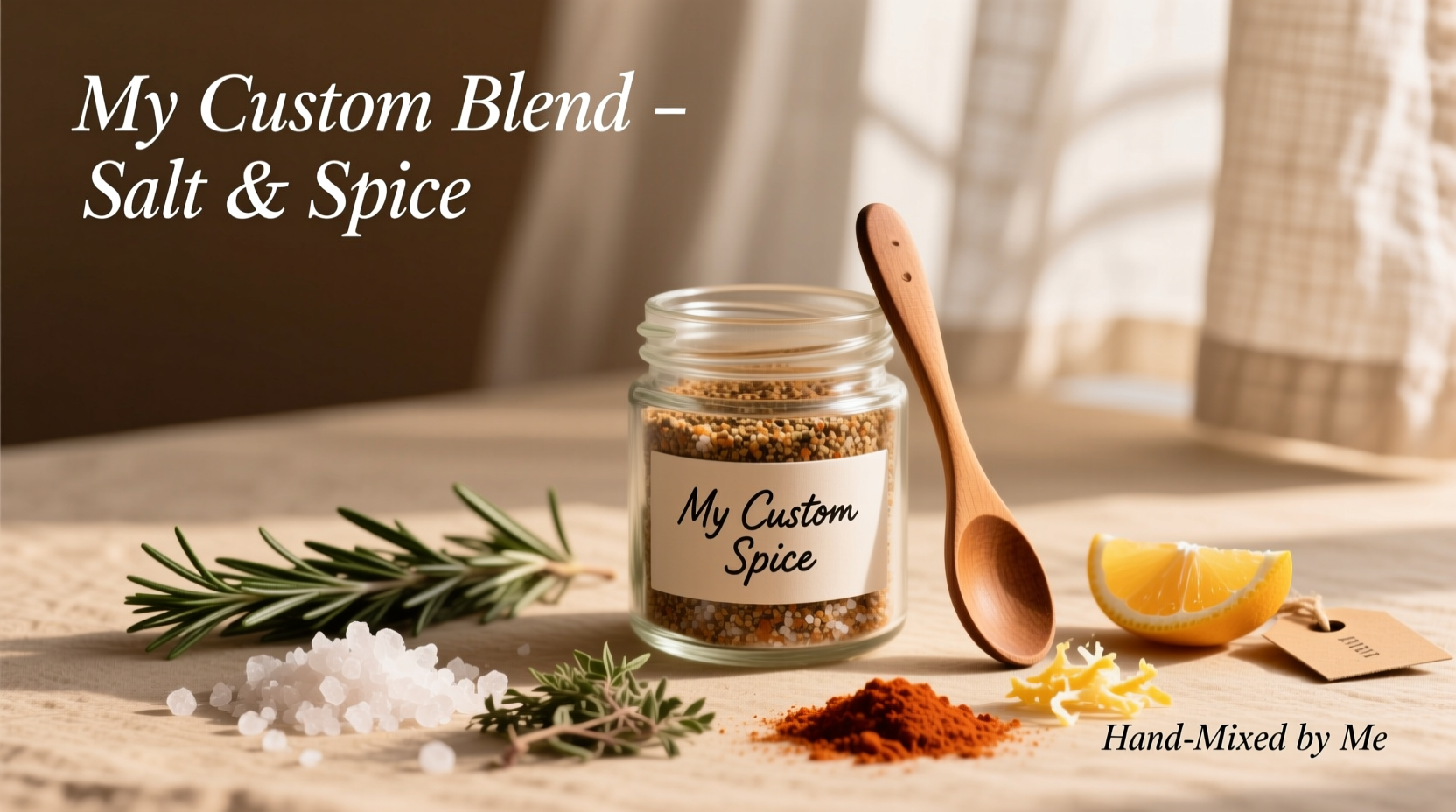
A custom seasoning salt blend is a mixture of salt and other flavoring agents designed to enhance food without requiring additional seasoning steps. Unlike single-ingredient salts (such as sea salt or Himalayan pink salt), these blends integrate complementary spices, herbs, acids, and sometimes savory elements like dried mushrooms or seaweed. The result is a multi-dimensional seasoning that functions both as a salt source and a flavor base.
The concept dates back centuries, with regional variations found in nearly every global cuisine. Examples include dukkah from Egypt (a mix of nuts, seeds, and herbs), za’atar from the Levant (thyme, sumac, sesame), and garam masala in India—though not always salt-based, many traditional spice mixes serve a similar purpose. Modern interpretations often draw inspiration from these traditions while adapting for contemporary kitchens and dietary preferences.
At its core, a seasoning salt blend must balance three elements: salinity, aroma, and functionality. It should deliver enough salt to season effectively while contributing noticeable secondary flavors. The best blends are versatile but also targeted—some ideal for meats, others for vegetables or snacks.
Key Characteristics
| Characteristic | Description |
|---|---|
| Flavor Profile | Varies by formulation; typically savory, herbal, earthy, or citrus-forward. May include heat, sweetness, or umami notes. |
| Aroma | Bright if citrus/herb-dominant; warm and toasty if spice-heavy (e.g., cumin, coriander); smoky when smoked salt or paprika is used. |
| Color/Form | Granular or coarse texture; color ranges from white (herb-light blends) to amber, red, or gray depending on added ingredients. |
| Heat Level | Adjustable—from mild (no chiles) to hot (with cayenne, chili flakes, or pepper). |
| Culinary Function | Seasoning agent, flavor enhancer, rub base, finishing touch, or snack seasoning. |
| Shelf Life | 6–12 months when stored properly; potency diminishes over time, especially with volatile oils (e.g., garlic, citrus zest). |
Practical Usage
Custom seasoning salts streamline cooking by reducing the number of individual ingredients needed during preparation. Instead of measuring salt, pepper, garlic powder, and herbs separately, a pre-mixed blend ensures consistent results every time.
Dry Rubs: Apply generously to meats before grilling, roasting, or smoking. For poultry, work the blend under the skin for deeper flavor penetration. A classic barbecue-style blend might contain smoked paprika, brown sugar, garlic powder, onion powder, black pepper, and sea salt in a 3:2:1:1:1:4 ratio.
Vegetable Seasoning: Toss root vegetables in olive oil and a herbed salt blend—such as one with rosemary, thyme, lemon zest, and garlic—before roasting. Use approximately ¾ teaspoon per pound of vegetables.
Finishing Salts: These are applied after cooking to preserve delicate aromas. A blend with flaky sea salt, dried mint, sumac, and lemon zest works beautifully on grilled fish, hummus, or avocado toast.
Popcorn & Snacks: Elevate homemade popcorn with a blend containing nutritional yeast, turmeric, garlic powder, and fine sea salt. The umami and slight bitterness mimic cheese while remaining dairy-free.
Soups & Stews: Stir in ½ to 1 teaspoon per serving to adjust seasoning without diluting flavor. Avoid overuse if the dish already contains high-sodium ingredients like broth or soy sauce.
TIP: Always label your blends with the date and primary ingredients. Keep a small batch in a shaker near the stove and store the remainder in an airtight container away from light and moisture.
Variants & Types
Seasoning salt blends vary widely based on cultural influences, intended use, and dietary goals. Understanding the categories helps in selecting or designing the right blend for specific applications.
- Herb-Centric Blends: Dominated by dried herbs like thyme, oregano, basil, or dill. Ideal for Mediterranean dishes, roasted vegetables, and seafood. Example: Herbes de Provence salt (lavender, thyme, savory, fennel seed, salt).
- Smoky/Spicy Blends: Feature smoked paprika, chipotle, cumin, or blackened seasonings. Perfect for grilled meats, tacos, and bean dishes. Often include a touch of sugar to balance heat.
- Citrus-Infused Blends: Made with dried lemon, lime, or orange zest. Bright and aromatic, excellent for chicken, fish, salads, and rice. Combine with herbs like parsley or tarragon for freshness.
- Umami-Rich Blends: Incorporate ingredients like dried porcini mushrooms, kombu, nori, or tomato powder. Deepens savory notes in sauces, grains, and vegetarian dishes.
- Low-Sodium Options: Reduce salt content by up to 50% and replace volume with potassium chloride (sold as \"salt substitute\"), nutritional yeast, or ground seeds. Best for health-conscious users managing blood pressure.
- Regional Specialties: Replicate authentic profiles such as Chinese five-spice salt (star anise, cinnamon, Szechuan pepper), Jamaican jerk salt (allspice, thyme, scotch bonnet), or Indian sambar salt (mustard, curry leaves, lentils).
Comparison with Similar Ingredients
While seasoning salt blends may resemble other spice mixtures, they differ significantly in composition, function, and application.
| Item | Seasoning Salt Blend | Plain Spice Mix | Flavored Salt |
|---|---|---|---|
| Salt Content | High — salt is the base (50–90%) | None or minimal | Moderate to high — salt is primary |
| Primary Use | Direct seasoning replacement | Flavor accent, usually paired with salt | Finishing or general seasoning |
| Application Timing | During cooking or finishing | During cooking | Mostly finishing |
| Examples | Garlic herb salt, taco seasoning salt | Garam masala, curry powder | Lemon sea salt, truffle salt |
| Storage Caution | Watch for clumping due to hygroscopic ingredients (garlic, onion) | Generally stable unless volatile oils present | Protect from humidity; some degrade faster (e.g., truffle oil) |
Unlike curry powders or garam masala—which are meant to be bloomed in oil and cooked—seasoning salt blends are formulated to deliver immediate salt and flavor. They are not substitutes for complex spice pastes but rather complements that simplify daily seasoning.
Practical Tips & FAQs
How do I start creating my first blend?
Begin with a simple 4:1 ratio of salt to spice. For example, combine 4 tablespoons of kosher salt with 1 tablespoon of garlic powder. Taste and adjust. Gradually introduce additional layers—one herb, one acid (like citric acid or dried citrus), one warm spice (like black pepper or coriander). Keep notes on what works.
What type of salt should I use?
Kosher salt is preferred for blending due to its clean taste and coarse texture, which integrates well with other dry ingredients. Sea salt or grey salt (sel gris) adds mineral complexity and is excellent for finishing blends. Avoid iodized table salt—it has a metallic aftertaste and dissolves too quickly.
Can I use fresh ingredients?
No. Fresh garlic, herbs, or citrus contain moisture that promotes spoilage and clumping. Always use thoroughly dried ingredients. To maximize flavor, grind whole spices just before mixing. For citrus zest, dry it in a low oven (170°F/75°C) for 20–30 minutes before grinding.
How much should I use per dish?
Treat your blend as your primary salt source. If a recipe calls for 1 teaspoon of salt, substitute with 1 teaspoon of your blend. Be cautious when using multiple seasoned ingredients (e.g., broth, cheese, soy sauce) to avoid over-salting.
My blend is clumping. What went wrong?
Moisture absorption is the main culprit. Ensure all ingredients are completely dry. Add a few grains of uncooked rice or a silica packet to the container to absorb ambient moisture. Store in a cool, dark place.
Are there allergens to watch for?
Yes. While rare, some blends may include nut components (e.g., in dukkah-inspired mixes) or sulfites (in dried citrus). Label accordingly if sharing or gifting. For commercial production, follow FDA labeling guidelines.
Can I make sugar-free or keto-friendly versions?
Absolutely. Omit sugar entirely or use a non-nutritive alternative like erythritol in barbecue-style blends. Focus on savory, spicy, and herbal profiles. Avoid maltodextrin-based additives unless labeled safe.
How do I scale up for gifts or events?
Double or triple recipes confidently, provided all ingredients remain balanced. Use glass jars with shaker lids for presentation. Include usage suggestions on a tag: “Perfect on grilled corn, avocado toast, or roasted potatoes.”
PRO TIP: Toast whole spices like cumin seeds, coriander, or fennel in a dry skillet over medium heat until fragrant (about 2–3 minutes), then cool and grind. This unlocks essential oils and dramatically improves depth of flavor.
\"The best seasoning blends aren’t about complexity—they’re about coherence. Every ingredient should support the same flavor story.\" — Chef Elena Rodriguez, Culinary Instructor, San Francisco Cooking School
Summary & Key Takeaways
Creating your own custom seasoning salt blend is one of the most impactful yet underutilized skills in home cooking. It allows precise control over flavor, reduces reliance on processed seasonings, and brings consistency to daily meals. The process hinges on understanding ratios, ingredient compatibility, and proper storage.
Start with a base of high-quality salt—preferably kosher or sea salt—and build around a central theme: herbaceous, smoky, citrusy, or umami-rich. Maintain a 4:1 salt-to-additive ratio initially, adjusting to taste. Use only dry, shelf-stable ingredients to ensure safety and longevity. Grind whole spices fresh whenever possible for maximum aroma.
Apply blends strategically: as dry rubs, vegetable seasoners, soup enhancers, or finishing touches. Differentiate between cooking-stage blends (robust, heat-stable) and finishing blends (delicate, aromatic). Store in airtight containers away from light and moisture, and expect peak potency within six months.
By mastering this technique, you transform salt from a background player into a leading ingredient. Over time, you’ll develop a personal repertoire—perhaps a go-to chicken roast blend, a favorite popcorn dusting, or a signature gift for food-loving friends. In doing so, you don’t just season food—you define its character.
Ready to begin? Start small: mix ¼ cup kosher salt with 1 tbsp each of garlic powder, onion powder, and cracked black pepper. Use it on roasted potatoes tonight. Adjust the ratios tomorrow. Your palate is your best guide.




 浙公网安备
33010002000092号
浙公网安备
33010002000092号 浙B2-20120091-4
Comments
No comments yet. Why don't you start the discussion?