
For pet owners who value both design and sustainability, transforming discarded wooden pallets into a custom cat house is more than a DIY project—it’s a statement. Cats thrive in environments that offer warmth, security, and elevated spaces, and a well-built pallet house delivers all three. With minimal cost and maximum creativity, you can construct a functional, visually appealing shelter that blends into your home or garden while giving your cat a personal retreat. This guide walks through every phase of the process, from sourcing materials to final decoration, ensuring durability, safety, and style.
Selecting and Preparing the Right Pallets
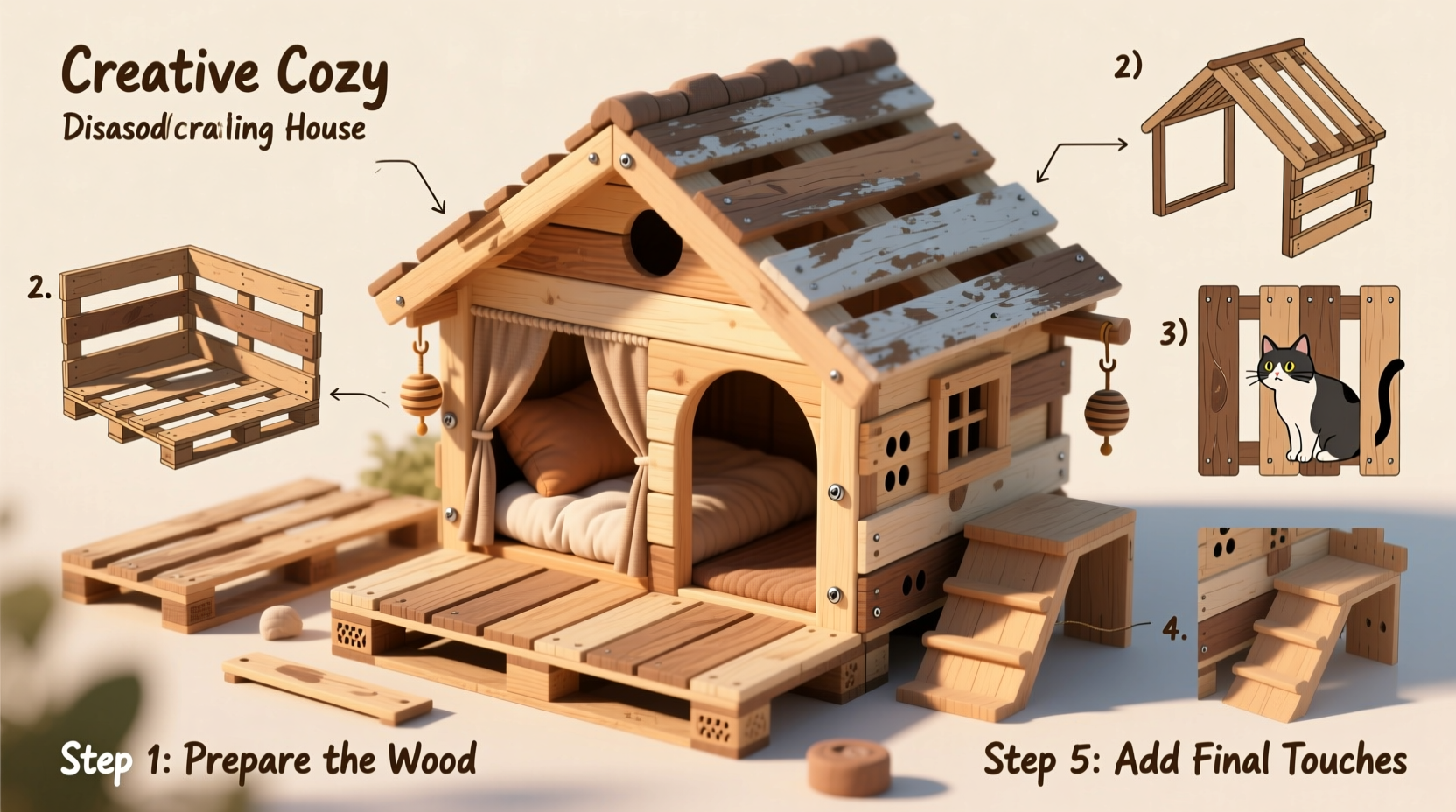
The foundation of any successful pallet-based build begins with choosing the right wood. Not all pallets are safe for indoor pet use. Many industrial pallets are treated with chemicals like methyl bromide (indicated by an “MB” stamp), which can be toxic to animals and humans alike. Always look for the HT stamp—short for “heat-treated”—which means the wood was kiln-dried instead of chemically fumigated.
Standard pallets typically measure 48x40 inches, but sizes vary. For a compact yet spacious cat house, two to three pallets are usually sufficient—one for the base, one for walls and roof, and optionally a third for added levels or a porch. Once selected, disassemble the pallets carefully using a pry bar and hammer, preserving as many intact planks as possible. Remove nails completely and sand all surfaces to prevent splinters—a critical safety step for curious paws and delicate whiskers.
Design Planning: Function Meets Aesthetics
Before assembling anything, sketch a basic blueprint. Consider your cat’s behavior: does it prefer high vantage points? Does it like enclosed spaces or open lounging areas? A two-level design with a lower entry den and an upper observation deck often satisfies both instincts.
A typical layout includes:
- A ground-level entrance leading to a snug sleeping chamber
- An internal ramp or stepped access to an upper platform
- Side ventilation gaps (about ½ inch) to ensure airflow without drafts
- Overhanging roof panels to protect against rain if placed outdoors
| Feature | Purpose | Recommended Dimension |
|---|---|---|
| Entry hole | Easy access with sense of security | 8–10 inches in diameter |
| Floor area | Room to stretch and turn comfortably | At least 18x18 inches per level |
| Wall height | Prevent falls, allow headroom | 12–14 inches |
| Ramp incline | Safe climbing for older cats | No steeper than 30 degrees |
“Cats seek micro-environments that offer control over their surroundings. Elevation, concealment, and warmth are key.” — Dr. Lydia Jensen, Feline Behavior Specialist
Step-by-Step Construction Process
With materials prepped and plans in hand, begin assembly. Work on a flat surface and use exterior-grade wood screws rather than nails for greater structural integrity.
- Build the base frame: Reinforce the bottom pallet with additional cross beams if needed. Attach four short wooden legs (4–6 inches tall) at each corner to elevate the house slightly off the ground, improving air circulation and reducing moisture absorption.
- Create vertical walls: Stand pallet sections upright along three sides of the base. Secure them with screws at the corners. Leave the front open for now to install the entryway later.
- Add intermediate floor (for multi-level): Position a flat pallet section horizontally between the lower and upper levels. Anchor it securely to the side walls using corner brackets for extra support.
- Construct the roof: Angle two pallet tops to form a gabled roof, joining them at the peak with a central beam. Alternatively, use a single flat pallet for a modern, minimalist look. Ensure overhang on all sides to shield openings from rain.
- Install entry and exit points: Cut a circular or arched opening near the base for entry. If designing a dual-level unit, add a small doorway between floors. Sand edges smooth.
- Seal and finish: Apply a non-toxic, water-based sealant to protect against weathering. Choose a matte finish to reduce glare, which can bother cats’ sensitive eyes.
Customization and Cozy Touches
A functional cat house becomes a cherished space when personalized. The real charm lies in thoughtful details that reflect both your style and your cat’s preferences.
Exterior finishes can include:
- Painting with pet-safe, low-VOC paint in earthy tones or bold accent colors
- Adding shingle-style roofing using recycled composite tiles
- Incorporating a small sign with your cat’s name
Inside, comfort is paramount:
- Line the floor with a removable, washable cushion made from old sweaters or fleece blankets
- Insert a heated pet mat (low-wattage, chew-resistant cord) for colder climates
- Hang dangling toys from the ceiling or attach sisal pads to walls for scratching
For outdoor models, position the house on a covered patio or under a tree canopy. Face the entrance away from prevailing winds and direct afternoon sun.
Mini Case Study: The Urban Balcony Cat House
Sophia, a graphic designer in Portland, transformed two salvaged pallets into a sleek triangular cat house for her balcony. Her cat, Miso, previously avoided the outdoor space due to noise and exposure. The new house featured a slanted green roof matching her planters, a side-access door for easy cleaning, and a built-in window ledge lined with soft gray felt. Within days, Miso began napping in the upper deck each morning, safely observing birds from behind the lattice walls. The structure also became a conversation piece among neighbors, proving that pet furniture can enhance urban living aesthetics.
Safety, Maintenance, and Longevity
Durability depends on ongoing care. Even sealed wood will degrade over time if exposed to constant moisture. Inspect the structure every few months for loose screws, warping, or insect damage. Clean interior bedding weekly and wipe down hard surfaces with a vinegar-water solution (1:4 ratio) to disinfect without toxicity.
If used outdoors, lift the house onto paving stones or a tarp during heavy rains. In snowy regions, remove snow buildup from the roof promptly to avoid strain on joints.
📋 Checklist: Building a Safe & Stylish Pallet Cat House- ✅ Source HT-stamped, chemical-free pallets
- ✅ Disassemble and sand all wood pieces
- ✅ Design with cat behavior in mind (elevation, hiding spots)
- ✅ Use non-toxic sealants and paints
- ✅ Install stable legs and reinforce joints
- ✅ Add ventilation gaps and weather protection
- ✅ Furnish with washable, warm bedding
- ✅ Perform seasonal inspections and cleaning
Frequently Asked Questions
Can I use pallets from grocery stores or warehouses?
Yes, but only if they are heat-treated (HT stamp). Avoid those marked MB (methyl bromide) or with unknown origins. Grocery stores often discard usable pallets—ask permission before taking them.
Is it safe to place a pallet cat house indoors?
Absolutely. Indoor versions can double as modern pet furniture. Seal the wood properly and consider adding casters to the legs for mobility. Just ensure the design fits your room’s decor and doesn’t obstruct pathways.
How do I get my cat to use the new house?
Cats are cautious with new objects. Place familiar-smelling items inside, such as an old T-shirt or favorite toy. Sprinkle catnip around the entrance and reward visits with treats. Patience is key—some cats take days or weeks to fully accept a new space.
Final Thoughts
Building a cat house from pallets merges sustainability, craftsmanship, and love for your pet. What starts as reclaimed wood evolves into a sanctuary where your cat can retreat, observe, and feel secure. By following sound construction principles and infusing personal style, you create more than shelter—you craft an experience. Whether nestled beside your sofa or on a quiet corner of the deck, this handmade haven becomes a meaningful part of your shared life.




 浙公网安备
33010002000092号
浙公网安备
33010002000092号 浙B2-20120091-4
Comments
No comments yet. Why don't you start the discussion?