
Knitting isn’t just for sweaters and scarves—your needles can bring joy to one of the most discerning critics: your cat. Handmade knitted cat toys offer a blend of comfort, stimulation, and safety that store-bought options often lack. By choosing natural materials and designing with feline behavior in mind, you create more than a toy—you craft an interactive experience tailored to your pet’s instincts. This guide walks through every stage of creating cozy, engaging knitted toys, from selecting yarn to adding catnip-infused surprises.
Why Knitted Toys Work for Cats
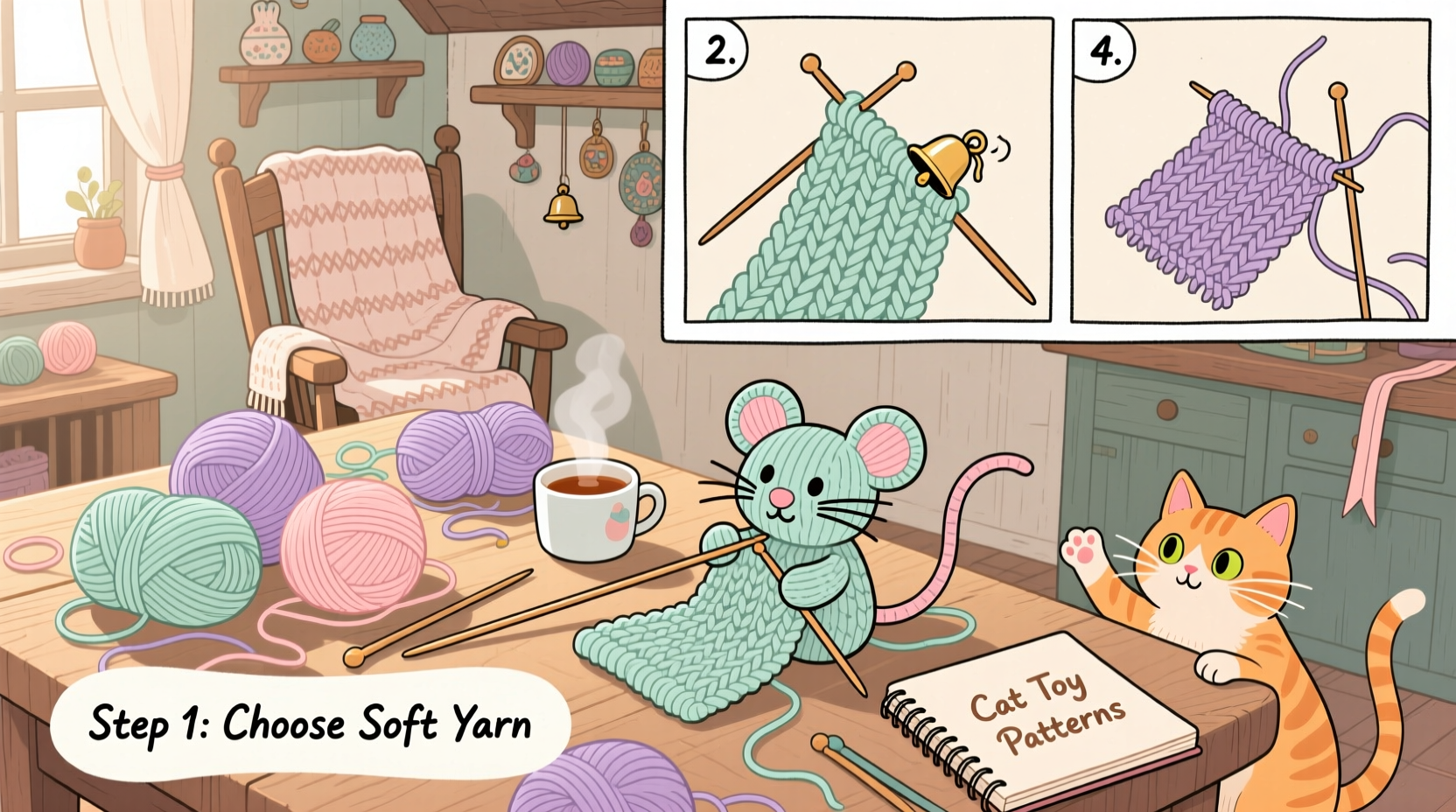
Cats are instinctive hunters. Even well-fed indoor cats retain the drive to stalk, pounce, and capture. A well-designed knitted toy mimics prey-like movement, texture, and size. Unlike plastic or rubber toys, knitted pieces have softness and flexibility that encourage biting and batting without risk of injury. The tactile nature of wool or cotton appeals to their sense of touch, while subtle rustling sounds from crinkle inserts or jingle bells heighten curiosity.
Additionally, handmade toys allow customization. You control the materials, ensuring they’re non-toxic and hypoallergenic. You can also tailor size and shape—small mice for solo play, larger tassels for interactive sessions, or looped rings for easy batting across hardwood floors.
“Cats respond best to toys that engage multiple senses. A soft, textured toy with a bit of noise and scent stimulation can keep them mentally engaged for longer.” — Dr. Lena Torres, Feline Behavior Specialist
Materials and Tools You’ll Need
Before casting on, gather supplies that prioritize both durability and safety. Not all yarns are suitable for pets, and small embellishments must be securely attached.
- Yarn: Use 100% natural fibers like cotton, wool, or bamboo. Avoid synthetic blends that may shed microplastics or irritate sensitive paws.
- Needles: Size 6–8 (4–5 mm) straight or circular needles work well for tight, secure stitches.
- Fiberfill: Organic cotton stuffing is safer than polyester if accidentally ingested.
- Catnip: Dried, food-grade catnip adds irresistible appeal. Store in an airtight container to preserve potency.
- Embellishments: Small jingle bells (sewn inside), felt eyes, or crinkle paper strips can enhance play value—but only if firmly enclosed.
- Stitch markers and tapestry needle: For tracking rounds and weaving in ends securely.
Step-by-Step Guide to Making a Knitted Mouse Toy
A knitted mouse is a classic design that combines simplicity with high feline appeal. Follow this sequence to make one that lasts.
- Casting On: Using size 7 needles and cotton yarn, cast on 12 stitches. Begin with a long-tail cast-on for elasticity.
- Body (Stockinette Stitch): Knit 20 rows, turning at each end. This forms the main body. Keep tension even to avoid gaps.
- Shaping the Head: Bind off 3 stitches at the beginning of the next two rows, leaving 6 center stitches. Knit 6 more rows, then bind off.
- Assembly: Fold the piece in half vertically. Seam the sides and bottom using a whipstitch. Leave the top open for stuffing.
- Stuffing: Fill lightly with organic cotton fiberfill. Add ½ teaspoon of dried catnip for extra attraction.
- Sealing: Close the opening tightly with a ladder stitch, ensuring no loose threads remain.
- Tail: Cut a 6-inch strand of yarn, fold in half, and attach it to the rear using a slip knot. Trim ends evenly.
- Eyes (optional): Embroider small black French knots or sew on securely backed felt dots.
This entire process takes under two hours and results in a durable, washable toy. Repeat with different colors to build a collection.
Safety Considerations and Best Practices
While knitting for cats, safety must outweigh aesthetics. What seems charming to you could pose a choking hazard or digestive risk to your pet.
| Do | Don't |
|---|---|
| Use tightly woven stitches to prevent snagging | Use loose lace patterns that unravel easily |
| Secure all embellishments internally | Sew on buttons or beads that can detach |
| Wash toys regularly to remove saliva and dirt | Leave soiled toys out for extended periods |
| Supervise initial play sessions | Leave fraying toys within reach unsupervised |
| Rotate toys weekly to maintain interest | Overload spaces with too many options |
Inspect toys weekly for wear. If edges fray or stuffing leaks, retire the toy immediately. Regular rotation also prevents habituation—cats lose interest in static environments.
Real Example: How Maya’s Cat Rediscovered Play
Maya, a pet owner from Portland, noticed her 8-year-old tabby, Jasper, had stopped playing with his usual toys. “He’d sniff them and walk away,” she said. After reading about sensory enrichment, she knitted him a small oval-shaped toy filled with catnip and lined with crinkle paper from a recycled snack bag. The combination of scent, sound, and soft texture reignited his hunting instinct. “He batted it across the room, then carried it around like prey,” Maya recalled. “Now he has three knitted toys on rotation, and his activity level has improved.”
This case illustrates how thoughtful design—not expensive features—can re-engage even sedentary cats.
Expand Your Designs: Creative Variations
Once comfortable with basic shapes, experiment with new forms and functions.
- The Tassel Teaser: Knit a short cylinder and attach long tassels at one end. Ideal for wand-style play.
- Crinkle Ball: Work in the round to create a sphere, inserting crinkle paper before closing.
- Hiding Pouch: Make a small envelope-style toy with a flap. Hide treats or catnip inside for puzzle-like engagement.
- Loop Ring: Knit a flat ring with a ribbed edge. Lightweight and easy to swat, perfect for older cats with limited mobility.
Each variation targets different aspects of feline behavior—chasing, pouncing, chewing, or problem-solving.
FAQ
Can I use acrylic yarn for cat toys?
It’s not recommended. Acrylic fibers are petroleum-based and indigestible. If ingested, they can cause intestinal blockages. Stick to natural, biodegradable yarns like cotton or wool.
How do I clean knitted cat toys?
Hand-wash in cool water with mild detergent. Gently squeeze out moisture—never wring. Lay flat to dry away from direct heat. Avoid machine washing, which can distort shape and loosen seams.
What if my cat ignores the toy?
Try infusing it with catnip, silvervine, or valerian root. Also, introduce it during active times (dawn or dusk) and use it interactively with a wand or string to mimic prey movement.
Checklist: Creating Safe, Engaging Knitted Cat Toys
- ☐ Choose natural, non-toxic yarn
- ☐ Use tight stitch patterns to prevent unraveling
- ☐ Securely enclose all small parts
- ☐ Stuff lightly with safe filling and optional catnip
- ☐ Inspect for loose threads before giving to your cat
- ☐ Wash periodically and replace when worn
- ☐ Rotate toys weekly to maintain novelty
Conclusion
Making knitted cat toys is more than a craft—it’s an act of care. Each stitch reflects attention to your cat’s needs, from texture preferences to safety concerns. These handmade creations foster play, reduce stress, and strengthen your bond. Whether you're a seasoned knitter or just starting, the process is accessible and deeply rewarding. Begin with a simple mouse, observe how your cat responds, and let their reactions guide your next design.




 浙公网安备
33010002000092号
浙公网安备
33010002000092号 浙B2-20120091-4
Comments
No comments yet. Why don't you start the discussion?