
Paracord leashes are more than just functional—they represent craftsmanship, resilience, and personal expression. Originally developed for military use due to its strength and versatility, 550-pound test paracord has become a favorite among DIY enthusiasts. When woven into a dog leash, it creates a lightweight yet incredibly strong tether that can be customized in color, length, and pattern. Whether you're making one for your own dog or as a thoughtful handmade gift, the process is both rewarding and practical.
The Strength and Style of Paracord
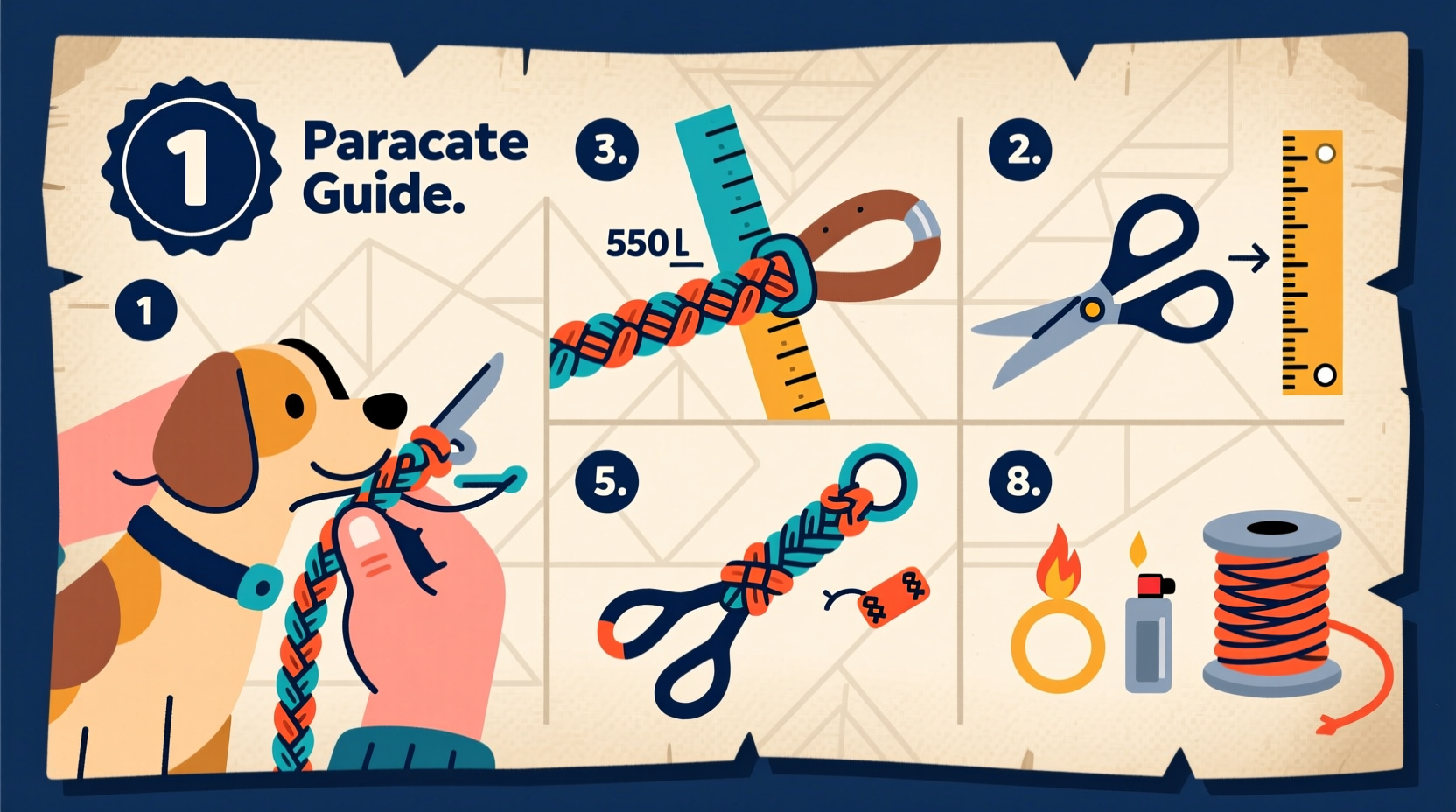
Parachute cord, commonly known as paracord, consists of a braided nylon sheath surrounding seven inner strands. Its tensile strength—rated at 550 pounds—makes it ideal for applications requiring durability under stress. For dog leashes, this means resistance to chewing, tugging, and outdoor wear. Unlike traditional nylon or leather leashes, paracord versions are water-resistant, mildew-proof, and won’t degrade quickly when exposed to the elements.
Beyond utility, paracord offers aesthetic flexibility. Available in dozens of colors and patterns—from solid tones to camo and glow-in-the-dark—users can mix and match to reflect their dog’s personality or their own style. The tactile satisfaction of a tightly woven braid adds comfort during walks, while the absence of metal links reduces weight and noise.
“Handcrafted gear fosters a deeper connection between owner and pet. A paracord leash isn’t just a tool—it’s a statement of care.” — Dr. Lena Torres, Canine Behavior Specialist and Outdoor Enthusiast
Materials and Tools You’ll Need
Before beginning, gather all necessary components. Quality materials ensure longevity and safety, especially since the leash will support your dog’s full weight during sudden movements.
Essential Supplies:
- Paracord: 100 feet of 550-lb test type III paracord (amount varies by leash length and thickness)
- Carabiner or heavy-duty trigger snap: Stainless steel recommended (minimum 800-lb gate strength)
- Center ring (optional): For attaching a secondary lead or ID tag
- Lighter or heat source: To seal cut ends and prevent fraying
- Measuring tape: For consistent strand lengths
- Masking tape or clips: To secure working ends during weaving
- Work surface: Table with clamp or vise to hold anchor point
Step-by-Step Construction Guide
This method uses the popular cobra weave—a simple, symmetrical braid that’s beginner-friendly yet robust enough for daily use. Follow these steps carefully to build a 4-foot standard walking leash with a comfortable handle loop.
- Prepare the anchor: Attach the carabiner or snap hook to a stable surface using a vise or heavy-duty clip. This will serve as your fixed point.
- Cut main cords: Measure and cut two paracord strands: one 72-inch piece (the core), and one 100-foot continuous strand (for weaving). Tape the ends of both to prevent fraying.
- Begin the handle: Fold the 100-foot strand in half. Loop it over the carabiner and pull both ends through to form a lark’s head knot. This creates two working legs for braiding.
- Weave the cobra stitch: Cross the right working cord over the core, then pass the left cord under the core and through the loop formed on the right. Pull tight. Repeat from the opposite side, alternating sides evenly. Continue for 8–10 inches to form a sturdy handle.
- Incorporate the center ring (optional): After 4 inches of handle, slide the ring onto the core cords before continuing the weave. This allows attachment of a traffic lead or ID tag.
- Weave the lead section: Continue the cobra weave down the remaining length. Maintain consistent tension for uniform appearance and strength. Aim for 36–48 inches depending on preferred leash length.
- Finish the end: Once the desired length is reached, feed both working ends through the last few stitches using a needle or shankless screwdriver. Trim excess and melt the tips carefully with a lighter to secure.
- Test thoroughly: Apply gradual pressure to simulate pulling. Inspect knots and weave integrity before first use.
Tips for a Professional Finish
- Maintain even tension throughout—too loose weakens structure; too tight distorts shape.
- Use contrasting thread colors to highlight patterns like diamond, viper, or king cobra weaves.
- For wider handles, start with a double or triple strand foundation.
Customization Ideas and Creative Variations
One of the greatest advantages of handcrafting your leash is the ability to personalize it. Consider these ideas to elevate both function and flair:
| Design Feature | Benefit | Implementation Tip |
|---|---|---|
| Two-tone cobra weave | Visual appeal with clean contrast | Alternate colors every row for a striped effect |
| Glow-in-the-dark cord accents | Improved visibility at night | Integrate every 6th stitch along the lead |
| Modular sections | Convertible from leash to harness strap | Add quick-release buckles mid-line |
| Embedded whistle or compass | Emergency preparedness | Suspend in a sealed capsule within the handle |
Real-World Example: From Concept to Daily Use
Jamie, a hiking guide in Colorado, needed a reliable leash for her German Shepherd, Rex, who often pulls on steep trails. Store-bought leashes wore out within months. She crafted a 48-inch paracord leash using olive green and black cord in a king cobra weave for extra thickness. She added a stainless steel center ring to clip a secondary line when navigating narrow ridges. After a year of rigorous trail use—including snow, mud, and river crossings—the leash shows minimal wear. “It’s survived more than any other gear I’ve owned,” she says. “And people always ask where I got it.”
Frequently Asked Questions
How much paracord do I need for a standard leash?
A 4-foot leash with a medium-thickness cobra weave typically requires 90–100 feet of paracord. Longer or thicker designs may require up to 150 feet.
Is paracord safe for large or strong dogs?
Yes, provided it's properly constructed. A well-woven paracord leash exceeds the strength of most commercial leashes. Always use a high-quality snap hook rated for at least twice your dog’s weight in potential pull force.
Can I wash a paracord leash?
Absolutely. Hand wash with mild soap and cold water. Hang to dry away from direct sunlight. Avoid machine washing, which can loosen the weave over time.
Final Checklist Before First Use
- Confirm all knots are tight and secured with melted ends.
- Inspect the carabiner or snap hook for smooth operation and no cracks.
- Test load capacity gradually—apply steady pressure equivalent to your dog’s sudden lunge.
- Check for even braid tension and no loose loops.
- Verify leash length suits your walking environment (shorter for urban areas, longer for trails).
Conclusion: Craft Something That Lasts
Creating a custom paracord dog leash blends practicality with personal touch. It’s an investment in safety, sustainability, and style—all wrapped into one durable strand. With basic tools and attention to detail, anyone can produce a leash that outperforms mass-produced alternatives. More than just a tether, it becomes a symbol of dedication—to your dog, to craftsmanship, and to mindful living.




 浙公网安备
33010002000092号
浙公网安备
33010002000092号 浙B2-20120091-4
Comments
No comments yet. Why don't you start the discussion?