
Car keys are one of the most frequently handled personal items, yet they often go unnoticed in terms of style. A scarf keychain offers an elegant way to personalize your keyring while adding texture, color, and a touch of flair. However, attaching a fabric accessory like a scarf to metal keys presents unique challenges—durability, security, and ease of access must all be balanced with aesthetics. The solution lies not just in choosing the right scarf, but in how you securely and creatively integrate it into your everyday carry.
This guide explores tested, practical, and stylish techniques to attach a scarf keychain to your car keys. From simple knots to reinforced hardware solutions, each method is designed to withstand daily use while keeping your keys both functional and fashionable.
Choosing the Right Scarf Material
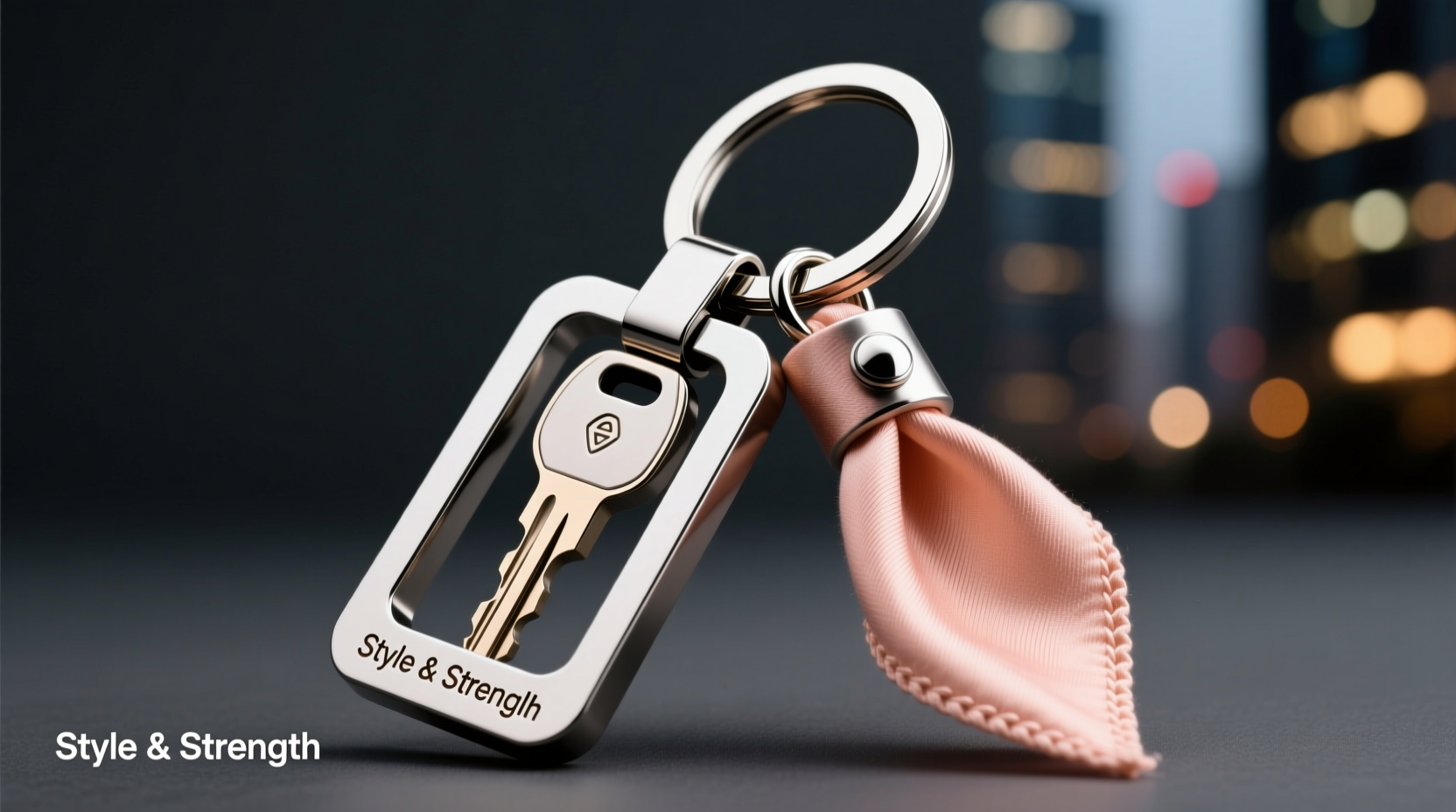
Not all scarves are suited for conversion into keychains. Lightweight silk or delicate lace may fray quickly under friction, while thick wool can be bulky and impractical. The ideal material balances softness with resilience.
- Cotton blends: Durable, washable, and available in vibrant prints.
- Polyester-silk mixes: Offer shine with improved tear resistance.
- Nylon ribbons or bias tape: Specifically designed for crafts, these resist fraying and come pre-cut.
- Repurposed bandanas: Sturdy, square-shaped, and easy to knot.
Durable Attachment Methods That Stand the Test of Time
The core challenge is creating a secure loop that won’t loosen when jostled in a pocket or bag. Below are five proven methods, ranked by durability and aesthetic appeal.
1. The Lark’s Head Knot (Simple & Reversible)
A classic knot used in macramé, the Lark’s Head is ideal for lightweight scarves. Fold the scarf in half, place the loop under the keyring, then pull the loose ends through the loop and tighten.
- Fold a 12–18 inch strip of fabric in half to form a loop.
- Slide the loop beneath the keyring.
- Pull both free ends through the loop and snug down gently.
- Trim excess if needed, or leave tails for added movement.
This method allows for quick swaps and doesn’t require tools. However, it may loosen over time with heavy use.
2. Metal Keyring Bead Anchor
Add a decorative bead with a large central hole (at least 8mm). Thread the folded end of the scarf through the bead, then tie a secure overhand knot below it. Slide the loop onto your keyring.
The bead acts as both a visual stopper and a protective shield, reducing wear on the fabric from direct contact with metal.
3. Leather Loop Sleeve Reinforcement
For long-term durability, reinforce the scarf with a small leather sleeve. Cut a 1-inch strip of thin leather or faux leather, fold it into a loop, and stitch or glue the ends. Attach the scarf to this loop using a double surgeon’s knot, then connect the leather loop to your keyring.
Leather resists abrasion far better than fabric and provides a professional finish. This hybrid method combines soft textile charm with rugged utility.
4. Split Ring + Quick Link Hardware Combo
Use a stainless steel split ring (common on keychains) paired with a miniature carabiner or \"quick link\" connector. Sew or knot the scarf securely to the carabiner, then clip it directly to your keyring.
This system allows for effortless removal and reattachment—perfect for switching scarves seasonally. Stainless steel prevents rust and maintains structural integrity.
5. Braided Multi-Strand Integration
Braid three strips of fabric together into a tight cord, then use a crimp bead or heat-shrink tubing at the end to create a permanent loop. Attach this loop to your keyring.
Braiding multiplies tensile strength and distributes stress evenly across strands. It also gives a polished, handmade appearance.
| Method | Durability | Style Flexibility | Tool Required? |
|---|---|---|---|
| Lark’s Head Knot | Low-Medium | High | No |
| Bead Anchor | Medium | High | No |
| Leather Sleeve | High | Medium | Sewing needle or strong adhesive |
| Hardware Clip System | Very High | Very High | No (if pre-assembled) |
| Braided Cord | High | Medium-High | Scissors, possibly glue |
Real-Life Example: How Sarah Personalized Her Commute Keys
Sarah, a graphic designer from Portland, wanted to distinguish her car keys from her house keys without resorting to bulky tags. She repurposed a vintage floral cotton scarf gifted by her grandmother, cutting a 15-inch strip and using the braided cord method with heat-shrink tubing.
After six months of daily use—including being tossed into purses, pockets, and glove compartments—the braid remained intact. “It’s not just about looks,” she said. “I can feel it in my pocket instantly. It’s become part of my routine.”
Her success came from combining sentimental value with smart construction. By reinforcing the attachment point, she preserved both memory and function.
“Accessories should serve more than vanity—they need to survive real life. A well-made scarf keychain isn’t decoration; it’s identity with integrity.” — Marcus Tran, Product Designer & Everyday Carry Specialist
Step-by-Step Guide: Create a Long-Lasting Scarf Keychain in 7 Minutes
Follow this streamlined process to make a durable, attractive scarf keychain using common household items.
- Gather materials: Fabric strip (1” x 12”), keyring, scissors, optional crimp bead or heat-shrink tube.
- Fold and align: Fold the fabric in half lengthwise, ensuring edges match neatly.
- Create loop: Bend the folded end upward to form a small loop (about ½ inch).
- Secure loop: If using a crimp bead, thread it over the folded tip and squeeze closed with pliers. For heat-shrink, slide it on and apply gentle heat until snug.
- Attach to keys: Open your keyring slightly and slide the loop onto it. Close securely.
- Adjust tail length: Trim the dangling ends evenly, or leave asymmetrical for artistic effect.
- Test durability: Gently tug the fabric to ensure the loop holds firm.
This method ensures the scarf stays put even during vigorous movement, such as jogging or driving over rough roads.
Checklist: Building Your Ideal Scarf Keychain
- ☐ Choose a fray-resistant fabric (cotton, nylon, polyester blend)
- ☐ Cut a strip between 10–18 inches long and 0.75–1.5 inches wide
- ☐ Pre-wash and dry the fabric to stabilize dimensions
- ☐ Select a secure attachment method (braided, knotted, or hardware-based)
- ☐ Reinforce the connection point with stitching, crimping, or a protective bead
- ☐ Ensure the final loop fits easily over your existing keyring
- ☐ Test strength before relying on it daily
Frequently Asked Questions
Can I wash my scarf keychain?
Yes, but remove it from the keys first if possible. Hand wash in cold water with mild detergent and air dry flat. Avoid wringing or machine drying, which can weaken fibers and connections.
Will the scarf interfere with key fob signals?
No. Fabric does not block radio frequency signals from keyless entry fobs. Even thicker materials like wool or denim have no measurable impact on signal transmission.
How do I prevent the scarf from twisting around the keys?
Use a wider fabric strip (at least 1 inch) or opt for a braided design. Twisting is minimized when the fabric has enough surface area to lie flat. Alternatively, attach two separate loops on opposite sides of the ring for balance.
Final Thoughts: Style Meets Substance
A scarf keychain is more than a fashion statement—it’s a reflection of personal taste integrated into daily ritual. When done right, it enhances usability while expressing individuality. The key is balancing creativity with craftsmanship. Whether you choose a minimalist knot or a reinforced hardware system, the goal remains the same: to carry something meaningful without compromising reliability.
Don’t settle for disposable accessories. Invest a few minutes in building a scarf keychain that lasts. With the right materials and technique, you’ll enjoy a unique piece that turns a mundane object into a conversation starter—one drive at a time.




 浙公网安备
33010002000092号
浙公网安备
33010002000092号 浙B2-20120091-4
Comments
No comments yet. Why don't you start the discussion?