
Sometimes the simplest situations become unexpectedly challenging—like when you're handed a glass bottle without a cap or opener in sight. Whether it’s a celebratory moment with friends or a quiet evening on the balcony, finding yourself unable to open a bottle can be frustrating. But there's a surprisingly effective solution already in your pocket: your house or car key. With the right technique, a standard metal key can double as an impromptu bottle opener. This guide explores safe, tested methods to open a bottle using only a key, offering practical insights, step-by-step instructions, and expert-backed tips to ensure success without injury or breakage.
Why Use a Key to Open a Bottle?
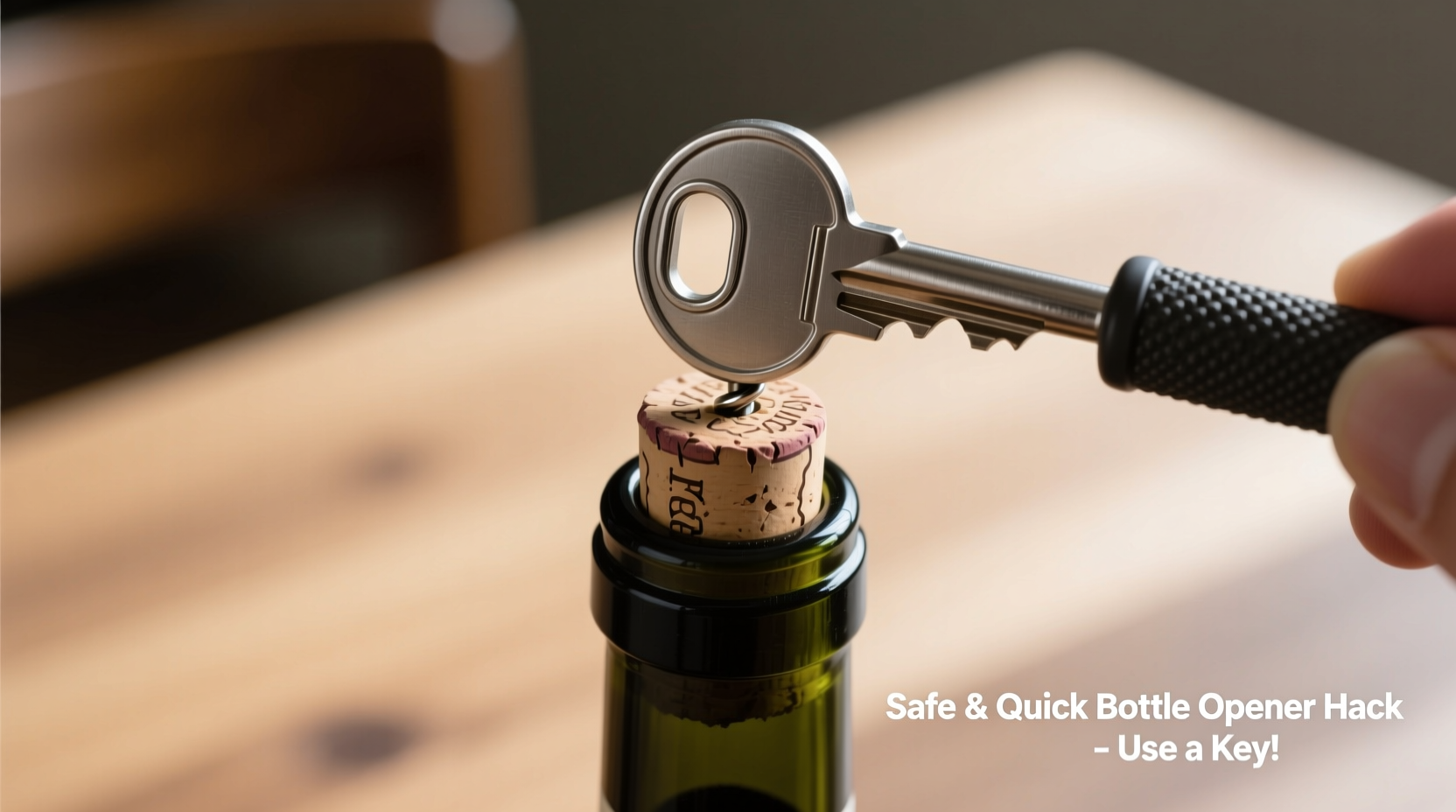
Keys are universally accessible, compact, and made of durable metal—qualities that make them ideal for improvised tasks. While they weren’t designed as bottle openers, their rigid structure and sharp edge allow for leverage against the bottle cap’s underside. In environments where traditional tools aren’t available—camping trips, outdoor gatherings, or late-night snacks at home—this skill becomes both useful and impressive.
The physics behind it is simple: applying upward pressure beneath the cap forces it to detach from the bottle neck. The key acts as a fulcrum, leveraging your hand strength to pry the cap loose. However, improper execution risks slipping, hand injuries, or broken glass. That’s why technique matters more than force.
Step-by-Step Guide: Opening a Bottle with a Key
Follow this precise sequence to maximize control and minimize risk:
- Choose the Right Key: Select a solid metal key with a broad shoulder (the flat top part). Avoid flimsy or thin keys that may bend under pressure.
- Position the Bottle Securely: Place the bottle upright on a stable surface. Hold the base firmly with your non-dominant hand to prevent tipping.
- Locate the Cap Edge: Identify the small gap between the bottle cap and the rim. This is where the key will be inserted.
- Insert the Key Horizontally: Slide the tip of the key under the cap’s edge, keeping it parallel to the ground. Aim for the side opposite the label, where grip is often better.
- Apply Upward Pressure: Press down on the key’s handle while keeping the tip anchored. Use controlled motion—do not jerk or twist abruptly.
- Lift Until the Cap Releases: As the cap lifts slightly, shift the key to another point along the rim and repeat. After 2–3 points, the cap should pop off completely.
- Dispose of the Cap Safely: Set it aside to avoid spills or stepping on it later.
This method works best on standard crown-corked bottles (like beer or soda) with a crimped metal lid. It is less effective on twist-off caps or plastic containers.
Alternative Techniques for Different Scenarios
Not every situation allows for a table or stable surface. Here are three variations based on environment and physical constraints:
- One-Handed Method (Standing): Grip the bottle neck tightly with your dominant hand. Insert the key under the cap and use your thumb to press the key upward from below. Requires strong grip and precision.
- Wall-Assisted Technique: Press the bottle cap against a wall or doorframe. Slide the key underneath and push the bottle forward to create leverage. Useful when no surface is available for downward pressure.
- Shoe-Sole Hack (Last Resort): Place the cap edge against the heel of a shoe. Press the key into the gap and use the shoe as a backstop to lever the cap up. Only recommended outdoors due to dirt exposure.
“Improvised tools require heightened awareness. The key isn’t sharper than a knife, but misdirection can still cause cuts or slips.” — Dr. Marcus Lin, Emergency Injury Prevention Specialist
Do’s and Don’ts: Safety Comparison Table
| Do’s | Don’ts |
|---|---|
| Use a full-sized metal key with a wide shoulder | Avoid using electronic key fobs or plastic keys |
| Work on a flat, non-slip surface | Never attempt this over your lap or near your face |
| Wear gloves if hands are wet or slippery | Don’t apply excessive force—leverage beats strength |
| Inspect the bottle neck for cracks first | Don’t reuse damaged or bent keys for safety |
| Keep fingers clear of the cap’s release path | Don’t try this with carbonated bottles held upside down |
Real-Life Example: A Campfire Solution
During a weekend hiking trip in the Adirondacks, a group of four friends found themselves without a bottle opener after dinner. One had forgotten theirs, and cell service was nonexistent. As someone pulled out a craft beer, laughter turned to mild frustration—until Alex remembered seeing a video about using a key. Using his car key and the edge of a picnic table, he carefully wedged the tip under the cap. On the second lift, the cap popped cleanly. The others followed suit, and within minutes, everyone was enjoying their drink. No injuries, no broken glass—just a shared moment of resourcefulness under the stars.
This scenario highlights how low-tech solutions can enhance real-world experiences. No apps, no gadgets—just knowledge and confidence.
Frequently Asked Questions
Can any type of key work for opening a bottle?
No. Thin or hollow keys (like some hotel or rental keys) may bend or snap. Electronic key fobs with plastic casings can crack. Opt for a solid metal house or car key with a broad head and sturdy shaft.
Is it safe to open a carbonated bottle this way?
Yes, if done correctly. Carbonation increases internal pressure, so ensure the cap is loosened gradually. Point the bottle away from people and your body during opening to prevent spray or shrapnel in case of breakage.
What should I do if the key slips?
If the key slips, stop immediately. Check your hand for cuts and inspect the bottle for cracks. Reassess your grip and surface stability before trying again. Wet or greasy hands increase slip risk—dry them first.
Mastery Through Preparation: Your Action Checklist
Before you find yourself in a pinch, prepare now. Follow this checklist to ensure readiness:
- ✅ Identify a durable key in your everyday carry set
- ✅ Test the method at home with an unopened (but expendable) bottle
- ✅ Memorize the two-point lift technique to reduce strain
- ✅ Share the method with friends—turn one person’s skill into a group advantage
- ✅ Keep a micro-tool or pocket bottle opener as a backup
Knowledge is only powerful when applied. By practicing these techniques, you’re not just learning a party trick—you’re building self-reliance in everyday moments.
Final Thoughts: Turn Constraints Into Confidence
The ability to open a bottle with a key is more than a novelty—it’s a symbol of adaptability. In a world increasingly dependent on specialized tools, rediscovering the utility of everyday objects reconnects us with practical problem-solving. When executed with care, this technique is fast, safe, and surprisingly satisfying.
Next time you’re faced with a sealed bottle and no opener, don’t reach for your phone or give up. Reach for your key. Position it wisely, apply steady pressure, and let physics do the rest. You might just impress a few people—and more importantly, enjoy your drink without delay.




 浙公网安备
33010002000092号
浙公网安备
33010002000092号 浙B2-20120091-4
Comments
No comments yet. Why don't you start the discussion?