
Cats thrive on movement, texture, and surprise. While store-bought toys have their place, nothing captures a cat’s attention quite like a handmade item infused with personal care—and the crinkle of an old sock stuffed just right. With a few mismatched socks, some basic household items, and a little creativity, you can craft engaging, safe, and stimulating toys that keep your cat entertained for hours. Best of all, these DIY projects reduce waste and cost next to nothing.
Why Homemade Sock Toys Work So Well
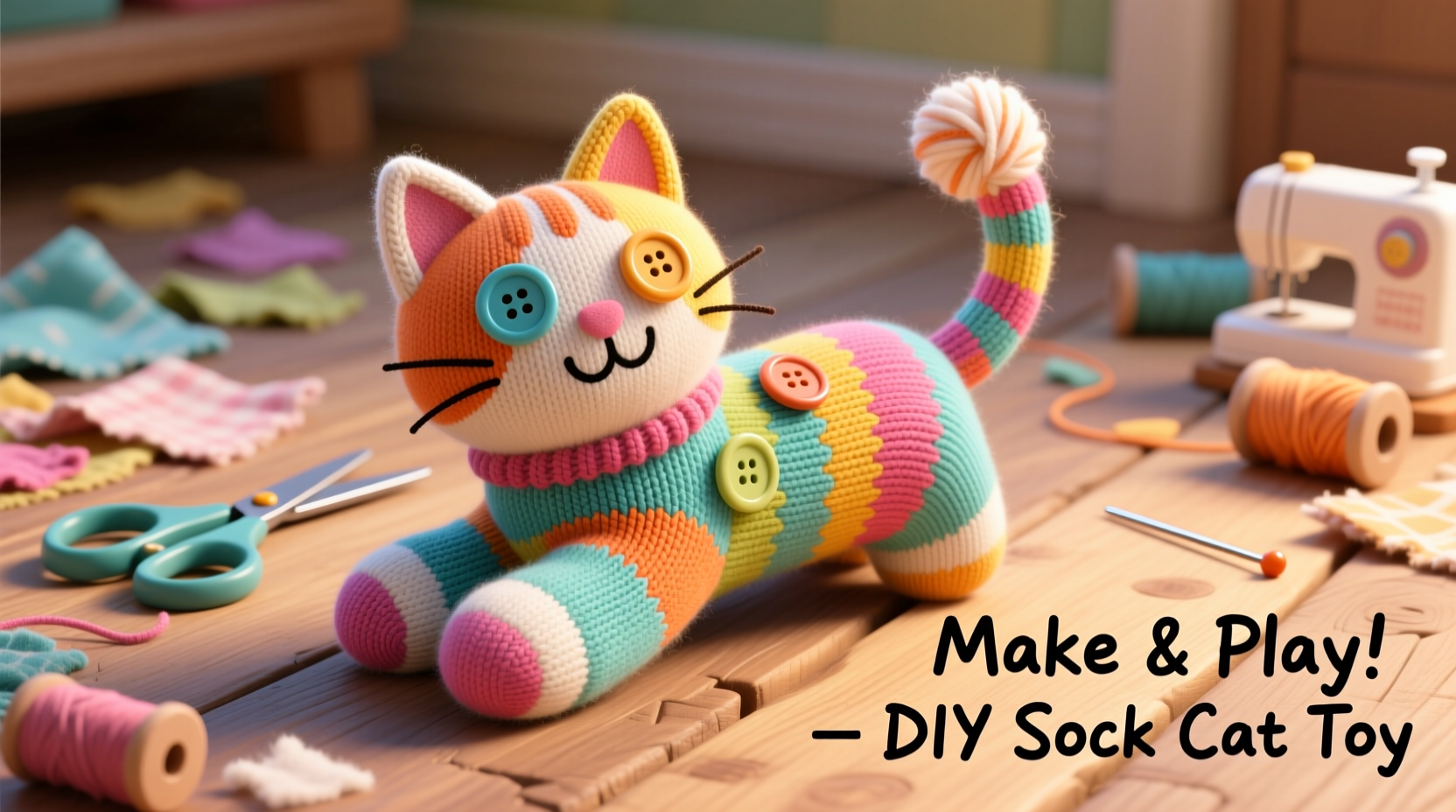
Socks are naturally soft, flexible, and often carry familiar scents—especially if they’ve been worn. This makes them comforting and intriguing to cats. The fabric moves unpredictably when batted around, mimicking prey-like motion. Plus, their tubular shape is perfect for stuffing, knotting, and adding sensory elements like bells or catnip.
Unlike mass-produced plastic toys, homemade sock toys can be tailored to your cat’s preferences: longer for batting, shorter for carrying, noisy for auditory stimulation, or silent for stealthy hunters. They’re also easy to replace when worn out, turning laundry day into crafting inspiration.
“Cats don’t need expensive toys—they need novelty, movement, and scent. A well-made sock toy checks all three boxes.” — Dr. Lena Reyes, Feline Behavior Consultant
Essential Materials & Safety Tips
You likely already have everything you need in your drawers or recycling bin. Here’s what works best:
- Old socks: Preferably cotton or cotton-blend, without holes or loose threads. Avoid synthetic-heavy blends that may shed microfibers.
- Filling materials: Crinkly plastic (from packaging), yarn scraps, jingle bells (securely enclosed), or organic catnip.
- Sealing tools: Needle and thread (preferred) or strong fabric glue. Avoid hot glue near stuffing.
- Scissors and rubber bands: For shaping and securing parts.
What to Avoid
| Avoid | Reason |
|---|---|
| Loose buttons or beads | Potential choking hazard if detached |
| Dangling ribbons longer than 4 inches | Risk of entanglement or ingestion |
| Fragile plastic film | Sharp edges when torn; avoid brittle packaging |
| Moldy or damp socks | Health risk from bacteria or mildew |
5 Creative Sock Cat Toy Ideas You Can Make Today
1. The Crinkle Snake
A long, slithery toy that wriggles across the floor like prey. Perfect for active cats who love to chase.
- Take a long tube sock (knee-high works best).
- Cut open one side lengthwise.
- Insert crinkly plastic—cut from a clean chip bag or shipping pouch.
- Roll tightly like a sleeping bag, then tie off every 4–6 inches with yarn or rubber bands.
- Trim ends into points for a snake-like head and tail.
The segmented design allows it to bend realistically when batted, and the crinkle sound keeps cats engaged even under furniture.
2. The No-Sew Mouse
For those who don’t sew, this quick version uses knotting instead of stitching.
- Use a small ankle sock.
- Fill halfway with dried lentils or rice (for weight) and a pinch of catnip.
- Add a jingle bell if desired.
- Pull the top down over the filling and tie several tight knots.
- Trim excess fabric close to the last knot.
The weighted bottom helps it roll unpredictably, mimicking injured prey. Replace every few weeks as fabric wears.
3. The Feather Teaser Wand (Sock Version)
Transform a short sock into a wand toy by combining sock texture with feather movement.
- Cut off the foot portion of a colorful sock.
- Stuff lightly with polyfill or yarn scraps.
- Sew or glue shut.
- Attach two feathers or a pom-pom to one end using strong thread.
- Tie the other end securely to a wooden dowel or stick.
Wave it through the air to trigger your cat’s hunting instinct. Store separately from other toys to preserve novelty.
4. The Catnip Burrito
This toy combines comfort and excitement—a soft, chewable bundle filled with aromatic herbs.
- Select a thick, fuzzy sock (terry cloth ideal).
- Fill with organic catnip and a small amount of dried lavender (calming effect).
- Roll into a cylinder and secure both ends with embroidery floss.
- Knot tightly and leave tassels for batting.
Some cats will cuddle with it; others attack it fiercely. Either way, it provides mental stimulation. Refresh with new catnip monthly.
5. The Tug-of-War Rope
Braided from multiple socks, this durable toy withstands aggressive chewing and pulling.
- Cut three long socks into continuous strips (about 1 inch wide).
- Align the strips and tie a knot at one end.
- Braid tightly and knot the other end.
- Optional: Bury a bell inside one knot before tying.
Ideal for interactive play between owner and cat. The stretchy fabric gives slightly, making it safer than rope made from synthetic cord.
Real-Life Example: How Mia Revived Her Senior Cat’s Playfulness
Mia, a pet owner from Portland, noticed her 12-year-old tabby, Oliver, had stopped chasing toys. He spent most days napping near sunny windows. Worried about muscle loss and cognitive decline, she tried various solutions—from laser pointers to puzzle feeders—but saw little change.
Then she made a crinkle snake from an old hiking sock and a recycled snack bag. To her surprise, Oliver batted it across the room the moment she tossed it. Over the next week, she introduced a catnip burrito and a braided tug rope. Within ten days, Oliver was playing daily for 10–15 minutes.
“It wasn’t about fancy features,” Mia said. “It was the texture, the sound, and the fact that these toys felt different from anything he’d seen before.”
Veterinarians confirmed that novel stimuli, especially multi-sensory ones, help maintain neural pathways in aging cats. Mia now rotates four sock toys weekly to prevent habituation.
Checklist: Building Your First Sock Toy Safely
- ☐ Choose a clean, undamaged sock with no loose threads
- ☐ Select non-toxic, cat-safe fillings (rice, lentils, catnip, crinkle paper)
- ☐ Secure all small parts (bells, beads) so they cannot escape
- ☐ Use needle and thread for closure whenever possible
- ☐ Trim excess fabric to prevent fraying or ingestion
- ☐ Supervise initial play sessions to monitor behavior
- ☐ Wash hands after handling catnip or reused materials
- ☐ Discard toy if heavily chewed or leaking stuffing
Frequently Asked Questions
Can I use dryer sheets in sock toys?
No. Dryer sheets contain chemicals and fragrances that can irritate cats’ respiratory systems and skin. Even trace residues pose risks. Stick to plain, unscented materials.
How often should I replace homemade sock toys?
Inspect weekly. Replace immediately if seams loosen, fabric thins, or stuffing leaks. High-use toys typically last 3–6 weeks. Rotate toys every 5–7 days to maintain interest.
Are wool socks safe for cats?
Wool can felt and become dense, which might resist tearing, but some cats may ingest fibers. If used, felt it thoroughly and supervise closely. Cotton remains the safest base material.
Final Thoughts: Turn Everyday Waste Into Joyful Play
Homemade sock toys prove that sustainability and enrichment go hand in hand. What might seem like trash—a lonely sock, a chip bag fragment, a scrap of yarn—becomes a source of fascination for your cat. These simple creations tap into primal instincts while strengthening your bond through shared play.




 浙公网安备
33010002000092号
浙公网安备
33010002000092号 浙B2-20120091-4
Comments
No comments yet. Why don't you start the discussion?